

In the rapidly evolving field of alumina 3D printing and Alumina Ceramics, success begins long before the final sintered part leaves the furnace. At AdventureTech (ADT Ceramic 3DP), pioneers in DLP ceramic 3D printing process technology since 2015, we know that every high-performance alumina component — from aerospace insulators to biomedical scaffolds — is determined by precise alumina powder characteristics at the very first stage.
Our complete solutions (high-resolution DLP printers + optimized alumina slurries + full sintering protocols) are trusted by Tsinghua University, HIT, CAS, and leading industrial partners. This guide, adapted from industry-leading research and enriched by our decade of hands-on DLP experience, presents a systematic quality control pathway that turns raw powder into exceptional performance.
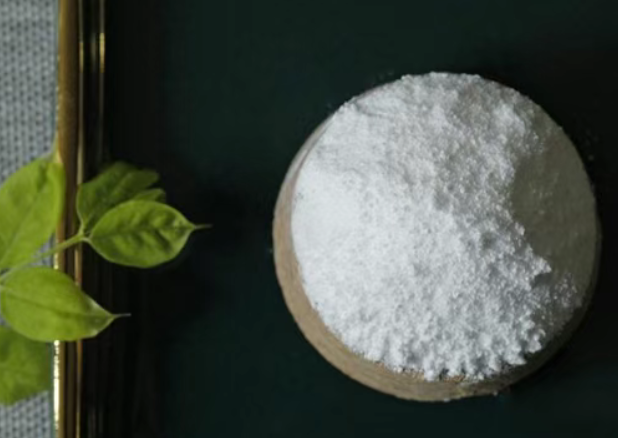
1. Alumina Powder Characteristics: The Foundation of Every Successful Print
Particle size distribution is the single most influential parameter in alumina 3D printing. Using laser diffraction analysis, AdventureTech’s high-purity alumina powders maintain a median diameter (D50) between 0.21 μm and 0.44 μm, with narrow distribution (D90/D10 ≈ 5.2 after 168 h wet milling).
- Why it matters for DLP: Finer, narrower distributions increase specific surface area (typically 7–10 m²/g) and sintering driving force while ensuring excellent slurry stability and layer uniformity in our high-speed DLP systems.
- Engineering tip: “Narrowing” the distribution is far more critical than simply making particles smaller — it prevents agglomeration and guarantees consistent green-body density.
This level of control is built into every batch of alumina powder we supply for our ADT-3D-ZM desktop and industrial-grade DLP printers.
2. Particle Morphology & Crystal Structure: Controlling Microscopic Defects
Scanning electron microscopy (SEM) reveals the true story behind powder performance.
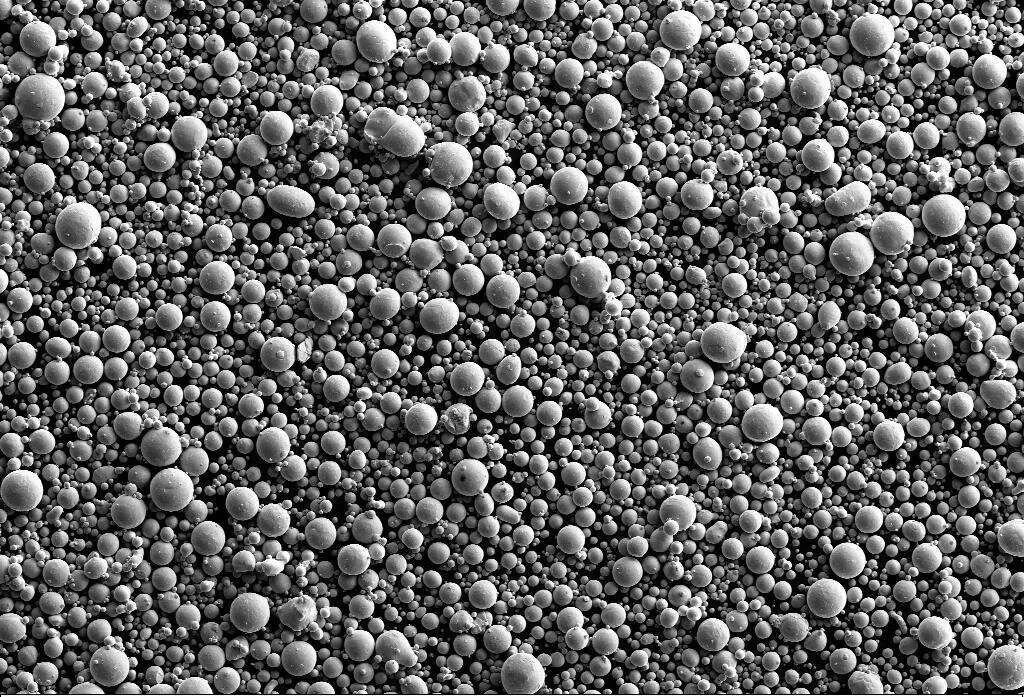
High-energy ball-milled Bayer-process alumina initially shows irregular shapes and lattice distortion (increased c-axis). Controlled annealing restores near-spherical morphology, releases internal stress, and stabilizes the α-Al₂O₃ phase while minimizing residual θ-Al₂O₃ that could disrupt shrinkage during sintering.
AdventureTech advantage: Our proprietary alumina formulations are pre-optimized for DLP photopolymerization slurries, delivering the perfect balance of reactivity and flowability required for layer thicknesses as fine as 25 μm.
3. Concentration States & Slurry Rheology: From Dilute Suspension to High-Solid DLP Feedstock
Powder behavior changes dramatically with concentration — and DLP ceramic 3D printing demands mastery of the concentrated regime:
- Dilute slurry stage (Zeta potential control) → stable dispersion for initial mixing
- High-solid-loading stage (55–65 vol% typical for AdventureTech alumina slurries) → shear-thinning rheology essential for smooth peristaltic feeding and dual-scraper layer recoating
- Dry pressing analogy → our slurries avoid bridging defects that cause porosity
Our industrial DLP printers use a unique peristaltic feeding + automatic filtration system that handles high-viscosity, high-solid-content alumina slurries without sedimentation — a direct result of rigorously controlled alumina powder characteristics.
4. The DLP Ceramic 3D Printing Process at AdventureTech
Our experimental and industrial DLP systems achieve printing speeds up to 700 layers per hour with alumina, thanks to:
- Upright DLP projection + dual-cylinder sinking-scraping structure (only 80 mL material needed)
- ADT-Slicer 4D engine for one-stroke forming
- Precise UV exposure calibrated to powder reactivity
Every print batch undergoes in-process quality checks (layer thickness, exposure uniformity, green density) — the practical embodiment of the systematic pathway we describe here.
5. Post-Processing & Sintering: Turning Green Parts into High-Performance Alumina Ceramics
- Conventional sintering (1550 °C, 2 h): ≥98.5 % theoretical density (3.92 g/cm³)
- With 0.25 wt% MgO + SPS: 99.96 % density, average grain size ~3 μm
- Transparent alumina route (three-stage sintering): >99.5 % density + 50 %+ in-line transmittance
Our complete sintering process packages eliminate guesswork and deliver repeatable results across aerospace, medical, and research applications.
6. Mechanical Performance Validation: The Ultimate Proof
Optimized powder → flawless DLP printing → controlled sintering delivers:
- Three-point bending strength: 471 MPa (standard) to >800 MPa (reinforced)
- Fracture toughness: >7 MPa·m¹/²
- Hardness: >18 GPa
These numbers are routinely achieved on parts printed on our DLP systems — real-world validation of the entire quality control pathway.
7. Why AdventureTech Delivers Superior Alumina 3D Printing Results
Founded by Dr. Pengfei Zhu (Ph.D. University of Science and Technology of China, Tsinghua postdoctoral researcher), AdventureTech combines deep materials science with industrial-grade DLP ceramic 3D printing process hardware. With 50+ patents, multiple SCI publications, and installations at China’s top institutions, we don’t just sell printers — we deliver end-to-end solutions that turn alumina powder characteristics into measurable performance advantages.
Our customers benefit from:
- Ready-to-use high-purity alumina slurries optimized for DLP
- Turnkey equipment (desktop to industrial ultra-high-speed)
- Full technical support for debinding, sintering, and post-processing
- Proven results in structural ceramics, bioactive scaffolds, and electronic components
Ready to elevate your alumina 3D printing projects? Contact AdventureTech today at adt-ceramic3dp.com and discover how our systematic quality control pathway can transform your ideas into high-performance Alumina Ceramics.
More articles
Gyroid-Structured SiOC Composites via DLP 3D Printing for Broadband Microwave Absorption
Sintering Stress Control Strategies for Complex Ceramic Parts Using CTE Insights in 3D Printing
From Powder to Performance: A Systematic Quality Control Pathway for High-Performance Alumina Ceramics
How to Prepare High-Performance Silica Ceramics Using DLP Technology and Optimized Reinforcements
Request A quote
