

In the intricate world of high-temperature ceramics processing, understanding the ceramic sintering process — particularly its late stages — is crucial for achieving optimal material properties in applications like aerospace components and biomedical implants. At AdventureTech (ADT Ceramic 3DP), leaders in ceramic 3d printer technology since 2015, we leverage deep insights into multi-stage grain growth, densification vs grain growth, and ceramic sintering mechanisms to deliver superior DLP-based systems that enable precise control over these phenomena.
Our complete solutions, including high-speed DLP ceramic 3d printer platforms and optimized sintering protocols, are trusted by Tsinghua University, Harbin Institute of Technology (HIT), and the Chinese Academy of Sciences (CAS). Founded by Dr. Pengfei Zhu (Ph.D. from University of Science and Technology of China, Tsinghua postdoctoral researcher), AdventureTech holds over 50 patents and empowers engineers to produce defect-free high-temperature ceramics through advanced additive manufacturing. This guide draws on established ceramic science to explore late-stage sintering dynamics, offering practical strategies for enhancing your ceramic sintering process.
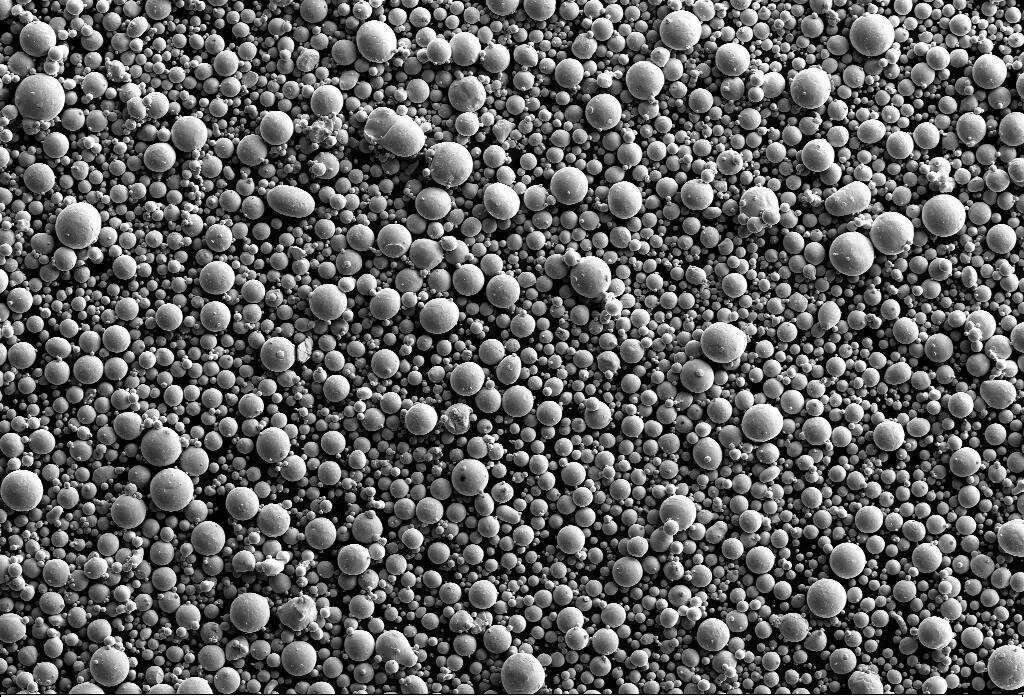
1. Overview of Late-Stage Sintering in Ceramic Materials
The ceramic sintering process traditionally divides into three phases: initial (neck formation between particles), intermediate (rapid densification to ~90% density), and late-stage (slow densification dominated by grain growth). In the late stage, the focus shifts to ceramic sintering mechanisms like grain boundary migration, where pores close and grains evolve, influencing final microstructure and performance.
For high-temperature ceramics such as alumina and zirconia — commonly processed on AdventureTech’s DLP ceramic 3d printer systems — late-stage sintering is pivotal. Here, residual pores become isolated, and grain growth takes precedence, potentially leading to non-uniform microstructures if not controlled. Our industrial-grade printers, with features like peristaltic feeding and automatic filtration, ensure uniform green bodies that minimize defects during this critical phase.
2. Multi-Stage Grain Growth: Beyond Traditional Models
Contrary to the classic two-stage view (normal vs. abnormal grain growth), multi-stage grain growth reveals a more nuanced evolution: initial normal growth (uniform grain enlargement), followed by abnormal growth (rapid expansion of select grains creating bimodal distributions), and then a return to normal growth as smaller grains are consumed. Some systems exhibit a fourth stage, with either accelerated or decelerated growth depending on material specifics like impurities, temperature, and boundary energies.
In high-temperature ceramics, prolonged heating can trigger these transitions, as seen in systems like low-carbon steel or cadmium analogs. AdventureTech’s ADT-Slicer 4D engine incorporates simulation tools to predict and mitigate such multi-stage grain growth, ensuring consistent outcomes in printed parts up to 200 mm in size.
3. Densification vs Grain Growth: Balancing Mechanisms for Optimal Performance
A key tension in the ceramic sintering process is densification vs grain growth. During intermediate stages, densification drives density from 50-60% to 90%, but in late stages, grain growth slows pore elimination. Abnormal growth exacerbates this by entrapping pores within large grains, hindering full densification and risking stress concentrations or microcracks.
Effective ceramic sintering mechanisms involve controlling grain boundary migration to favor uniform densification. For instance, additives or optimized heating profiles can suppress abnormal phases. On our desktop ADT-3D-ZM ceramic 3d printer, users achieve >99% relative density in alumina parts by applying multi-stage ramps (0.5–2 °C/min in the 800–1200 °C viscous flow range), directly addressing this balance.
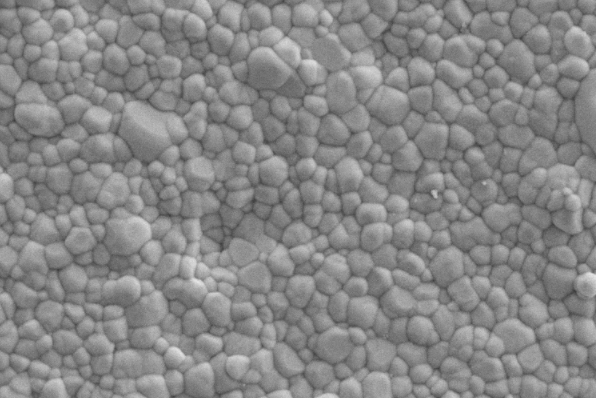
4. Ceramic Sintering Mechanisms in High-Temperature Environments
Ceramic sintering mechanisms in high-temperature ceramics are driven by interfacial energy, with grain boundary migration enabling particle coalescence. In late stages, abnormal growth can lead to pore closure within grains, reducing overall density and thermal stability. Factors like atmosphere (air, vacuum, or reducing) and impurities further influence migration rates, potentially shifting from bimodal to homogenized structures.
Practical implications include enhanced mechanical properties through suppressed abnormalities — vital for applications in aerospace insulators or electronic substrates. AdventureTech’s pressure-assisted sintering packages (e.g., SPS/HIP integration) help manage these mechanisms, delivering parts with minimal microcracks and superior high-temperature performance.
5. Practical Implications and Strategies for Ceramic Processing
Mastering multi-stage grain growth allows for tailored microstructures: inhibit abnormalities with dopants to avoid entrapped pores, or leverage controlled heating for uniform evolution. In high-temperature ceramics, extended hold times at peak temperatures can homogenize structures but risk overgrowth; thus, precise process design is essential.
AdventureTech’s end-to-end solutions — from DLP ceramic 3d printer hardware to FEA-supported sintering design — empower users to optimize these dynamics. With proven results across structural ceramics and bioactive scaffolds, our systems routinely yield compressive strengths >30 MPa and fracture toughness >7 MPa·m¹/².
6. Why AdventureTech Leads in Ceramic 3D Printing and Sintering Innovation
With a foundation in materials science and over a decade of expertise, AdventureTech integrates cutting-edge ceramic 3d printer technology with comprehensive sintering know-how. Our collaborations with Tsinghua, HIT, and CAS underscore our authority in advancing ceramic sintering mechanisms. Backed by 50+ patents, we offer:
- High-speed DLP systems (up to 700 layers/hour for alumina)
- Multi-material compatibility for zirconia, alumina, and SiOC
- Full technical support for debinding, sintering, and post-processing
Ready to advance your high-temperature ceramics projects? Contact AdventureTech today at adt-ceramic3dp.com and explore how our ceramic 3d printer solutions can refine your ceramic sintering process for unparalleled results.
More articles
Advanced Insights into Late-Stage Sintering: Multi-Stage Grain Growth in Ceramic Materials
Gyroid-Structured SiOC Composites via DLP 3D Printing for Broadband Microwave Absorption
Sintering Stress Control Strategies for Complex Ceramic Parts Using CTE Insights in 3D Printing
From Powder to Performance: A Systematic Quality Control Pathway for High-Performance Alumina Ceramics
Request A quote
