

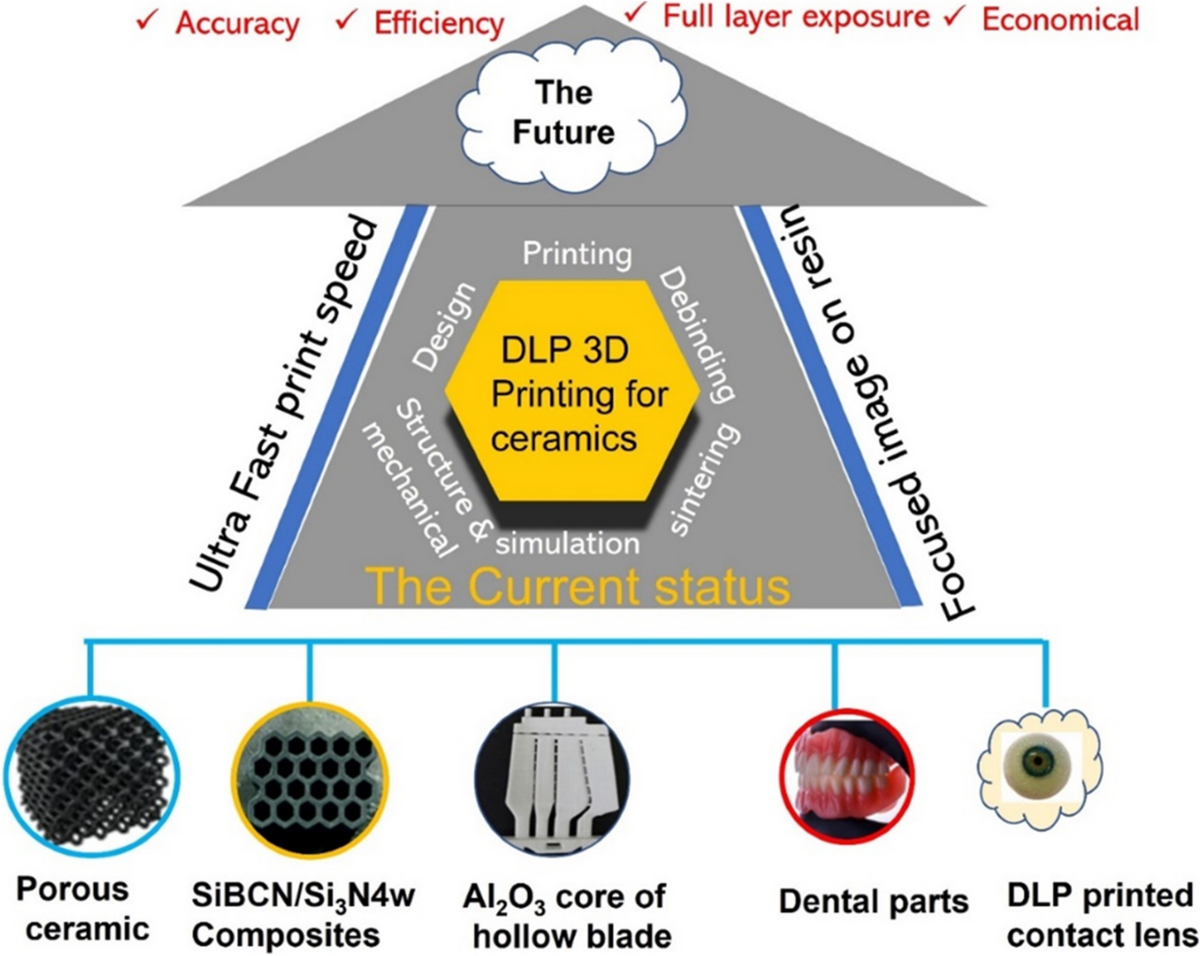
Light curing 3D printing, also known as photopolymerization, has transformed additive manufacturing by enabling rapid, high-resolution fabrication using resin 3D printers and DLP 3D printers. These technologies cure photosensitive resins layer-by-layer with UV light, delivering exceptional precision for complex geometries. Recent modifications to photosensitive resins have overcome limitations such as high viscosity, curing shrinkage, and mechanical weaknesses, significantly enhancing performance—especially for advanced applications like ceramic 3D printing and silicon nitride 3D printing.
Challenges in Traditional Photosensitive Resins for Ceramic 3D Printing
Photosensitive resins used in light curing 3D printing often suffer from high porosity, deformation, and limited mechanical strength after curing. These issues are amplified when incorporating ceramic powders into the resin for ceramic 3D printer applications, as high filler loads increase viscosity and complicate uniform curing. Modifications are essential to improve tensile strength, impact resistance, and thermal stability while maintaining printability in DLP 3D printers.
Key Advances in Photosensitive Resin Modification
Researchers have made significant progress by incorporating reinforcing fillers into photosensitive resins:
- Graphene and Graphene Oxide (GO) — Additions of 0.05–0.15 wt% GO have boosted tensile strength by up to 71.8% and impact strength by 49.7%, enhancing overall toughness and reducing shrinkage.
- Fiber Reinforcement — Continuous glass fibers or SiC fibers, treated with coupling agents, dramatically improve flexural strength. For instance, 4% SiC fiber in silica-based resins increased high-temperature flexural strength by 121%.
- Rubber and Sustainable Additives — Modified waste rubber powder and cork powder enhance toughness by up to 80% and promote eco-friendly formulations through recycling.
These modifications enable resin 3D printers to produce high-performance composites suitable for advanced applications, including optical ceramics and structural components.
Ceramic 3D Printing: Pushing Boundaries with Modified Resins
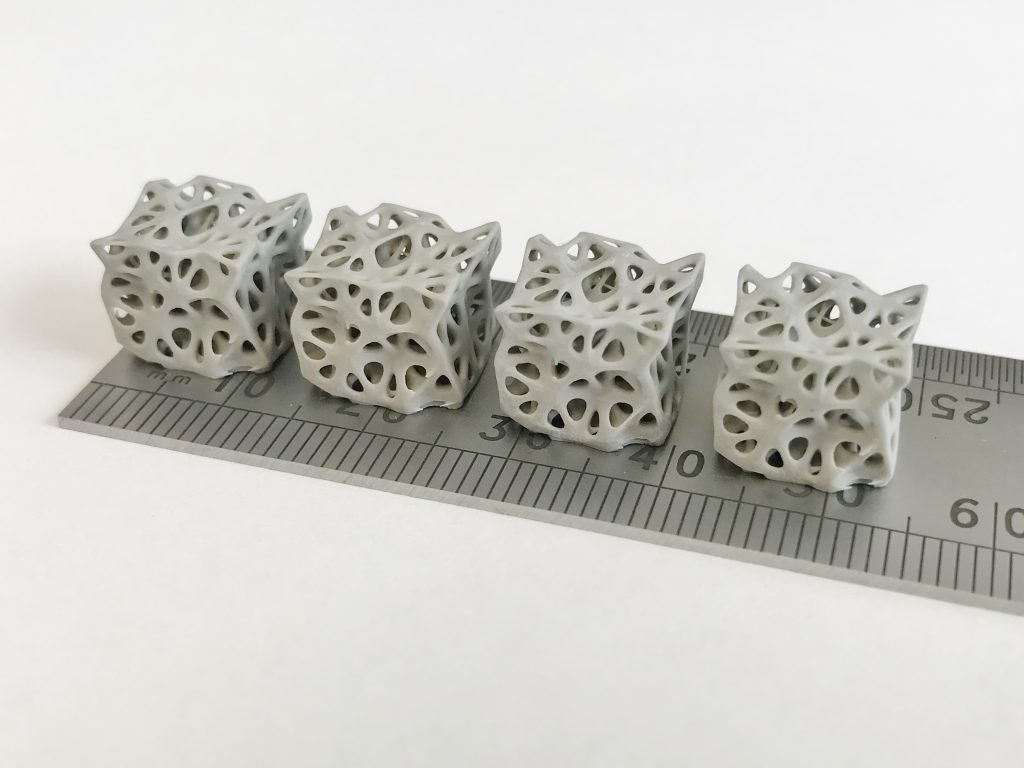
In ceramic 3D printing, modified photosensitive resins loaded with ceramic particles (such as alumina, zirconia, or silicon nitride) allow DLP 3D printers to fabricate dense, high-precision green bodies that undergo debinding and sintering for final ceramic parts. This approach excels in producing complex structures impossible with traditional manufacturing, such as intricate reflectors or high-temperature components.
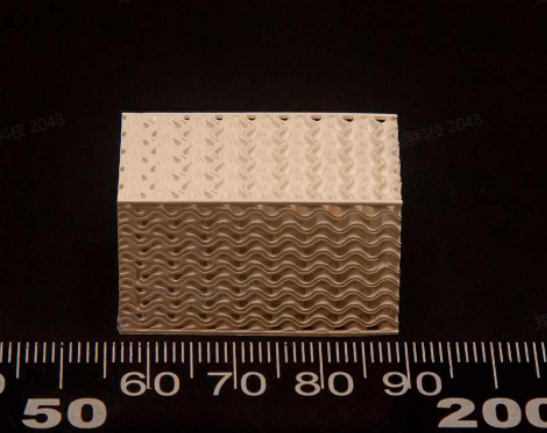
Silicon nitride 3D printing benefits immensely from these advancements, yielding parts with exceptional mechanical properties, thermal shock resistance, and wear performance—ideal for aerospace, biomedical, and industrial uses.
Adventure Technology: Leading Innovation in Ceramic 3D Printers
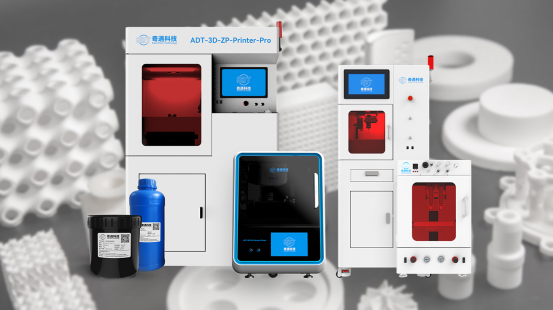
Adventure Technology Co., Ltd. (AdventureTech), established in 2015, stands at the forefront of ceramic 3D printing solutions. Specializing in DLP 3D printers and light curing 3D printing systems, AdventureTech offers industrial-grade printers capable of ultra-high speeds (up to 700 layers/hour) and multi-material compatibility. Their proprietary technologies, including peristaltic feeding systems and advanced slicing software, ensure precise control over high-viscosity ceramic resins.
Trusted by institutions like Tsinghua University and the Chinese Academy of Sciences, AdventureTech supports cutting-edge silicon nitride 3D printing and other advanced ceramics. Their comprehensive ecosystem—encompassing equipment, functional resins, and sintering processes—empowers researchers and manufacturers to achieve superior results in resin 3D printer applications.
For more details on AdventureTech’s innovative ceramic 3D printers, visit adt-ceramic3dp.com.
Future Outlook
Ongoing modifications to photosensitive resins will further expand the capabilities of light curing 3D printing and DLP 3D printers, driving adoption in sustainable manufacturing, aerospace, and healthcare. Companies like AdventureTech are leading this evolution, making high-performance ceramic 3D printing, including silicon nitride 3D printing, more accessible and efficient than ever.
This article reflects the latest industry insights and expertise in photopolymerization technologies, ensuring reliable, authoritative information for professionals exploring advanced additive manufacturing.
More articles
Progress in Light Curing 3D Printing: Advances in Photosensitive Resin Modification
Mastering Debinding in Ceramic 3D Printing: The “Invisible” Stage That Determines Success
Optimizing Silicon Nitride Performance: Understanding the Sintering Logic for Microstructural Excellence in Ceramic 3D Printing
DLP Ceramic 3D Printing of W-Band Gradient Refractive Index (GRIN) Metalens: Fabrication and Performance Analysis
Request A quote
