
DLP Ceramic 3D Printer-Standard
Designed for ultra-fast performance, this system achieves up to 700 layers per hour when printing with alumina, significantly boosting both R&D efficiency and production throughput. Its upright sinking forming method, combined with a peristaltic filter feeding system, ensures a high printing success rate and material stability. With broad multi-material compatibility, it supports a wide range of ceramic materials to accommodate diverse research objectives. The built-in material process parameter package simplifies operation, enabling true one-click printing. Enhanced software capabilities—such as integrated photo and video capture, as well as algorithm-based correction—further optimize the printing workflow for precision and ease of use.
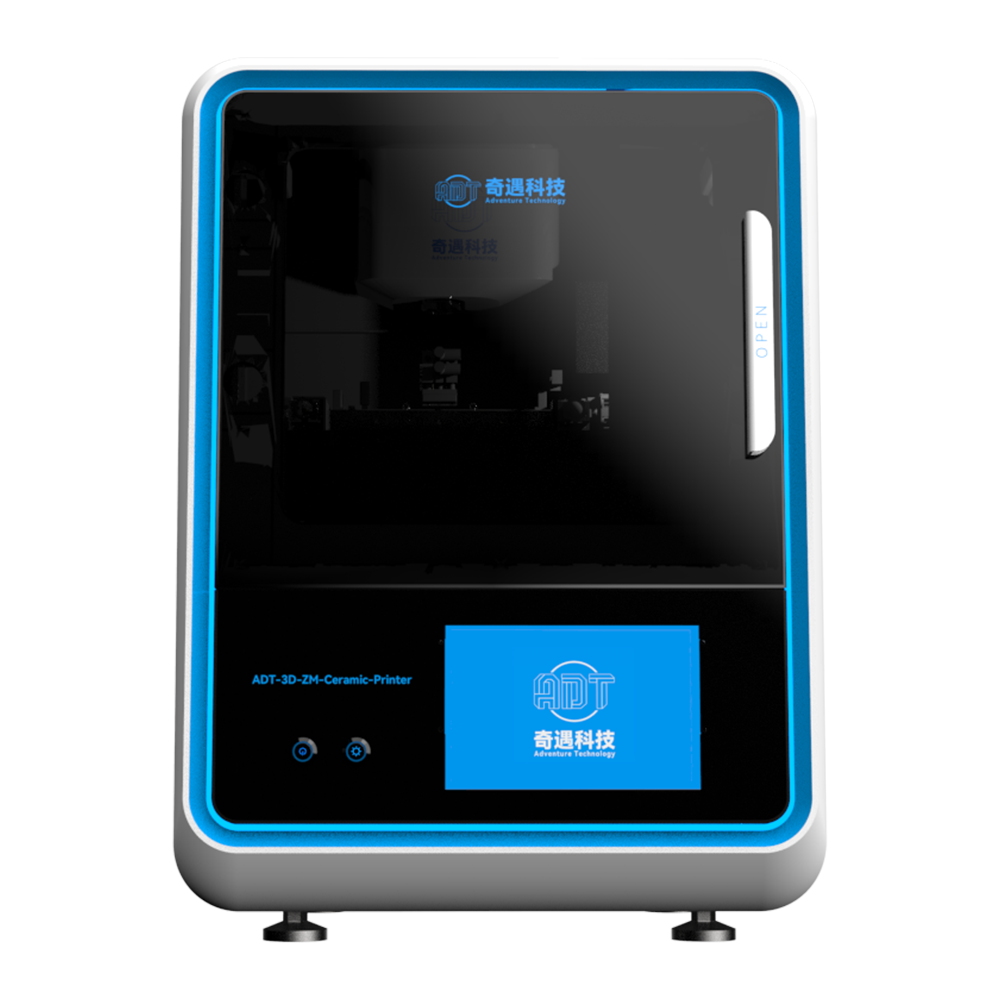
DLP Ceramic 3D Printer For Laboratory
Engineered for demanding ceramic applications, this system offers exceptional compatibility with high-viscosity materials through a precision scraper that ensures smooth and consistent leveling. Its dual-cylinder hopper design minimizes material waste, requiring as little as 80 mL to initiate printing—ideal for high-value or experimental materials. A 1080P UV light source delivers high optical precision, with distortion controlled within ≤0.1% and resolution reaching 25 μm. Combined with the upright sinking forming method, this design effectively prevents common defects like layer “pulling,” resulting in a significantly higher printing success rate and more reliable outcomes for advanced research and production.
DLP Ceramic 3D Printer For Industry
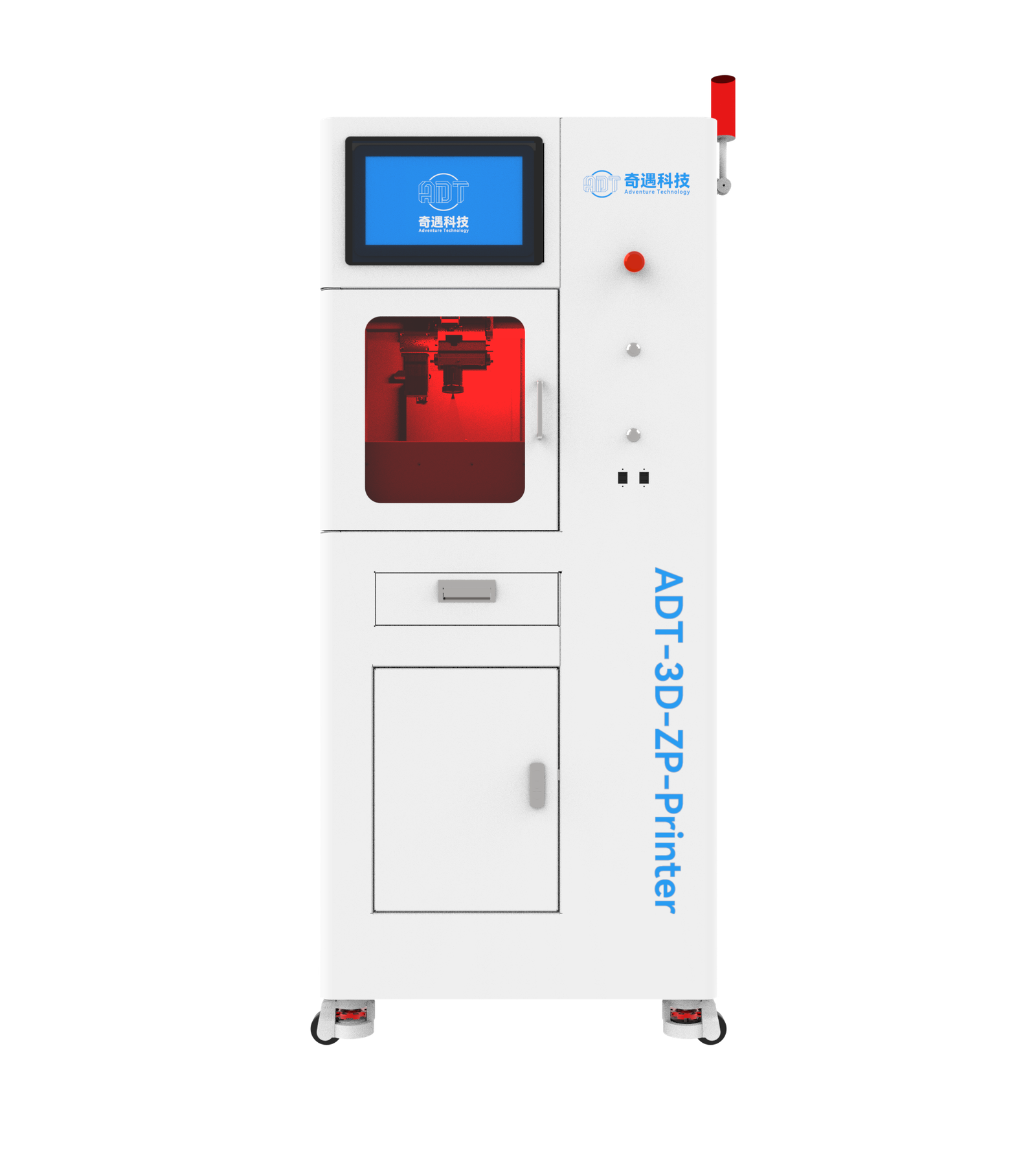
Designed to meet the demands of industrial-scale production, this system features a large printing area of up to 288 × 162 mm, enabling the fabrication of large-format components without compromising precision. With a printing speed of up to 600 layers per hour (using alumina), it ensures high-throughput performance suitable for continuous manufacturing. The optical system delivers precision down to 50 μm, making it ideal for applications that require fine detail and dimensional accuracy. Additionally, the integrated peristaltic filter feeding system optimizes material utilization, significantly reducing the amount of ceramic slurry required for each print and minimizing waste in the process.
(144-75)-4.png "ADT-3D-ZP-Printer-Pro | Industrial-Grade Dual-Vat DLP Ceramic 3D Printer")
