Oxide Ceramics
- 1
Alumina (Al₂O₃)
Alumina is one of the most widely used oxide ceramics, offering high hardness, excellent wear resistance, electrical insulation, and thermal stability.
- 2
Zirconia (ZrO₂)
Zirconia offers high strength and good mechanical reliability, making it suitable for applications requiring structural stability and wear resistance.
- 3
Silica (SiO₂)
Known for low thermal expansion and excellent thermal shock resistance, silica ceramics are widely used in high-temperature environments.
What Are Oxide Ceramics?
Oxide ceramics are a class of advanced ceramic materials composed of metal oxides such as alumina (Al₂O₃), zirconia (ZrO₂), and silica (SiO₂). These materials are characterized by high melting temperatures, excellent chemical stability, and diverse electrical properties.
Due to their fully oxidized state, oxide ceramics exhibit outstanding resistance to oxidation and corrosion, making them ideal for high-temperature and chemically aggressive environments.
Product Introductionn
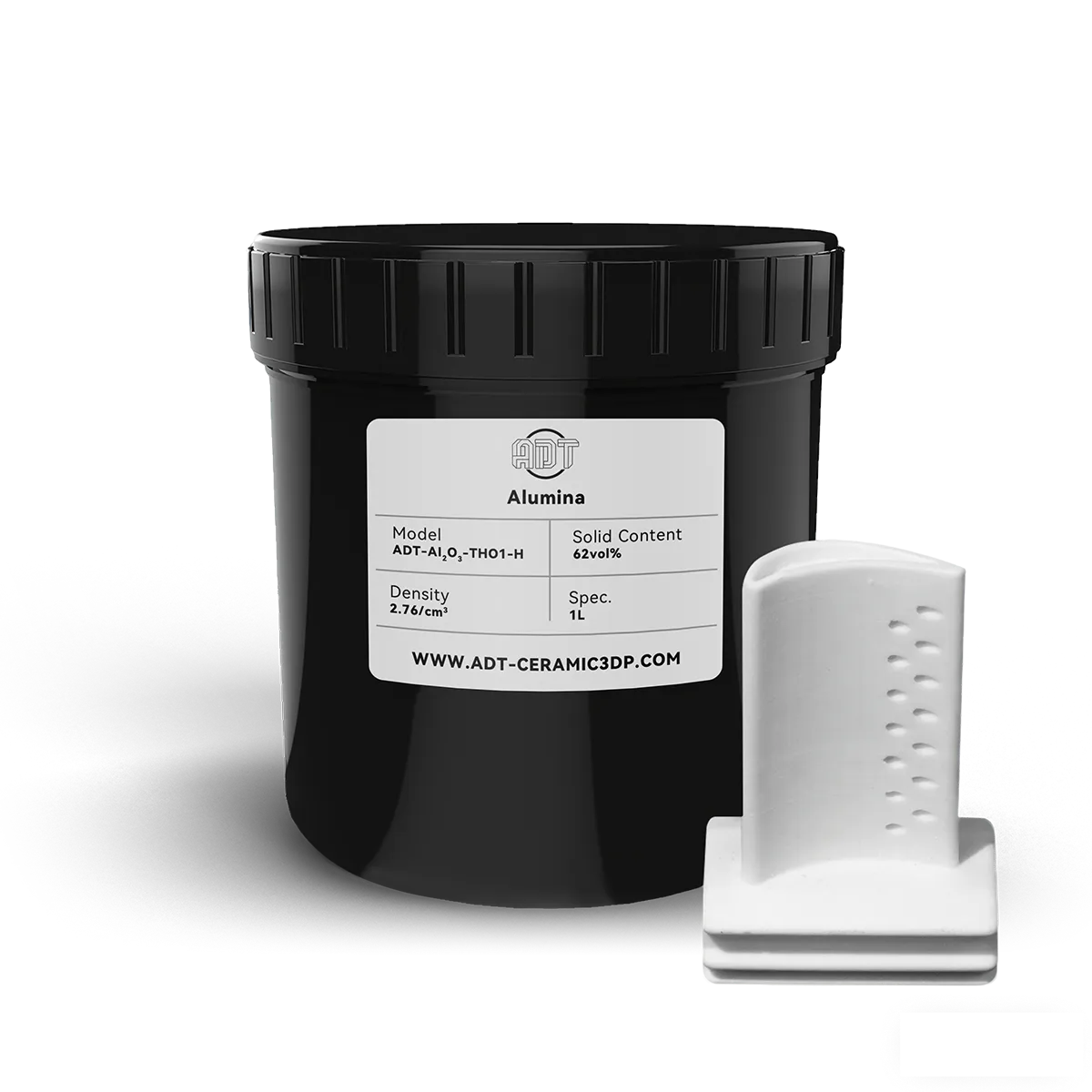
Alumina (Al₂O₃) Ceramic Slurry
Alumina ceramic slurry is one of the most widely used materials in ceramic 3D printing. It features high solid loading, excellent dispersion stability, and optimized rheological behavior for DLP/SLA processes.
Applications:
Electronic substrates and insulating components.
Industrial wear parts and cutting tools.
High-temperature furnace components.
Biomedical implants and dental restorations.
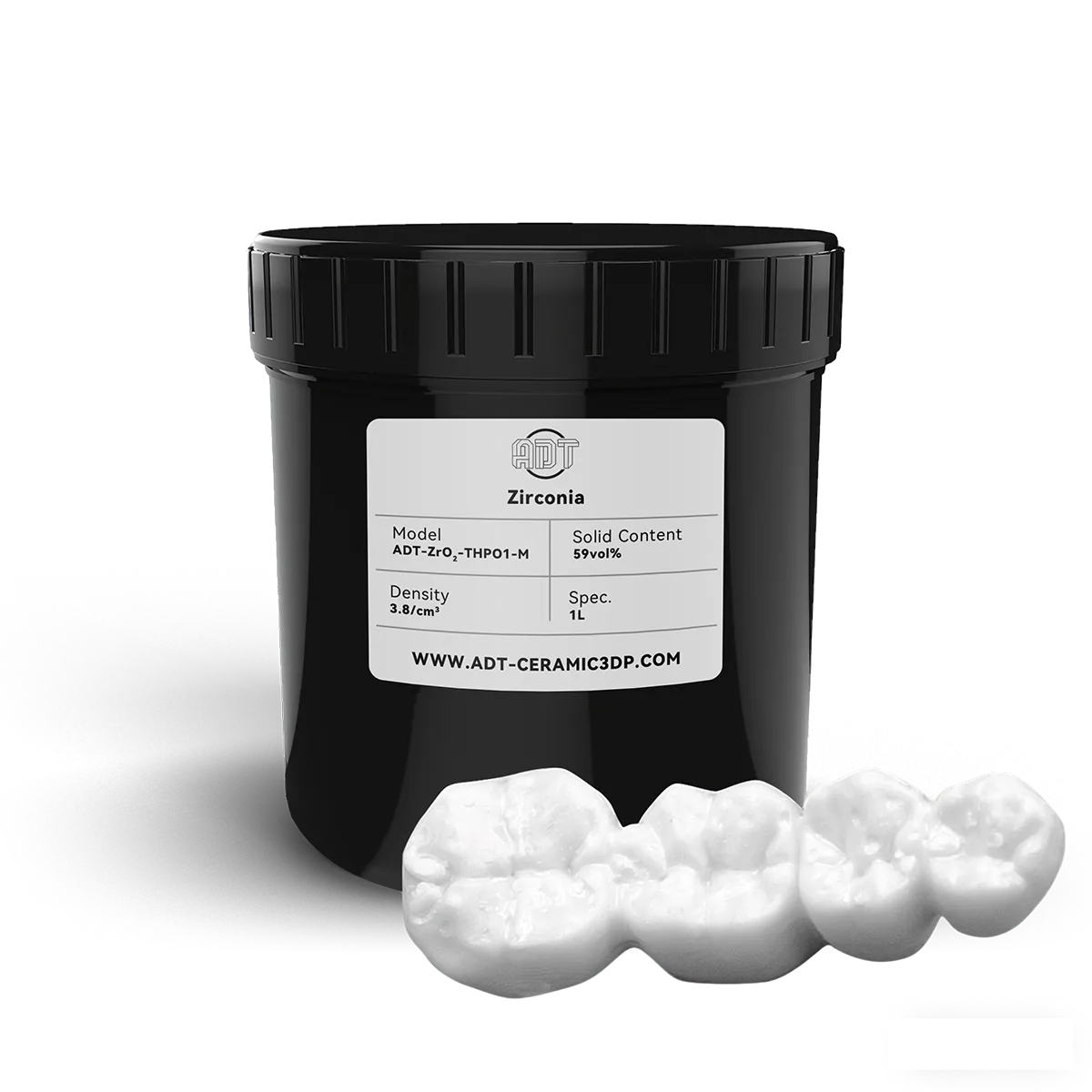
Zirconia (ZrO₂) Ceramic Slurry
Zirconia ceramic slurry is known for its exceptional fracture toughness and strength, enabled by transformation toughening mechanisms. It is highly suitable for manufacturing parts that require impact resistance and reliability.
Applications:
Dental crowns, bridges, and implants.
Structural ceramic components.
Wear-resistant parts.
Aerospace and high-stress mechanical applications.
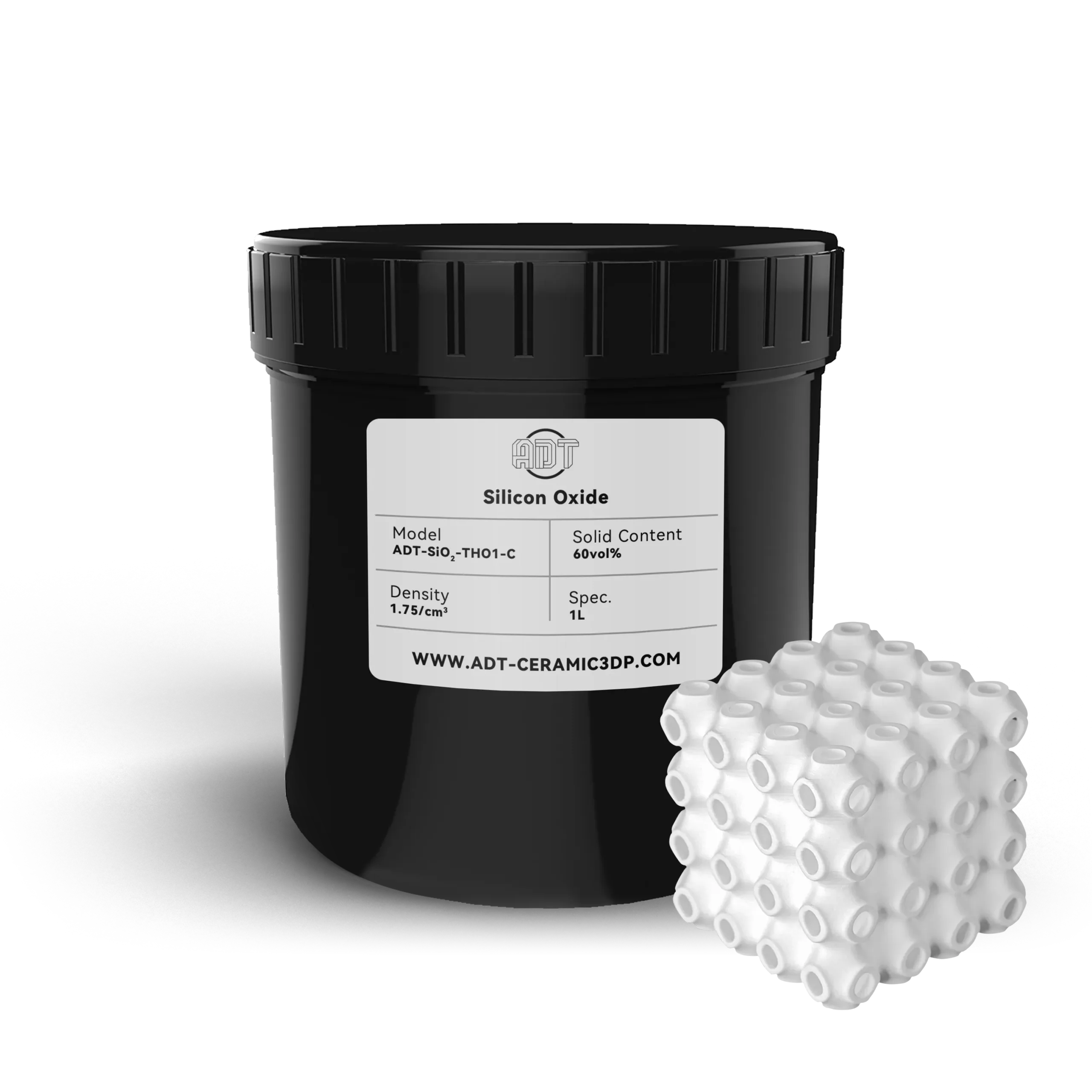
Silica (SiO₂) Ceramic Slurry
Silica ceramic slurry is characterized by low thermal expansion and excellent thermal shock resistance. It is particularly suitable for applications requiring dimensional stability under rapid temperature changes.
Applications:
Investment casting molds and cores.
Thermal insulation components.
Aerospace lightweight structures.
Optical and precision components.
Printing Case
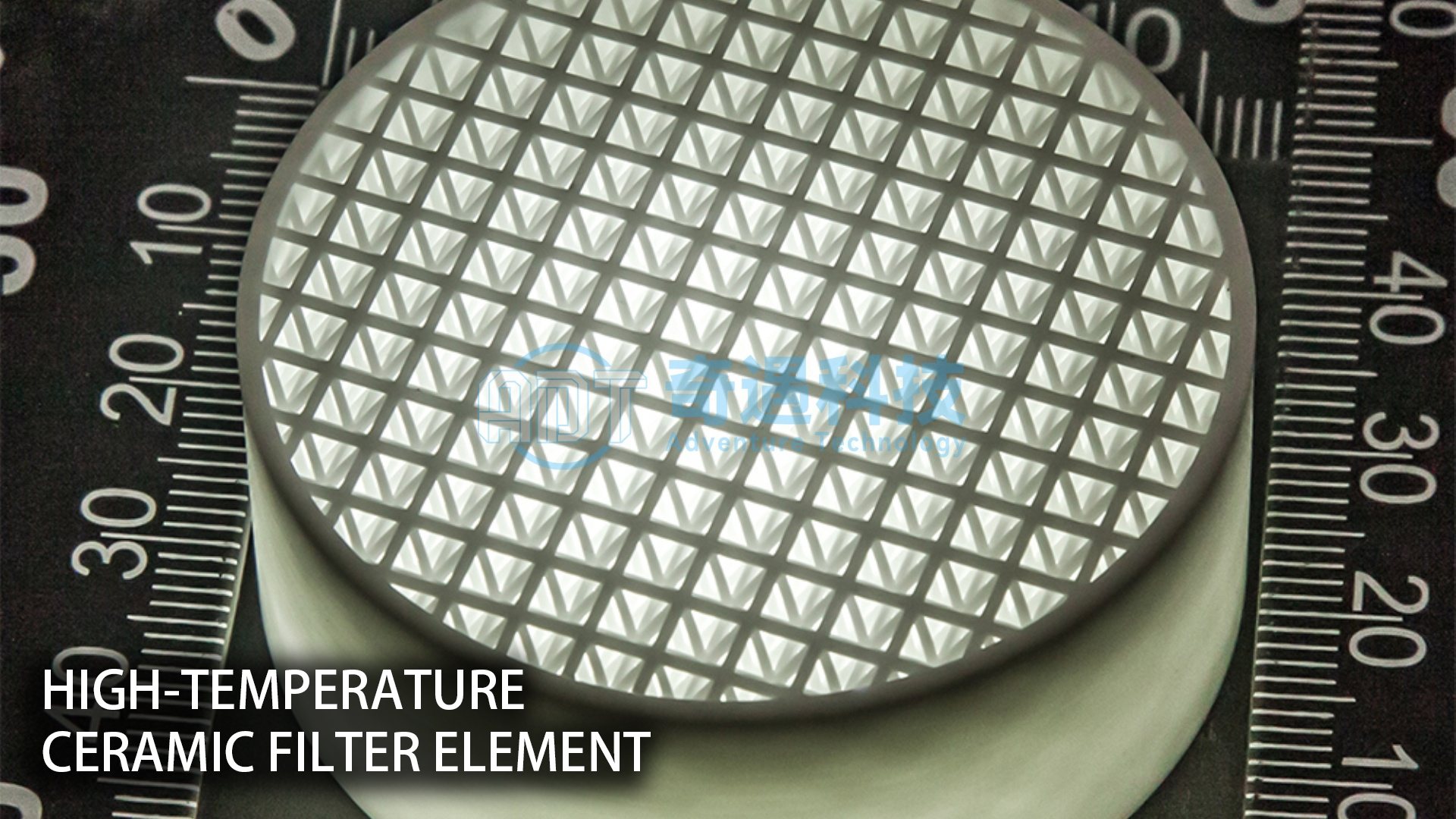
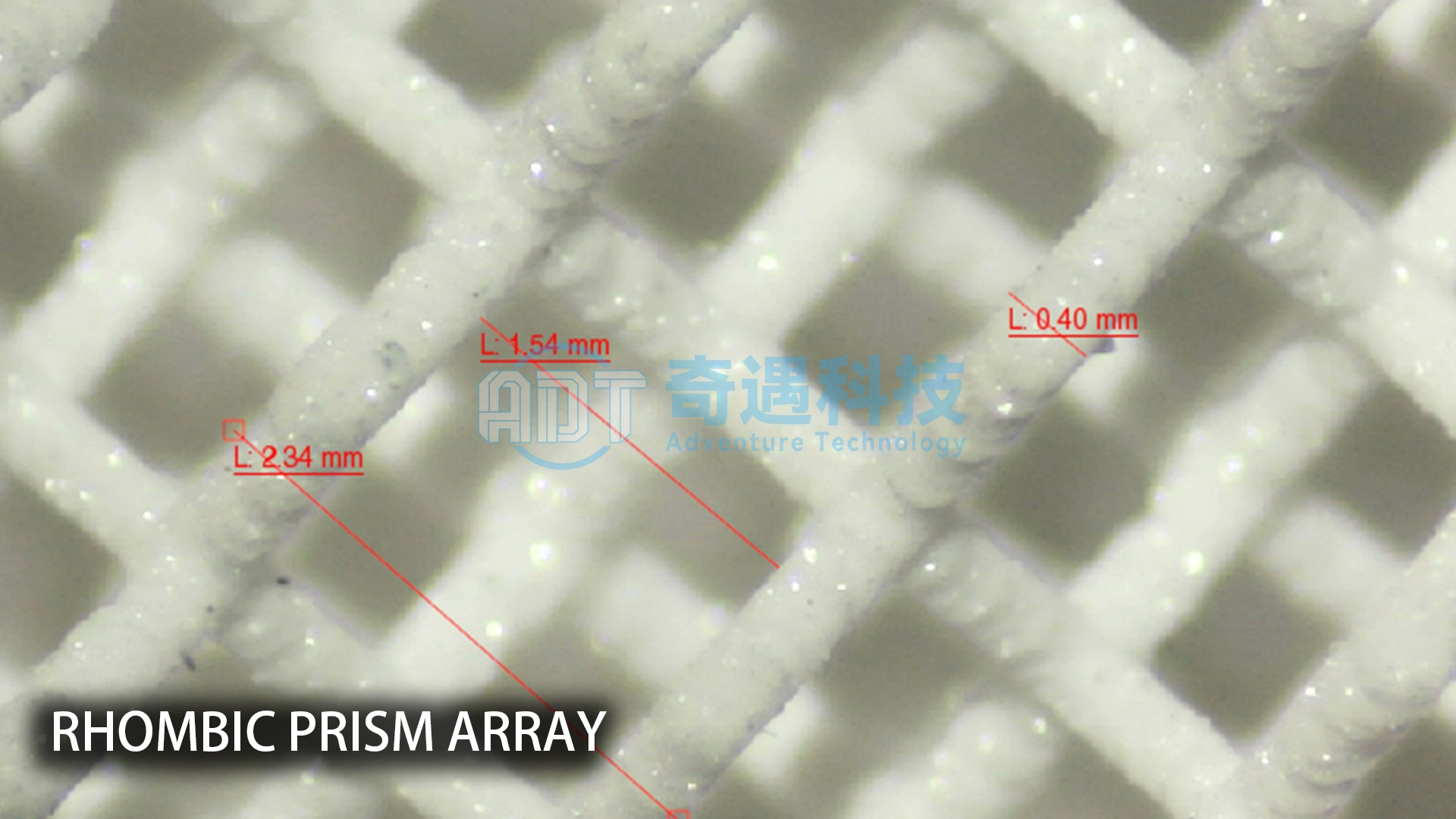
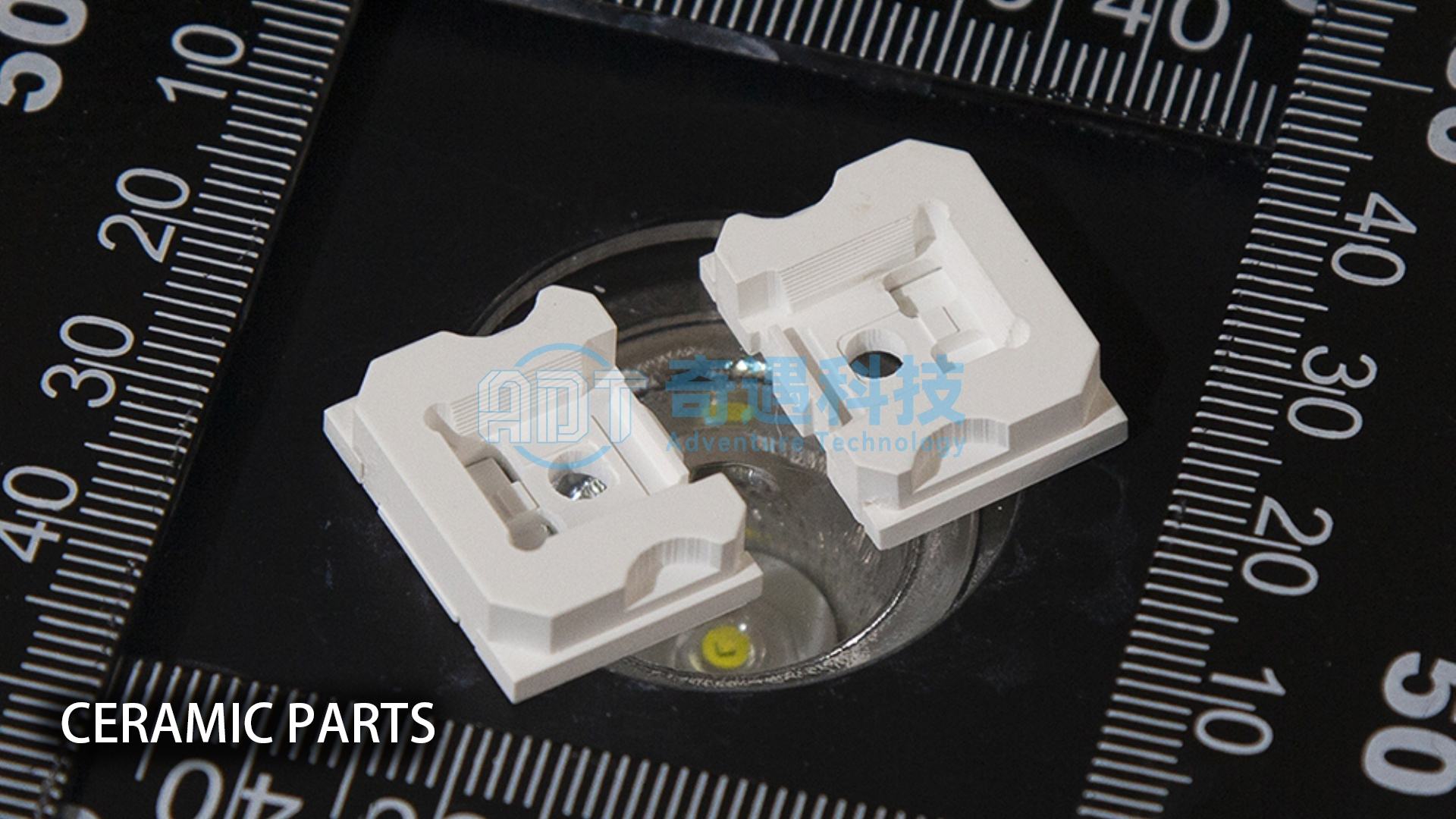
Industrial Applications
Ceramic 3D printing technology can be utilized to fabricate high-precision molds and components; serving as a complement to traditional techniques, it helps reduce waste in conventional manufacturing processes and shortens product development cycles.
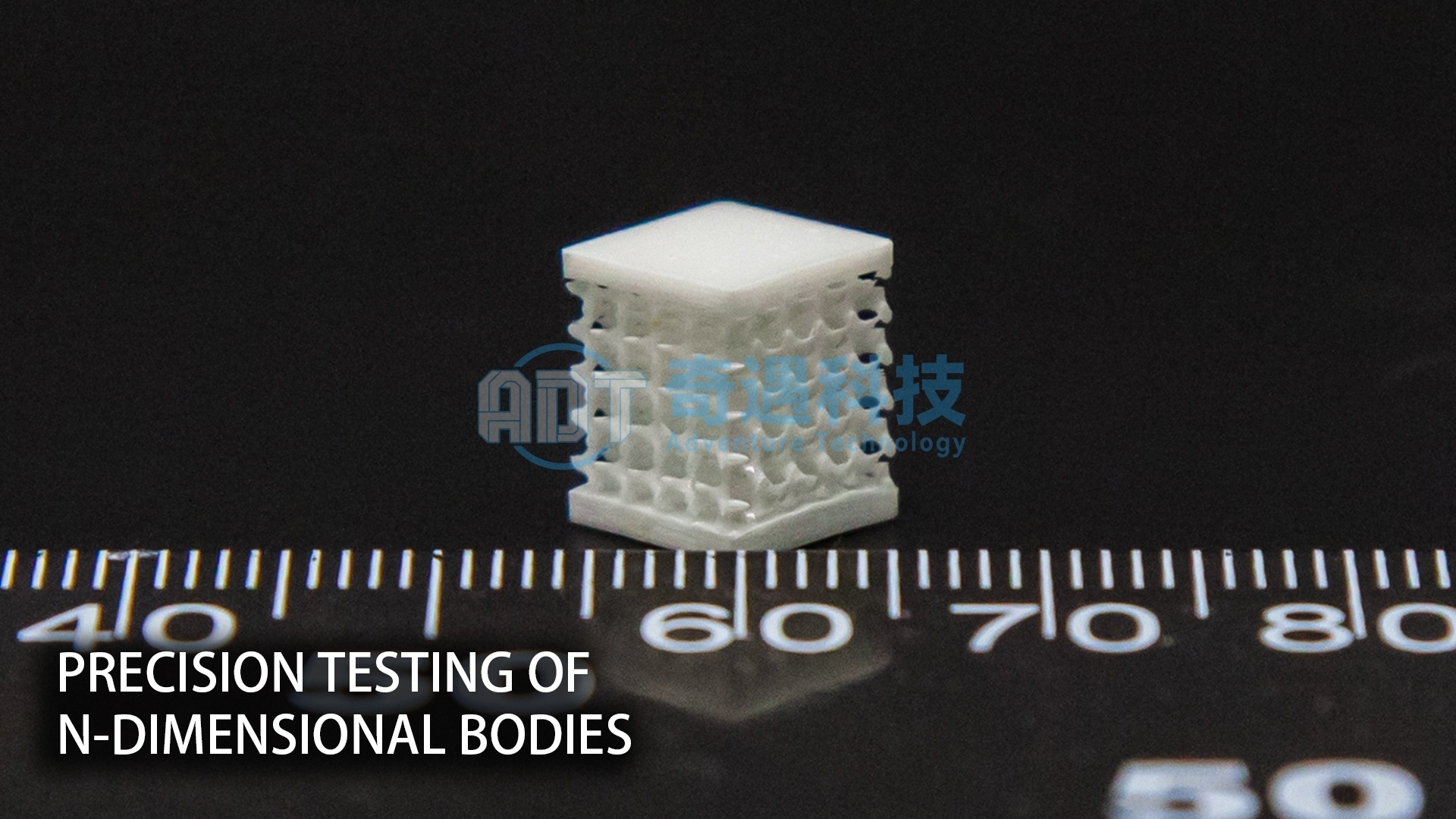
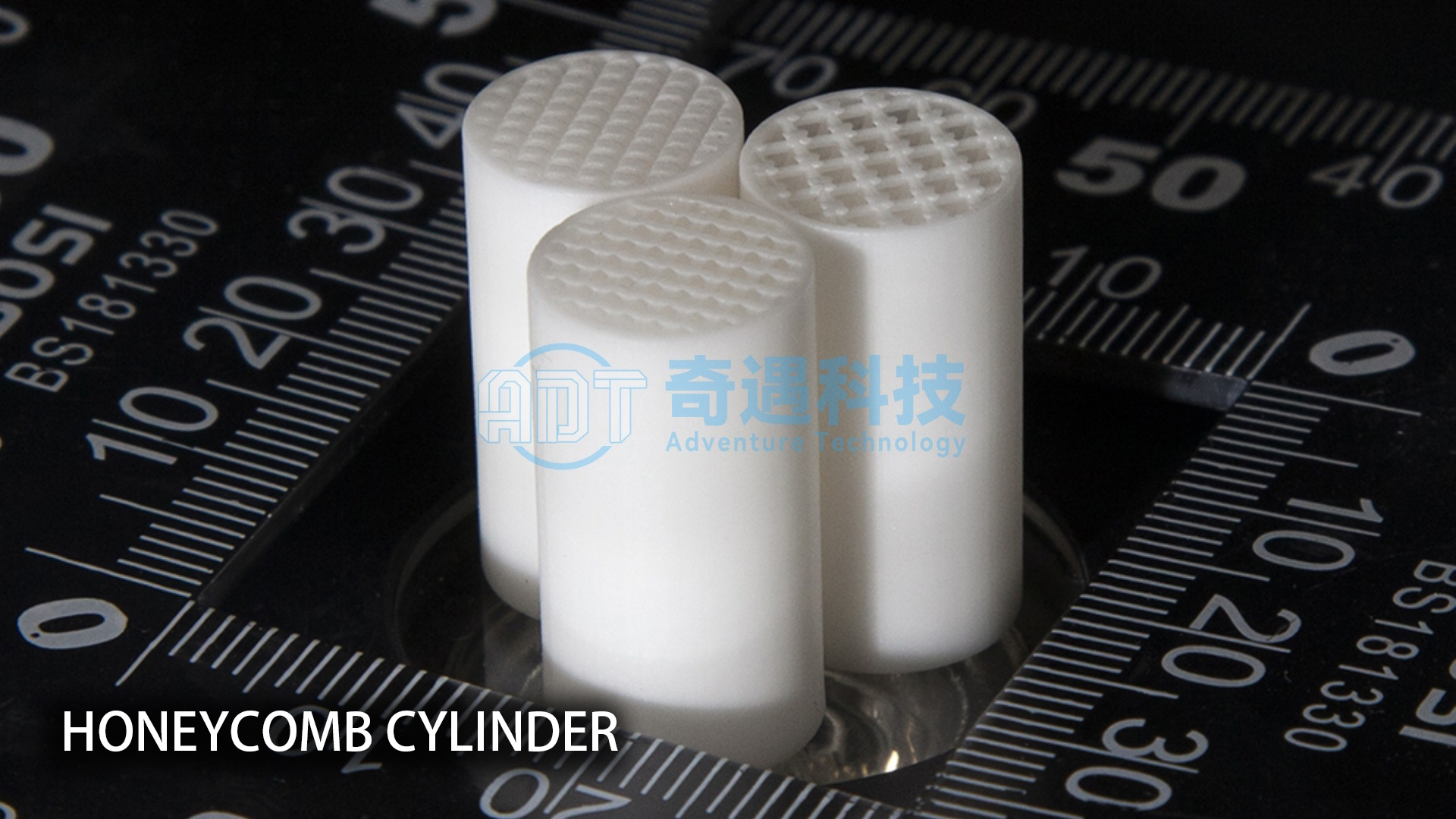
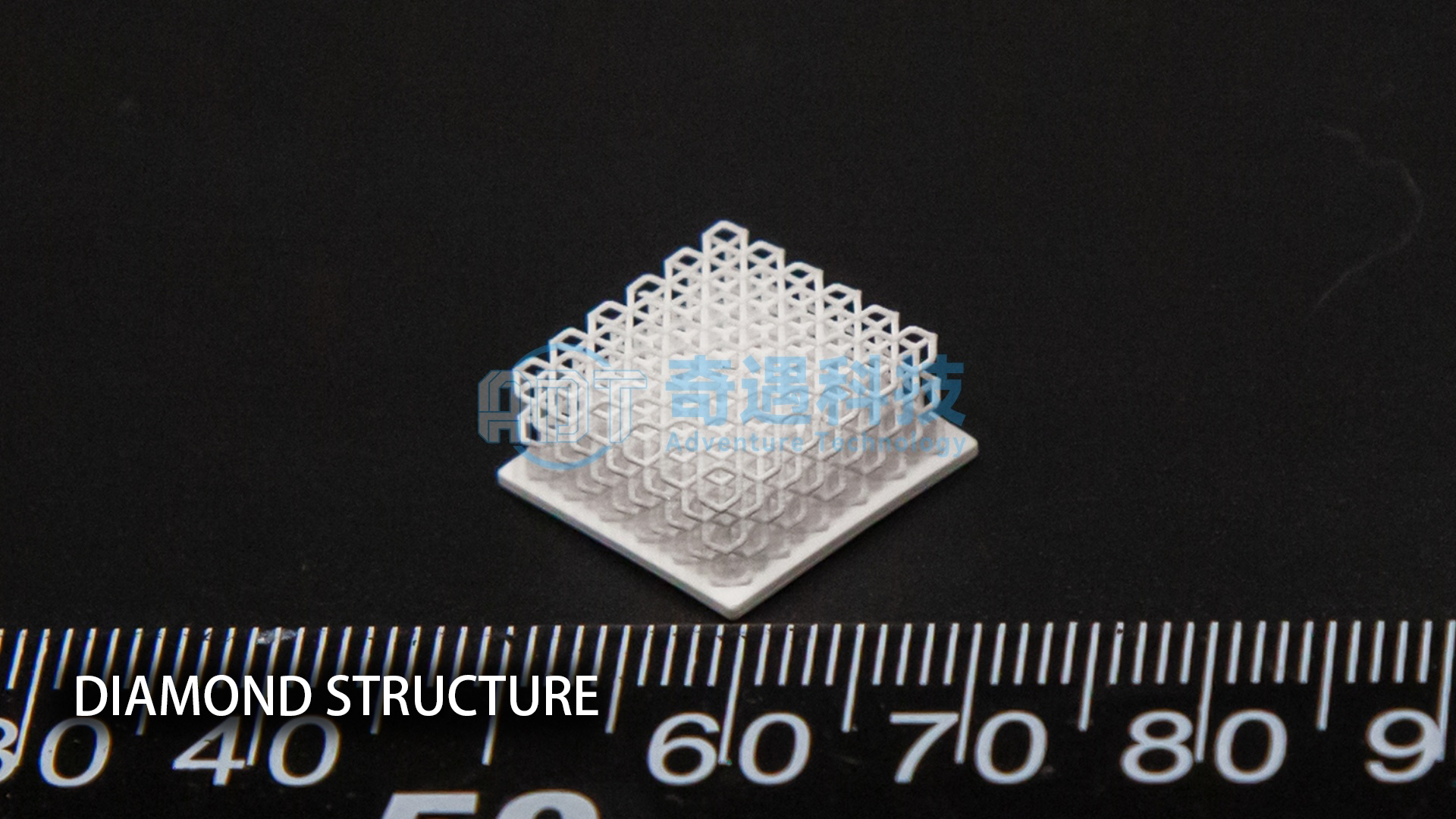
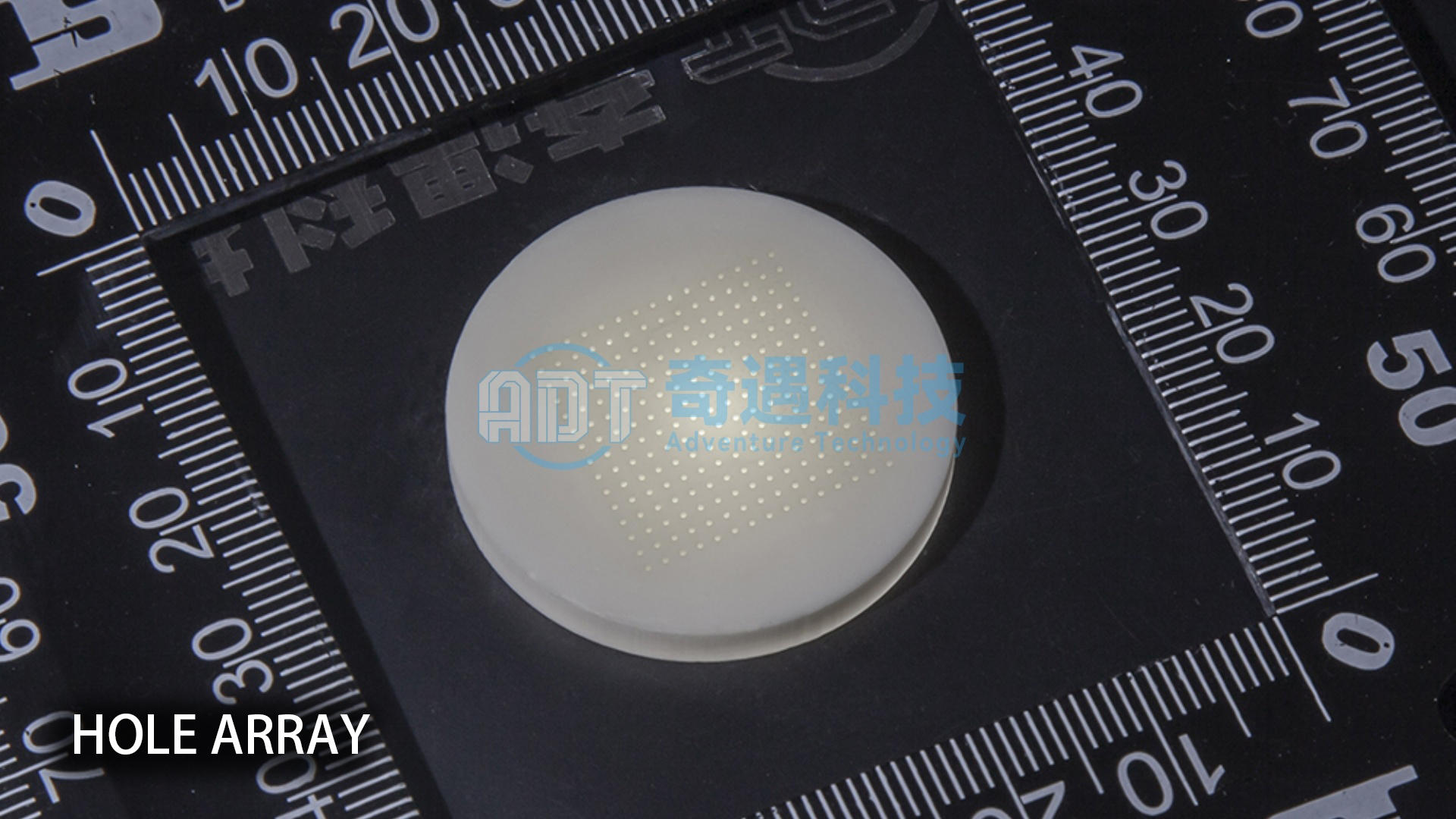
University Research
The application of ceramic 3D printing in the field of scientific research is continuously expanding. In university research settings, it enables the rapid validation of materials and structures, thereby facilitating scientific inquiry. To date, ADT Technology has partnered with over 100 universities and research institutions both domestically and internationally.
Material parameters
Alumina (Al₂O₃) Ceramic Slurry
| Material Name | Alumina (Al2O3) | |
|---|---|---|
| Material Model | ADT-Al2O3-TH01-X | ADT-Al2O3-TH01-H |
| Slurry | ||
| Solid Content (vol%) | 56 | 62 |
| Solid Content (wt%) | 82 | 85 |
| Viscosity (50 s⁻¹) (Pa·s)¹ | 3.21 | 5.08 |
| Density (g/cm³) | 2.69 | 2.76 |
| Sintered Ceramics | ||
| Sintering Temperature (°C) | 1750 | 1650 |
| Sintered Density (g/cm³) | 3.82 | 3.68 |
| Three-point Bending Strength (MPa)² | 298 | 386 |
| Hardness (HV)10 | 1566 | 1040 |
| Relative Dielectric Constant (12GHz) | 8.23 | 9.10 |
| Dielectric Loss Factor tanδ (*0.001) | 55.2 | 0.52 |
| Compressive Strength (MPa) | 632 | 880 |
| Material Name | Zirconia (ZrO2) | |
|---|---|---|
| Material Model | ADT-ZrO2-THP01-F | ADT-ZrO2-TH01-M |
| Slurry | ||
| Solid Content (vol%) | 49 | 59 |
| Solid Content (wt%) | 84 | 87 |
| Viscosity (50 s⁻¹) (Pa·s)¹ | 4.62 | 12.8 |
| Density (g/cm³) | 3.53 | 3.8 |
| Sintered Ceramics | ||
| Sintering Temperature (°C) | 1530 | 1570 |
| Sintered Density (g/cm³) | 5.99 | 5.67 |
| Three-point Bending Strength (MPa)² | 782 | 209 |
| Hardness (HV)10 | 1458 | 669 |
| Relative Dielectric Constant (12GHz) | - | 15.71 |
| Dielectric Loss Factor tanδ (*0.001) | - | 32.9 |
| Compressive Strength (MPa) | 2240 | 882 |
Zirconia (ZrO₂) Ceramic Slurry
Silica (SiO₂) Ceramic Slurry
| Material Name | Silica (SiO2) | |
|---|---|---|
| Material Model | ADT-SiO2-TH01-C | |
| Slurry | ||
| Solid Content (vol%) | 60 | |
| Solid Content (wt%) | 75 | |
| Viscosity (50 s⁻¹) (Pa·s)¹ | 1.5 | |
| Density (g/cm³) | 1.75 | |
| Sintered Ceramics | ||
| Sintering Temperature (°C) | 1350 | |
| Sintered Density (g/cm³) | 1.69 | |
| Three-point Bending Strength (MPa)² | 18.67 | |
| Hardness (HV)10 | - | |
| Compressive Strength (MPa) | 14.4 | |
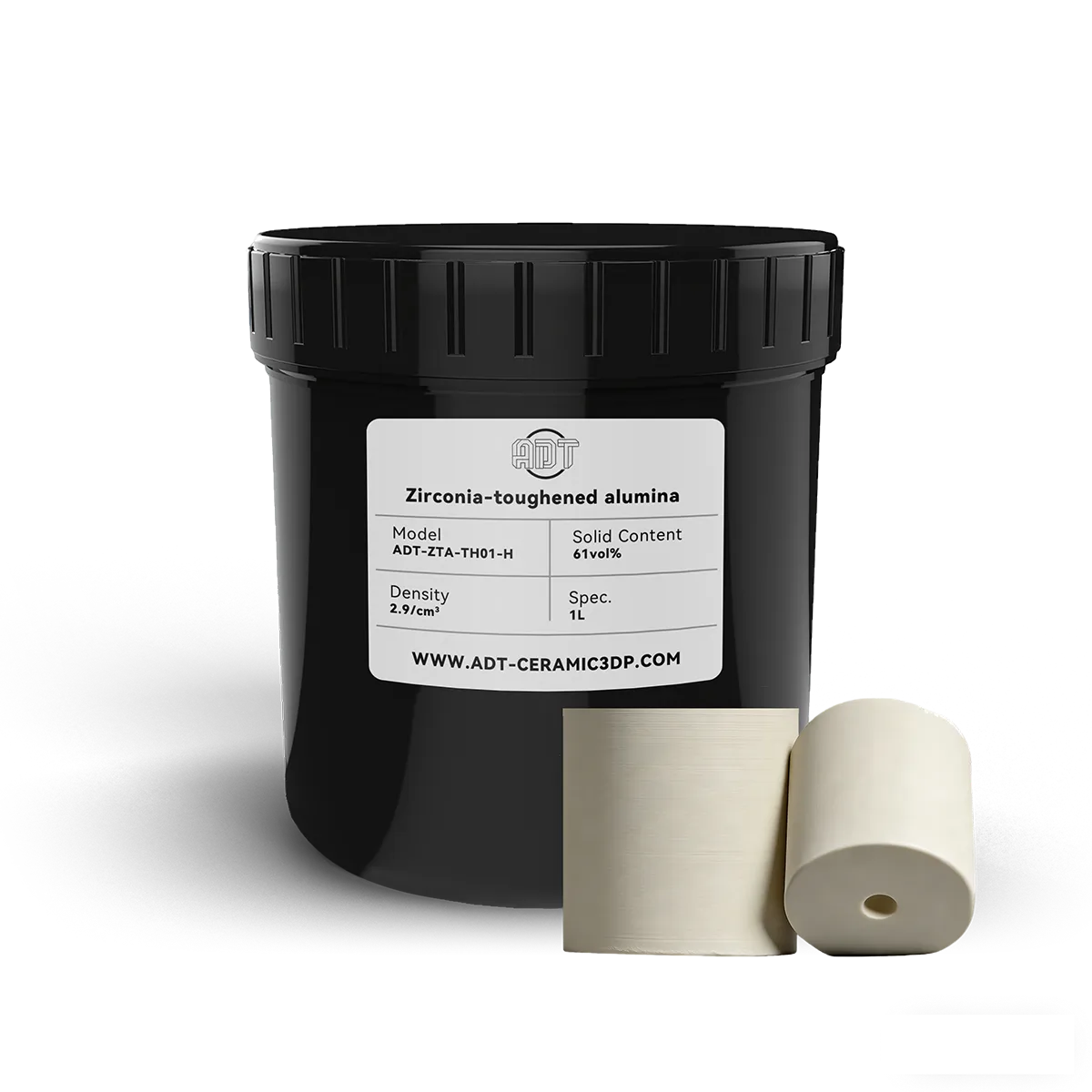
| Material Model | ADT-ZTA-TH01-H |
|---|---|
| Powder | |
| Purity (%) | ≥ 99 |
| Slurry | |
| Solid Content (vol%) | 61 |
| Solid Content (wt%) | 85 |
| Viscosity (50 s⁻¹) (Pa·s)¹ | 3.85 |
| Slurry Density (g/cm³) | 2.9 |
| Shelf Life | 12 Months |
| Sintered Ceramics | |
| Sintering Temperature (°C) | 1650 |
| Theoretical Density (g/cm³) | 4.2 |
| Actual Density (g/cm³) | 4.12 |
| Relative Density (%) | 98.1 |
| Porosity (%) | 1.9 |
| Three-point Bending Strength (MPa)² | 682 |
| Surface Roughness Ra (μm)² | 1.09 |
| Hardness (HV10) | 1250 |
| Compressive Strength (MPa) | 1466 |
| Max. Working Temperature (°C) | 1500 |
| Fracture Toughness (MPa·m1/2) | 5.6 |