

Silicon nitride (Si₃N₄) ceramics are renowned for their exceptional mechanical strength, fracture toughness, thermal shock resistance, and high-temperature stability. These properties make them ideal for demanding applications in aerospace, automotive turbines, high-performance bearings, and cutting tools. However, achieving optimal performance requires precise control over the sintering process, which directly influences the material’s microstructure.
At Adventure Tech (ADT Ceramic 3D Printing), we specialize in silicon nitride 3D printing using advanced DLP 3D printers and light curing 3D printing technology. Our ceramic 3D printers enable the fabrication of complex, high-precision silicon nitride components that traditional manufacturing cannot achieve. By combining additive manufacturing with optimized sintering strategies, we deliver parts with superior microstructural excellence and performance.
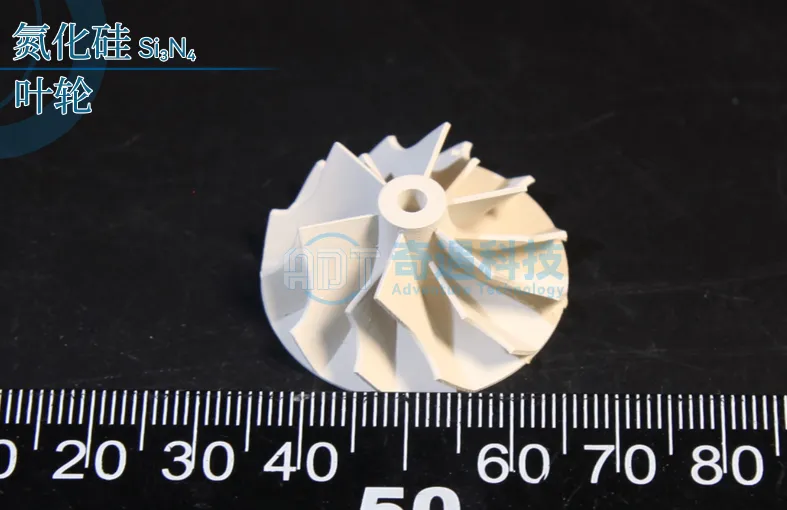
Silicon nitride ceramic samples printed by Adventure Tech (ADT Ceramic 3D Printing)
Why Sintering Matters for Silicon Nitride
Unlike oxide ceramics, silicon nitride has strong covalent bonding and low self-diffusion coefficients, making densification challenging without sintering aids. Sintering transforms the α-phase to β-Si₃N₄ while forming a liquid phase that promotes particle rearrangement, dissolution-precipitation, and grain growth. The key to microstructural excellence lies in controlling:
- Grain boundary phase composition and stability
- β-Si₃N₄ grain morphology (equiaxed vs. elongated)
- Pore elimination and final density
- Phase transformation kinetics
Proper sintering logic ensures high strength (>800 MPa), improved fracture toughness, and excellent creep resistance at elevated temperatures.
Main Sintering Methods for Silicon Nitride
1. Pressureless Sintering
The most cost-effective method for industrial-scale production. It relies on sintering aids (e.g., Y₂O₃, Al₂O₃, CeO₂) to form a low-viscosity liquid phase at high temperatures (>1700°C).
Advantages: Excellent shape flexibility—perfect for silicon nitride 3D printing of complex geometries. Limitations: Relative density often <95%, with potential unstable glass phases affecting high-temperature performance.
At Adventure Tech, we formulate proprietary ceramic slurries optimized for post-print sintering, achieving dense silicon nitride parts via pressureless or gas-pressure methods.
2. Hot Pressing Sintering
Applies uniaxial pressure to enhance particle contact and diffusion, enabling near-theoretical density at lower temperatures.
Benefits: Uniform β-grain structure, flexural strength 800–1000 MPa, suppressed abnormal grain growth. Drawbacks: Anisotropy and limited to simple shapes.
3. Gas Pressure Sintering (GPS)
Uses high-pressure nitrogen (10–100 atm) to suppress decomposition and promote densification.
Advantages: Balances high density with complex shape capability—ideal for 3D-printed silicon nitride components like turbine blades or bearing balls. Rare-earth additives stabilize grain boundaries for superior thermal shock resistance.
4. Advanced Rapid Sintering Techniques
Spark Plasma Sintering (SPS) and microwave sintering enable low-temperature (1400–1600°C) densification through multi-field coupling.
Key Benefit: Fine-grained microstructures with minimal grain boundary phase crystallization.
High-performance technical ceramics, including silicon nitride components used in extreme environments.
Microstructural Control Logic
The sintering logic revolves around three core elements:
- Sintering Aids Selection — Rare-earth oxides (Y₂O₃, Lu₂O₃) form high-viscosity, refractory grain boundary phases for better high-temperature stability compared to MgO-based systems.
- Temperature and Atmosphere Control — Gradual heating profiles prevent rapid volatilization; high-pressure nitrogen maintains Si₃N₄ stability.
- Pressure and Time Optimization — External pressure or rapid heating suppresses coarse grain growth while promoting uniform β-Si₃N₄ development.
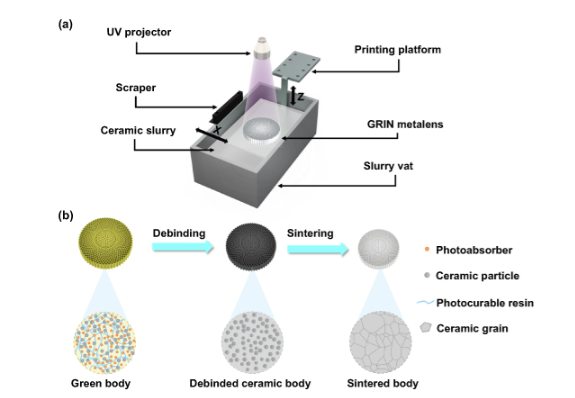
In silicon nitride 3D printing, green bodies from DLP 3D printers have ultra-fine particle distribution, enabling lower sintering temperatures and finer final microstructures compared to traditional powder-compacted parts.
Adventure Tech’s Expertise in Silicon Nitride 3D Printing and Post-Processing
With over 10 years of experience and thousands of material tests, Adventure Tech provides end-to-end solutions for advanced ceramics:
- High-precision DLP Ceramic 3D Printers using light curing technology for intricate silicon nitride designs
- Custom ceramic slurries optimized for printability and sintering behavior
- Post-processing expertise, including debinding, sintering, and silicon nitride machining for final dimensional accuracy
Our patented technologies ensure reliable production of dense, high-performance silicon nitride parts that excel in microstructural integrity.
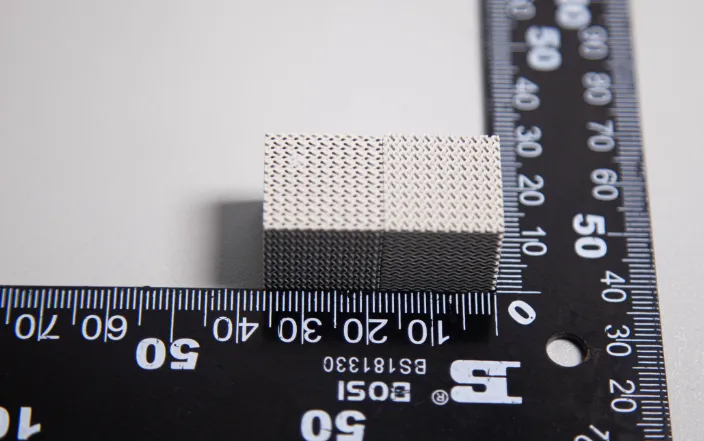
Silicon nitride ceramic samples printed by Adventure Tech (ADT Ceramic 3D Printing)
Conclusion
Mastering the sintering logic of silicon nitride is essential for unlocking its full potential. By selecting the right method, additives, and parameters, manufacturers can achieve microstructural excellence—leading to superior mechanical and thermal properties.
Adventure Tech is at the forefront of integrating ceramic 3D printing with advanced sintering strategies. Our DLP 3D printers and comprehensive material systems enable innovative silicon nitride applications that push performance boundaries.
Ready to optimize your silicon nitride components? Contact Adventure Tech today for custom ceramic 3D printing solutions.
More articles
Progress in Light Curing 3D Printing: Advances in Photosensitive Resin Modification
Mastering Debinding in Ceramic 3D Printing: The “Invisible” Stage That Determines Success
Optimizing Silicon Nitride Performance: Understanding the Sintering Logic for Microstructural Excellence in Ceramic 3D Printing
DLP Ceramic 3D Printing of W-Band Gradient Refractive Index (GRIN) Metalens: Fabrication and Performance Analysis
Request A quote
