

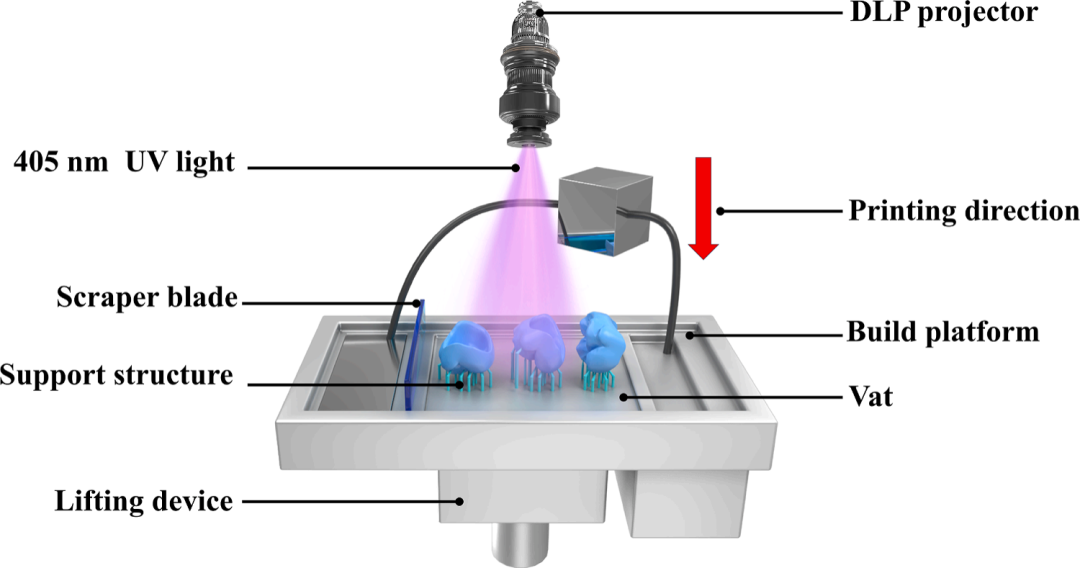
In the rapidly evolving field of ceramic 3D printing, zirconia 3D printing using DLP ceramic 3D printers and light curing 3D printing technology has emerged as a game-changer for high-precision applications. Digital Light Processing (DLP) enables the fabrication of complex, dense zirconia components with exceptional mechanical properties, making it ideal for dental restorations, aerospace parts, and biomedical implants.
At AdventureTech (ADT Ceramic 3D Printing), we specialize in advanced DLP 3D printers and proprietary technologies backed by a robust portfolio of invention patents. Our systems deliver superior resolution, slurry control, and optimized thermal post-processing for reliable zirconia 3D printing results.
High-precision zirconia dental crowns produced via DLP light curing 3D printing (Image credit: ADT Ceramic 3D Printing)
This guide provides an in-depth analysis of the critical debinding and sintering stages in light curing 3D printing of zirconia, drawing from established research and practical expertise.
Why Choose DLP for Zirconia 3D Printing?
DLP ceramic 3D printers use UV light to cure photosensitive zirconia slurries layer-by-layer, achieving resolutions down to 50 µm and relative green body densities of 40–65%. Compared to traditional manufacturing, DLP enables intricate geometries without tooling, with uniform shrinkage and high final density (up to 99.6%).
AdventureTech’s patented slurry rheology and hardware innovations ensure stable, high-solid-loading formulations that minimize defects during zirconia 3D printing.
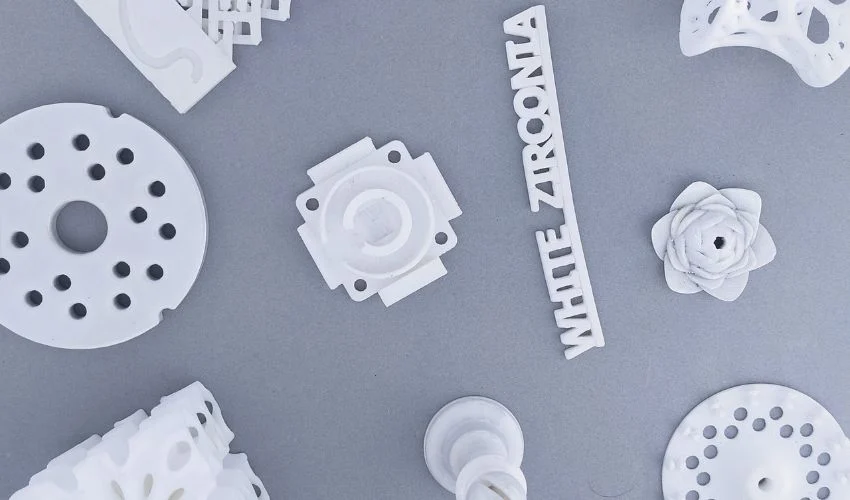
Complex zirconia components enabled by DLP ceramic 3D printing technology
Key Post-Processing Steps: Debinding and Sintering
After printing, green bodies contain 35–60% organic binders that must be removed carefully to avoid cracks, warping, or porosity.
1. Debinding Process
Debinding removes photopolymers and additives. Thermal debinding is most common:
- Slowly heat in air (10–60°C/h) to 600°C .
- Include staged holds (e.g., 1–2 hours at 200°C, 600°C) to allow gradual gas release.
- Critical zone: 300–500°C, where rapid pyrolysis can cause blisters if rates exceed 60°C/h.
Solvent-assisted options can pre-debind, but thermal remains standard for DLP zirconia.
AdventureTech’s patented thermal post-processing technologies optimize heating profiles for crack-free debinding, even with complex geometries.
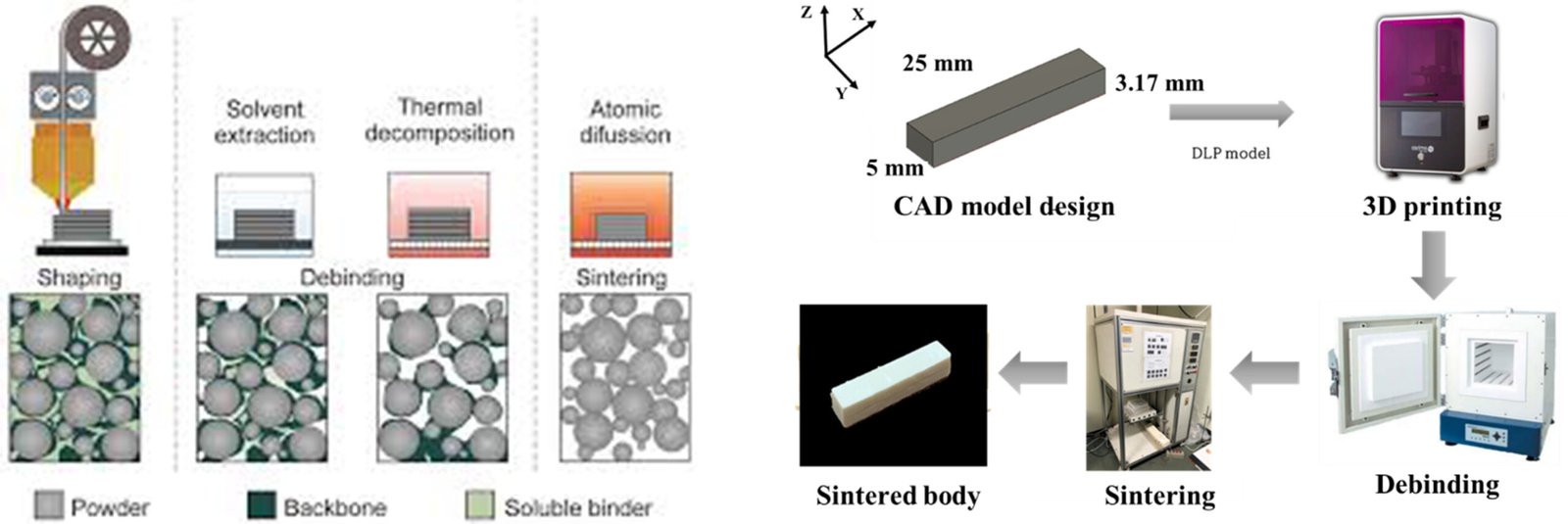
Schematic of debinding and sintering stages in ceramic 3D printing
2. Sintering Process
Sintering densifies the part through grain growth and phase transformation:
- Pre-sintering: 600–900°C at 150–200°C/h.
- Final sintering: Ramp to 1500–1550°C, hold 2 hours in air.
- Expect 20–25% linear shrinkage, peaking around 1130°C during monoclinic-to-tetragonal transition.
Proper control yields >99% density, flexural strengths up to 1566 MPa, and fine grain sizes (~600 nm).
Our systems incorporate patented sintering optimizations that deliver consistent, high-density zirconia parts with minimal deformation.
Challenges and Best Practices
Common issues include cracking from rapid gas evolution, uneven shrinkage, and phase-induced stresses. Solutions:
- Use TGA/DTA-guided slow ramps below 600°C.
- Employ high-solid-loading slurries (45+ vol%) to reduce shrinkage.
- Recycle slurries carefully to maintain viscosity.
AdventureTech printers excel here, with patented rheology control enabling repeatable, defect-free results.
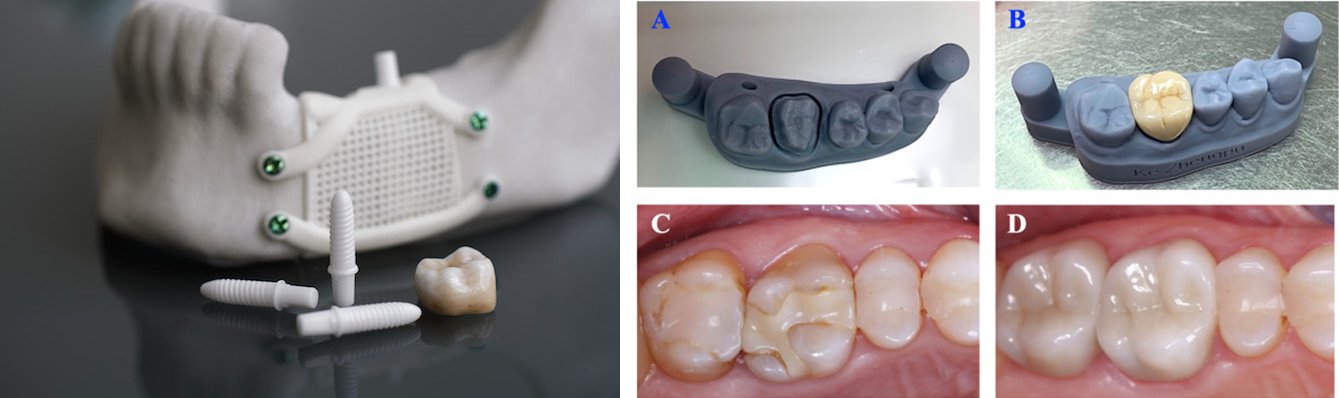
3D-printed zirconia dental crowns showcasing precision and translucency
Applications of DLP-Printed Zirconia
- Dental: Crowns, bridges, implants with excellent biocompatibility.
- Aerospace & Engineering: High-temperature, wear-resistant components.
- Biomedical: Custom implants with complex internal structures.
Why Partner with AdventureTech for Your Zirconia 3D Printing Needs?
With years of expertise and invention patents in ceramic additive manufacturing, AdventureTech delivers industry-leading DLP ceramic 3D printers optimized for zirconia 3D printing. Our integrated solutions—from slurry formulation to thermal post-processing—ensure you achieve dense, high-performance parts efficiently.
Contact us today to learn how our patented technologies can elevate your light curing 3D printing projects.
References: Insights adapted from peer-reviewed studies in Ceramics International, Heliyon, and Progress in Additive Manufacturing.
More articles
Progress in Light Curing 3D Printing: Advances in Photosensitive Resin Modification
Mastering Debinding in Ceramic 3D Printing: The “Invisible” Stage That Determines Success
Optimizing Silicon Nitride Performance: Understanding the Sintering Logic for Microstructural Excellence in Ceramic 3D Printing
DLP Ceramic 3D Printing of W-Band Gradient Refractive Index (GRIN) Metalens: Fabrication and Performance Analysis
Request A quote
