

AdventureTech specializes in high-performance ceramic 3D printers and DLP 3D printing systems engineered for demanding ceramic slurries. Our industrial-grade platforms help researchers and manufacturers achieve superior printability and part quality through precise slurry control. This article explores how ceramic additives — used at low dosages of 0.5–2.0% — dramatically improve slurry rheology and stability, unlocking reliable ceramic 3D printing results in DLP processes.
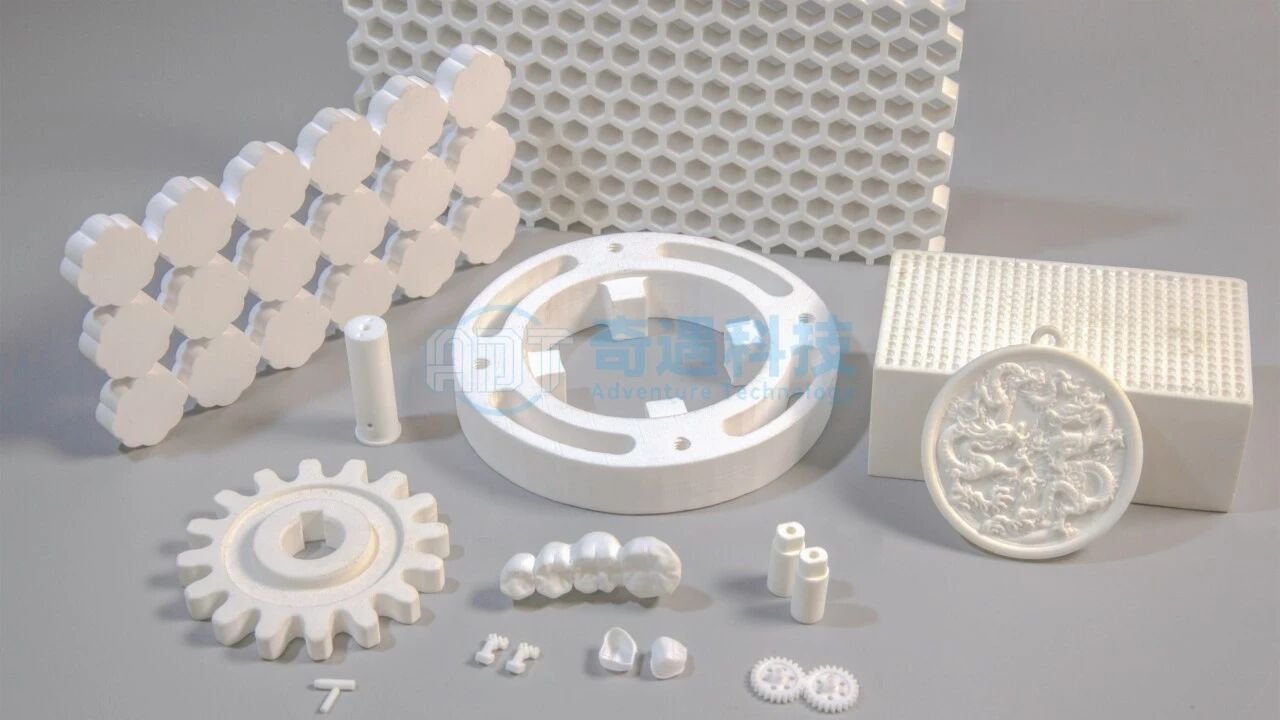 Figure 1: Ceramic parts are printed using high-resolution DLP technology with optimized slurry containing ceramic additives.
Types of Ceramic Additives: Process vs. Functional
Ceramic additives are divided into two main categories:
- Process additives (e.g., dispersants, wetting agents, defoamers): Simplify slurry preparation, improve flowability, and enhance equipment efficiency during DLP 3D printing.
- Functional additives (e.g., binders, plasticizers, sintering aids): Deliver specific final properties such as higher density, mechanical strength, and thermal stability after debinding and sintering.
In ceramic 3D printing, dispersants are the most critical process additive. Common options like polyacrylic acid (PAA), BYK-series copolymers, and sodium citrate provide electrostatic and steric stabilization, preventing agglomeration in high-solid-loading slurries (typically 40–60 vol.%).
Optimizing Rheology for Superior Printability
Rheology governs how slurries behave under shear. Ideal DLP ceramic 3D printing slurries must exhibit strong shear-thinning: high viscosity at rest (to hold shape) and low viscosity under the printer’s recoater blade.
Ceramic additives achieve this by:
- Reducing interparticle friction and agglomeration
- Lowering overall viscosity at high shear rates
- Increasing yield stress for layer stability
Optimized formulations can reduce viscosity by 30–60% while maintaining print fidelity, enabling faster recoating speeds and fewer defects on ceramic 3D printers.
AdventureTech’s DLP systems, with peristaltic feeding and dual-scraper technology, are specifically designed to handle these precisely tuned slurries, ensuring consistent layer thickness and minimal waste.
Enhancing Slurry Stability and Preventing Sedimentation
High-density ceramic powders tend to settle quickly, causing density gradients and print failures. Advanced dispersants increase zeta potential and create steric barriers, dramatically slowing sedimentation (often reducing settling by >70% over 24 hours).
Stable slurries maintain uniform solid distribution throughout long print jobs — critical for large or high-resolution parts produced via ceramic 3D printing.
Real-World Results in DLP Ceramic 3D Printing
With properly optimized additives, users achieve:
- Higher solid loadings without viscosity spikes
- Excellent curing depth and layer adhesion
- Dense, defect-free sintered parts with superior mechanical properties
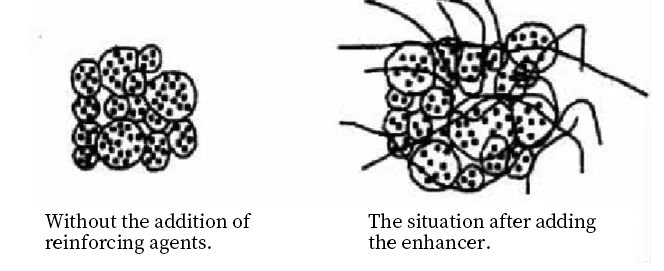
Figure 2: Schematic diagram of the mechanism of action of ceramic reinforcing agents.
Why Leading Institutions Choose AdventureTech
Since 2015, AdventureTech has supplied trusted ceramic 3D printers to Tsinghua University, Harbin Institute of Technology, and the Chinese Academy of Sciences. Our systems excel at processing additive-optimized slurries for structural ceramics, bioceramics, and high-temperature applications.
Whether you are developing new DLP 3D printing formulations or scaling production, our technology delivers the precision and reliability needed to maximize the benefits of ceramic additives.
Ready to optimize your ceramic slurries? Explore AdventureTech’s full range of ceramic 3D printers and expert support: Learn more about AdventureTech
Frequently Asked Questions (FAQ)
Q1: What are the most important ceramic additives for DLP ceramic 3D printing? Dispersants are the most critical (typically 0.5–2.0%), followed by wetting agents and defoamers. They directly control rheology and prevent sedimentation in high-solid-loading slurries.
Q2: How much ceramic additive should I add to my slurry? Most applications require only 0.5–2.0% by weight. Over 5% may negatively affect final density and sintering. Always start with the supplier’s recommended dosage and adjust via viscosity tests.
Q3: Can ceramic additives completely solve sedimentation in ceramic 3D printers? They significantly reduce sedimentation (often by 70%+), especially when combined with proper mixing and AdventureTech’s peristaltic feeding system. For ultra-long prints, continuous gentle stirring is still recommended.
Q4: Do I need a special ceramic 3D printer to use optimized additive slurries? While many DLP printers can run them, AdventureTech’s industrial ceramic 3D printers with dual-scraper and automatic filtration deliver far more stable results and higher success rates.
Q5: Will optimized slurries improve the final mechanical properties of DLP printed ceramics? Yes. Uniform dispersion leads to higher green-body density, fewer defects, and up to 15–25% better flexural strength after sintering.
Q6: Does AdventureTech provide slurry formulation support? Absolutely. Our technical team offers free consultation, recommended additive packages, and on-site slurry optimization services for all DLP 3D printing users.
More articles
Multi-Material Ceramic 3D Printing for Durable Electronic Devices
Ceramic 3D Printing Market Forecast 2026–2033: Opportunities, Growth, and Key Applications
Advanced Insights into Late-Stage Sintering: Multi-Stage Grain Growth in Ceramic Materials
Gyroid-Structured SiOC Composites via DLP 3D Printing for Broadband Microwave Absorption
Request A quote
