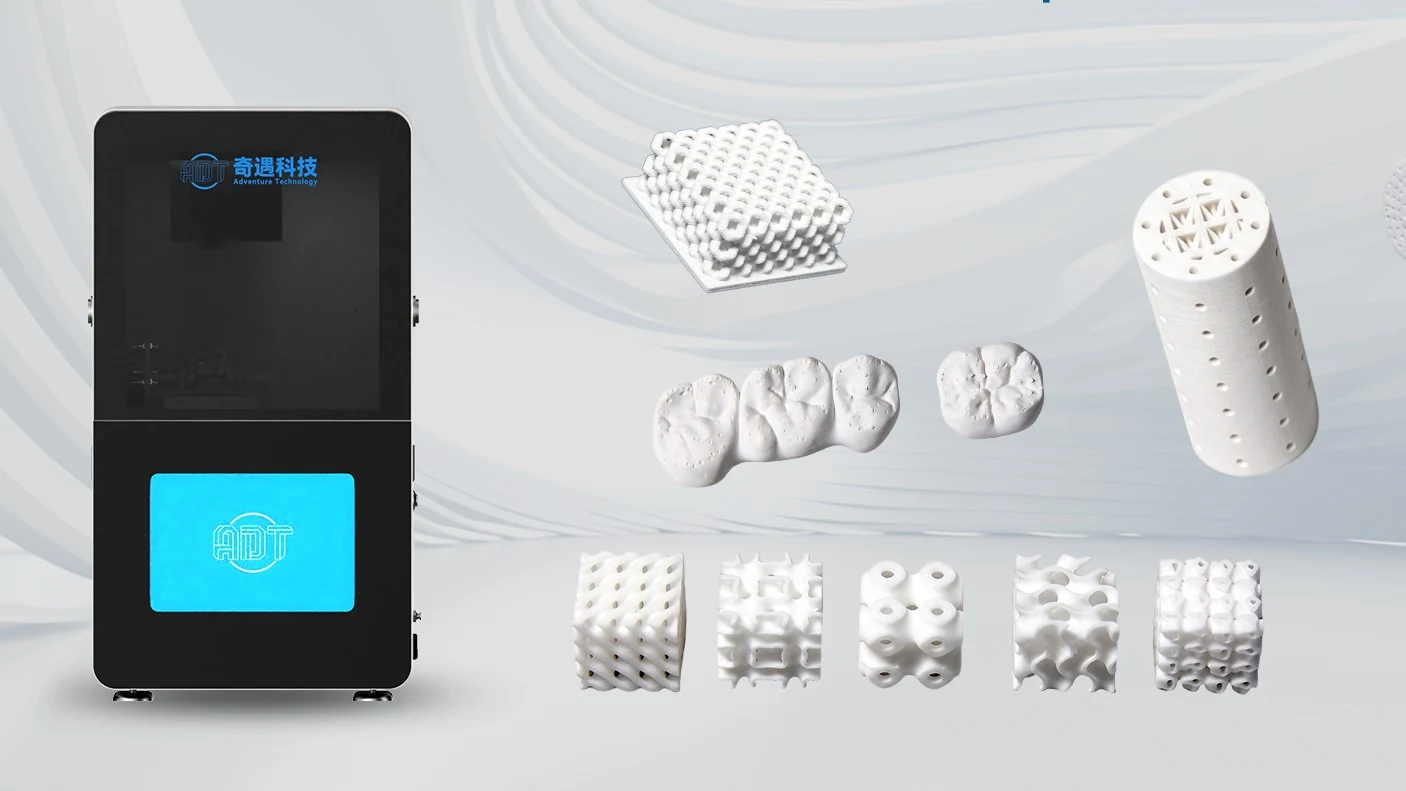
In ceramic additive manufacturing, high-precision DLP printers have long been an important tool for universities, research institutes and corporate R&D teams working on material formulation validation, complex-structure forming and small-batch trials. Yet for users who are still at the R&D stage, high equipment investment, a large minimum material load and heavy material consumption directly raise the barrier to entry for ceramic 3D printing.
To address these practical problems, Adventure Technology has officially launched a brand-new Mini ceramic 3D printer series, the ADT Ceram-DD50. The machine is priced at $7,600 USD (bare unit), with a build size of 51.2 × 28.8 × 60 mm and an optical resolution accuracy of 20 μm. It is aimed at ceramic material R&D, research experiments and teaching applications — lowering both equipment and material investment while still meeting the need to print and validate fine-structure samples.
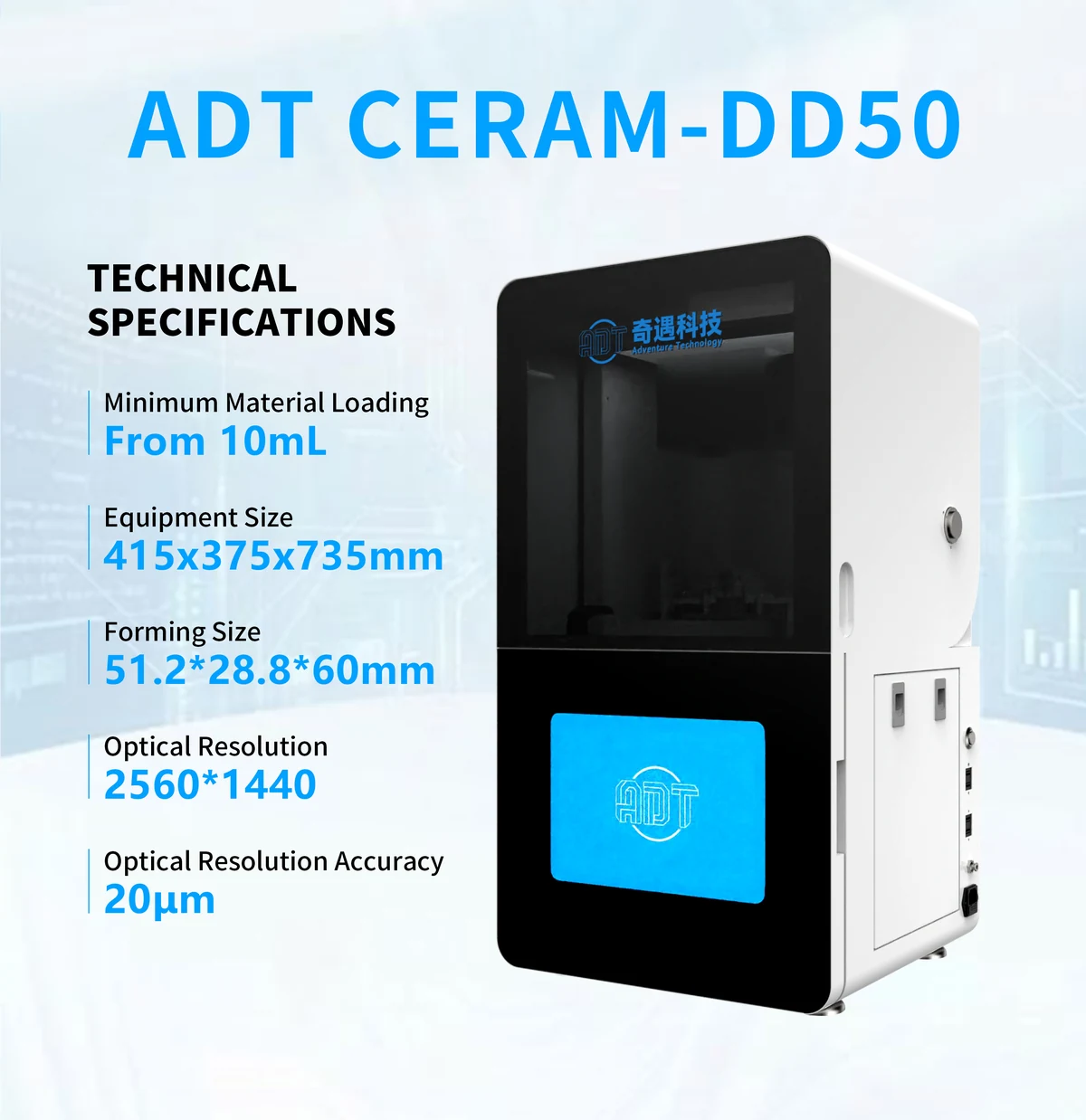
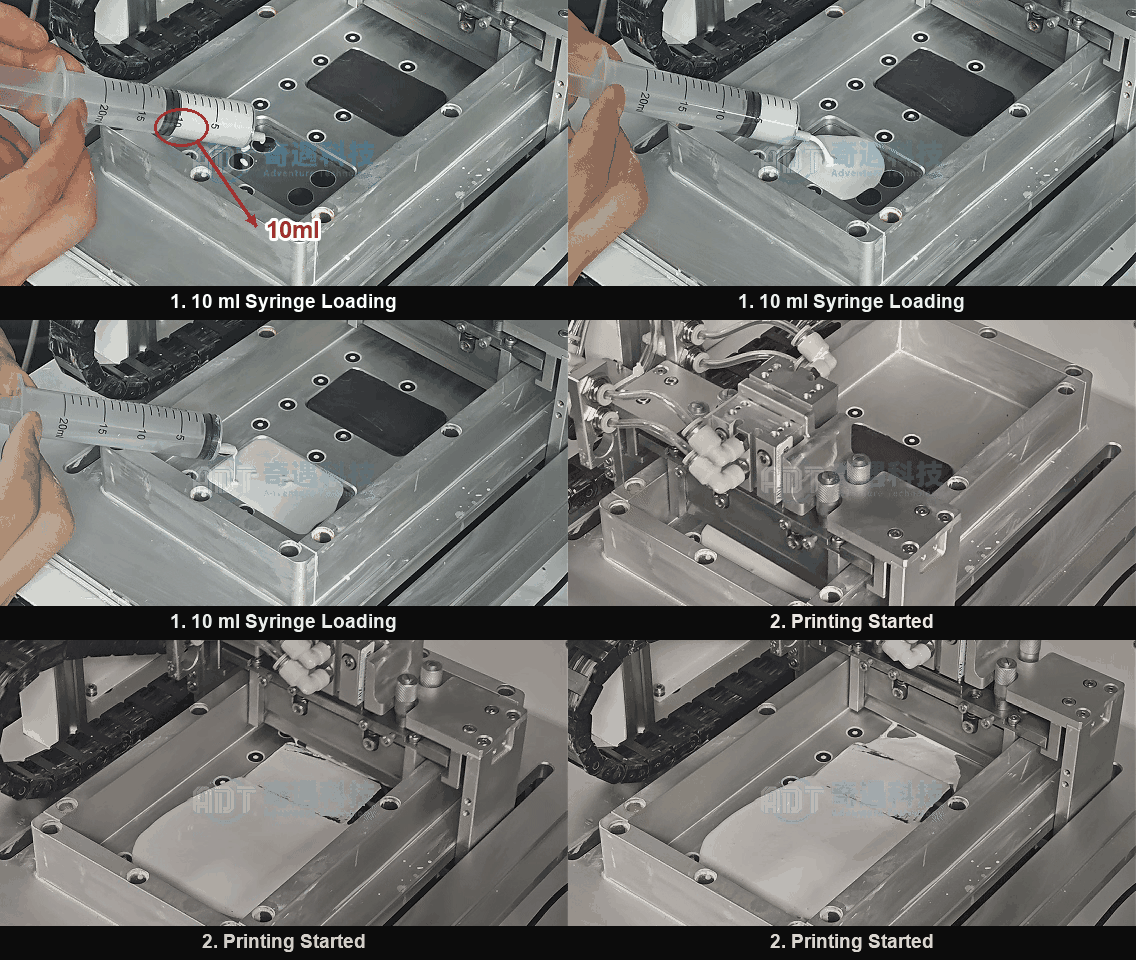
1. 10 mL minimum material loading cuts waste at the R&D stage
As the flagship model of the Mini series, the ADT Ceram-DD50 uses a dual-cylinder feeding structure built from a feeding cylinder + forming cylinder. During printing, ceramic slurry is delivered from the feeding cylinder to the forming area and spread with a blade. The DD50's minimum material loading is as low as 10 mL — a design that suits ceramic material R&D in particular.
For a new ceramic slurry, a lab-made formulation or a material available only in limited quantities, researchers usually need many rounds of experiments to adjust solid loading, the dispersion system, exposure parameters and the sintering process. A 10 mL micro-load reduces the slurry consumed per experiment, letting a limited amount of material support more rounds of printing validation. What the DD50 sets out to solve is not miniaturization for its own sake, but the real cost problem inside the material R&D process.
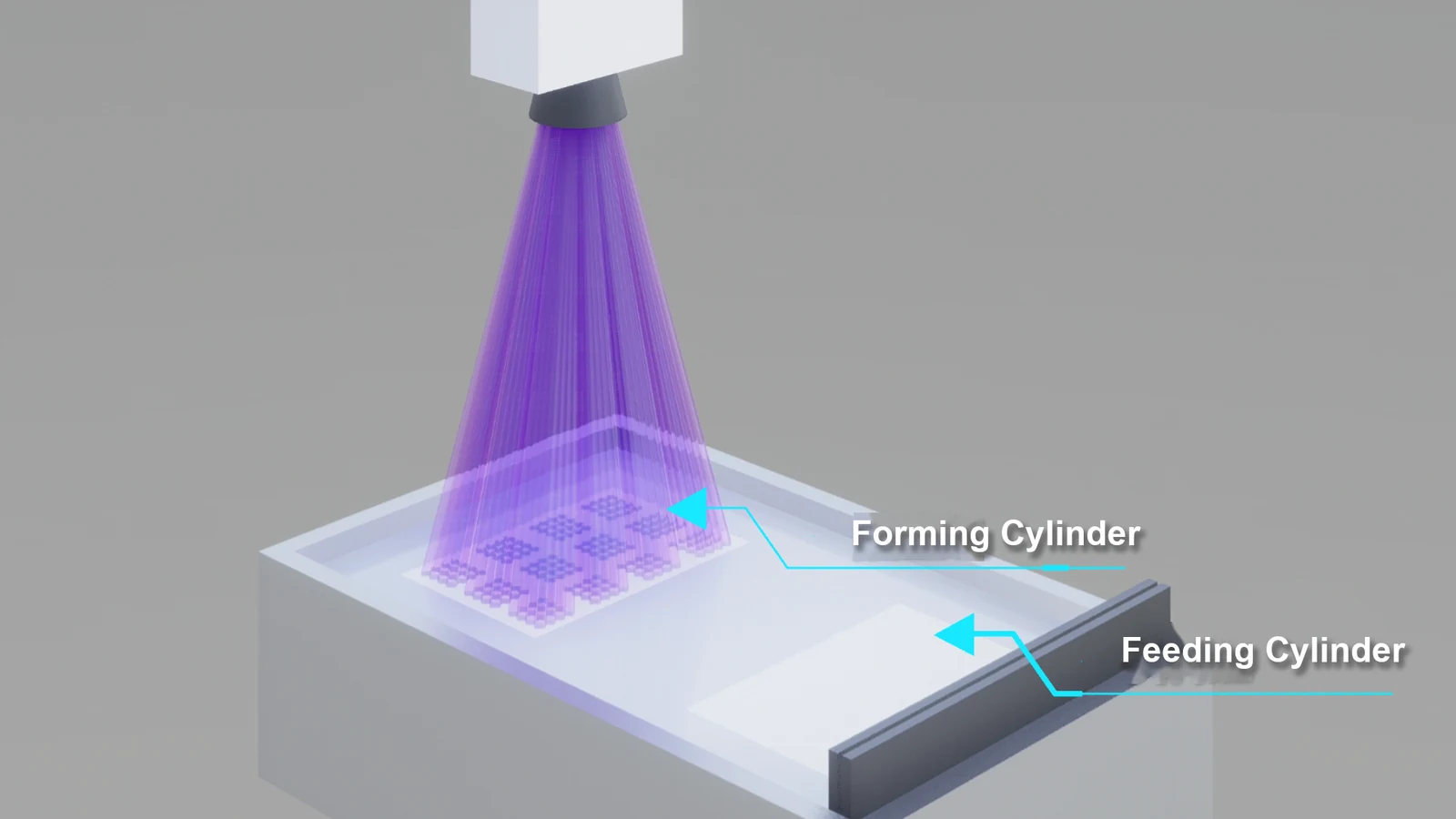
2. Optics on top, platform sinking down: 20 μm for complex structures
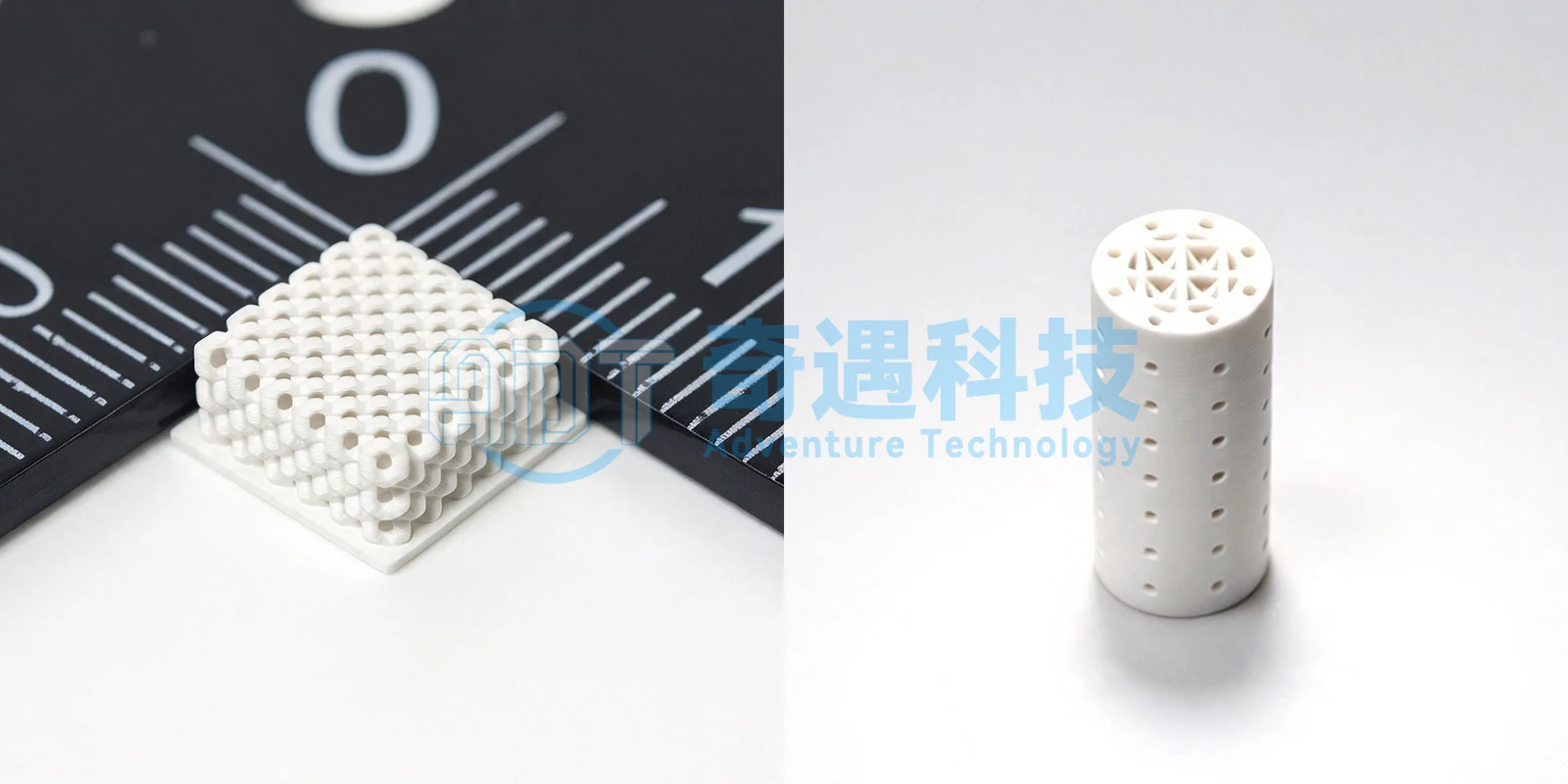
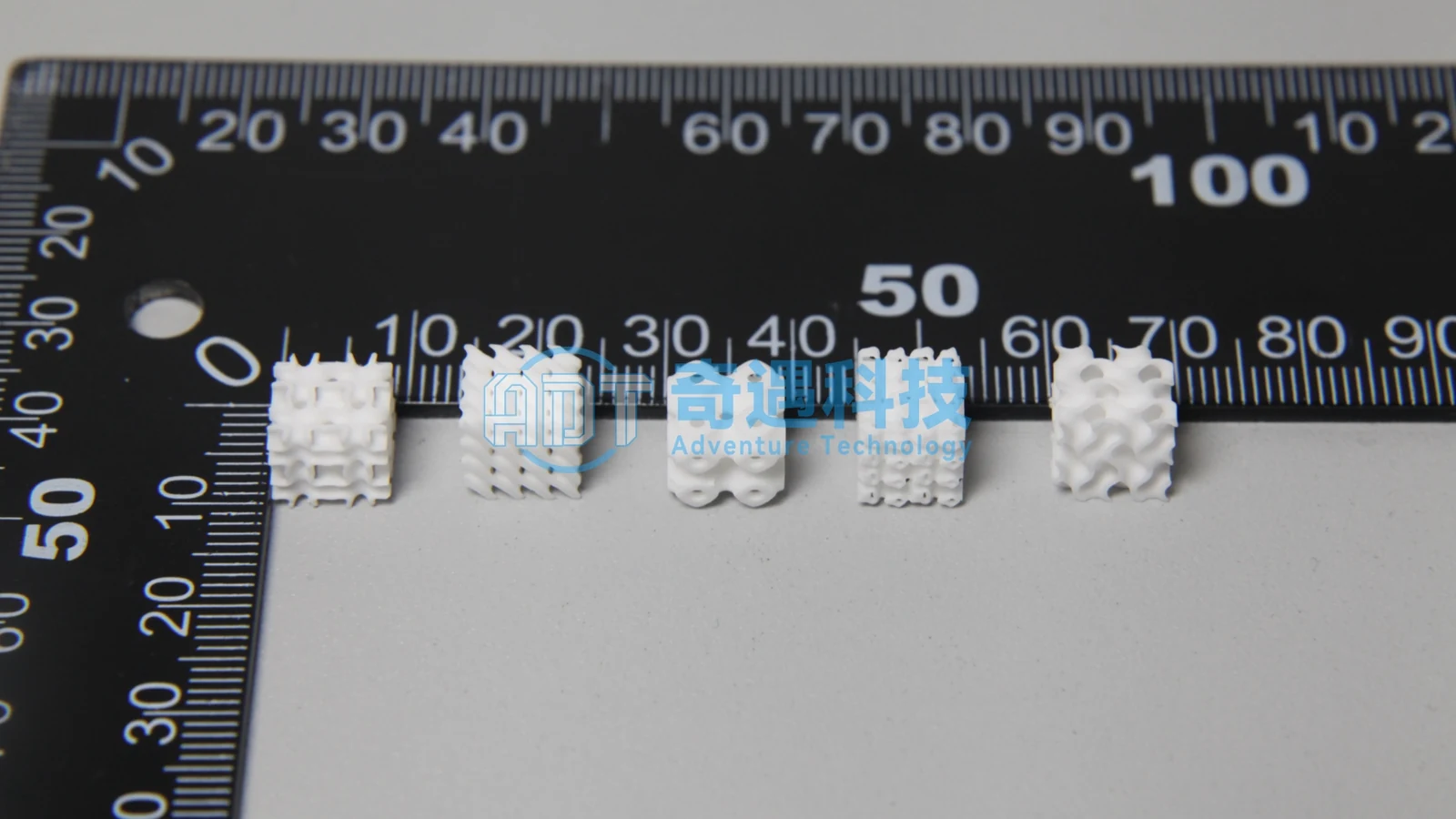
The DD50 uses a top-down DLP forming method with a custom 2560 × 1440 optical resolution and an optical resolution accuracy of 20 μm, providing the hardware basis needed to print complex structures. It is positioned not for large-size batch manufacturing, but for material R&D validation of small, complex geometries such as lattices and complex curved surfaces. For research teams developing new ceramic materials, different structural samples make it possible to further validate how a material forms — combining material formulation, exposure parameters and structural design in one experiment. Below are zirconia and hydroxyapatite structural parts and an alumina TPMS sample printed on the machine.
3. Adapts to different slurries — friendlier to high-viscosity ones
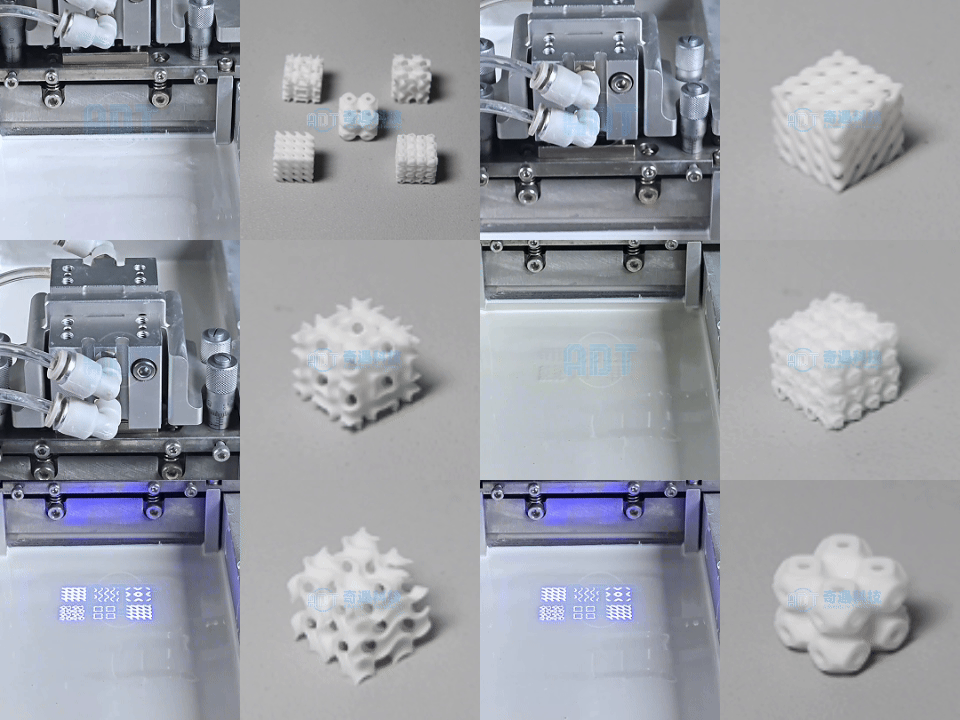
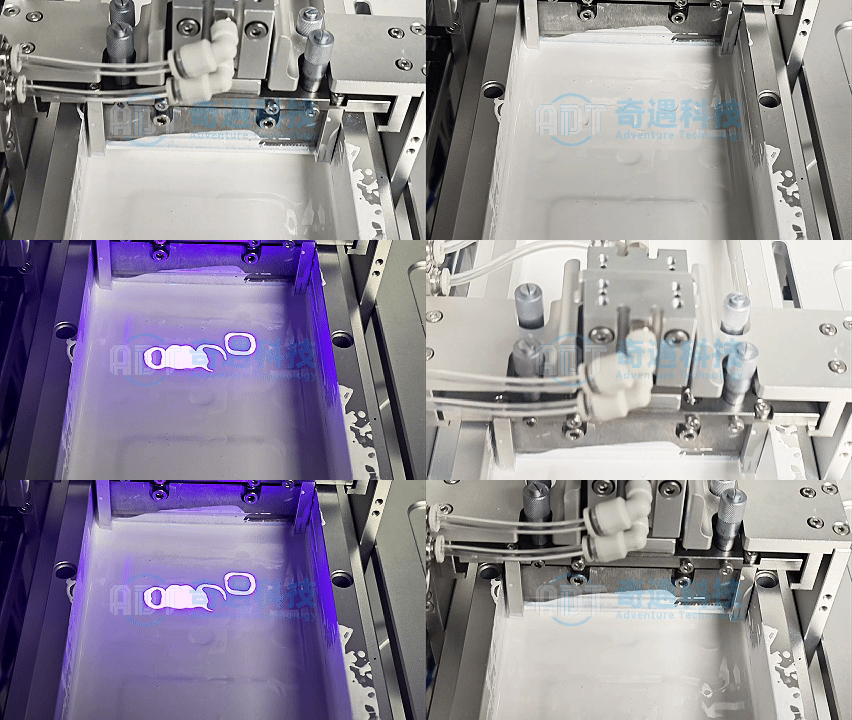
Material R&D rarely works with a single fixed slurry. Changes in powder type, solid loading and formulation system all affect a slurry's viscosity and spreading behaviour. Through the combination of top-down forming, blade spreading and dual-cylinder feeding, the DD50 is broadly adaptable to ceramic slurries of different viscosities and is especially friendly to high-viscosity slurries. The machine also includes a heating system that, together with material and print parameter settings, provides the right printing conditions for experiments. Actual forming parameters still need to be adjusted for each specific slurry formulation.
4. At $7,600 USD, ceramic print validation reaches more labs
The DD50 measures 415 × 375 × 735 mm. Its compact design, with the main unit and control software included as standard, lets it be deployed in a research lab. Together with print-process control and parameter settings, researchers can get up to speed quickly and complete validation printing of ceramic green bodies. Green bodies still need the corresponding cleaning, debinding and sintering steps before final ceramic parts are obtained.
The $7,600 USD bare-unit price lowers the up-front equipment investment; 10 mL minimum material loading reduces the material tied up in early experiments. Together they form the DD50's value proposition for ceramic R&D users:
Small investment, big R&D.
The Adventure Technology ADT Ceram-DD50 is now on sale. For configuration details, printed samples or purchasing information, please contact the Adventure Technology sales team.