
Advanced Ceramics in Energy: Printing Solutions for Solid-State Batteries and Fuel Cells
In the global push for cleaner and more efficient energy systems, advanced ceramics are quietly becoming heroes behind the scenes. From solid-state batteries to high-efficiency fuel cells, the demand for materials that can withstand extreme environments while enabling ion conductivity is at an all-time high.
At Adventuretech, we work closely with research teams and energy innovators to deliver ceramic 3D printing solutions tailored for next-gen energy devices. Here’s how this powerful combination is changing the energy landscape:
1. Solid-State Batteries Need Solid Ceramic Electrolytes
Unlike conventional lithium-ion batteries, solid-state designs use ceramic-based electrolytes—typically yttria-stabilized zirconia (YSZ) or lithium lanthanum zirconium oxide (LLZO). These ceramics offer excellent ionic conductivity and chemical stability, while also improving safety by eliminating flammable liquids.
2. Fuel Cells Require Complex Ceramic Architectures
High-temperature solid oxide fuel cells (SOFCs) depend on multilayered ceramic structures to function. Our DLP ceramic 3D printers allow precise control over wall thickness, porosity, and internal geometry—key for maximizing efficiency and longevity.
3. Complex Components, No Molding Required
Conventional ceramic fabrication for batteries and fuel cells involves machining or injection molding—both slow and inflexible. With ceramic 3D printing, researchers can rapidly prototype new geometries and iterate with minimal material waste.
4. Custom Test Strips for Lab Research
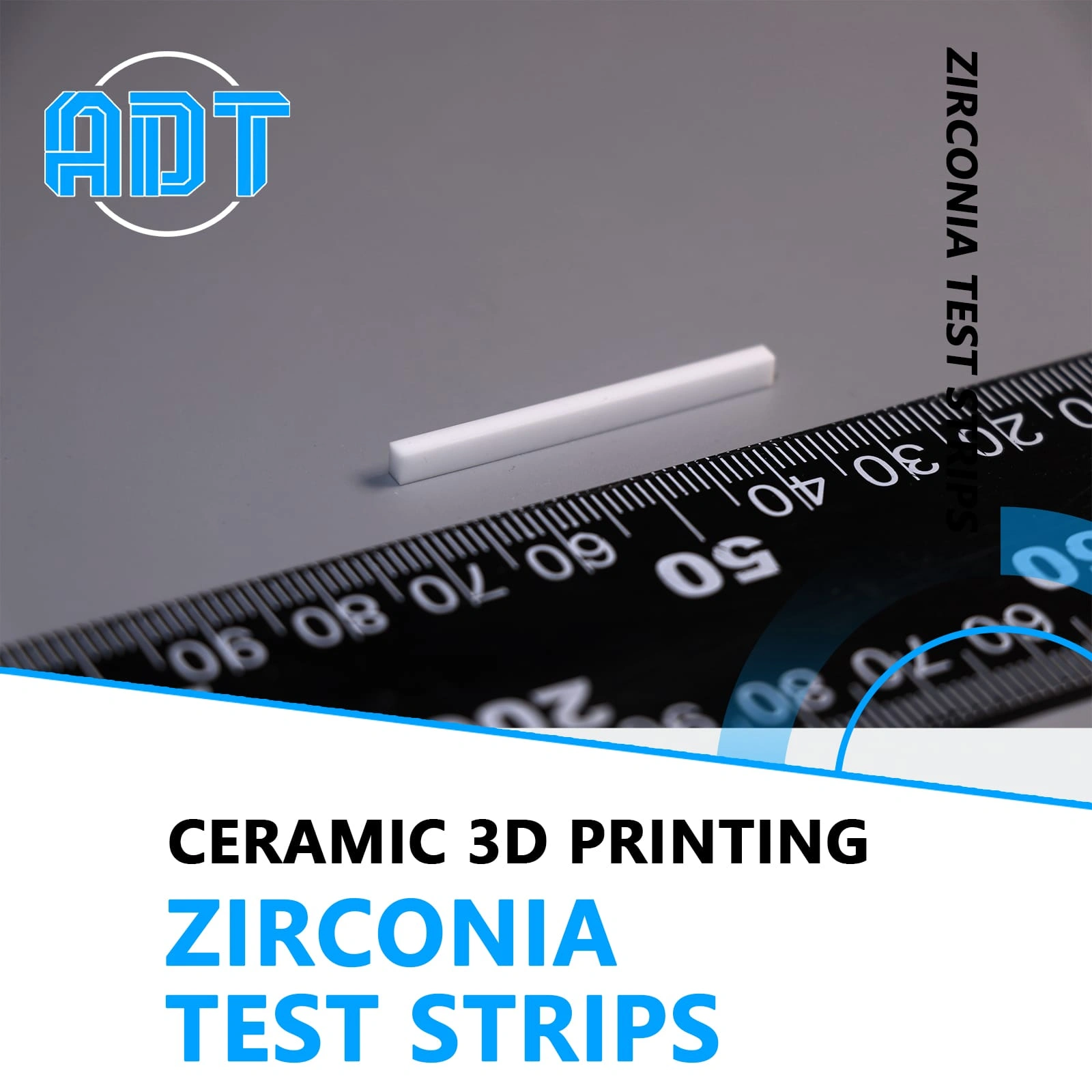
We’ve supported academic labs with zirconia-based test strips (as shown above), which serve as miniaturized electrolytes or sealing layers in experimental energy cells. The ability to print small batches of functional ceramic parts has accelerated testing and publication timelines.
5. Scalability and Material Diversity
Our systems support materials such as yttria-stabilized zirconia, alumina, silicon carbide, and more—each playing a role in energy applications. Whether you’re developing solid-state battery separators or high-temp flow field plates, our platform can scale with your goals.
At the intersection of material science and additive manufacturing, ceramic 3D printing opens up a world of possibilities for the energy industry. Interested in printing your own electrolyte layers or fuel cell structures? Let Adventuretech help you build the future of energy.