
AdventureTech leads innovation in light curing 3D printing and ceramic 3D printing technologies, delivering high-precision solutions for biomedical applications. This article explores recent breakthroughs in bio resin 3D printing, emphasizing its transformative role in tissue engineering and regenerative medicine.
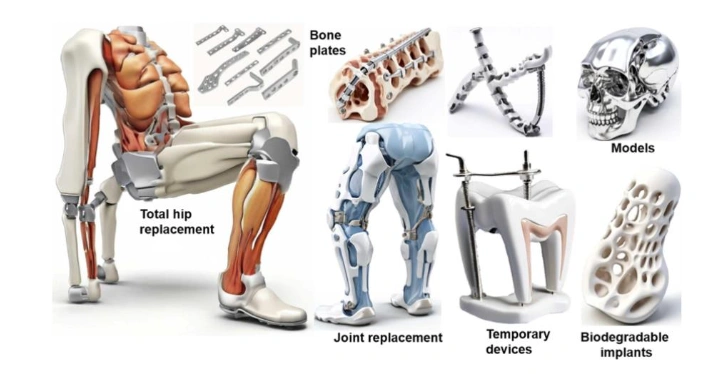
The Rise of Bio Resin 3D Printing in Biomanufacturing
Bio resin 3D printing, particularly through SLA (Stereolithography) and DLP-based light curing 3D printing, has emerged as a cornerstone technology in biomanufacturing. These methods enable precise layer-by-layer construction of complex biological structures using biocompatible and bioactive resins, including advanced SLA ceramic resins. Researchers now fabricate vascularized tissues, multi-layered skin, and porous bone scaffolds that closely mimic natural physiology, advancing personalized medicine and regenerative therapies.
Companies like AdventureTech pioneer this field with industrial-grade ceramic 3D printers and resin 3D printers optimized for bioactive materials. Their DLP systems support high-solid-content ceramic slurries (e.g., alumina and zirconia-based bio resins), making them ideal for tissue engineering research and clinical applications.
Key Advances in Vascular Tissue Engineering
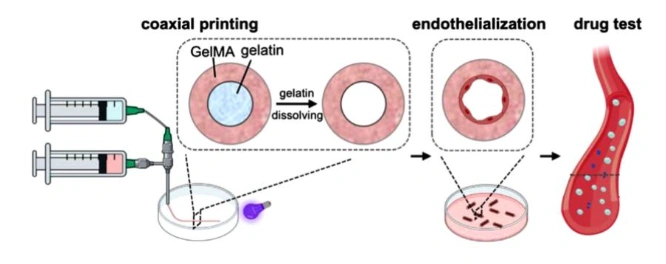
Coaxial printing techniques have revolutionized the creation of engineered blood vessels. By simultaneously extruding core-shell bioinks (e.g., GelMA and gelatin), researchers achieve hollow structures that support endothelialization and drug testing.
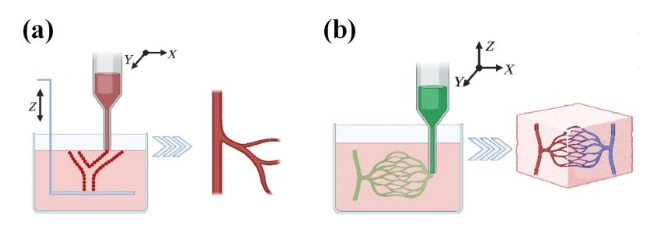
Immersed printing further enhances complexity, allowing branched and perfusable vascular networks essential for nutrient delivery in thick tissues.
Breakthroughs in Skin Bioprinting
Multi-layered skin constructs with integrated vascularization represent a major milestone. Using bioinks laden with fibroblasts (HDF), endothelial cells (HUVEC), and keratinocytes (HEK), researchers print pre-vascularized dermal layers followed by epidermal layers via photo-crosslinking.
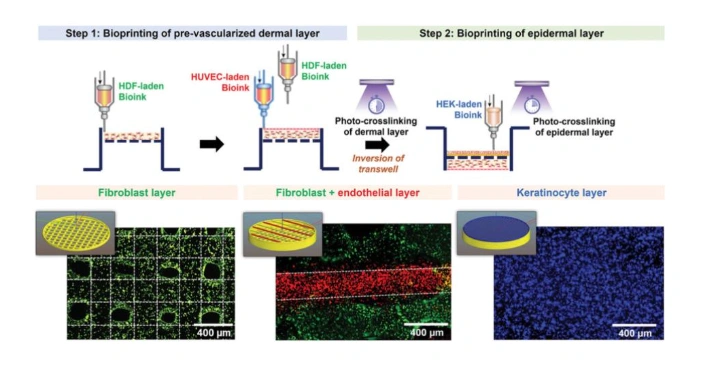
These models support inflammation studies and personalized wound healing solutions.
Optimized Scaffolds for Bone Regeneration
Topology-optimized scaffolds, including TPMS (Triply Periodic Minimal Surface) designs such as Gyroid, Diamond, and Split-P, provide superior mechanical strength and porosity for cell ingrowth. SLA ceramic resins enable high-resolution printing of hydroxyapatite-based structures that promote osteogenesis.
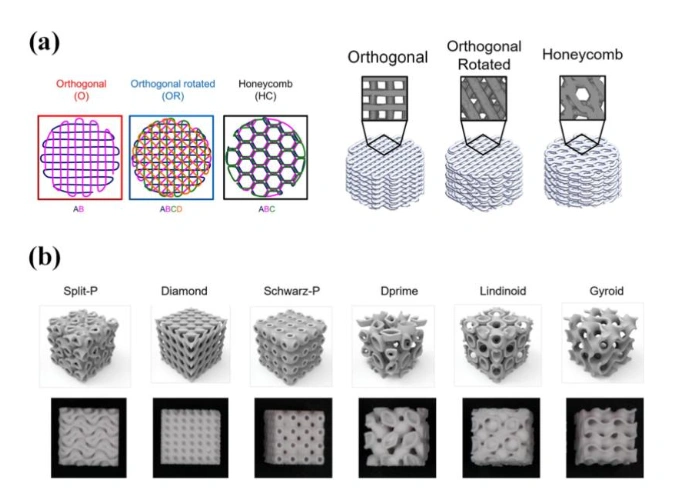
AdventureTech‘s ceramic 3D printers, such as the ADT-3D-ZM series, excel here with ultra-high-speed DLP light curing (up to 700 layers/hour) and compatibility with bioactive SLA ceramic resins, trusted by institutions like Tsinghua University for bioactive scaffold research.
Challenges and Future Directions
Despite progress, challenges remain in bioprinting resolution, long-term biomaterial stability, and vascular perfusion. Ongoing optimization of bio resin 3D printing formulations and resin 3D printer hardware addresses these issues.
Looking ahead, integration of 4D responsive materials and multi-material light curing 3D printing will usher in dynamic implants that adapt to physiological environments.
Why Choose AdventureTech for Your Bio Resin 3D Printing Needs?
Founded in 2015, AdventureTech delivers end-to-end solutions in ceramic 3D printing, from high-precision SLA 3D printers to proprietary ceramic photo-resins. Their systems support biomedical researchers worldwide in creating bioactive scaffolds and regenerative constructs. Learn more about their innovative resin 3D printers and SLA ceramic resin capabilities at AdventureTech About Page.
For experts in tissue engineering, AdventureTech provides the reliability, precision, and material versatility needed to translate research into real-world regenerative medicine solutions.