
Engineering Case Study on Controlled Porous Alumina Architecture Using Alumina Ceramic 3D Printing
Introduction: Why Porous Alumina Structures Matter in Advanced Research?
Porous ceramic structures play a critical role in modern materials engineering, particularly in applications such as gas filtration, thermal management systems, catalyst supports, semiconductor processing, and biomedical scaffolds.
In these fields, performance is not determined solely by the ceramic material itself, but increasingly by the geometry of the internal porous network, including pore size distribution, connectivity, and structural periodicity.
However, fabricating large-scale, highly ordered porous alumina structures remains challenging using conventional ceramic manufacturing methods. Techniques such as molding, machining, and replica-based foaming often introduce limitations in:
- Geometric complexity
- Pore uniformity
- Design repeatability
- Structural consistency across large areas
To address these limitations, DLP ceramic 3D printing (Digital Light Processing-based ceramic additive manufacturing) provides a direct digital-to-ceramic fabrication route, enabling precise control over internal architectures without tooling constraints.
This case study presents the fabrication of a large-format alumina porous plate using DLP ceramic 3D printing, focusing on structural fidelity, manufacturability, and research relevance.
Research Relevance: Why Engineers and Academic Labs Study This Structure?
Engineered porous alumina lattices are widely studied in academic research due to their ability to decouple material composition from structural behavior.
Key research interests include:
- Relationship between pore morphology and fluid transport behavior
- Optimization of permeability vs. mechanical stability
- Heat transfer enhancement in periodic porous networks
- Controlled catalyst surface area design
- Reproducible scaffold structures for experimental validation
Unlike stochastic foams, periodic porous lattices allow controlled and repeatable experimental conditions, making them particularly valuable for parametric studies in materials science and mechanical engineering.
Can Complex Porous Alumina Structures Be Manufactured?
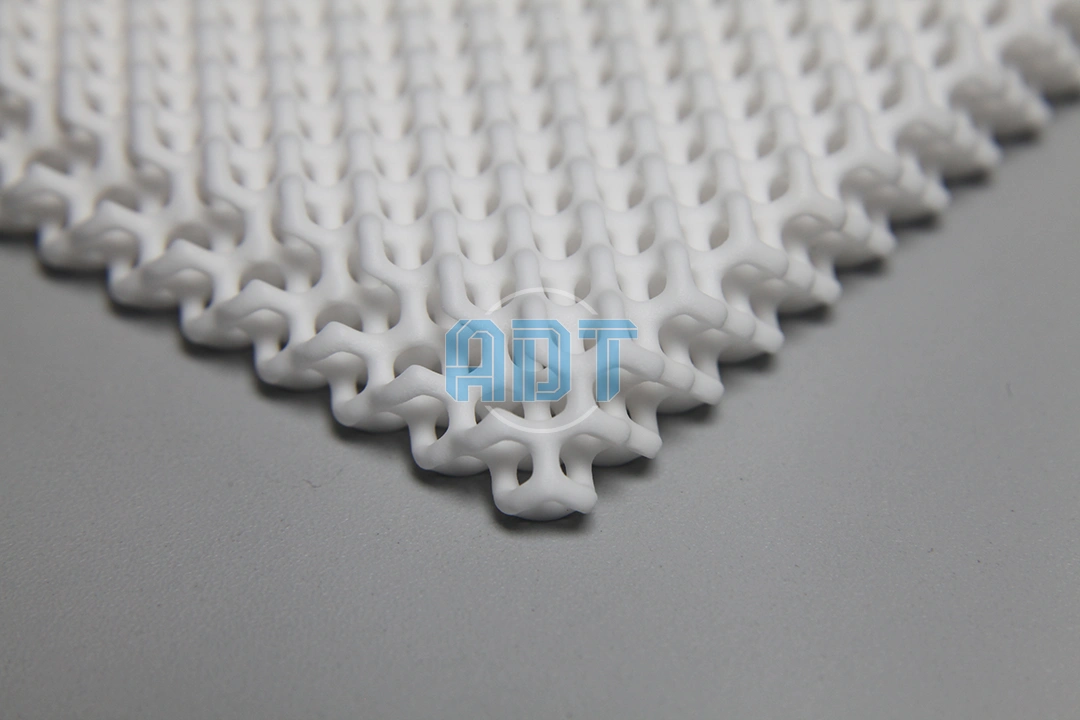
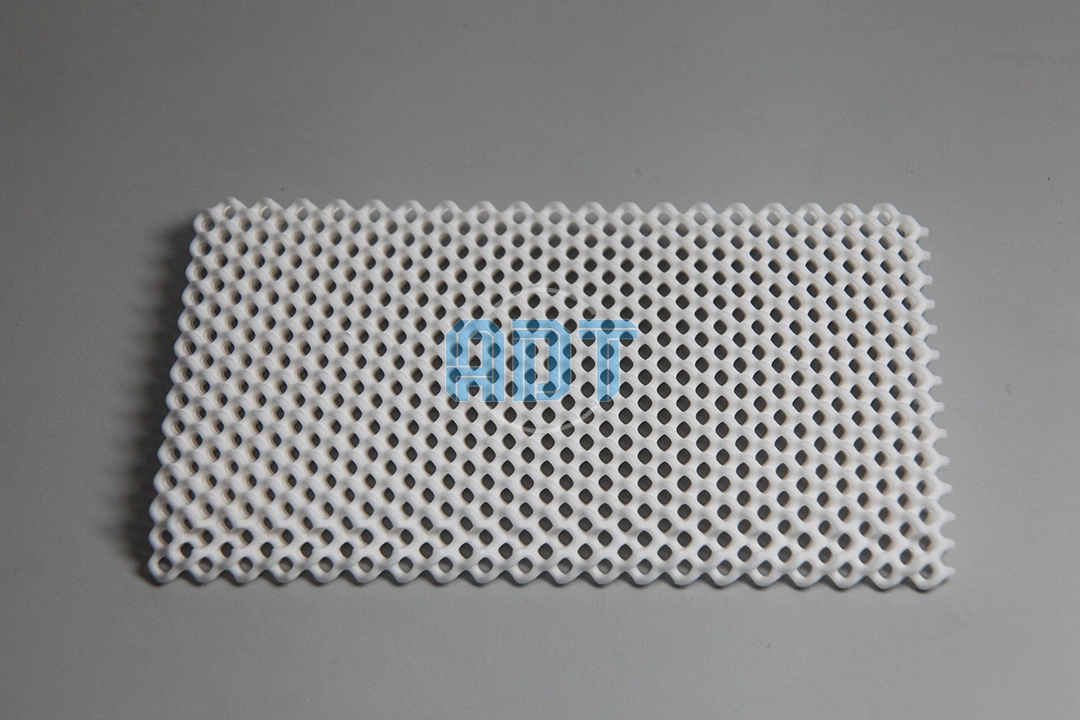
The component demonstrated in this study is a porous alumina plate (approx. 120 mm × 170 mm) featuring a periodic 3D lattice network composed of interconnected micro-channels.
From a manufacturing perspective, this type of geometry is extremely difficult to achieve using conventional ceramic processing due to:
- Mold release limitations in undercut geometries
- Fragility during machining of thin ceramic struts
- Non-uniform pore distribution in foaming processes
- Lack of design scalability in tooling-based methods
With ceramic additive manufacturing, the structure is directly translated from a digital model into a physical green body, enabling:
- Continuous internal channel formation
- High repeatability across layers
- Complex lattice topology without tooling constraints
- Scalable design iteration for research optimization
Manufacturing System and Material Platform
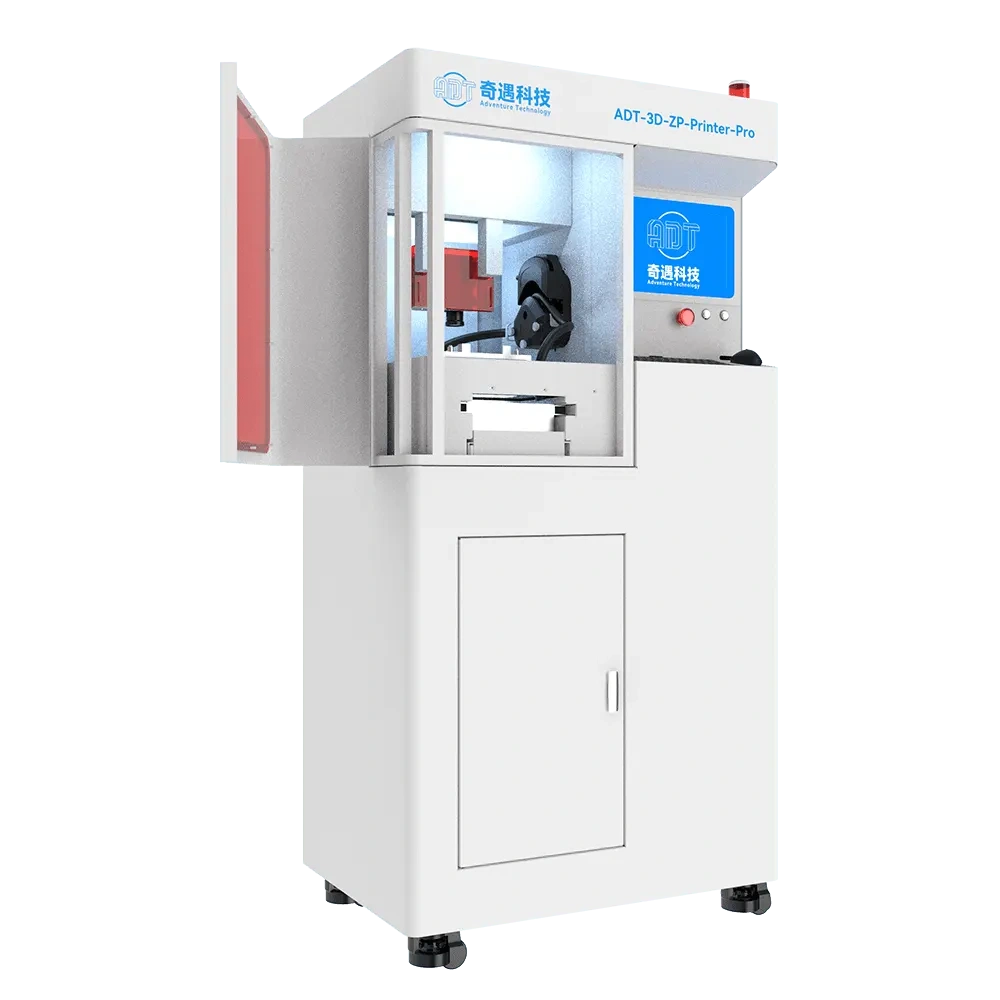
The part was fabricated using the AdventureTech DLP Ceramic 3D Printing Pro System, a high-resolution DLP platform designed for ceramic additive manufacturing with a build volume of 96 × 54 × 90 mm and an optical resolution of 50 μm at 405 nm UV wavelength.
DLP (Digital Light Processing) enables selective photopolymerization of ceramic-loaded resin, forming each layer with high precision before thermal post-processing.
Compared with conventional ceramic manufacturing routes, DLP-based ceramic 3D printing enables:
- High geometric resolution for micro-lattice structures
- Consistent feature reproduction across large surface areas
- Tool-free fabrication of internal channel networks
- High design flexibility for experimental geometries
This makes it particularly suitable for research-grade porous ceramic fabrication, where structural accuracy directly impacts experimental validity.
Manufacturing Process Overview
Digital Design and Lattice Engineering
The porous architecture was designed using CAD-based modeling. The lattice topology was selected to achieve a balance between permeability and structural stability, while ensuring manufacturability within ceramic shrinkage constraints.
Ceramic Slurry Preparation
A high-solid-loading alumina slurry system was used to ensure:
- Stable photopolymerization behavior during exposure
- Uniform particle dispersion
- High densification potential during sintering
Material consistency is critical for preventing pore collapse or channel blockage in complex geometries.
DLP Printing Process
The component was fabricated layer-by-layer using controlled UV exposure, with a layer resolution of 50 μm, enabling stable reproduction of micro-lattice features across the full build area.
Each layer was selectively cured according to the digital cross-section, gradually building the full porous structure with high geometric fidelity.
Key process characteristics include:
- Stable layer adhesion throughout build height
- Consistent feature resolution across lattice regions
- Controlled curing behavior in thin strut geometries
Post-Processing: Cleaning and Debinding
After printing, the green body underwent solvent cleaning to remove uncured resin, followed by careful removal of support structures.
Thermal debinding was then applied to eliminate organic binders without damaging the fragile lattice network.
Sintering and Densification
The part was sintered at high temperature (>1400°C), resulting in full ceramic densification.
During sintering, predictable shrinkage occurred while maintaining overall structural integrity of the porous network.
No significant channel blockage or collapse was observed in the final structure.
Engineering Results and Structural Evaluation
The final alumina porous plate demonstrated strong structural fidelity to the original digital model.
Key observed outcomes include:
- Uniform pore distribution across full build area
- Stable lattice integrity after sintering shrinkage
- Fully open and interconnected channel network
- High dimensional consistency across large-format geometry
- No observable structural collapse in thin strut regions
From an engineering perspective, the results confirm that DLP ceramic 3D printing can reliably produce large-scale periodic porous alumina architectures with repeatable structural quality.
Application-Driven Research Opportunities
The demonstrated structure is relevant to multiple ongoing research domains:
Filtration and Separation Research
Controlled pore architectures enable systematic study of pressure drop, permeability, and particle capture efficiency in ceramic filtration systems.
Thermal Transport Engineering
Periodic porous networks provide a model system for investigating heat transfer enhancement in high-temperature ceramic structures.
Catalyst Support Design
High surface-area alumina lattices allow controlled studies of reaction efficiency and mass transport behavior.
Semiconductor Process Components
Porous ceramic structures can be used in gas distribution, vacuum interface systems, and process control components requiring thermal and chemical stability.
Biomedical Scaffold Research
Engineered porosity enables controlled studies of cell growth behavior, nutrient diffusion, and scaffold mechanics.
DLP Ceramic 3D Printing vs. 3D Metal Printing
DLP Ceramic 3D Printing vs. 3D Metal Printing
In advanced manufacturing research, ceramic additive manufacturing is often compared with 3D metal printing.
While 3D metal printing is widely used for load-bearing structural components, ceramic systems such as alumina offer distinct advantages in:
- High-temperature environments (>1000°C)
- Electrical insulation requirements
- Corrosive chemical exposure
- Engineered porous architectures
- Long-term thermal stability
For research applications involving controlled porosity and extreme operating conditions, alumina ceramic 3D printing provides a complementary capability that is not achievable with metallic systems alone.
Conclusion
This study demonstrates that DLP ceramic 3D printing enables the fabrication of large-scale, structurally consistent porous alumina plates with highly controlled internal architectures.
The results confirm that ceramic additive manufacturing is a viable approach for producing research-grade porous structures with:
- High geometric fidelity
- Stable sintering behavior
- Repeatable lattice performance
- Design flexibility for experimental studies
Looking for an Alumina Ceramic 3D Printing Service?
AdventureTech provides end-to-end alumina ceramic 3D printing service solutions for universities, research laboratories, and industrial R&D teams.
Whether your research focuses on filtration systems, thermal management, catalyst supports, or engineered porous ceramics, we help transform digital designs into validated ceramic structures for experimental and industrial use.
Contact AdventureTech engineers to discuss your next alumina ceramic 3D printing research project or porous structure development program.