Industry new knowledge
Recently, Xi'an Jiaotong UniversityProfessor Ma En, Associate Professor Song Suocheng Team在《Journal of the European Ceramic Society》发表了题PMMA light channels facilitate the additive manufacturing of complex-structured SiC reflector mirrors的研究,The light channel constructed by PMMA significantly improves the light curing depth of DLP printing SiC slurry, and the spherical silicon induced by PMMA reduces the stress concentration in the matrix during the reaction sintering process, improves the bending strength of SiC/Si ceramics, and successfully prepares SiC/Si mirrors with complex structures..
Original link: https://doi.org/10.1016/j.jeurceramsoc. 2024.116970
Adventure Technology official website: http://www.adventuretech.cn/
If it cannot be opened, please copy the URL to the browser.
research content
Silicon Carbide (SiC) MirrorsBecause of its excellent mechanical strength, thermal stability and excellent optical performance, it is widely used in aerospace, laser equipment and high-power optical systems. However, traditional manufacturing methods, such as sintering and machining, have significant limitations in producing complex structures, especially in achieving high precision and surface quality. These limitations limit the usefulness of SiC mirrors in high performance applications. With the development of additive manufacturing technology,digital light processing(DLP)3D printing technology has received widespread attention because of its ability to provide high-precision, rapid prototyping advantages.
The main purpose of this study is to usepolymethyl methacrylate (PMMA) optical channeltechnology to optimize the illumination depth of SiC mirrors in the DLP additive manufacturing process, thereby improving the manufacturing quality and performance of the mirrors and creating SiC mirrors with complex structures. The specific steps are as follows:
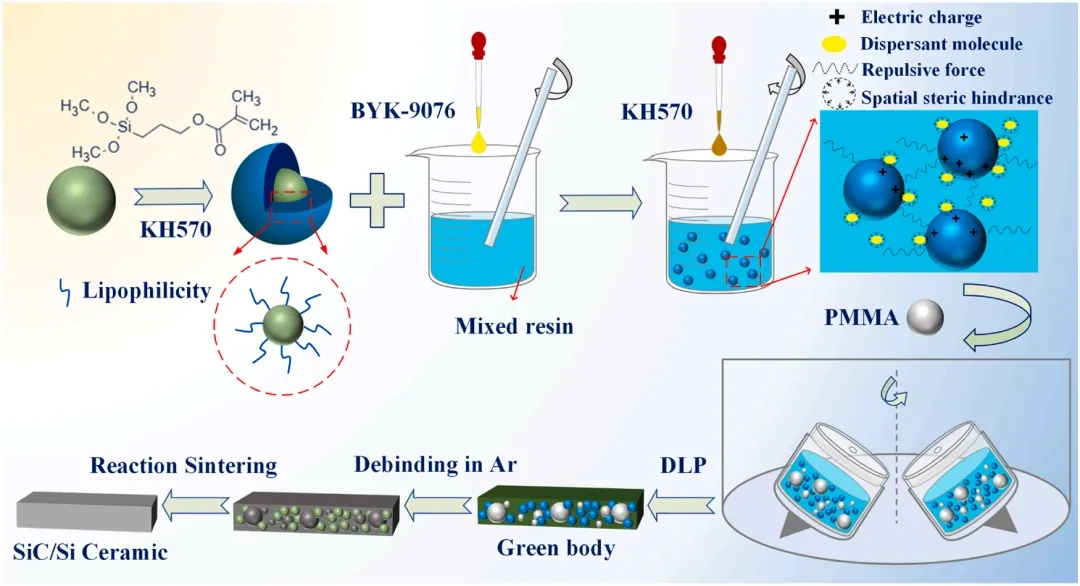
△ Fig. 1, preparation process and subsequent treatment of PMMA/SiC slurry.
-
Preparation of modified silicon carbide powder (mSiC)
-
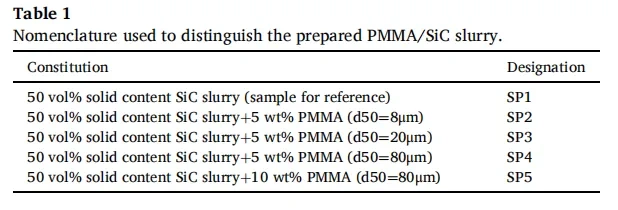
Preparation of 50vol% silicon carbide slurry + different proportions of PMMA as shown in Table 1
-
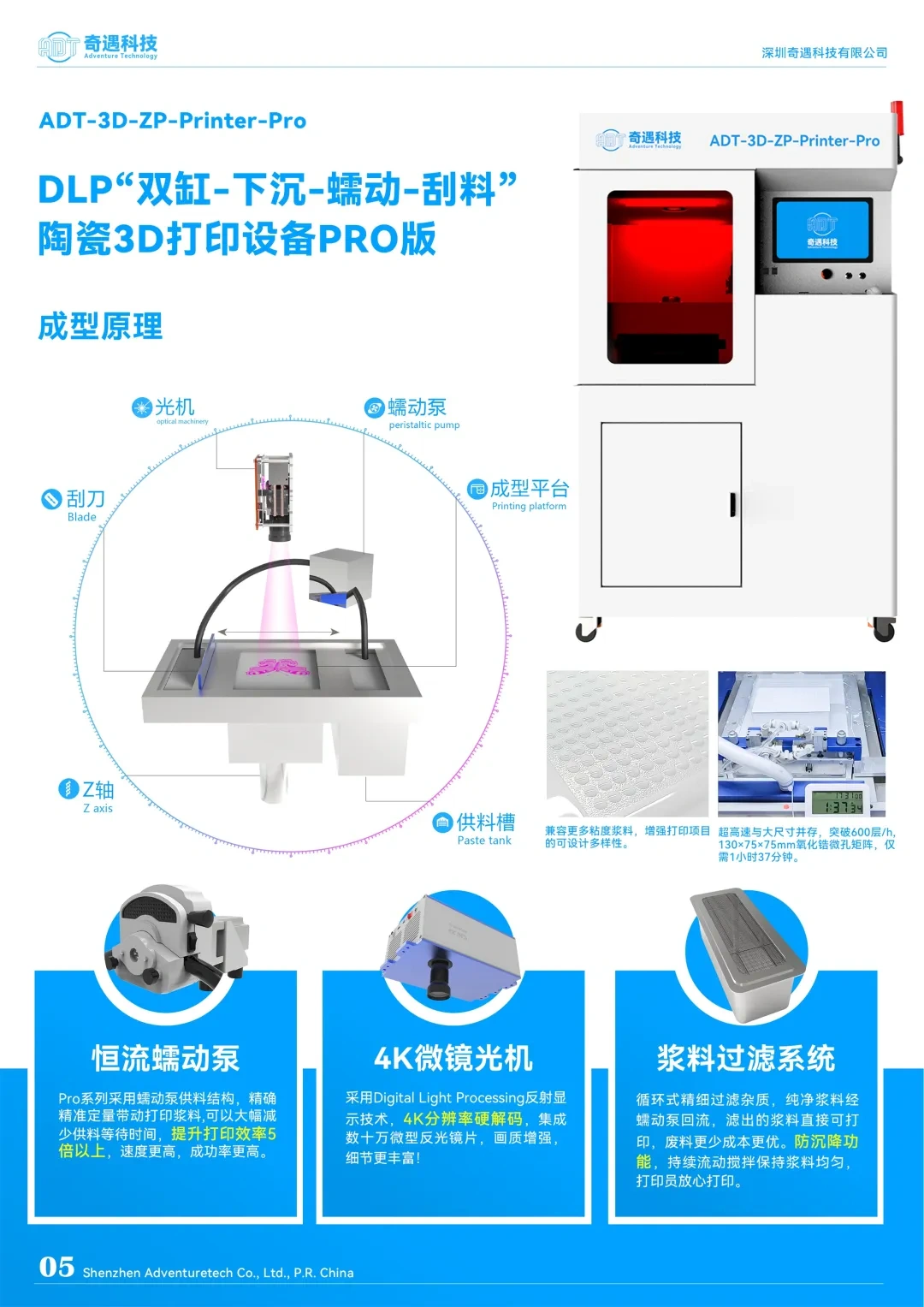
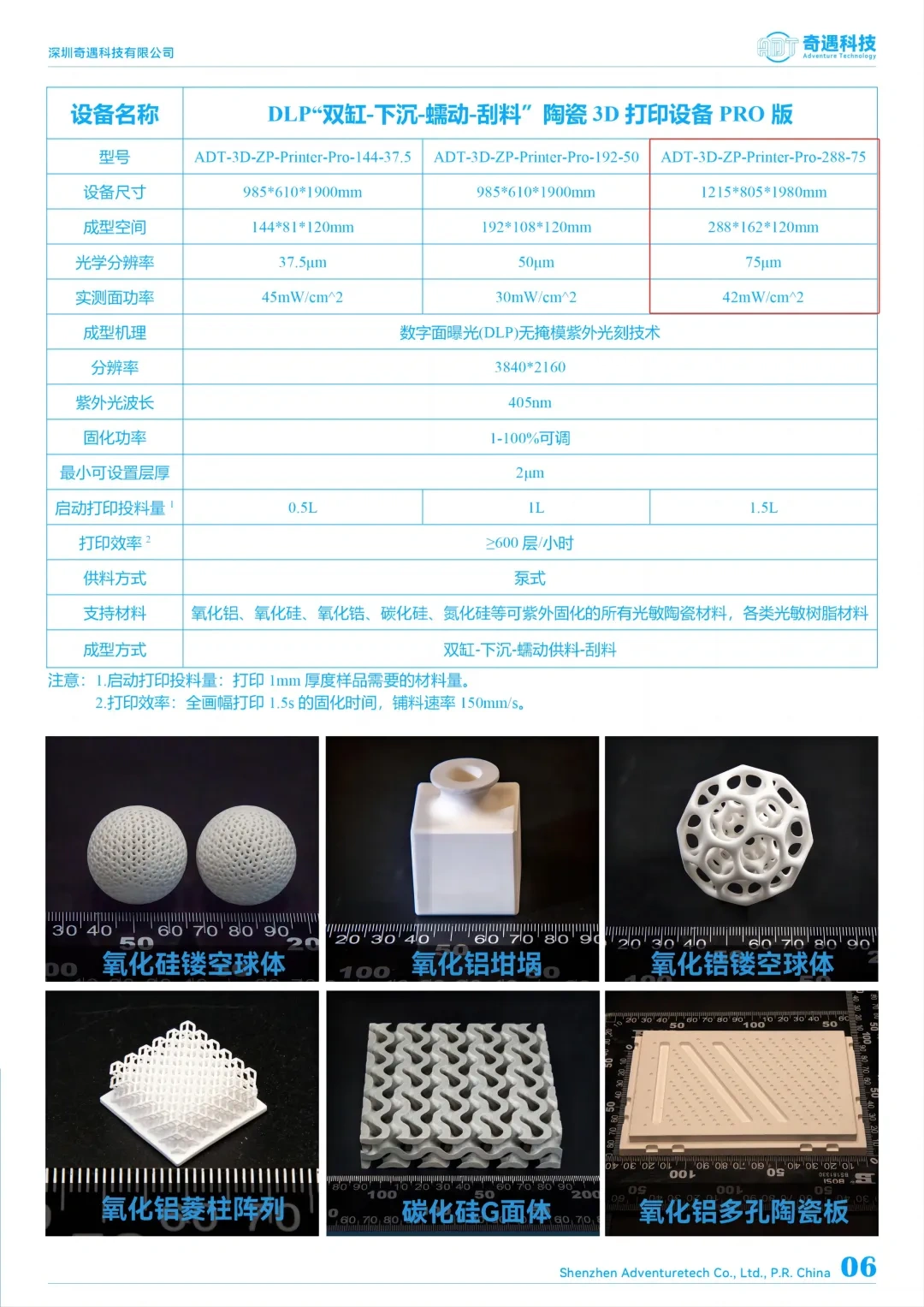
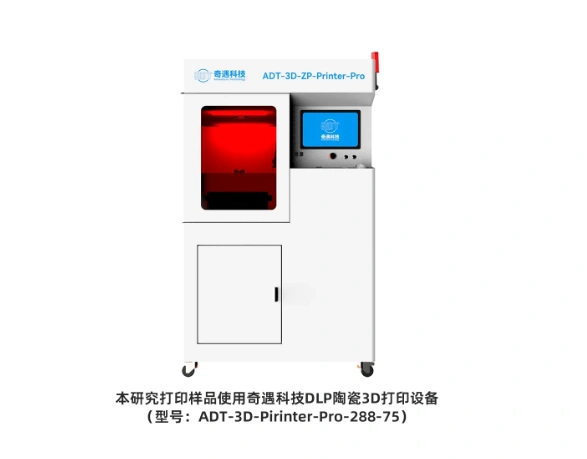
DLP Print Molding: This step usesAdventure Technology DLP Ceramic 3D PlayPrinting equipment(型号:ADT-3D-Pirinter-Pro-288-75)wavelength 405nm, light intensity 29mW/cm2.
-
Degreasing Sintering: The green body was placed on twice the mass of silicon particles as in Figure 2(a-b) and degreased in a 0.1 MPa argon atmosphere before reaching 1000°C. Subsequently, reaction sintering was carried out by heating to 1650 ° C. under vacuum with a holding time of 2 hours.
-
Performance evaluation: The viscosity, curing depth, microstructure, density and shrinkage of SiC after reaction sintering of PMMP-containing SiC slurry were evaluated.
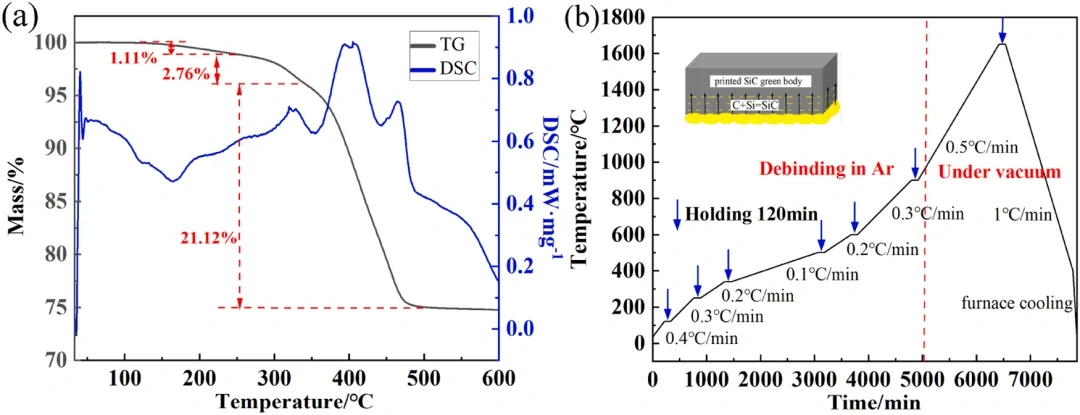
Figure 2,(a) TG/DSC curve of printed blank. (B) One-step degreasing-sintering curve.
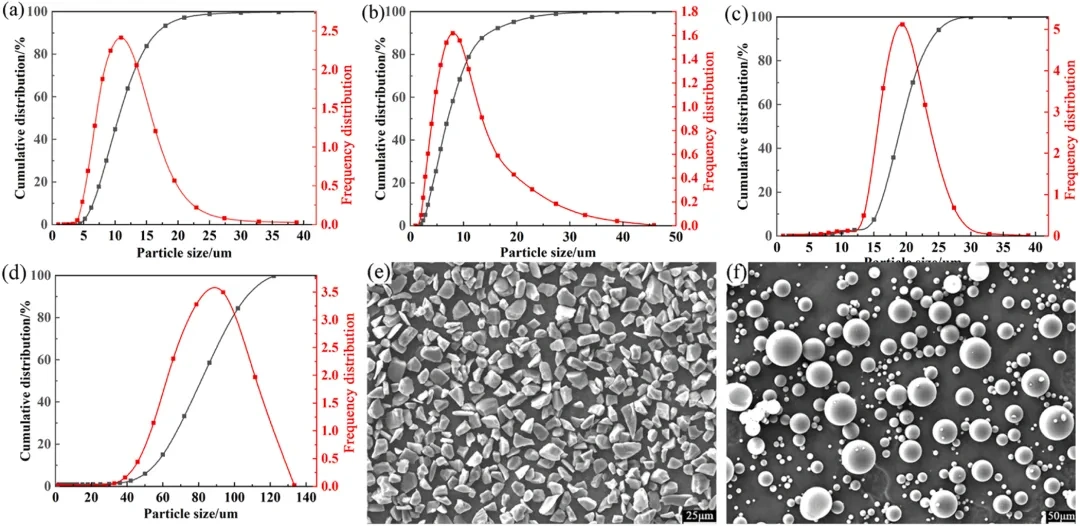
△ Fig. 3, particle size distribution and morphology of SiC and PMMA powder:(a) SiC with d50 = 10μm; (B) PMMA with d50 = 8μm;(c) PMMA with d50 = 20μm;(d) PMMA with d50 = 80μm;(e) SiC powder morphology;(f) PMMA powder morphology with d50 = 80μm.
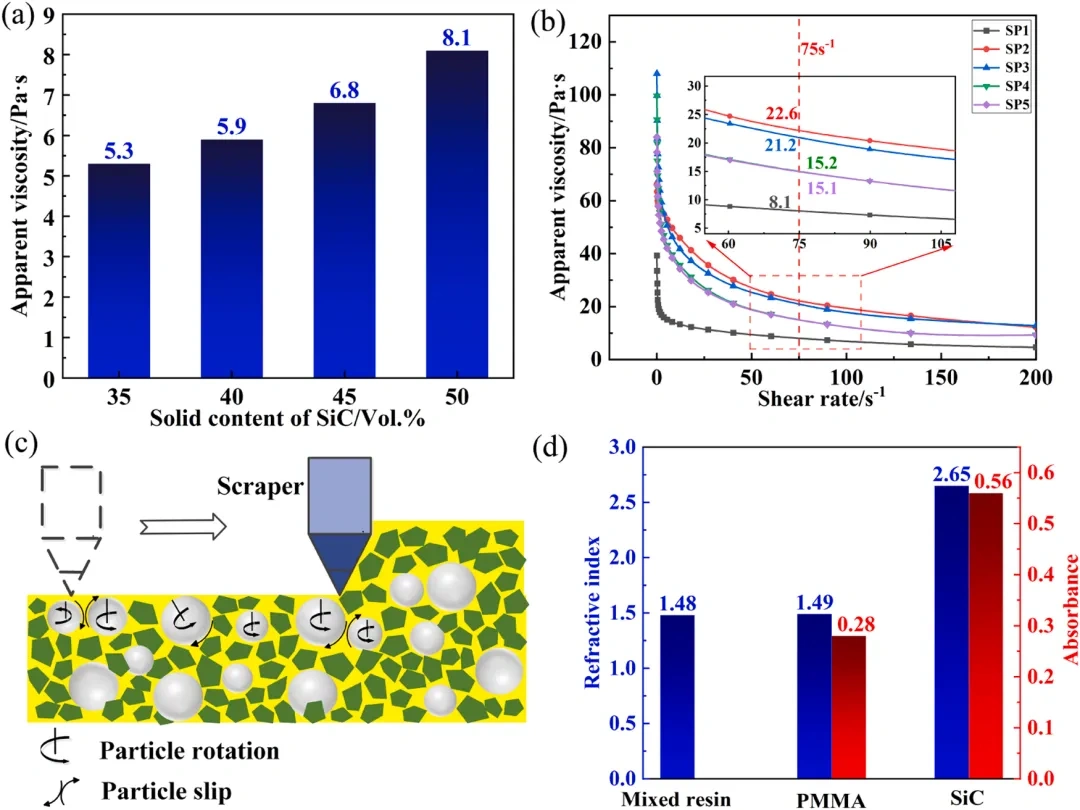
△ Fig. 4,(a) The apparent viscosity value of SiC slurry with different solid content when the blade moving speed is 75S − 1. (B) The apparent viscosity of the five SiC slurries in Table 1 changes with shear rate. (c) The lubricating effect of the spherical PMMA particles makes the viscosity of the slurry change little. (d) Refractive index of SiC, PMMA particles and mixed resin, and absorbance of SiC and PMMA under 405nm UV light.
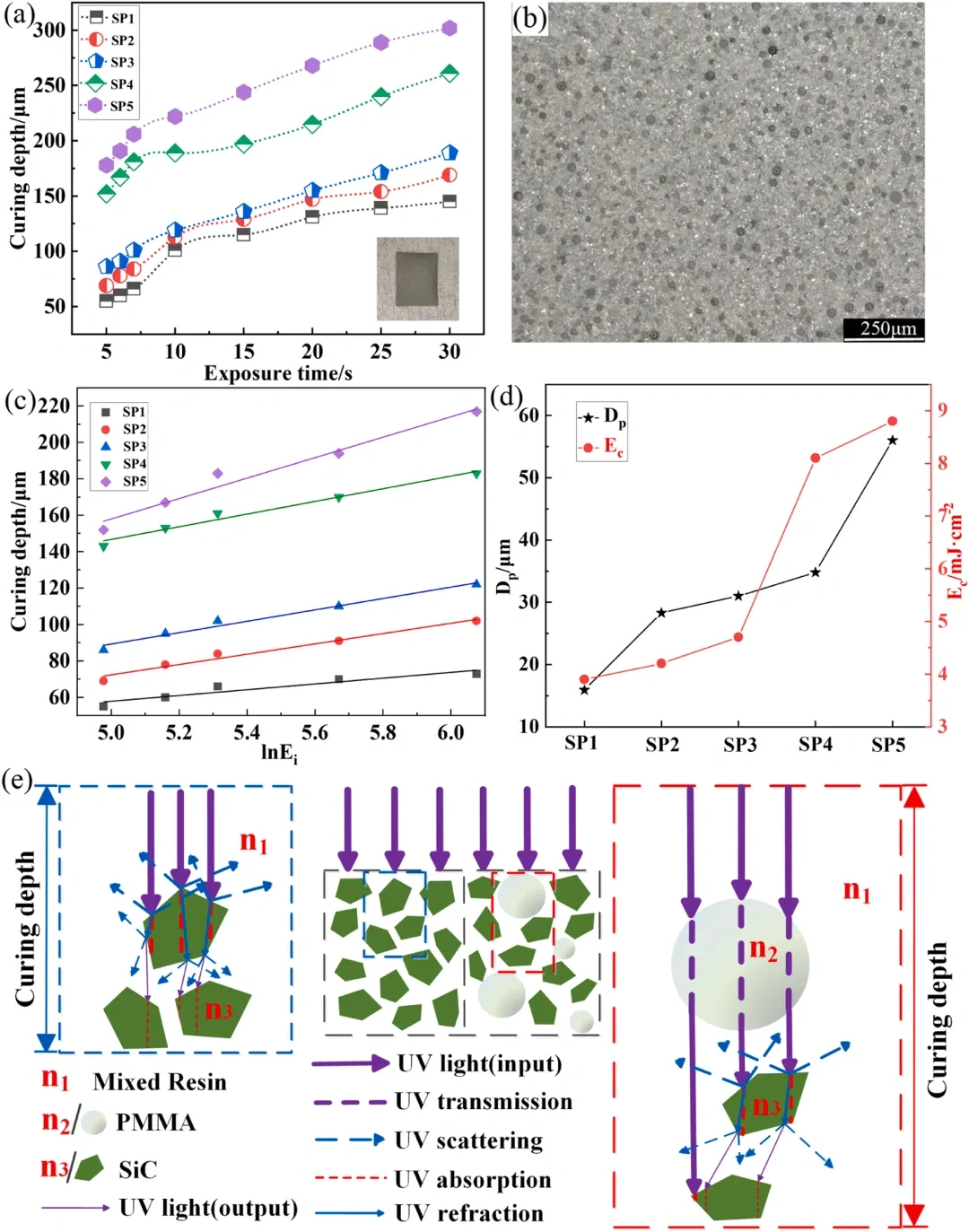
5,(a) Depth of solidification of five SiC pastes listed in Table 1. (B) PMMA is uniformly distributed in the cured sheet. (c) and (d) Relationship between Cd, lnEi, Dp and Ec. (e) PMMA-constructed optical channels effectively improve the curing depth of SiC slurry.
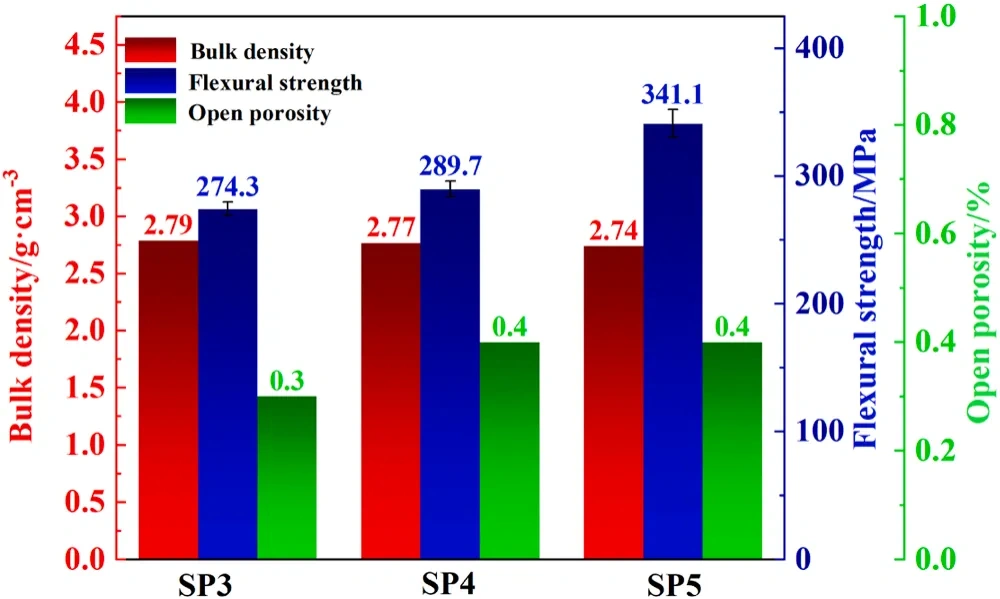
6, bulk density, open porosity and bending strength of sintered samples SP3, SP4 and SP5.
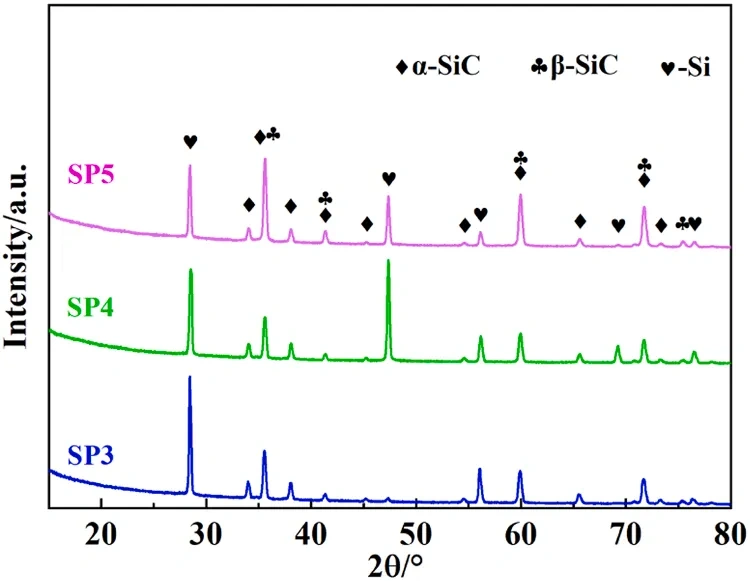
7, XRD patterns of three sintered samples SP3, SP4 and SP5.
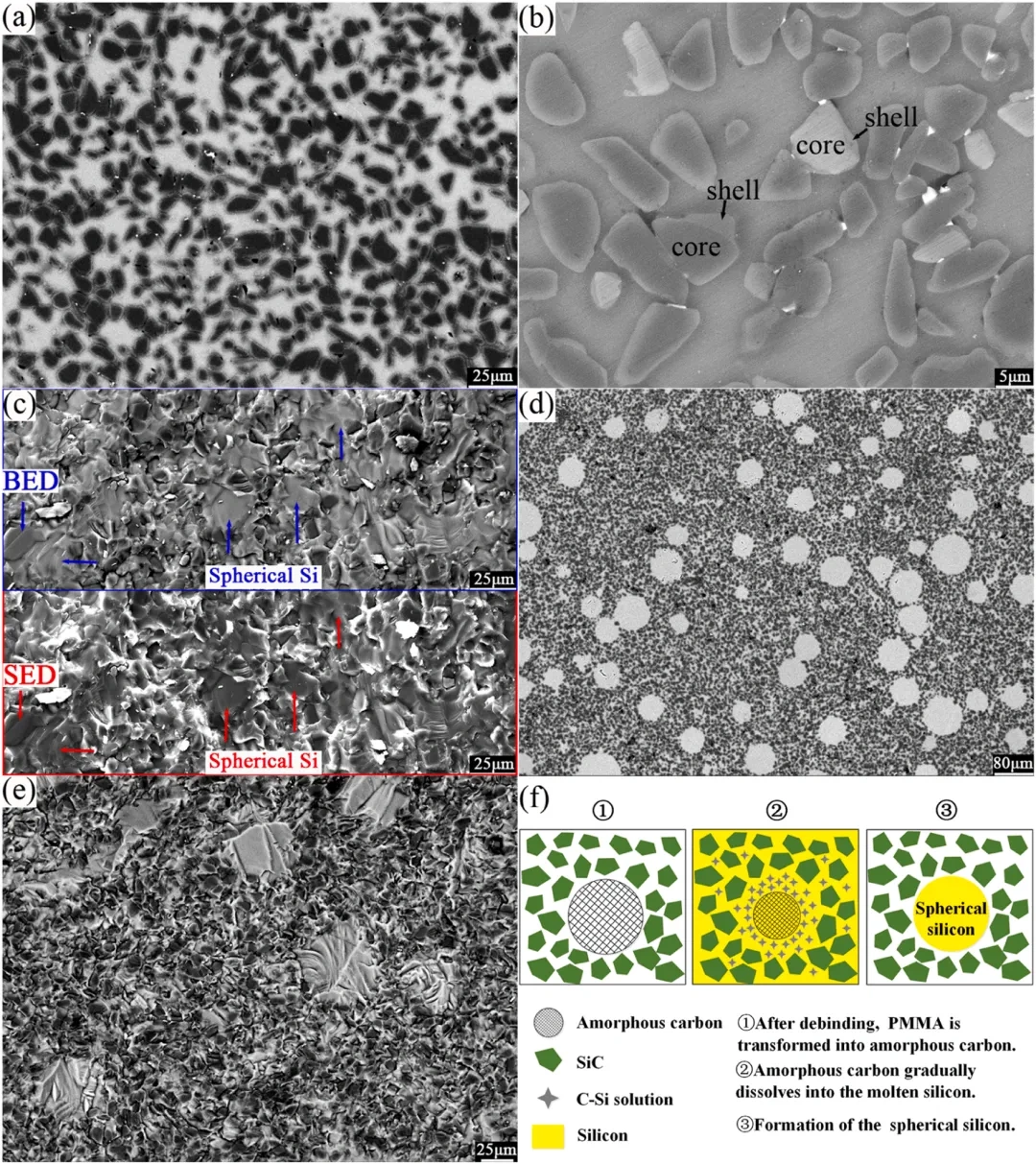
Figure 8,(a) Backscattered electron microscope image of the surface of sintered sample SP3. (B) A secondary electron microscope image of the surface of the sintered sample SP3. (c) Fracture morphology of sintered sample SP3 in secondary and backscattered electron modes. (d) A large number of spherical silicon particles were formed on the surface of the sintered sample SP5. (e) Fracture morphology of sintered sample SP5. (f) Formation process of spherical silicon.
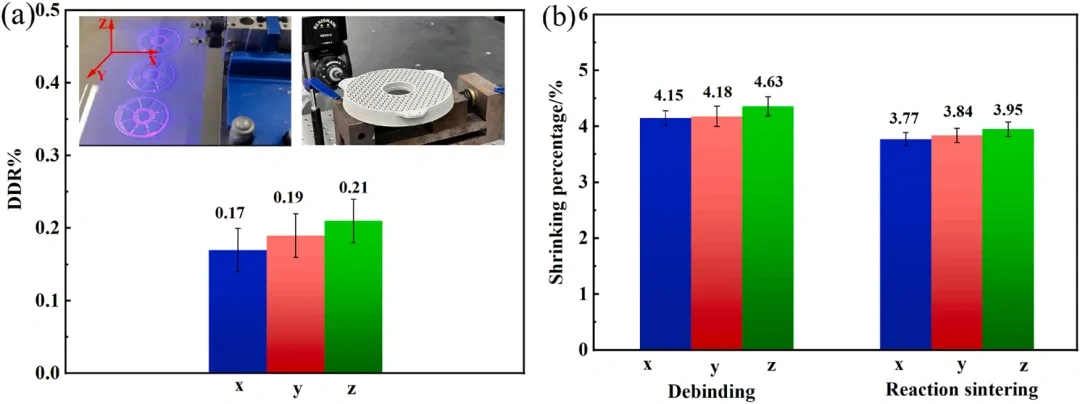
△ Figure 9,(a)SP5 three-dimensional size deviation rate. (B) Shrinkage of the green body during debinding and sintering.
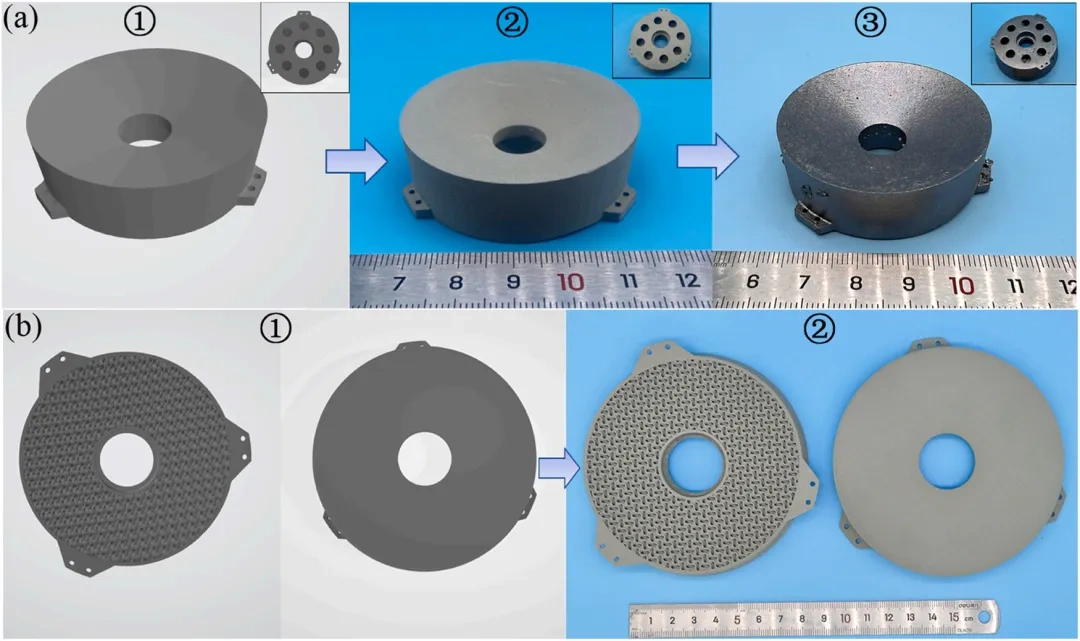
△ Figure 10, images of silicon carbide mirrors of different sizes:(a), 48mm in diameter. (B) 120mm in diameter.
Conclusion
In this study, by introducing high transparency PMMA particles, the curing depth of SiC slurry in the DLP printing process was significantly improved, reaching a maximum of 244 μm, and combined with the reaction sintering technology, the SiC/Si mirror with complex structure was successfully manufactured.The results show that the lubricity of PMMA particles has little effect on the viscosity of SiC ceramic slurry, and the refractive index of PMMA particles is similar to that of mixed resin, which avoids UV light scattering, indicating that it is suitable as a light channel material. During the reaction sintering process, the spherical silicon formed not only reduces the silicon content in the SiC particle-enriched region, but also relieves the stress concentration in the matrix, making the highest bending strength of SiC/Si composite ceramics up to 341.1MPa.
The light curing DLP 3D printing equipment used in the article is introduced as follows