
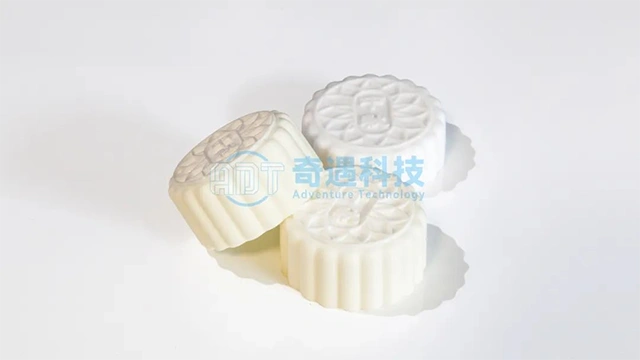
As a traditional reunion festival in China, moon cake has always been an indispensable symbol. In this era of blending technology and culture, our company skillfully combines ceramic 3D printing technology with Mid-Autumn Festival, and uses light curing DLP 3D technology to print alumina ceramic moon cakes. This innovation not only shows the advanced 3D printing technology, but also gives the traditional festival a new charm of science and technology. This article will take you to understand the process of light curing DLP 3D printing alumina ceramic moon cake.
This time, our company uses self-developed ADT-3D-ZP-Printer-Pro-144-75 printing equipment to print, which supports the integrated molding of large-size ceramic parts and the mass production of fine and small-size samples, which is required in aerospace, automobile manufacturing and 3C industries.
Print Device
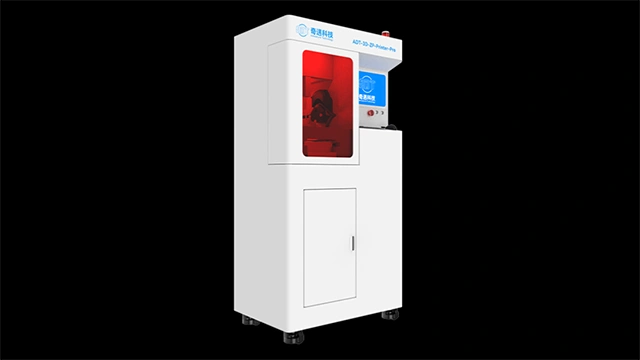
This time we use the (ADT-3D-ZP-Printer-Pro-144-75) printing equipment independently developed by Adventure Technology to print
STL Model
First, our design team used 3D modeling software to design a digital model of the moon cake. In this process, we fully considered the shape details of the moon cake, including the pattern, size, etc., so that it not only has the appearance of traditional moon cakes, but also reflects the texture of ceramic materials. After the 3D design is completed, the model is imported into the slicing software. The slicing software divides the three-dimensional model into multiple two-dimensional plan layers for layer-by-layer printing.
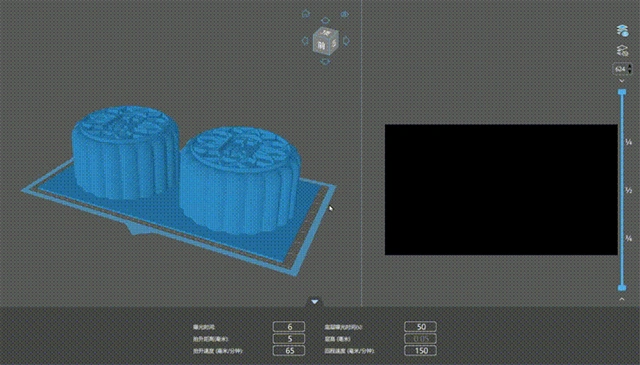
Print Process
In the DLP 3D printer, our equipment is equipped with a peristaltic filter feeding system, which greatly reduces the amount of material required for a single print. Then, the DLP light source irradiates the slurry layer by layer according to the pre-designed model to cure the slurry. The entire printing process through precise digital control, to achieve a high-precision alumina ceramic moon cake molding.
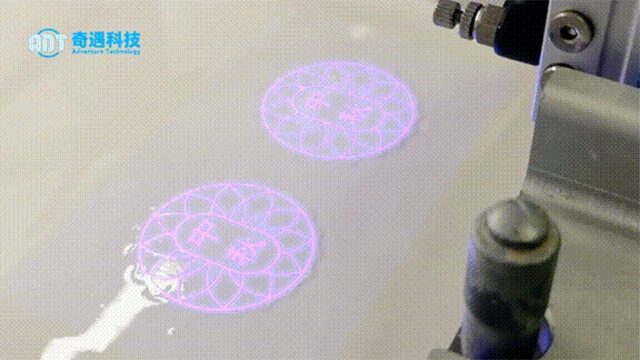
roll-out process
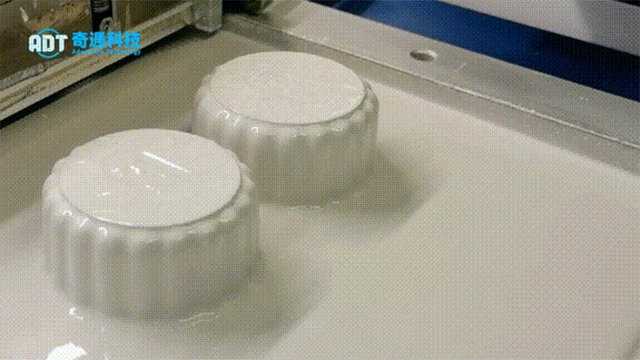
After the printing is completed, the molded moon cake is removed from the printing platform and cleaned to remove the uncured slurry on the surface. At this time, the moon cake is still not sintered state, showing a certain degree of brittleness.
Removal process
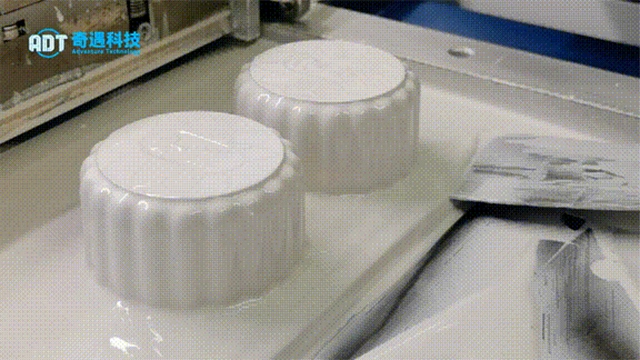
Cleaning process
In order to obtain the final ceramic properties, the moon cake needs to be sintered at high temperature. The sintering temperature of alumina ceramics is generally around 1650°C. After this process, our moon cakes will have high hardness and wear resistance while maintaining fine appearance details.
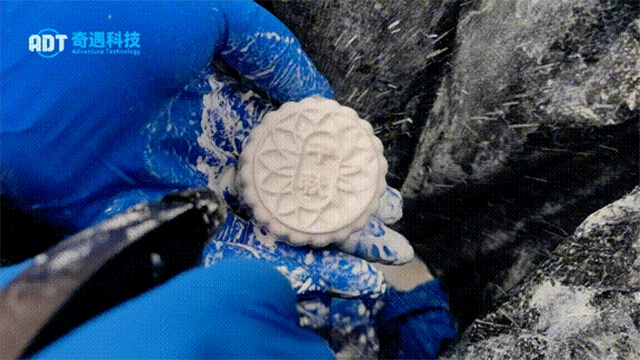
sintering
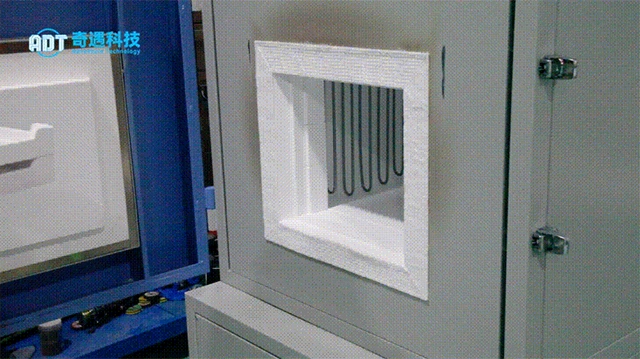
Finished product display
The progress of science and technology gives us the opportunity to inherit and innovate traditional culture in a new way. Light-curing DLP 3D printing alumina ceramic moon cakes is just the beginning. We look forward to integrating more technology and culture in the future and injecting new vitality into traditional festivals.