
Ceramic 3D printed gallium-doped calcium silicate bioceramic scaffold
1.Ceramic 3D printed: Gallium-doped 3D-printed calcium silicate scaffolds enhance strength and osteogenic properties.
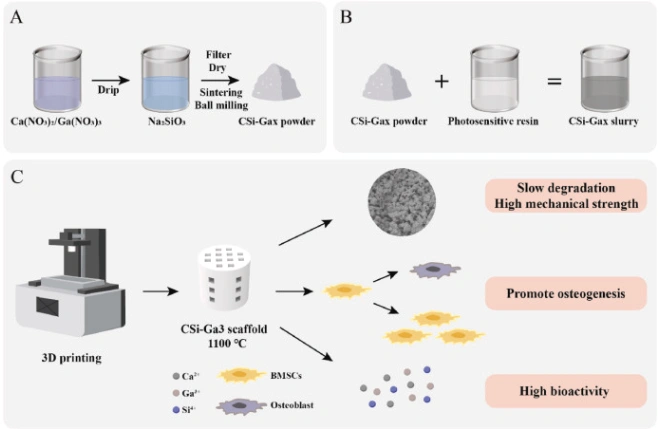
With the continuous increase in the incidence of bone injuries, the research on silicon dioxide calcium (CSi) ceramics as artificial bone implants for repairing bone defects has attracted much attention. However, problems such as low mechanical strength and rapid degradation have posed significant challenges to bone repair, especially for thin-walled bone defects with specific mechanical requirements, limiting its application in bone repair. Recently, Professor Shao Huifeng from Hangzhou Dianzi University led a team and published a study titled "3D-printed gallium-doped calcium silicate bioceramic scaffolds with high strength and osteogenesis-promoting properties" in "Ceramics International". They modified CSi ceramics by doping gallium ions and developed gallium-doped calcium silicate (CSi-Gax) scaffolds based on projection 3D printing technology, which have good mechanical strength and degradation performance.
Original link: https://doi.org/10.1016/j.ceramint.2024.12.53
2. Ceramic 3D printed: Gallium doping enhances the strength and osteogenic properties of calcium silicate scaffolds, with CSi-Ga3 showing the best performance.
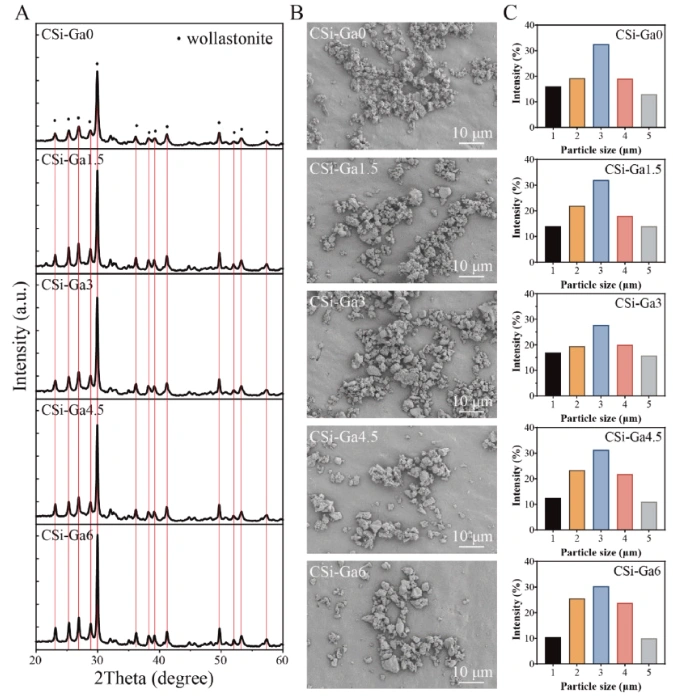
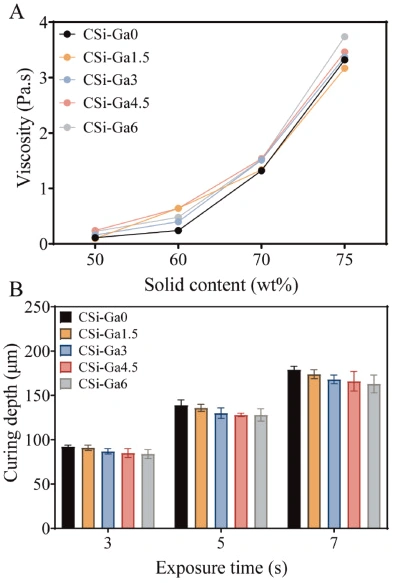
This study aims to synthesize CSi-Gax ceramics with Ga/Ca molar ratios ranging from 0% to 6%, and to prepare CSi-Gax scaffolds using 3D printing technology based on projection. The physicochemical properties, mechanical properties and biodegradability of the scaffolds were investigated, and the biological activity and osteogenic performance of the scaffolds were further explored. The significance of gallium ion doping in improving the performance of calcium silicate scaffolds was revealed. This research can provide more effective treatment methods for clinical bone repair and reconstruction, and is expected to become an innovative and efficient bone repair treatment plan. The following is the research method and data of the article:
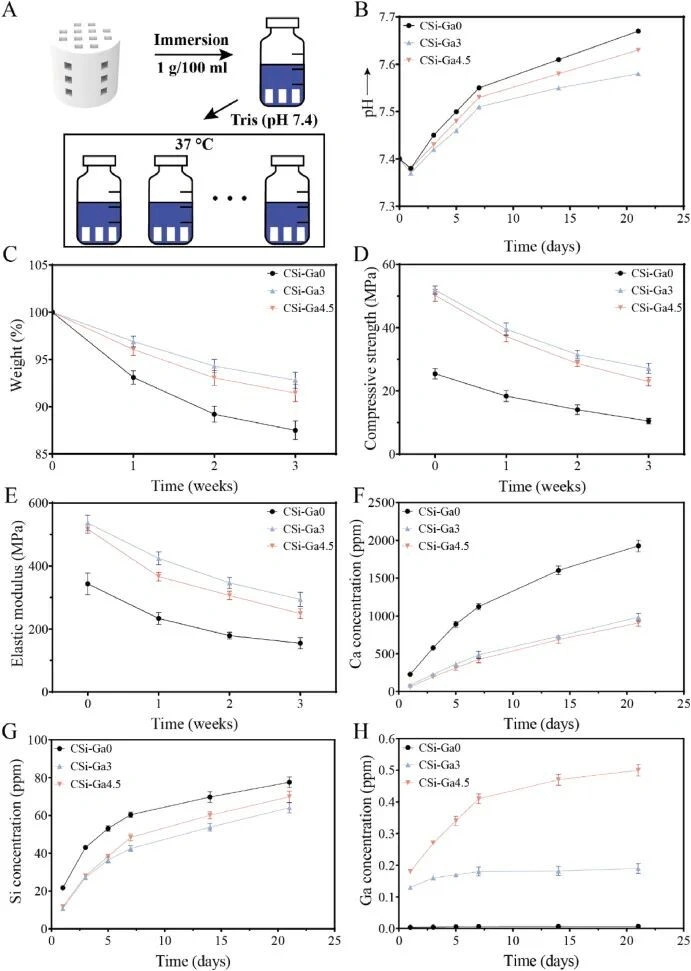
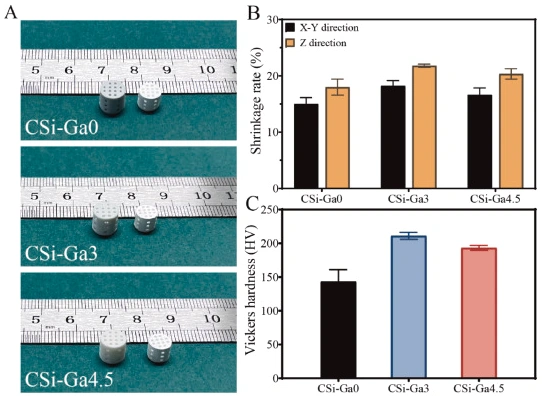
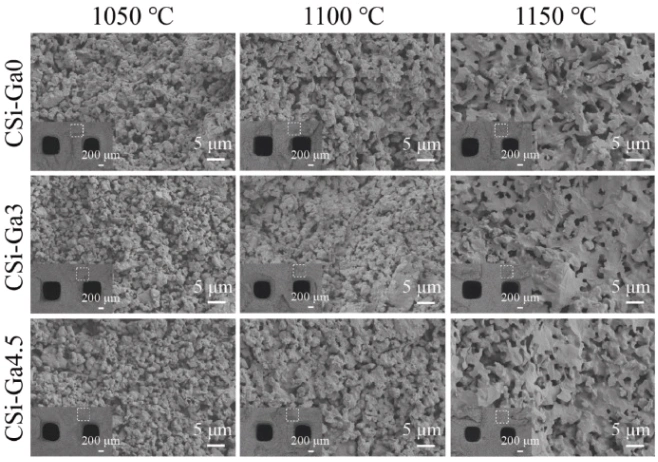
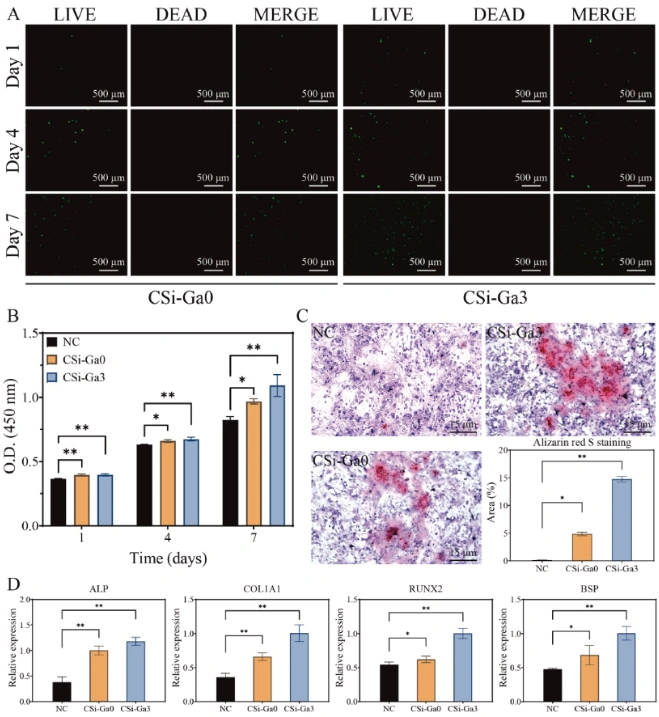
This study modified CSi ceramic by doping gallium ions, and developed a gallium-doped calcium silicate (CSi-Gax) scaffold with excellent mechanical strength and degradation performance. The effects of gallium ion doping amount (x mol%), sintering temperature and pore size on the scaffold strength were systematically investigated. At a temperature of 1100 °C, the CSi-Gax scaffold exhibited remarkable mechanical properties. The compressive strength of the CSi-Ga3 scaffold was nearly twice that of the pure CSi scaffold, reaching approximately 52 MPa. The in vitro degradation study showed that the CSi-Ga3 scaffold maintained a high compressive strength (over 27 MPa) and elastic modulus (greater than 294 MPa) after being immersed in Tris buffer solution for three weeks. Moreover, it also exhibited excellent biocompatibility and osteogenic performance. The research results indicate that the CSi-Ga3 scaffold exhibits excellent mechanical and biological properties, making it highly suitable for in situ bone repair.