Bioceramic scaffolds printed by ceramic 3D printer have been widely used in the field of bone tissue engineering.
The porous structure of 3D-printed bioceramic scaffolds significantly reduces their mechanical properties, hindering their application in load-bearing areas. Recently, Professor Zhu Yufang and his team at the Shanghai Institute of Ceramics, Chinese Academy of Sciences, published a study entitled "3D printing of polymer-derived ceramic scaffolds with cuttlebone-like structure for bone repair" in *Ceramics International*. The researchers combined a polymer-derived ceramic (PDC) strategy with biomimetic manufacturing technology to fabricate a PDC/CUTT-AKT scaffold with a cuttlebone-like structure, exhibiting both excellent mechanical strength and biological properties, providing a novel structural support platform for bone repair ceramic 3d printer.
Original link: https://doi.org/10.1016/j.addma.2024.104143
AdventureTech Official Website:
https://adt-ceramic3dp.com/
https://www.adventure-tech.cn/
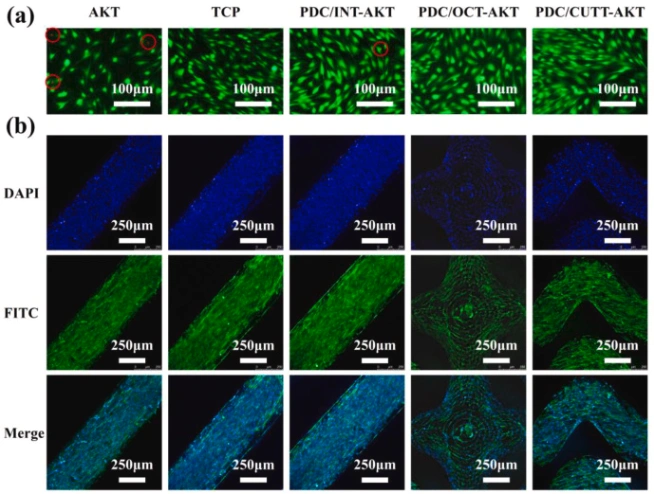
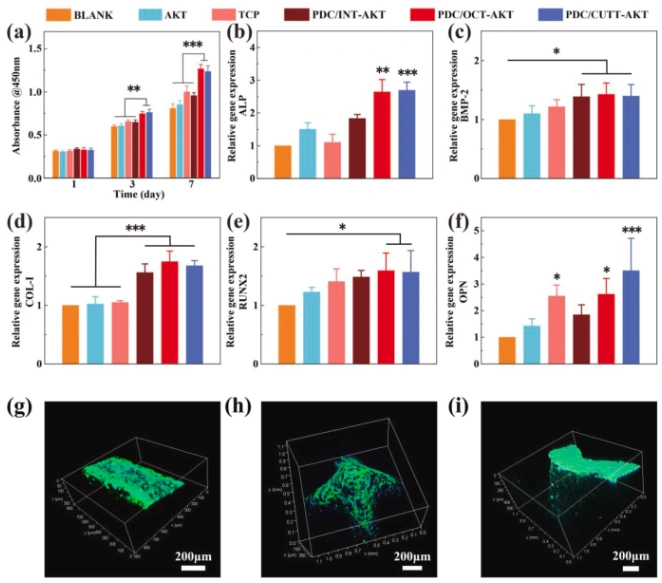
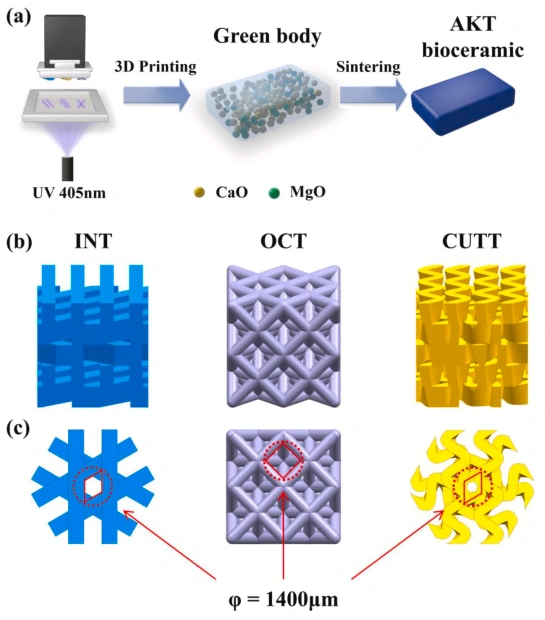
This study proposes combining polymer-derived ceramics (PDC) strategies with 3D printing-based biomimetic manufacturing technology to successfully fabricate a porous mafic scaffold (PDC/CUTT-AKT) with a cuttlebone-like structure. The research team formulated a photosensitive ceramic slurry containing silicone resin and bioactive components for high-precision printing of the bioceramic scaffold. The introduction of the biomimetic CUTT structure effectively improved the compressive strength of the scaffold. In terms of biological performance evaluation, good cell adhesion, proliferation, and osteogenic differentiation capabilities were observed after rabbit bone marrow mesenchymal stem cells (rBMSCs) were seeded on the surface of the PDC/CUTT-AKT scaffoldceramic 3d printer.
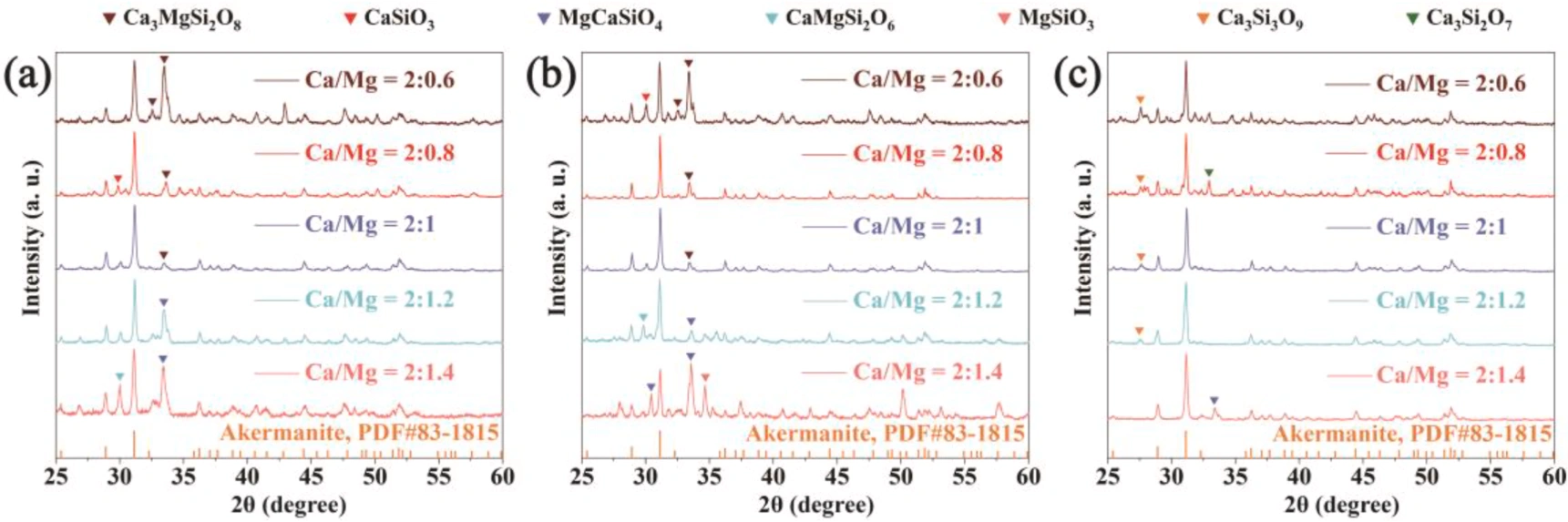
The following are the research methods and some data of bioceramic scaffolds printed by ceramic 3D printer:
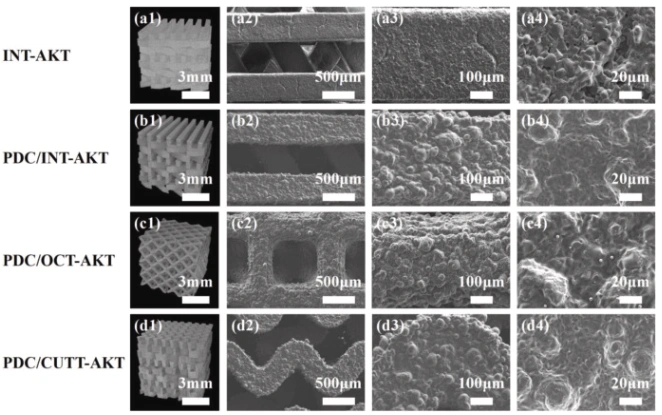
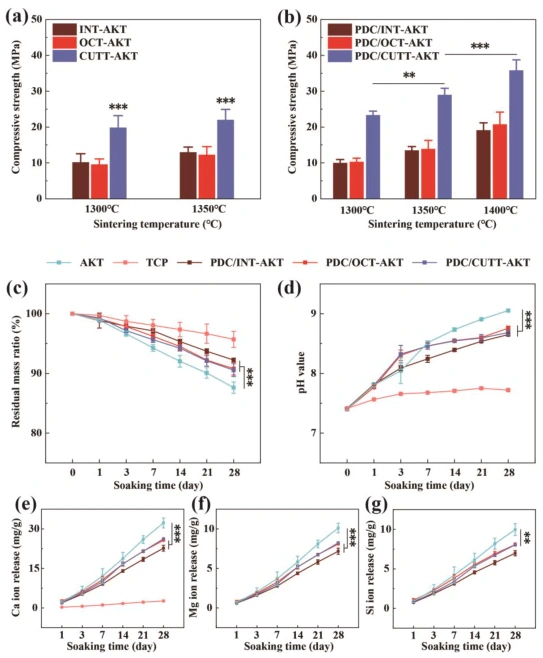
This study successfully fabricated a cuttlebone-like AKT bioceramic scaffold by combining PDC with a biomimetic strategy.
When the calcium-magnesium molar ratio is 2.0 and the sintering temperature is 1400℃, a pure PDC/CUTT-AKT scaffold with a dense surface microstructure can be formed. Furthermore, due to the construction of the cuttlebone-like macrostructure, the PDC/CUTT-AKT scaffold exhibits high compressive strength (35.80±2.95 MPa) and porosity (51.74±5.23%). More importantly, the PDC/CUTT-AKT scaffold also exhibits good biocompatibility and osteogenic capacity in vitro. This PDC-biomimetic strategy holds promise for providing a new method for fabricating high-performance bioceramic scaffolds for bone repairceramic 3d printer.