
In 2025, a listed medical device company in China installed two industrial ceramic DLP printers from Adventure Technology to move its bioceramic bone graft products toward volume production. After close to a year of running them on real parts, the company ordered two more units of the same model in 2026. Its installed base is now four machines.
The interesting part is not the first purchase — it is the second one. Buying the first machine is a decision about a technology. Buying two more is a decision about production.
1. Bone grafts need structure, not just material
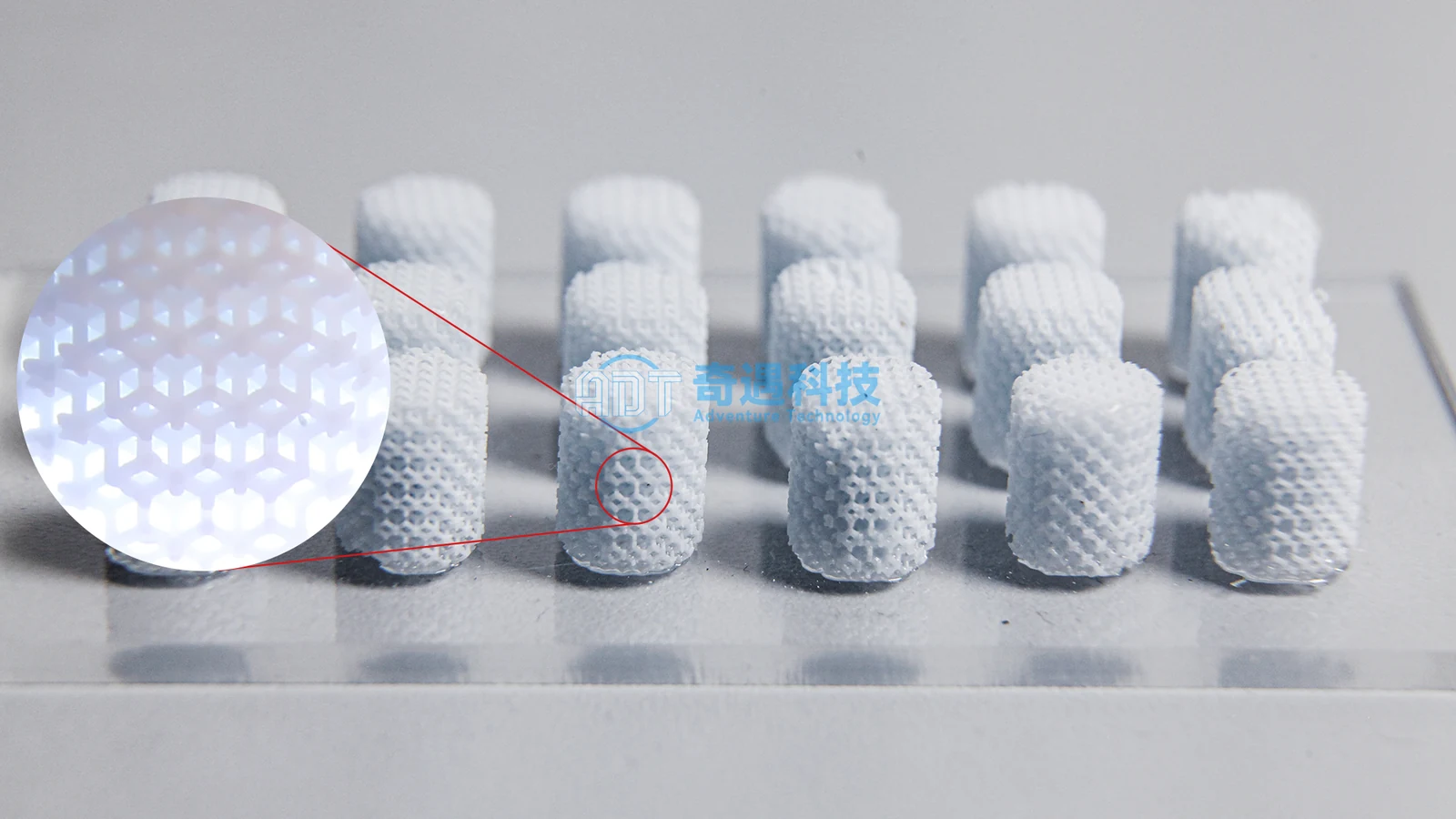
China's bone repair material market is expected to grow to around RMB 7 billion by 2027, driven by an ageing population and rising demand in orthopaedics and dentistry [1]. For bioceramic bone grafts, material performance is only half of the story. Pore size, porosity, pore connectivity and the overall three-dimensional architecture decide how the implant behaves in the defect site.
Moulding and machining impose limits on that architecture. Ceramic DLP printing builds the porous structure directly from a digital model, so the outer shape and the internal channels are designed in CAD and printed in one piece — without a complex mould, and without a design compromise forced by the tooling.
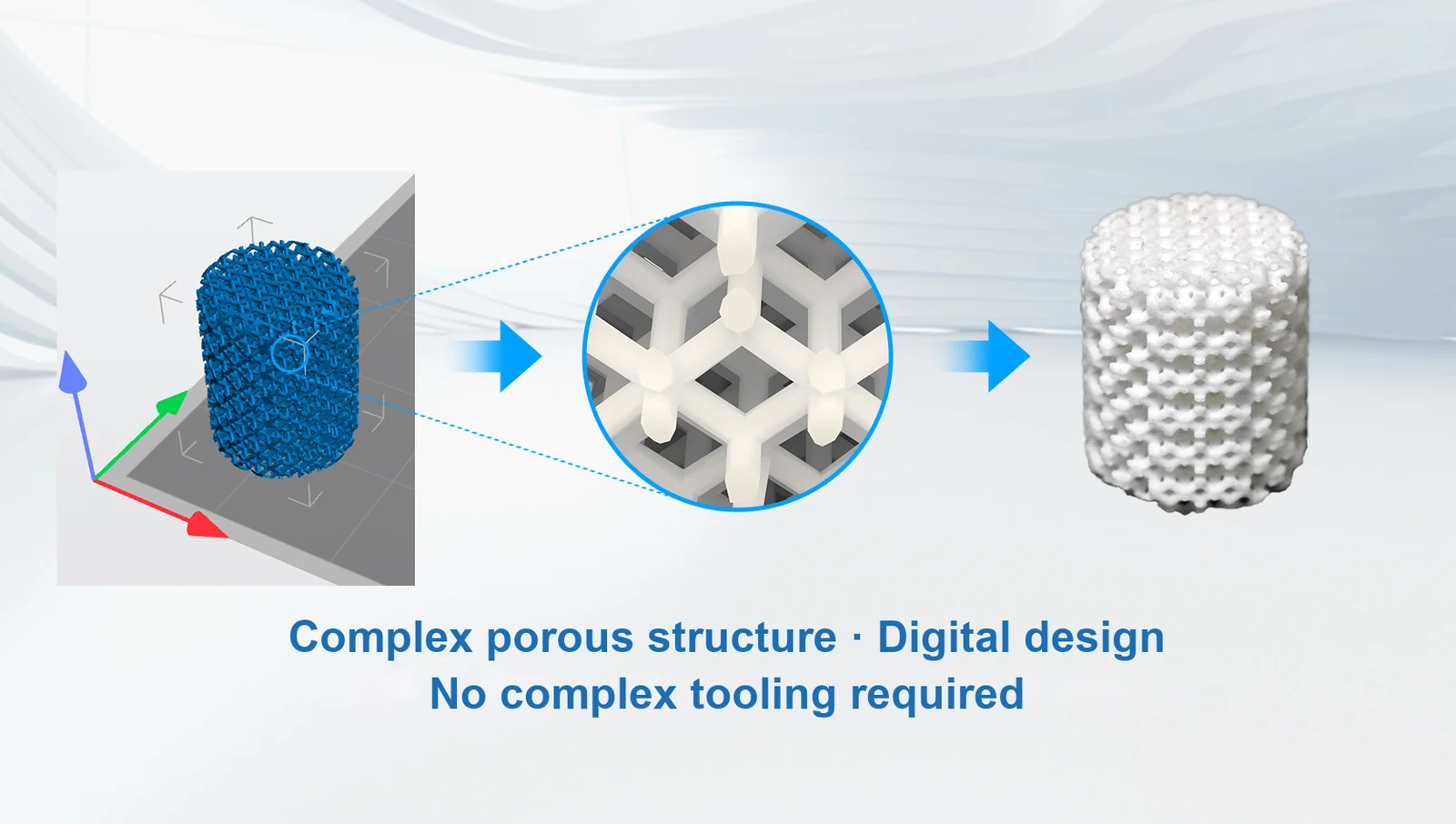
2. Printing a sample is not the same as producing it
For a medical device manufacturer, printing one good sample proves the technology. Running it in production is a different test, and the questions change: does the machine hold up over long runs? Do batches match each other? Is throughput high enough for the product line? Can a complex structure be repeated, part after part, without drifting?
Those are the questions that separate a R&D tool from production equipment — and they were exactly what this customer set out to evaluate before committing.
3. From 2 to 4: a year of production validation
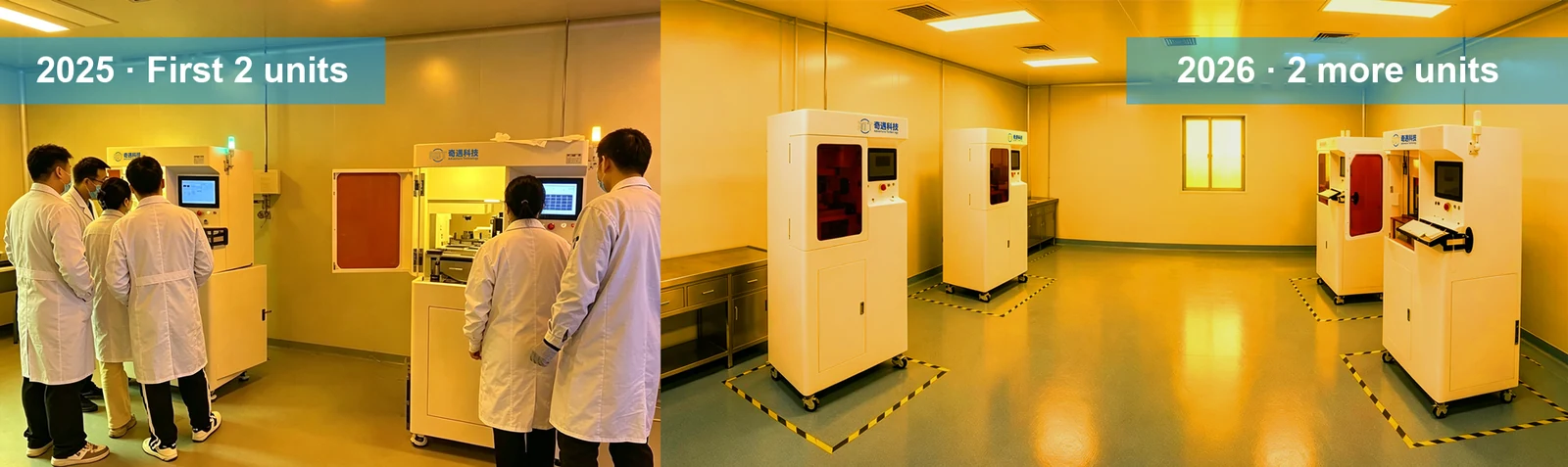
During selection, the company benchmarked several ceramic 3D printing suppliers on accuracy, continuous-run stability, throughput and part-to-part consistency. It chose Adventure Technology's industrial DLP platform and put the ADT Ceram-D-F144 to work on bioceramic bone graft products. The machine and process were adapted to the actual parts, and the system completed a 12-hour continuous run during on-site acceptance.
The two printers then ran for roughly a year inside real production, under normal load, normal scheduling and normal quality checks. In 2026, on the strength of that record, the customer added two more units of the same model to expand capacity. Four industrial DLP printers now run the same product family.
4. From sample to batch: how the efficiency was measured
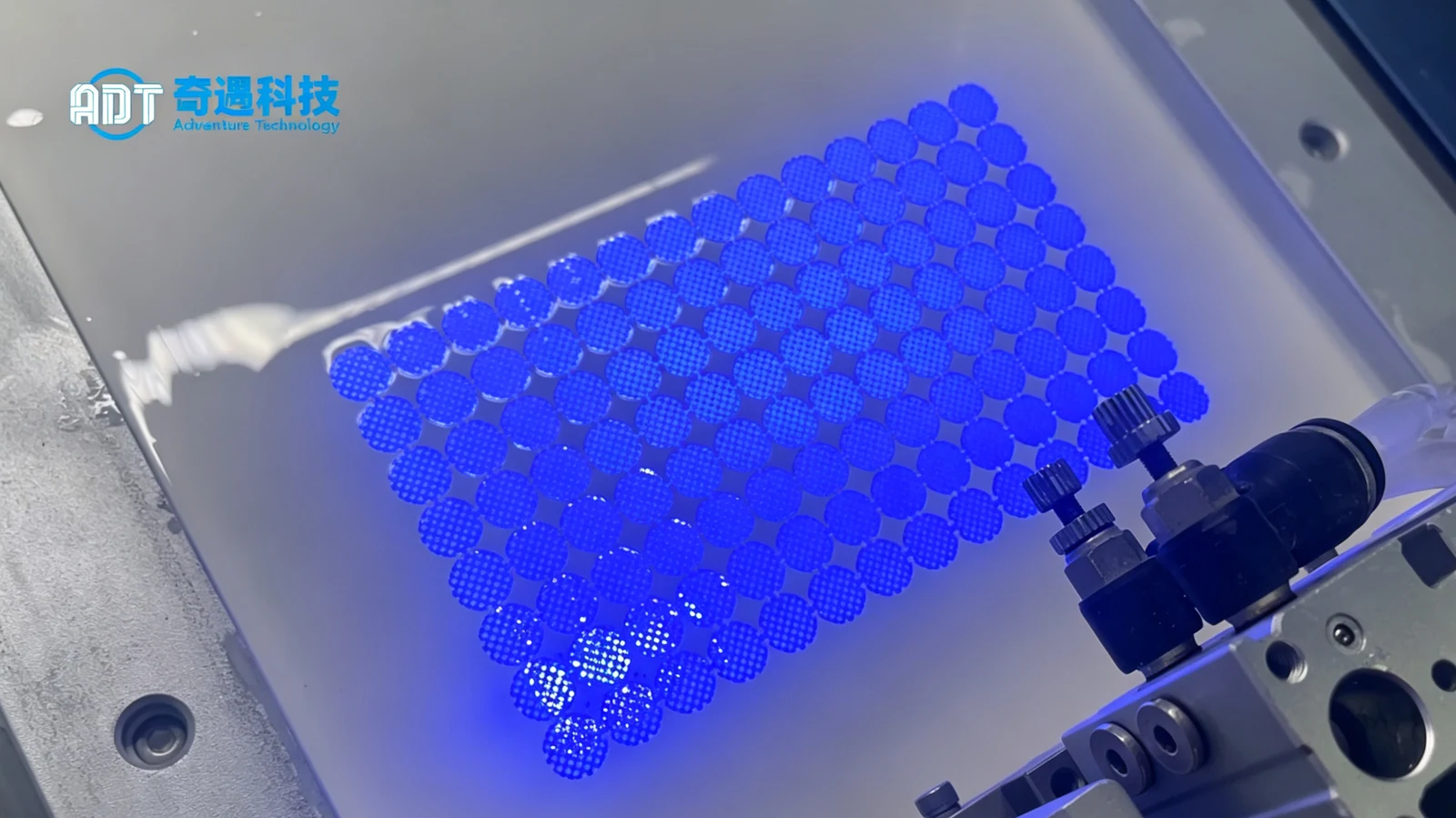
Proving that a complex structure can be printed is not enough for industrial use. Throughput has to be quantified. The project used cylindrical test coupons matched to the size of the target bone graft: Ø9.3 × 12 mm, spaced 0.8 mm apart.
At those conditions, one build plate carries 112 coupons and takes about 20 minutes to print. Run a single machine for six hours and the theoretical output is roughly 2,016 coupons.
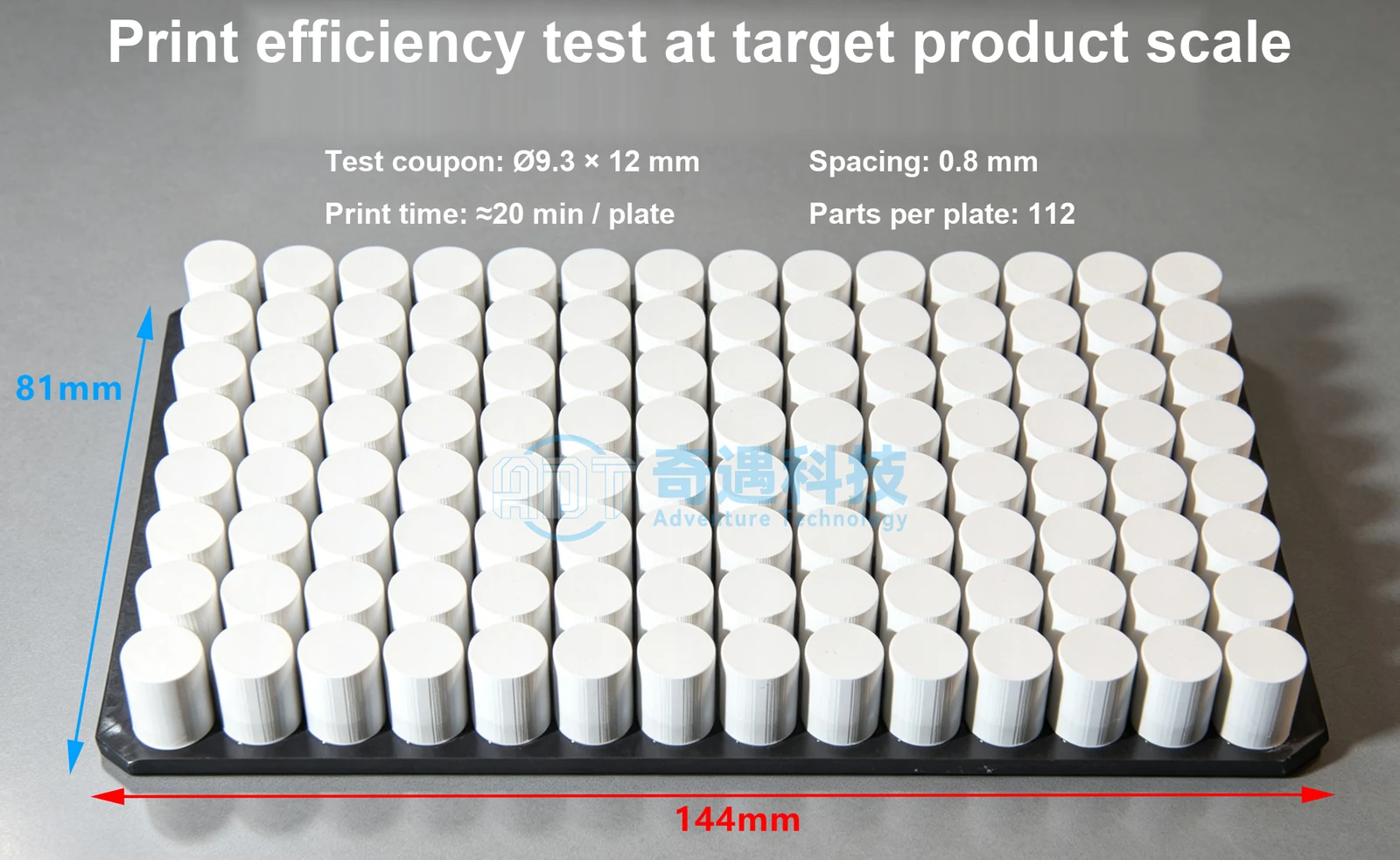
Coupons are not the final product, and this test does not represent the actual capacity of a finished bone graft line. What it does show is the shape of the answer: the process is predictable enough to plan a production schedule around.
5. What one repeat order says about the industry
Ceramic DLP printing used to live almost entirely in universities, research institutes and corporate R&D departments — material studies, structure validation, one-off samples. As slurries, printers and the debinding and sintering steps have matured, the technology is moving from "can we print this shape?" to "can we make it repeatably, at a useful rate?"
Biomedical is one of the clearest examples of that shift. Bone grafts depend on designed porosity, and medical production imposes strict requirements on machine stability, throughput and consistency. In 2026, a 3D-printed biomimetic porous bioceramic bone repair product obtained Class III medical device registration in China — a signal that printed bone grafts are entering a more mature phase of application.
6. A printer alone is not a production line
Once a ceramic part reaches industrial production, the printer is only one variable. Slurry formulation, print parameters, machine stability, debinding and sintering, and how those steps fit together all shape the final result. A machine that performs well in isolation can still fail in a production line if the process around it is not matched.
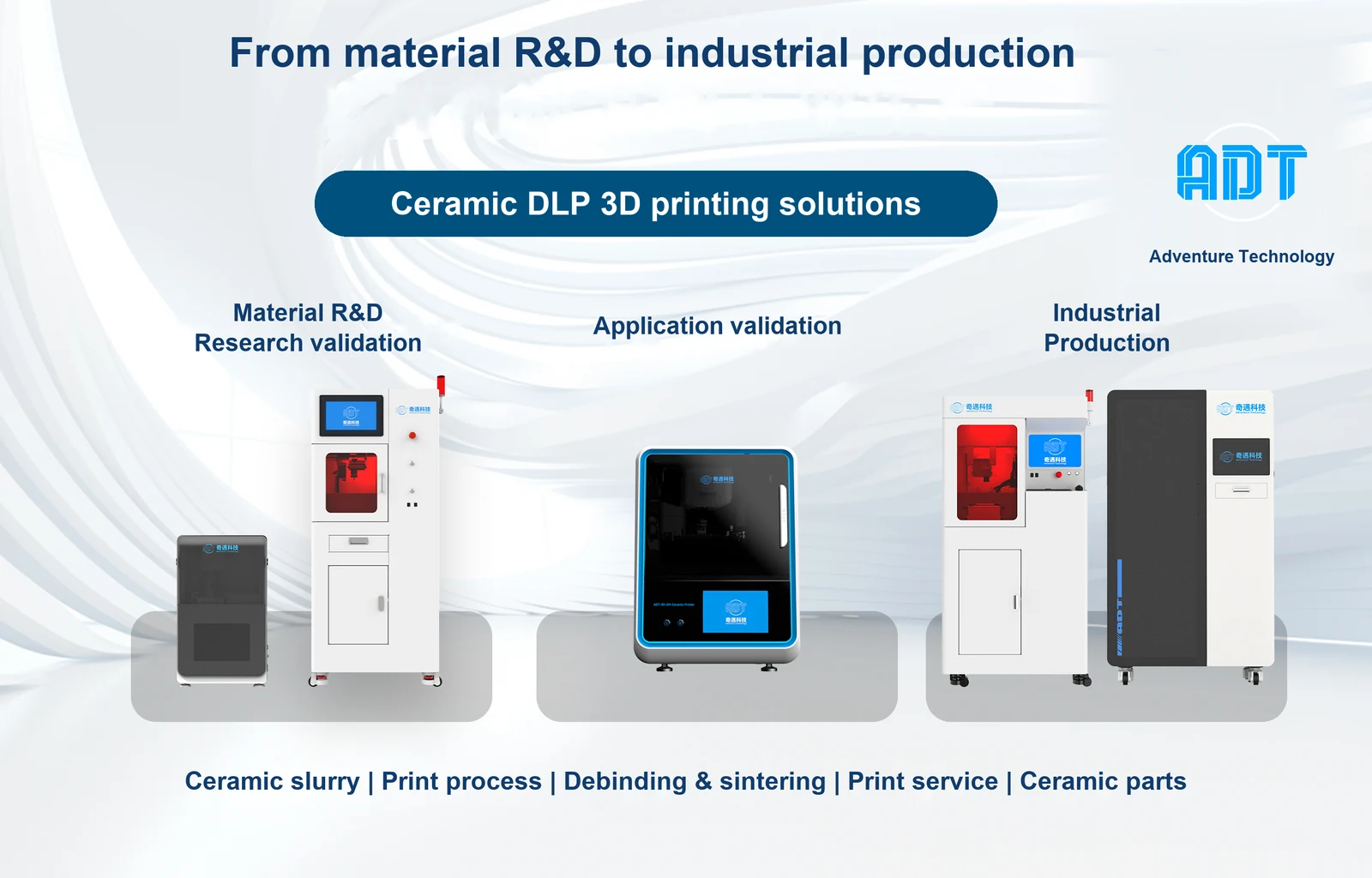
Adventure Technology (ADT) covers those stages with ceramic printers, slurries, print process support, sintering support and print services, serving biomedical, electronic ceramic and high-performance structural ceramic applications.
From printing a complex ceramic structure to manufacturing a complex ceramic product — that is the step this case is about. If you are taking a ceramic part from sample to batch, our engineers can review your geometry, annual volume and tolerances, and recommend a machine and process route. Talk to our team.
[1] Market figure as cited in the customer briefing material for this project.