
In modern ceramic processing and sintering, DLP (Digital Light Processing) 3D printing enables unprecedented geometric complexity. However, as ceramic structures become thinner and more delicate, achieving full densification ceramics becomes significantly more challenging.
This article explains the fundamental reasons why sintering ceramics in thin-walled structures leads to higher ceramic porosity, distortion, and defects — and how advanced process control can overcome these limitations.
The Core Challenge: Geometry-Dependent Sintering Behavior
Unlike traditional bulk ceramics, thin structures produced by DLP exhibit:
- High surface-to-volume ratio
- Non-uniform heat distribution
- Accelerated mass transport at surfaces
These factors fundamentally alter the ceramic sintering process, making densification less efficient and less predictable.
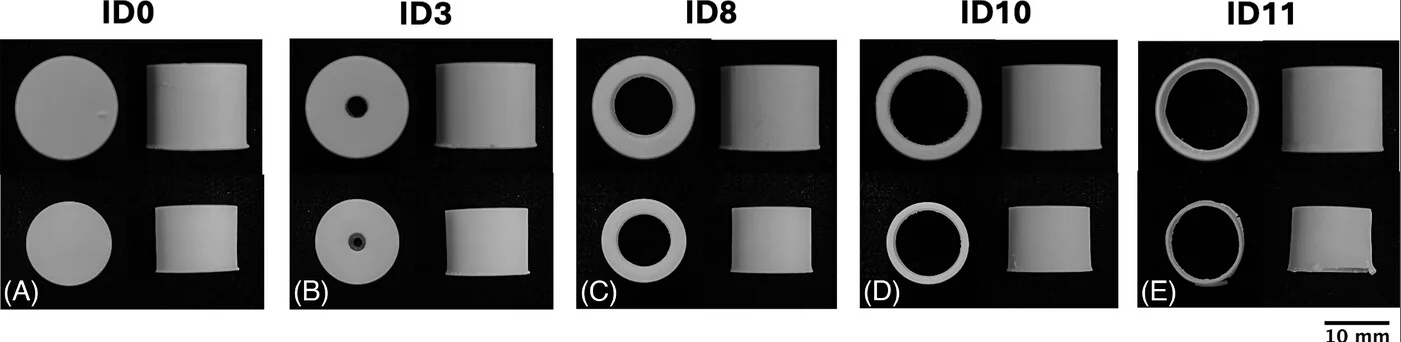
1. Surface-Dominated Diffusion Limits Densification
In thin ceramic features, surface diffusion dominates over grain boundary and lattice diffusion.
While surface diffusion promotes neck growth between particles, it does not contribute to densification. This leads to a paradox:
- Structure appears consolidated
- But internal pores remain uneliminated
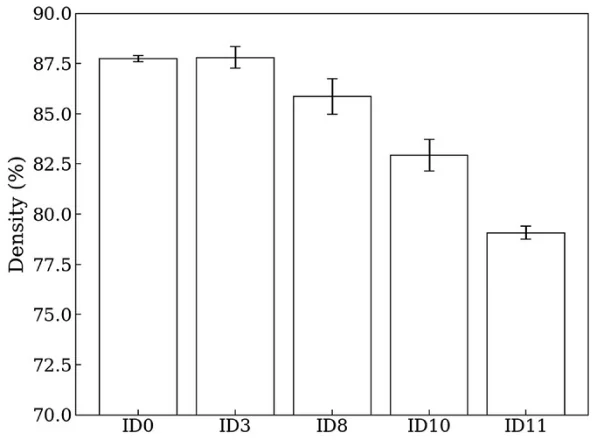
As a result, thin parts often show high residual ceramic porosity even after sintering.
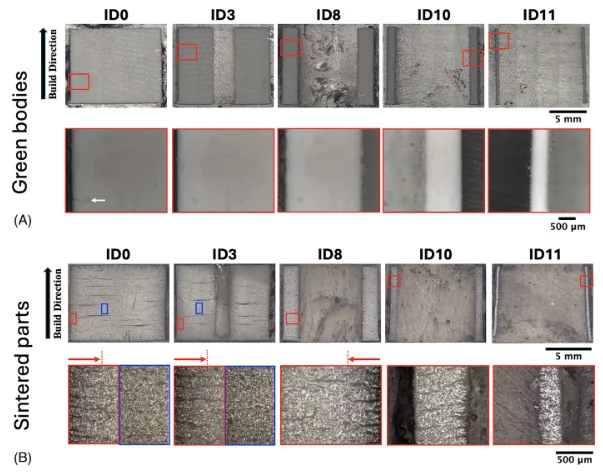
2. Constrained Shrinkage and Warping
During the ceramic sintering process, shrinkage is essential for densification. However, thin-walled geometries introduce uneven constraints:
- Edges densify faster than the core
- Thin sections shrink more rapidly
- Adjacent thick-thin transitions create stress gradients
This leads to:
- Warping
- Microcracks
- Dimensional inaccuracies
3. Rapid Binder Burnout Causes Structural Instability
DLP ceramic printing relies on photopolymer resin systems. During debinding:
- Thin walls heat up faster
- Organic removal becomes too rapid
- Internal pressure builds up
This often causes:
- Pore formation
- Cracking
- Collapse of fine features
Controlling debinding kinetics is therefore critical in ceramic processing and sintering.
4. Particle Packing Density Is Lower in Fine Features
In DLP printing, slurry flow and light scattering affect particle distribution:
- Thin regions receive less uniform particle packing
- Higher initial porosity exists before sintering
Since densification is strongly dependent on green density, this directly limits final densification ceramics.
5. Grain Growth Competes with Densification
Thin structures often reach sintering temperature faster, accelerating grain growth:
- Grains grow before pores are eliminated
- Pores become trapped inside grains
This reduces final density and mechanical strength.
How to Improve Densification in Thin Ceramic Structures
To overcome these challenges, advanced strategies are required:
1. Optimized Sintering Profiles
- Slow heating rates
- Multi-step sintering
- Two-step sintering (TSS)
2. Controlled Debinding Process
- Gradient temperature ramps
- Atmosphere control
3. High-Solid-Loading Slurry Design
- Improves green density
- Reduces initial porosity
4. Geometry-Aware Design Optimization
- Avoid sudden thickness transitions
- Use lattice reinforcement structures
ADT Solution: Integrated Ceramic 3D Printing + Sintering Optimization
At ADT Ceramic 3D Printing, we address thin-structure challenges through:
- High-solid ceramic slurry systems
- Precision DLP exposure control
- Tailored debinding and sintering curves
- Simulation-driven shrinkage compensation
This enables:
- Higher density in thin walls
- Reduced ceramic porosity
- Improved dimensional accuracy
Our integrated approach ensures reliable sintering ceramics performance even for complex microstructures.
Conclusion
As ceramic components become thinner and more complex, the limitations of the ceramic sintering process become more pronounced.
Understanding the interplay between diffusion mechanisms, shrinkage behavior, and ceramic porosity is essential for achieving high-quality results.
With advanced process control and material engineering, it is possible to overcome these challenges and unlock the full potential of densification ceramics in DLP 3D printing.