
How Bioceramic DLP 3D Printing Enables Researchers to Design Materials Around Function
For decades, the development of bioceramic components has been limited by traditional manufacturing methods.
Materials such as hydroxyapatite (HA) and tricalcium phosphate (TCP) are widely recognized for their excellent biocompatibility and osteoconductive properties. However, creating complex porous architectures, interconnected internal channels, patient-specific geometries, and controlled microstructures has traditionally required significant compromises between design intent and manufacturing feasibility.
With the advancement of DLP 3D Printing, this limitation is rapidly disappearing.
Today, researchers are no longer restricted to designing structures that can be manufactured. Instead, they can design structures according to biological, mechanical, and functional requirements—and then fabricate them directly through Bioceramic 3D Printing.
At ADT Ceramic 3D Printing, we have worked with research institutes, universities, and industrial partners to produce a wide range of functional bioceramic structures. The following projects demonstrate how DLP-based ceramic additive manufacturing transforms theoretical designs into high-precision ceramic components.
Why Structure Matters as Much as Material
When discussing bioceramics, attention is often focused on material composition.
Yet in many biomedical and tissue engineering applications, structural design plays an equally important role.
Parameters such as:
- Pore size
- Porosity
- Interconnectivity
- Surface area
- Internal topology
- Mechanical gradient
directly influence:
- Cell attachment and proliferation
- Nutrient transport
- Vascularization
- Bone ingrowth
- Mechanical performance
- Material degradation behavior
Traditional manufacturing techniques struggle to control these parameters simultaneously.
DLP ceramic printing changes this paradigm by enabling layer-by-layer fabrication of geometries that would be impossible using molding or machining methods.
Case Study 1: Porous Hydroxyapatite Bone Scaffold
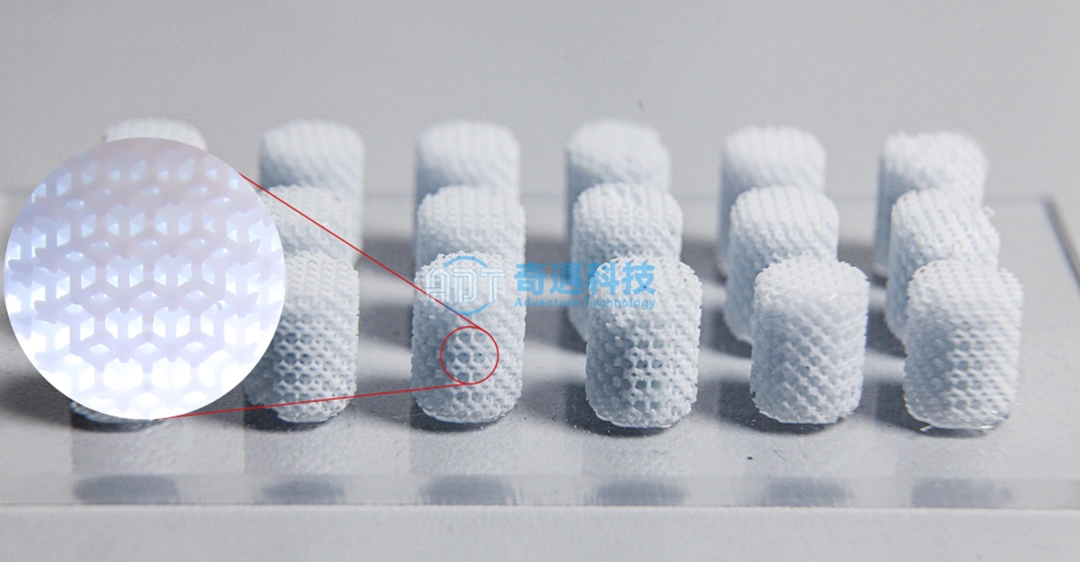
Reproducing Complex Bone Structures with High Precision
One of the most common applications of Bioceramic 3D Printing is the fabrication of porous hydroxyapatite scaffolds.
Using DLP technology, we produced HA bone substitutes featuring highly controlled external geometries and interconnected internal porosity.
These structures can be utilized in:
- Maxillofacial defect reconstruction
- Dental bone augmentation
- Tissue engineering research
- Cell culture studies
- Osteogenesis evaluation platforms
Unlike conventionally fabricated bone substitutes, DLP printing allows the scaffold architecture to be designed digitally before fabrication.
Researchers can independently adjust:
- Pore diameter
- Porosity percentage
- Wall thickness
- Overall implant geometry
to investigate how structural parameters affect biological performance.
This design freedom makes DLP printing an increasingly valuable tool for bone regeneration research.
Case Study 2: Hydroxyapatite Lattice Structures
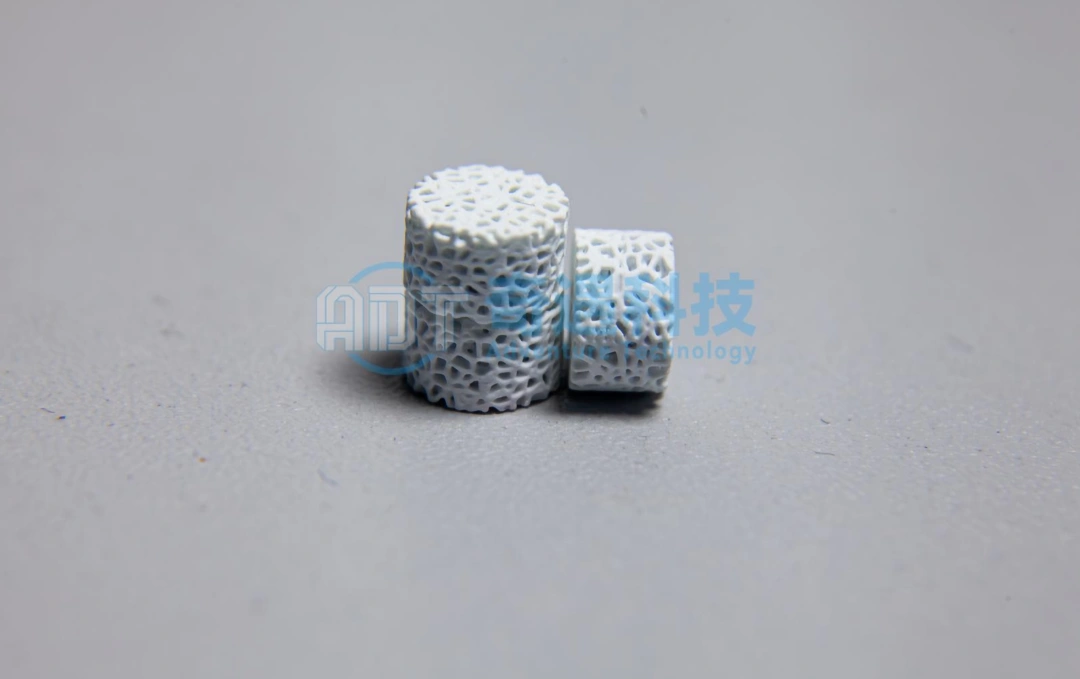
Engineering Regular Porosity for Controlled Biological Response
Another project involved the fabrication of HA cylindrical lattices containing highly ordered pore arrays.
Compared with random porous structures, engineered lattice architectures provide several advantages:
- Predictable mechanical behavior
- Uniform fluid transport
- Controlled tissue ingrowth pathways
- Reproducible experimental conditions
For researchers studying bone regeneration, drug delivery, or cell-material interactions, repeatability is often critical.
By utilizing DLP 3D Printing, lattice structures can be fabricated with exceptional dimensional consistency, allowing investigators to isolate biological variables while maintaining precise architectural control.
Potential applications include:
- Bone integration studies
- Small bone replacement research
- Drug-loading systems
- In-vitro tissue models
Regenerative medicine platforms
Case Study 3: TPMS Hydroxyapatite Structures
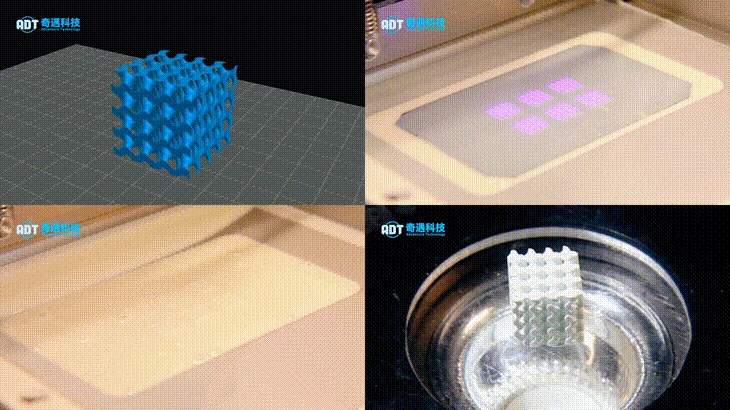
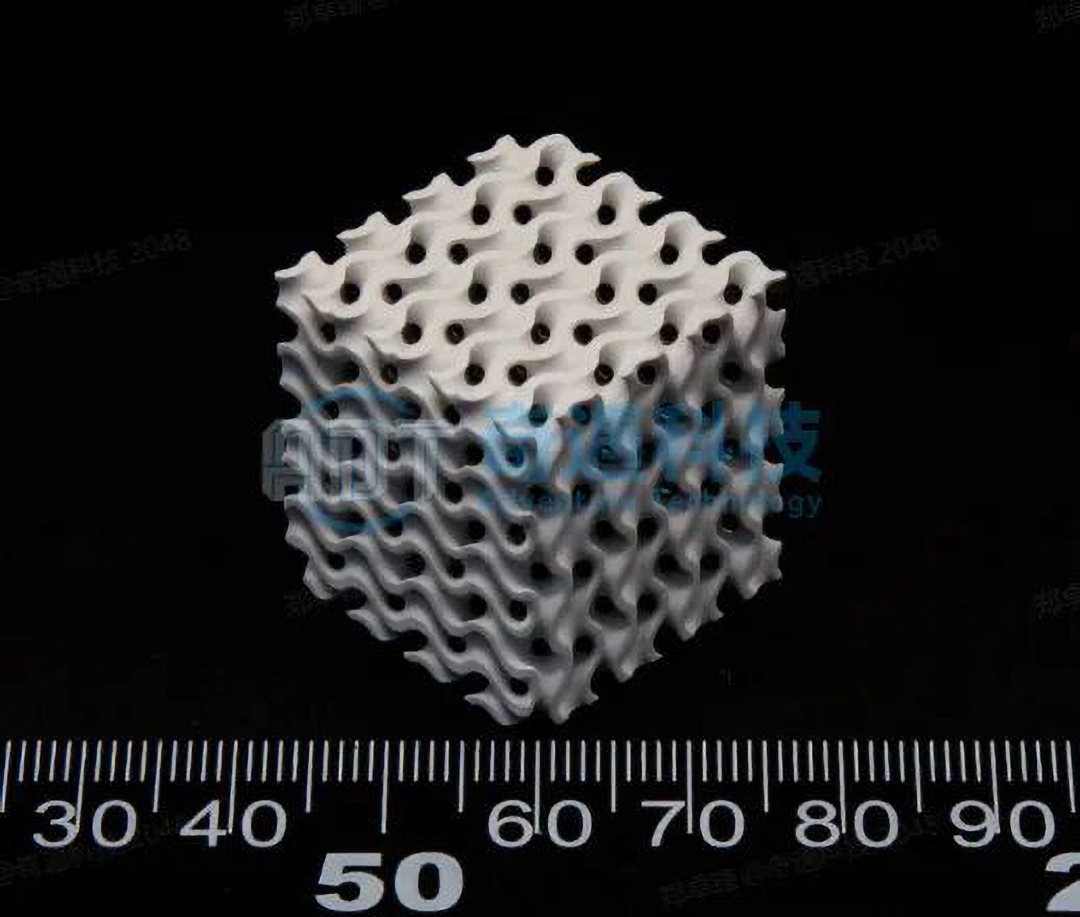
Unlocking Advanced Architectures Through Mathematical Design
Among the most exciting developments in Bioceramic 3D Printing is the adoption of TPMS (Triply Periodic Minimal Surface) architectures.
TPMS geometries are continuous three-dimensional surfaces defined mathematically rather than through conventional lattice construction.
Examples include:
- Gyroid
- Diamond
- Schwarz P
- I-WP structures
These architectures offer unique advantages:
- High specific surface area
- Fully interconnected pore networks
- Reduced stress concentration
- Enhanced permeability
- Excellent strength-to-weight ratios
However, manufacturing TPMS structures using traditional ceramic processing methods is extremely difficult.
DLP ceramic printing makes precise TPMS fabrication achievable.
In this project, HA-based TPMS cylinders were successfully produced with highly resolved internal features and continuous pore connectivity.
Beyond biomedical applications, TPMS ceramic structures are increasingly investigated for:
- Catalyst supports
- Filtration systems
- Heat exchangers
- Lightweight engineering components
- Energy absorption structures
The combination of TPMS design and bioactive ceramics opens new opportunities for multifunctional materials research.
Case Study 4: TCP Bone Regeneration Scaffolds
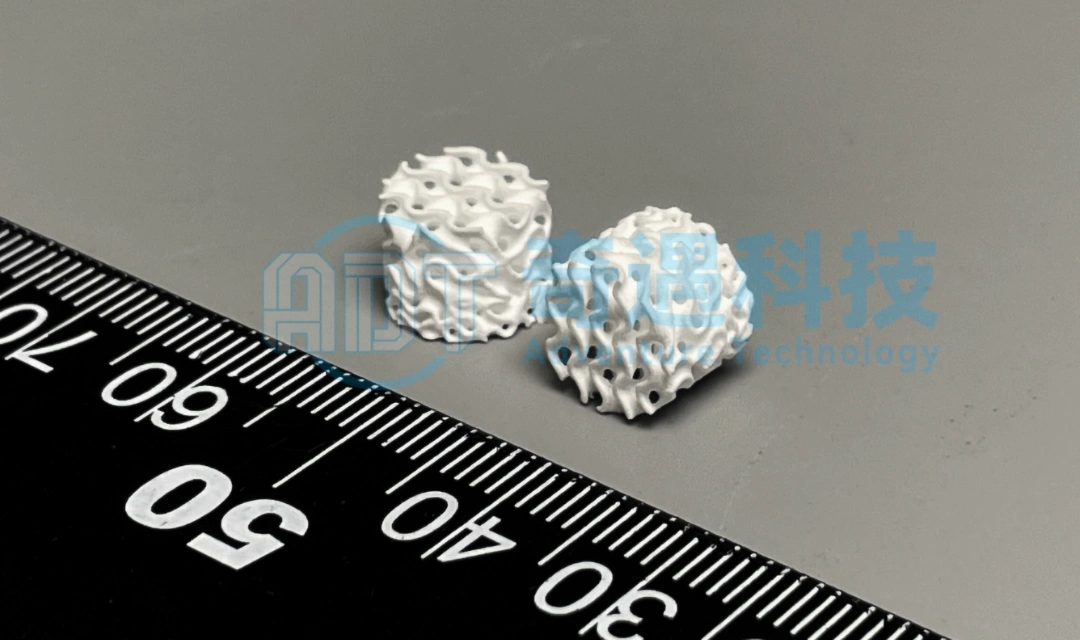
Combining Bioactivity and Controlled Resorption
Tricalcium phosphate (TCP) remains one of the most important biodegradable bioceramics used in regenerative medicine.
Compared with hydroxyapatite, TCP generally exhibits:
- Faster degradation rates
- Higher bioresorbability
- Enhanced replacement by natural bone
Using DLP ceramic additive manufacturing, we fabricated porous TCP scaffolds featuring:
- Vertical wall structures
- Interconnected pore channels
- Controlled porosity distribution
These characteristics support:
- Nutrient diffusion
- Waste removal
- Cell migration
- Long-term tissue growth
The ability to accurately tailor pore architecture enables researchers to optimize degradation behavior and tissue integration simultaneously.
Such design flexibility is difficult to achieve through conventional processing routes.
Case Study 5: Patient-Specific HA Cranial Implants
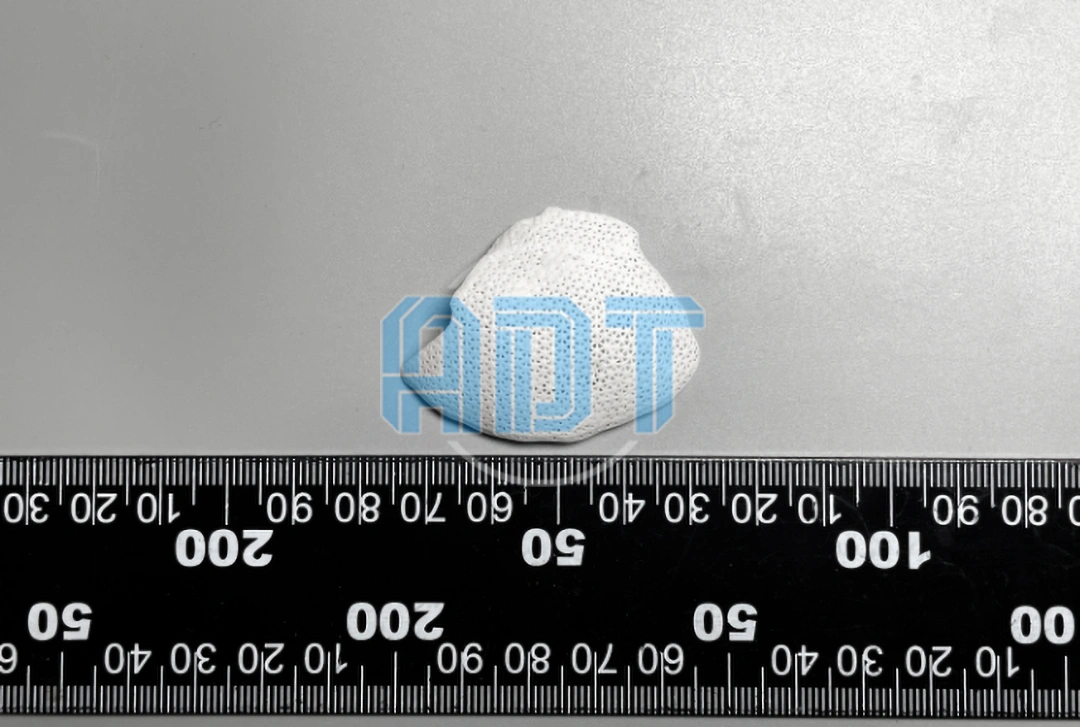
From Medical Imaging Data to Functional Ceramic Implant
One of the strongest advantages of DLP 3D Printing is its capability to produce customized ceramic components directly from digital models.
In this project, a patient-specific cranial implant was fabricated using hydroxyapatite bioceramic material.
The workflow involved:
- Acquisition of 3D anatomical data
- Digital defect reconstruction
- Implant design optimization
- DLP ceramic fabrication
- Debinding and sintering
The resulting implant featured:
- Anatomically matched geometry
- Controlled porous architecture
- Excellent interconnectivity
- Bioactive ceramic composition
Such structures can serve as temporary support frameworks that facilitate bone regeneration while gradually integrating with surrounding tissue.
This approach illustrates how digital manufacturing is transforming personalized medicine and customized implant development.
What These Projects Reveal About the Future of Bioceramic 3D Printing
Although the geometries shown above differ significantly, they share a common principle:
The structure was designed according to the intended function before manufacturing began.
This represents a fundamental shift in how advanced ceramic materials are developed.
Instead of asking:
“What geometry can we manufacture?”
Researchers can now ask:
“What geometry delivers the desired biological or engineering performance?”
and use DLP 3D Printing to realize that design with high fidelity.
Whether the objective is:
- Enhancing osteointegration
- Increasing permeability
- Controlling degradation
- Improving mechanical response
- Creating patient-specific implants
the manufacturing process is no longer the limiting factor.
Why Researchers Choose ADT for Bioceramic 3D Printing
At ADT, we specialize in high-precision ceramic additive manufacturing and have extensive experience printing:
- Hydroxyapatite (HA)
- Tricalcium Phosphate (TCP)
- Alumina
- Zirconia
- Customized ceramic formulations
Beyond printing services, we collaborate with researchers during the design stage to help optimize:
- Structural topology
- Printing feasibility
- Sintering behavior
- Dimensional accuracy
- Functional performance
Our experience across biomedical, academic, and industrial projects enables us to bridge the gap between conceptual design and manufacturable ceramic components.
As the field of Bioceramic 3D Printing continues to evolve, DLP technology is becoming an increasingly powerful platform for researchers seeking to explore new material architectures, validate innovative concepts, and develop next-generation functional ceramic devices.
Looking to Fabricate a Custom Bioceramic Structure?
Whether you are developing bone scaffolds, TPMS architectures, porous implants, tissue engineering platforms, or novel bioceramic research materials, ADT can help transform your digital design into a high-precision ceramic component through advanced DLP 3D Printing technology.
Contact our engineering team to discuss your project requirements and explore the possibilities of customized Bioceramic 3D Printing solutions.