
Introduction: Why DLP 3D Printing of Ceramics Still Has a Core Problem?
DLP 3D printing is one of the most promising technologies for making high-precision ceramic parts. It can build complex geometries that are hard to achieve with traditional forming methods. Among advanced ceramics, SiCN (silicon carbon nitride) derived from preceramic polymers stands out because of its thermal stability and mechanical strength.
But there is a long-standing problem.
During pyrolysis, polymer-derived ceramics shrink heavily—often more than 30%. This shrinkage creates cracks, pores, and dimensional errors. For precision applications like biomedical implants or micro devices, this is a serious limitation.
A recent study published in Ceramics International introduced a simple but powerful idea: instead of adding foreign fillers, the researchers used “homologous SiCN microspheres”—particles made from the same chemical system as the matrix itself.
This approach changes how we think about reinforcement in DLP 3D printed ceramics.
Material Design: Using “Same-Source” Reinforcement
Traditional reinforcement methods usually rely on foreign materials such as Si₃N₄ whiskers or SiO₂ nanoparticles. These materials often create interface mismatch problems during high-temperature processing.
This study takes a different path.
Researchers first created SiCN resin microspheres using a PSZ precursor through an emulsion and thermal curing process. Then they converted these microspheres into ceramic particles under nitrogen atmosphere.
The key idea is simple:
- If the filler and matrix share the same chemistry, they should behave better together during shrinkage.
This “same-material reinforcement” reduces interface stress and improves structural stability during thermal decomposition.
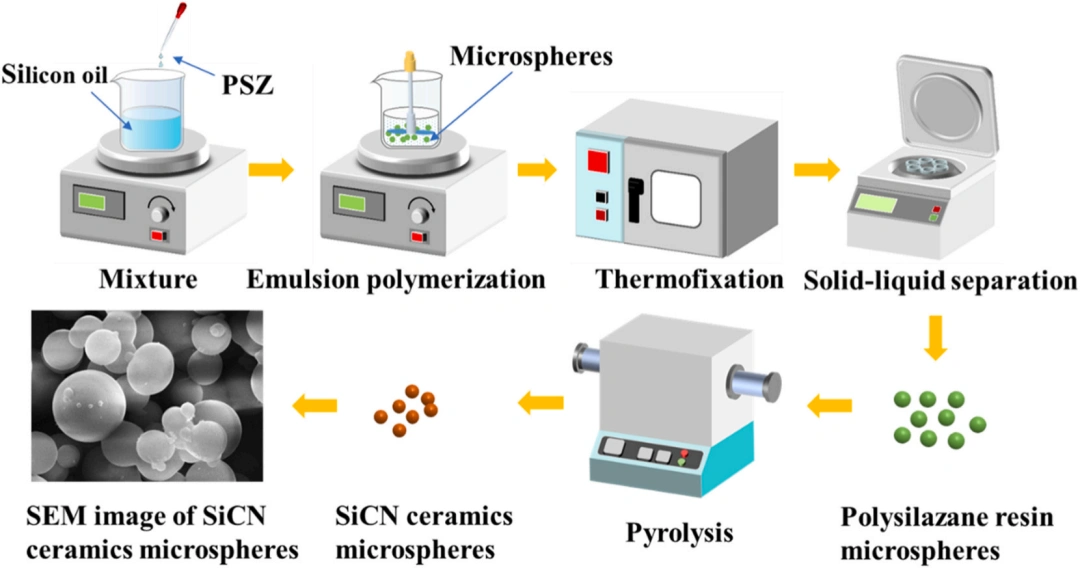
Processing Strategy: Finding the Right Thermal Treatment Window
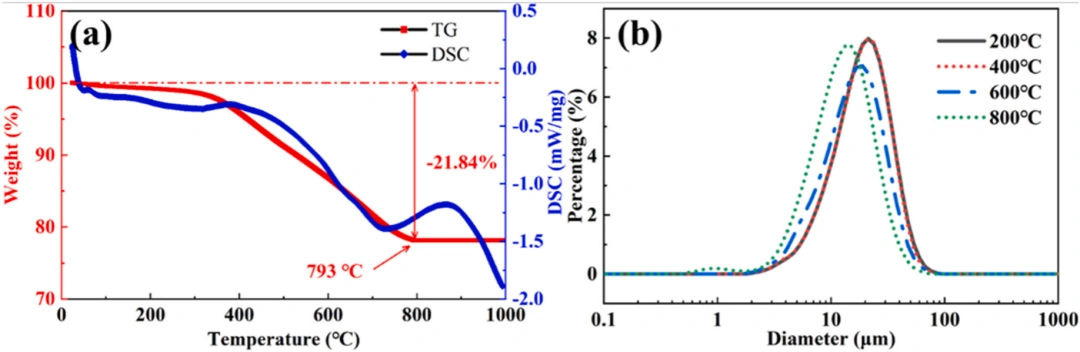
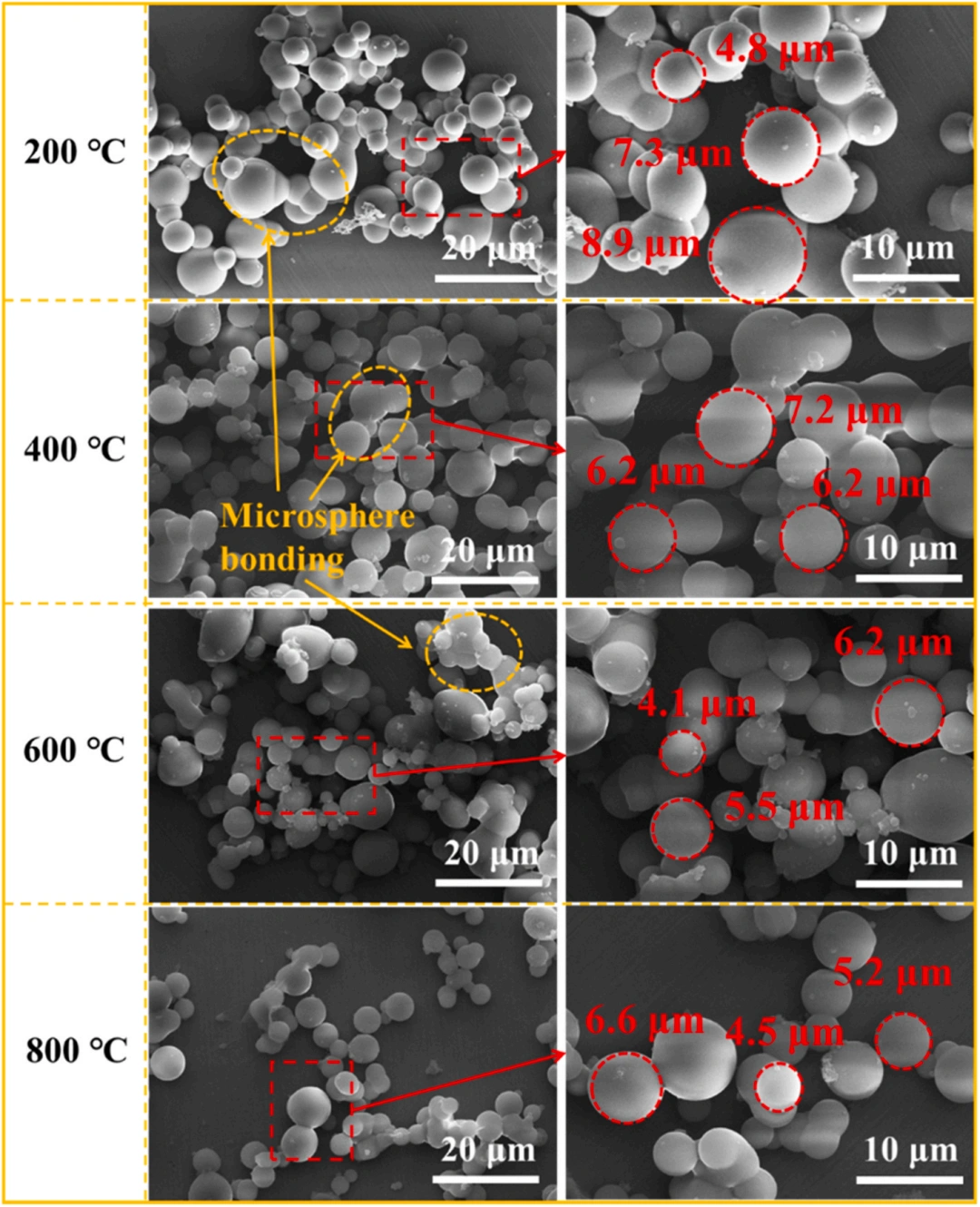
The microspheres were heat-treated at different temperatures before being added into the DLP printing slurry.
This step is critical for printability.
If the temperature is too low, the microspheres are not fully ceramicized and cannot strengthen the structure. If the temperature is too high, they absorb more UV light and interfere with the DLP curing process.
After analysis, the researchers found that 600°C is the optimal condition.
At this temperature:
- The microspheres are stable enough
- UV absorption stays low
- Printing behavior remains consistent
This balance is what makes the process work in real DLP printing conditions.
Shrinkage Control: A Clear Improvement in Dimensional Accuracy
The team added different amounts of SiCN microspheres (0–30 wt%) into the resin and printed test structures using DLP 3D printing.
After pyrolysis, they measured linear shrinkage.
The results are clear:
- Without microspheres: ~31.8% shrinkage
- With 30 wt% microspheres: ~26.2% shrinkage
This is a significant improvement in dimensional stability.
In practical terms, a 100 mm printed part would shrink to about 68 mm without fillers, but about 73–74 mm with microspheres. That difference is critical for precision engineering, especially in biomedical and microfluidic applications.
Mechanical Performance: Strength Peaks at the Right Balance
One of the most interesting findings is the change in flexural strength.
As microsphere content increases, strength first rises and then drops.
- Best performance at 15 wt% microspheres
- Maximum flexural strength: 1 MPa
- Baseline material: ~150 MPa
This is nearly a 60% improvement.
Why does this happen?
At the right concentration, microspheres act like a strong internal skeleton. They distribute stress and block crack growth. But when too many particles are added, they start to cluster. These clusters create weak points and reduce strength.
So the key is balance, not maximum loading.
Microstructure: How Cracks Behave Inside the Material
Scanning electron microscope images reveal an important mechanism.
The SiCN microspheres are evenly embedded in the ceramic matrix. There are no obvious gaps or weak interfaces.
Even more important, cracks often pass through the microspheres instead of going around them. This is called transgranular fracture.
This behavior shows that:
- The interface between matrix and microspheres is very strong
- The microspheres can carry stress effectively
- Crack growth consumes more energy
Compared with traditional fillers, which often cause weak interfaces, this “same-source” structure creates a much more stable internal network.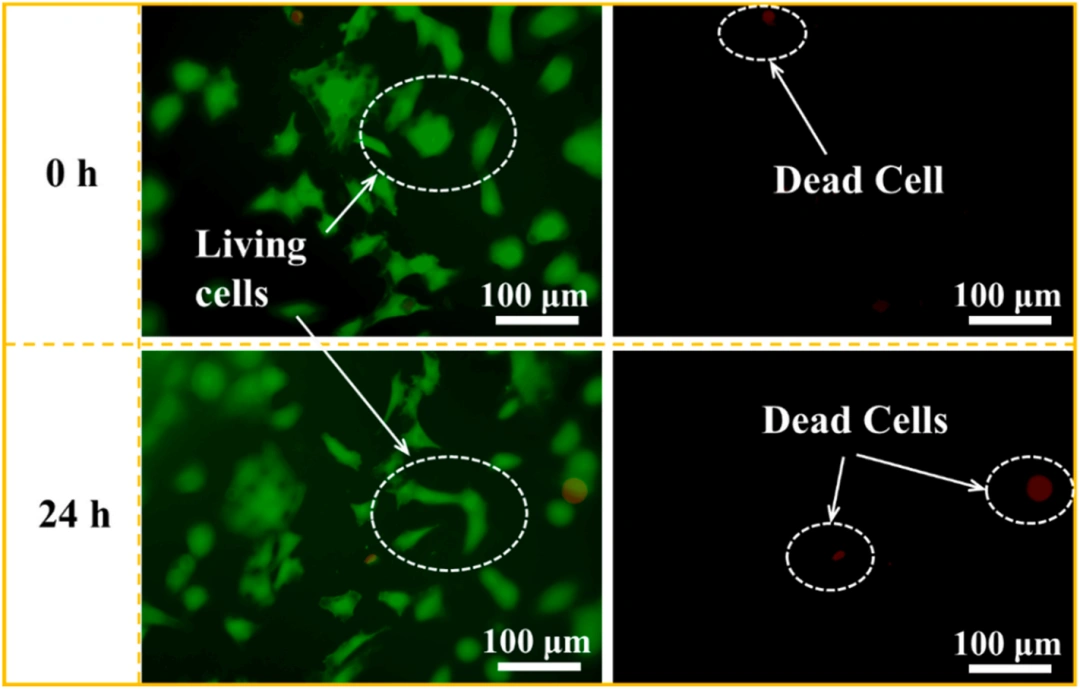
Biocompatibility: A Key Step Toward Medical Applications
For biomedical use, material safety is just as important as strength.
The researchers tested cell viability using a standard CCK-8 assay with osteoblast cells.
The result is very encouraging:
- Cell viability: 8%
According to ISO 10993-5, anything above 70% is considered non-toxic. This material is far above that threshold.
It suggests that SiCN ceramics produced by DLP 3D printing may be suitable for:
- Bone implants
- Dental restoration parts
- Customized biomedical structures
This opens a real pathway from lab research to medical use.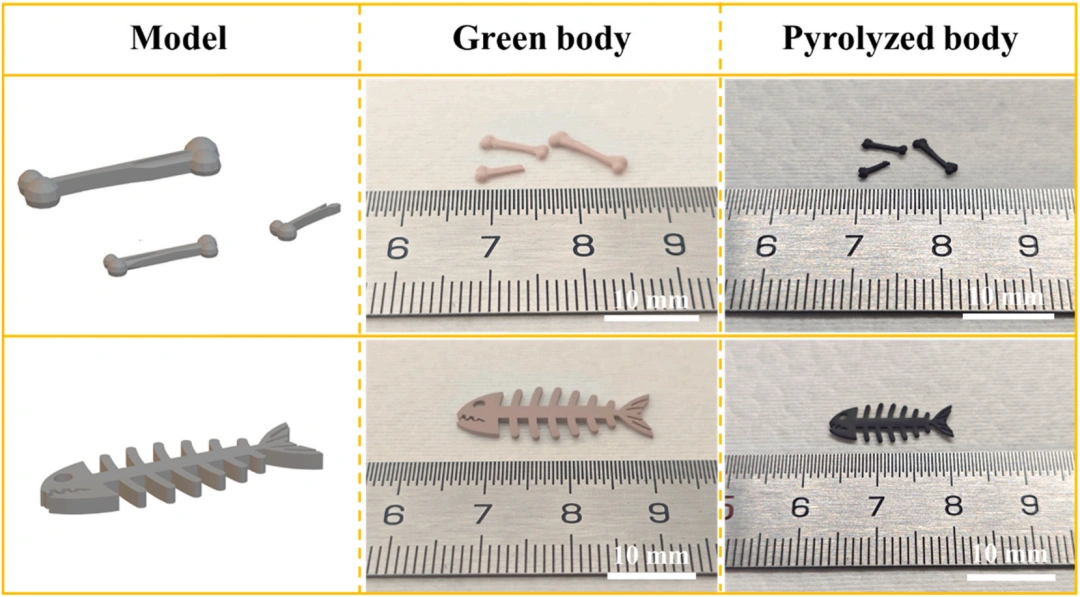
Conclusion: A Simple Idea with Strong Impact
This study shows that sometimes the simplest ideas can solve long-standing problems.
By using SiCN microspheres made from the same material system, researchers achieved:
- Lower shrinkage during pyrolysis
- Much higher mechanical strength
- Strong interface bonding
- Excellent biocompatibility
More importantly, this strategy is not limited to SiCN. It can likely be applied to other polymer-derived ceramics such as SiOC or SiBCN.
For DLP 3D printing of ceramics, this represents a shift in design thinking—from “foreign reinforcement” to “homologous integration.”
It is a small change in concept, but a big step for performance.
Ready to Explore Polymer-Derived Ceramic 3D Printing?
Research on SiCN microsphere reinforcement demonstrates how material innovation and printing technology work together to improve ceramic performance.
Whether you are developing new polymer-derived ceramic systems or validating a new material formulation, choosing the right DLP platform can significantly reduce development time and improve experimental consistency.
ADT Supports Researchers With
✓ Open-material DLP ceramic printers for custom resin development
✓ High-resolution printing for complex ceramic geometries
✓ Process guidance for debinding and pyrolysis workflows
✓ Sample printing and application evaluation
Have a new ceramic formulation to test?
Talk with our engineering team about your research goals or request a sample print.
Reference:
Zhang, Z. et al. Ceramics International (2026).
“SiCN microsphere reinforced SiCN composite ceramics formed by DLP and their biotoxicity.”
https://doi.org/10.1016/j.ceramint.2026.01.194