
I. In DLP 3D printing, adding reinforcing particles to the resin matrix can improve the functional properties of composite materials.
Recently, Professor Nullah Yüksel and his team from Ankara Gazi University in Turkey published a study entitled “Exploration of tungsten carbide reinforcement in photopolymer nano-composites via DLP 3D printing” in *Ceramics International*. They systematically studied the functional properties of tungsten carbide (WC) nanoparticle-reinforced photopolymer nanocomposites ceramic 3d printing.
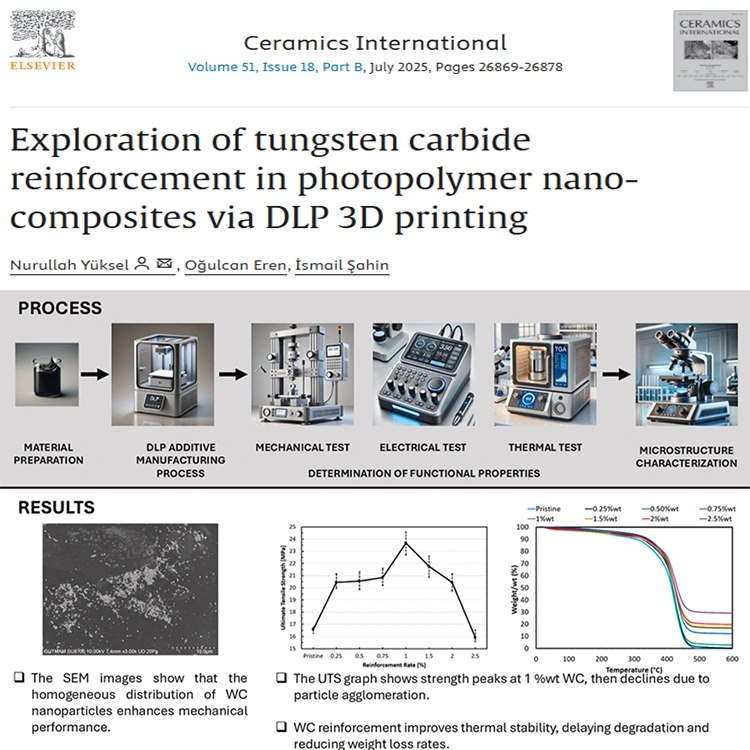
II. This study systematically investigated the functional properties of tungsten carbide (WC) nanoparticle-reinforced photopolymer nanocomposites.
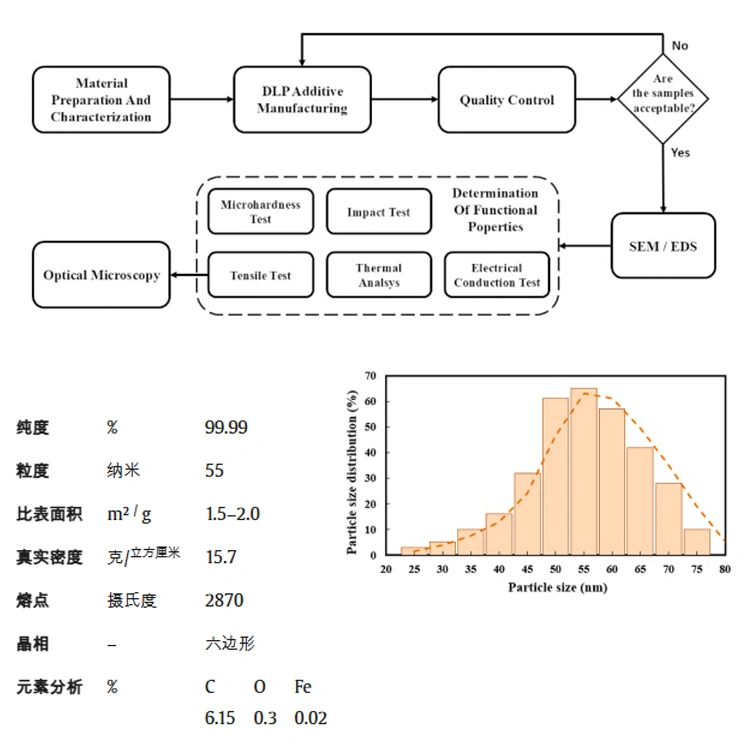
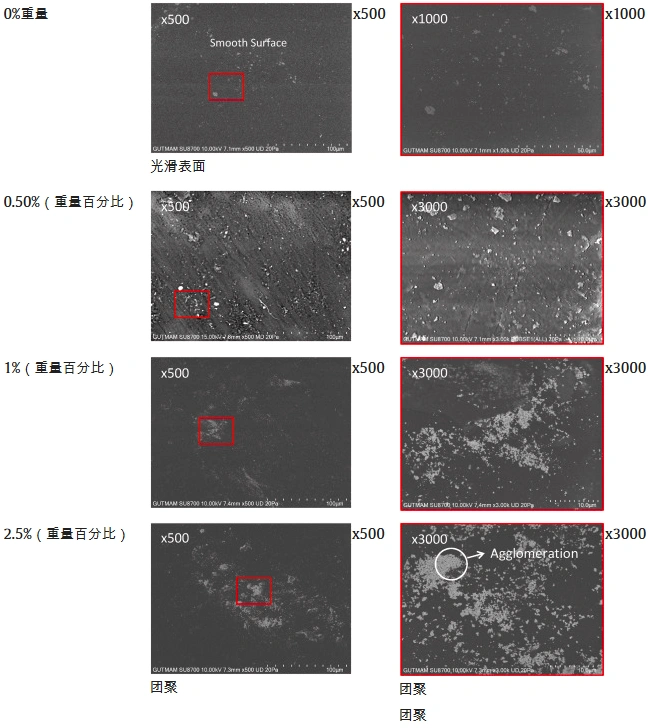
Nanocomposites were prepared by incorporating WC nanoparticles of different weight percentages into a photopolymer resin matrix ceramic 3d printing. The mechanical properties of the composite material were evaluated using tensile, hardness, and impact tests; its thermal properties were analyzed using thermogravimetric analysis (TGA); and its electrical properties were evaluated using four-probe conductivity testing ceramic 3d printing. Furthermore, an innovative method was employed to comprehensively investigate the effects of optimal reinforcement concentration and nanoparticle distribution on the composite material’s properties. Morphological analysis using scanning electron microscopy (SEM) showed that uniform particle dispersion plays a crucial role in improving mechanical properties ceramic 3d printing.
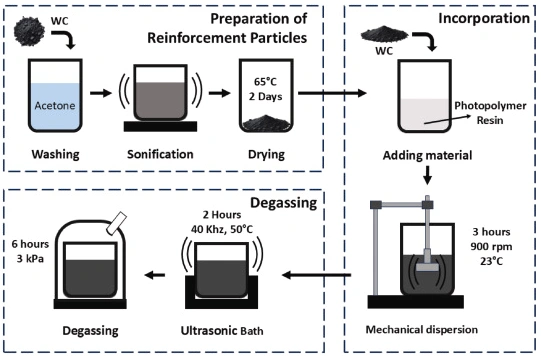
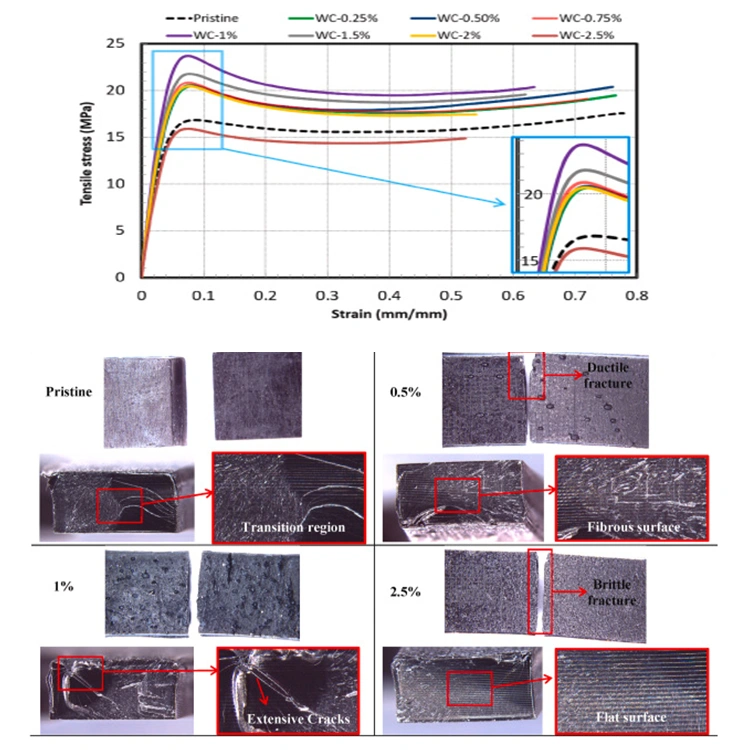
III. The following are the research methods and data:
This study used DLP 3D printing to comprehensively evaluate the mechanical, thermal, and electrical properties of tungsten carbide (WC) nanoparticle-reinforced photosensitive polymer nanocomposites. The properties of composites obtained by adding different WC nanoparticle mass ratios (0.25%–2.5%) to a photosensitive polymer resin matrix were investigated, and the optimal reinforcement ratio was determined ceramic 3d printing. Tensile, microhardness, impact strength, thermal analysis, and conductivity tests were performed on the prepared nanocomposites, and their material properties were analyzed in detail.
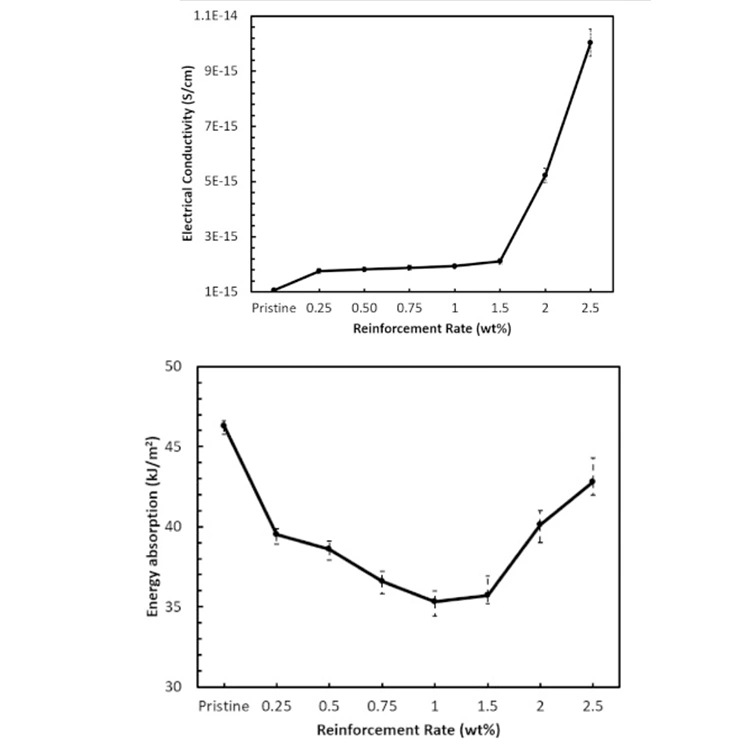
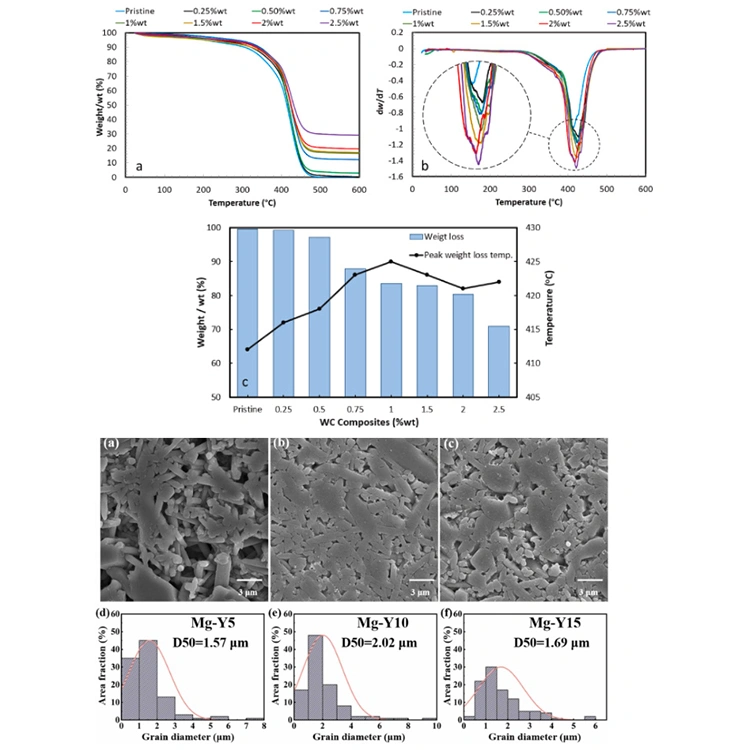
The results show that WC reinforcement significantly improves the properties of the photosensitive polymer material ceramic 3d printing. In particular, when the WC addition was 1 wt%, the tensile strength increased by 42.9% due to the uniform distribution of nanoparticles, and the load-bearing capacity of the material was also significantly enhanced. However, when the reinforcement ratio reached 1.5% or higher, particle agglomeration was observed, leading to a decrease in mechanical strength and an increase in brittleness. This finding again emphasizes the importance of determining the optimal reinforcement ratio for nanoparticle-reinforced composites. Microhardness analysis also showed that WC reinforcement increased the hardness value of the material by 21.86%, but the hardness increase plateaued due to the uneven distribution at high reinforcement ratios ceramic 3d printing.

On the other hand, the impact test results showed a different trend from the mechanical strength results, especially at high reinforcement ratios, where WC particles promoted local hardening and partially improved energy absorption capacity. This indicates that WC-reinforced nanocomposites have good performance potential in applications subjected to dynamic loads.