
DLP Ceramic 3D Printing: Low-Temperature Manufacturing of High-Specific Strength SiC-Based Ceramics
I. The combination of silicon carbide (SiC) ceramics and DLP ceramic 3D printing technology offers promise for the fabrication of complex-shaped silicon carbide components.
However, high sintering temperatures, long preparation cycles, and structural anisotropy present new challenges for the practical application of 3D printed silicon carbide ceramic parts. Recently, Professor Lou Yan and Professor Chen Zhangwei and their team at Shenzhen University published a study in the *International Journal of Extreme Manufacturing* entitled "Low-temperature fabrication of high-specific strength SiC-based ceramics via photopolymerization 3D printing with controllable anisotropy." They proposed a new method for producing high-specific strength SiC-based ceramics at a relatively low sintering temperature (1100°C).
Original article link: https://doi.org/10.1088/2631-7990/add2e1
II. How to address the anisotropy of DLP ceramic 3D printed parts and achieve low-temperature one-step sintering of silicon carbide-based ceramics?
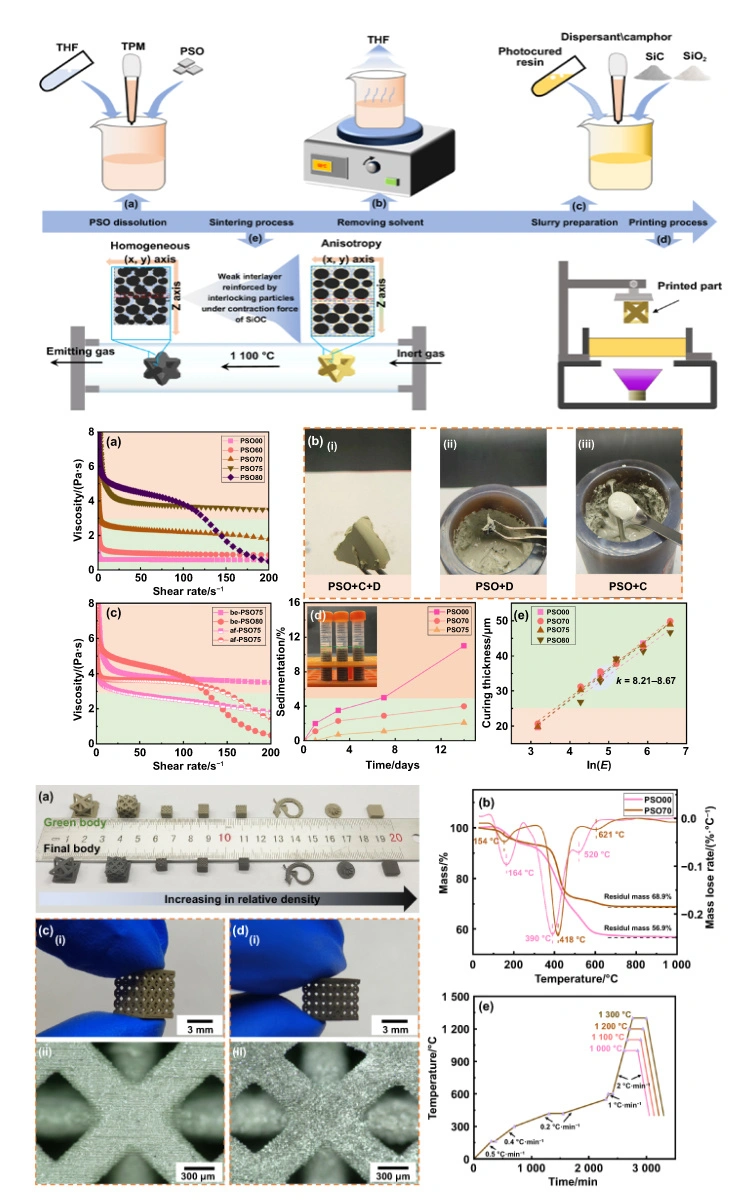
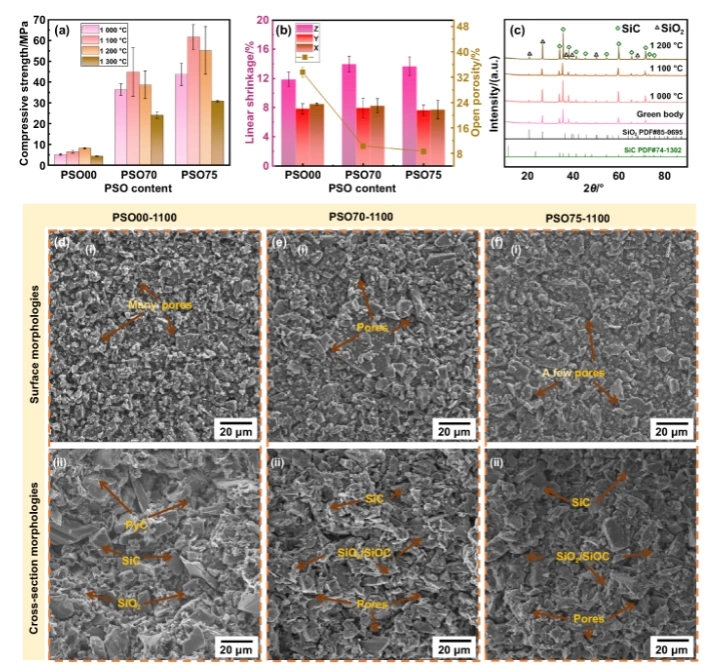
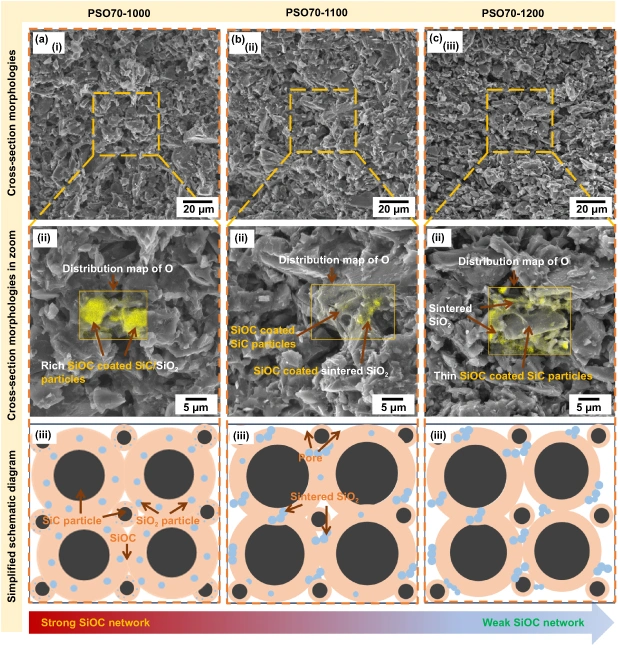
The study achieved low-temperature sintering of SiC-based ceramics by introducing a high-content polysiloxane (PSO) solution (75% by weight). Simultaneously, the introduction of the silicon oxycarbide (SiOC) phase significantly reduced the anisotropy in the mechanical properties of the SiC ceramics. This method provides insights into low-temperature one-step sintering of silicon carbide-based ceramics and offers a new reference for controlling the anisotropy of photopolymerized ceramic parts. The following are the research methods and data from the article:
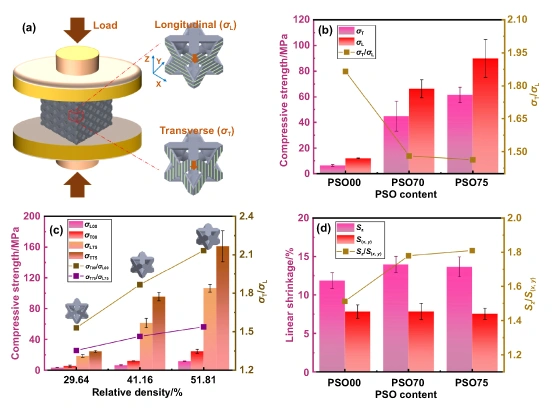
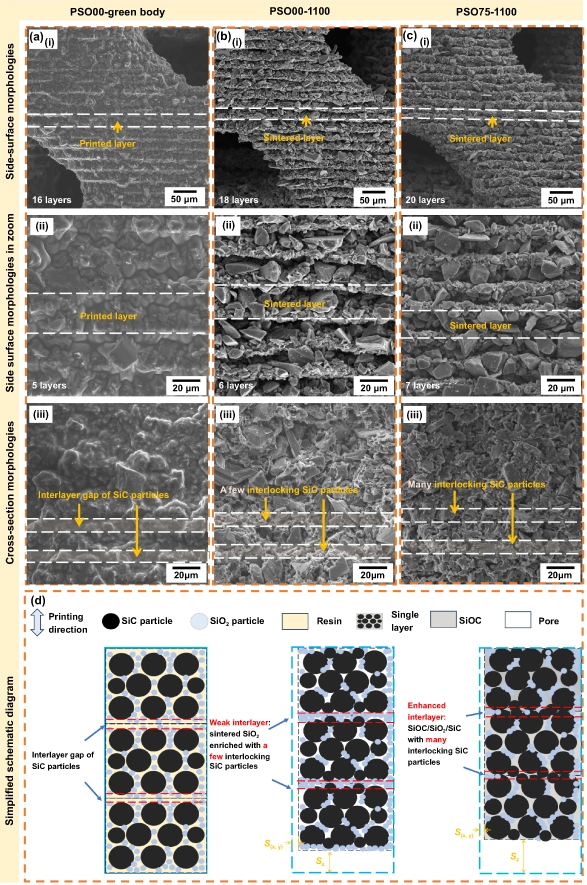
This study successfully prepared SiC-based ceramic materials with high specific strength and controllable anisotropic mechanical properties using a low-temperature sintering process at 1100°C. Studies show that the introduction of SiO significantly improved the printing quality of SiC-based slurries, while the addition of PSO substantially enhanced the compressive strength of the ceramic matrix: at a relative density of 41.16%, the compressive strength reached (89.99 ± 14.76) MPa; when the PSO content increased to 75%, the compressive strength increased by 9 times compared to the initial state.
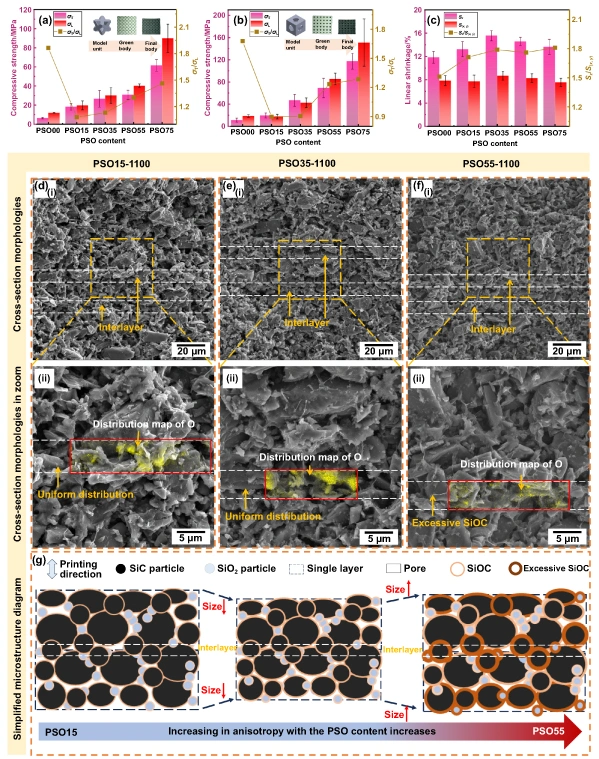
Furthermore, the formation of the SiOC phase effectively filled and eliminated the interlayer gaps generated during DLP ceramic 3D printing, promoting material densification and enhancing cohesive strength, thus achieving effective control over mechanical anisotropy. For example, the ratio of transverse to longitudinal compressive strength of the octahedral truss structure SiC/SiO₂/SiOC ceramic decreased to 1.08, significantly lower than that of SiC/SiO₂ ceramic (1.87), indicating more balanced mechanical properties.
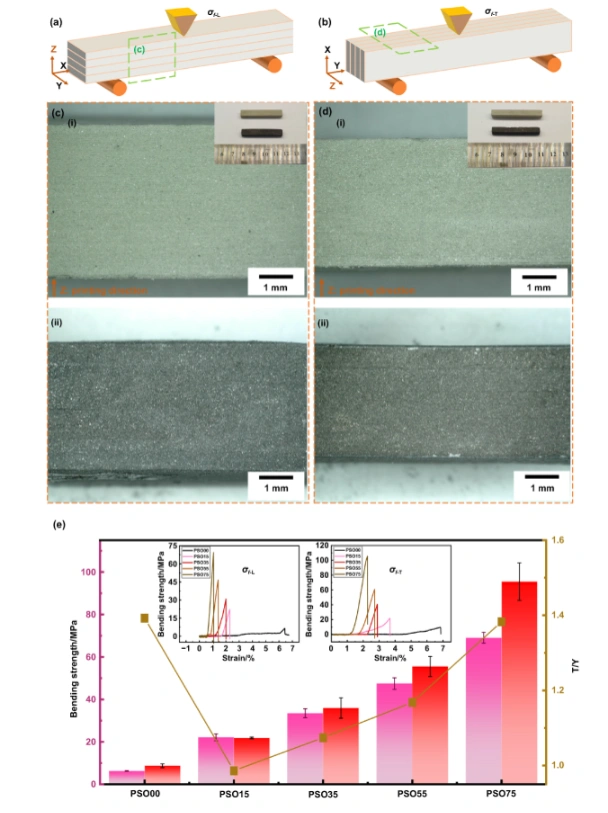
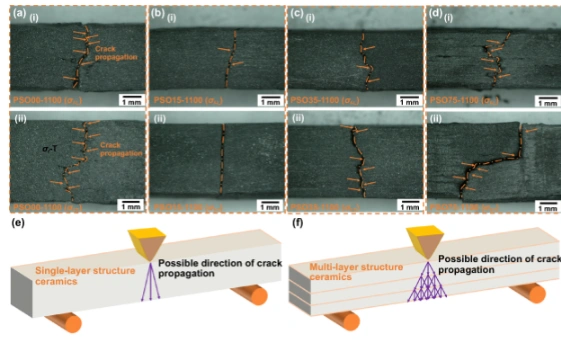
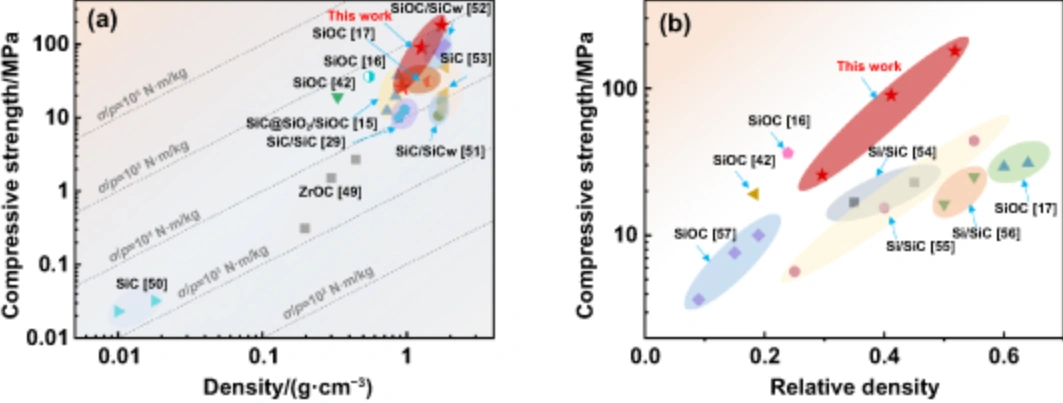
The material also exhibited excellent structural performance: the specific strength of the octagonal truss lattice reached (1.03 × 10⁵) N·m·kg⁻¹, with a density of 1.75 g·cm⁻³, surpassing many previously reported SiC-based and SiOC ceramics with similar densities. Simultaneously, the bending strength of the SiC/SiO₂/SiOC ceramic reached (95.49 ± 8.79) MPa, approaching or equivalent to similar ceramic materials prepared at ≥ 1400 °C.
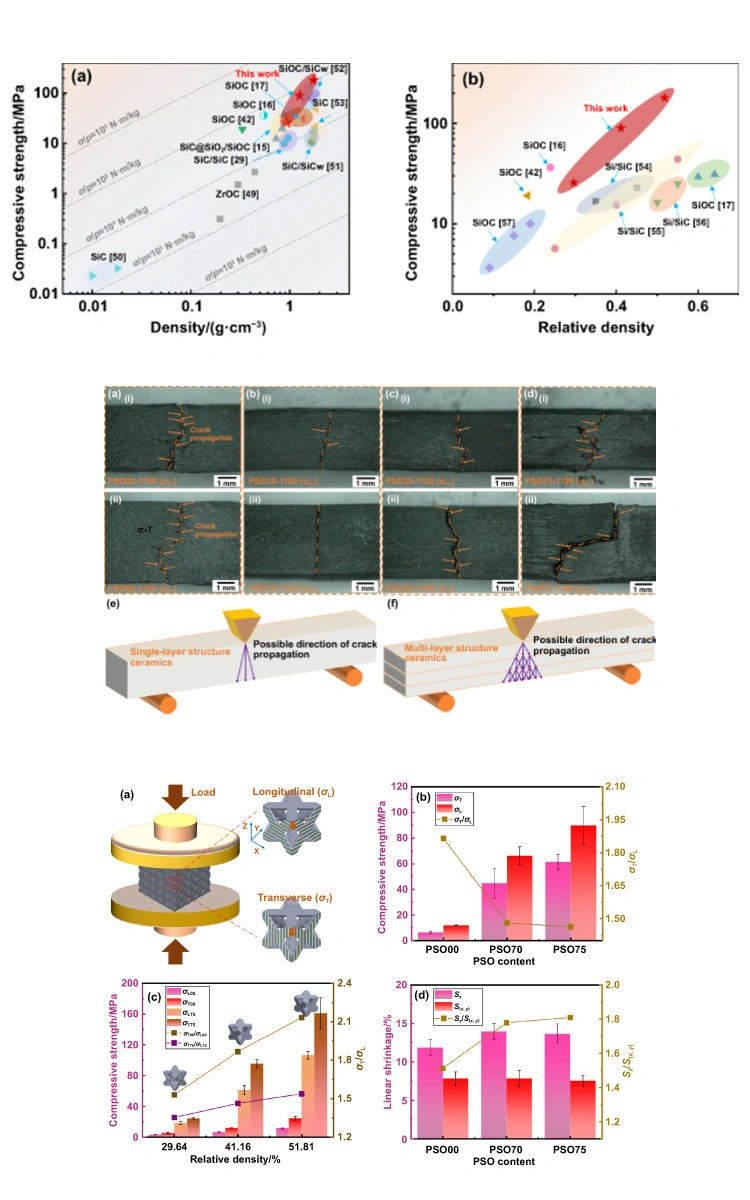
These results not only provide important references for the low-temperature preparation of high-strength SiC-based ceramics but also propose an effective strategy to mitigate the anisotropy problem of stereolithography (SLA/DLP) 3D printed ceramics. In addition, this research demonstrates the potential for achieving high-purity, high-strength SiC-based structural ceramics without the need for additional non-silicon-based binders, meeting the requirements for high-temperature applications.