
I. Additive manufacturing technology based on digital light processing (DLP) provides a new approach for the preparation of complex-structured silicon nitride (Si₃N₄) ceramics.
Due to the high ultraviolet light absorption rate and low sintering activity of Si₃N₄ powder, achieving densely bonded and structurally complete Si₃N₄ ceramics using DLP technology still faces significant challenges. Recently, Professor Wei Xu, Professor Renli Fu, and Professor Zhe Zhao, leading a team from the University of Shanghai for Science and Technology, published a study entitled “Synergistic enhancement of density and curing depth in DLP 3D printed MgO-Y₂O₃ coated Si₃N₄ ceramics” in the *Journal of Alloys and Compounds*. They proposed using a co-precipitation method to coat the surface of Si₃N₄ particles with layers of magnesium oxide and yttrium oxide (MgO-Y₂O₃), aiming to simultaneously achieve the dual goals of increasing curing depth and promoting densification.
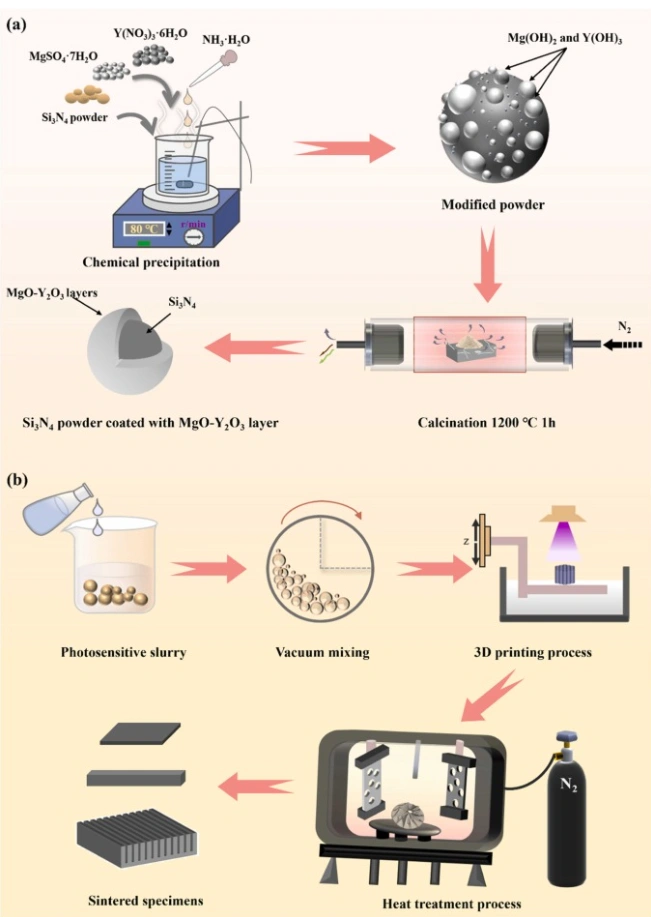
II. This study combines chemical co-precipitation coating technology with DLP ceramic 3D printing to directly coat the surface of Si₃N₄ particles with sintering aids magnesium oxide (MgO) and yttrium oxide (Y₂O₃) to achieve the dual goals of increasing curing depth and promoting densification.
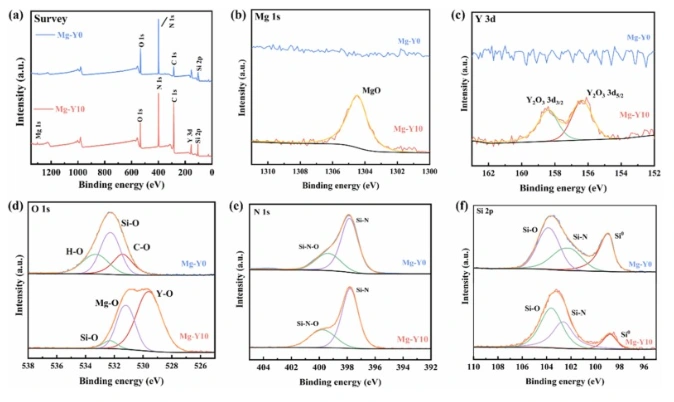
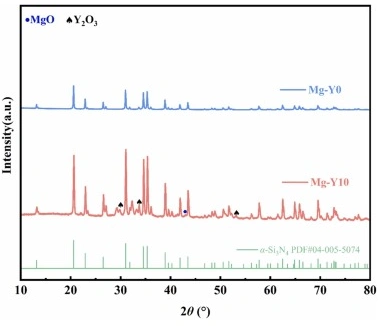
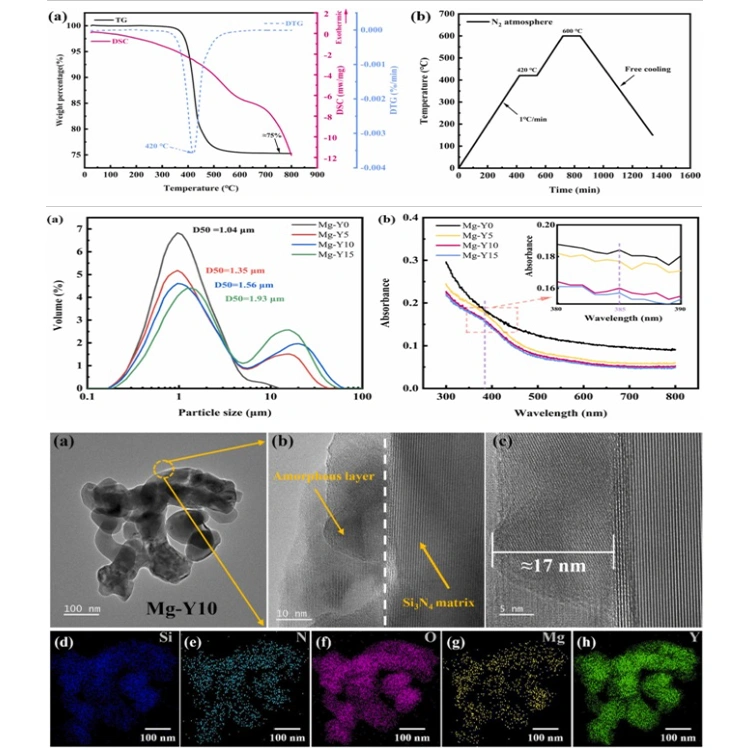
The resulting amorphous MgO–Y₂O₃ layer not only reduces ultraviolet light absorption but also acts as a sintering aid to generate a low-melting-point liquid phase, thereby promoting ceramic densification. Furthermore, the researchers systematically evaluated the effects of different coating amounts on the particle size distribution of Si₃N₄ particles, the rheological properties of the photosensitive slurry, and the curing properties. The microstructure of the sintered Si₃N₄ ceramics was also analyzed, providing a technical basis for further improving the performance of advanced Si₃N₄ ceramics.
The following are the research methods and data from this article:
III. This study successfully improved the photocuring depth of the slurry and the density of the sintered parts by co-precipitating an amorphous MgO–Y₂O₃ layer onto the surface of Si₃N₄ powder using a co-precipitation method.
The study systematically investigated the effects of different coating amounts on the particle size distribution of Si₃N₄ powder, the rheological properties of the slurry, the curing behavior, and the microstructure after sintering.
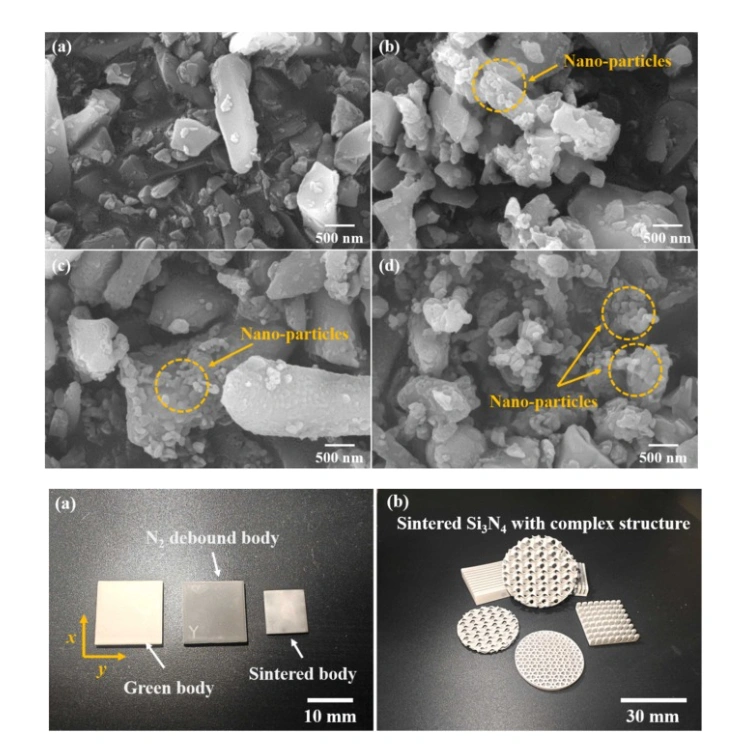
The results showed that with increasing coating amount, the average particle size of the powder gradually increased, and the particle size distribution changed from a unimodal to a bimodal pattern; the rheological properties of the photosensitive Si₃N₄ slurry changed from shear thinning to shear thickening; simultaneously, the powder coating layer significantly improved the curing depth of the slurry, with the Mg–Y10 slurry with a solid content of 72 wt% achieving a curing depth of 107 μm, approximately 33% higher than that of the original powder.
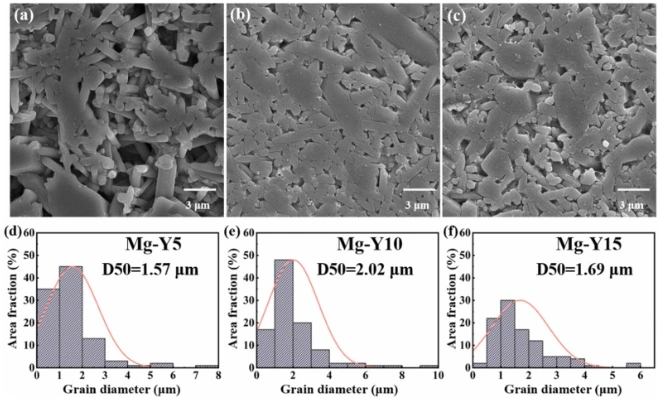
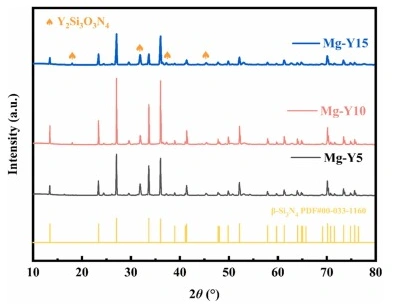
Furthermore, with the increase of MgO–Y₂O₃ coating content, the bulk density, flexural strength, and thermal conductivity of 3D-printed sintered Si₃N₄ ceramics all showed a trend of first increasing and then decreasing. Among them, the sample with a coating content of 10wt% performed best: bulk density 3.26±0.04 g/cm³ (relative density 97.89±1.20%), flexural strength 530±15 MPa, and thermal conductivity 54.67±0.68 W·m⁻¹·K⁻¹. This work provides a simple and effective strategy for preparing high-performance Si₃N₄ ceramics using DLP ceramic 3D printing technology.