
In the field of high-performance ceramic manufacturing, DLP (Digital Light Processing) ceramic 3D printing is gradually becoming a high-precision, high-efficiency emerging manufacturing solution. Compared with traditional ceramic processing techniques, DLP technology can quickly produce complex geometric structures and high-precision parts while reducing material waste. This article will provide customers and technology enthusiasts with a comprehensive analysis of the advantages and practical guidelines of DLP ceramic 3D printing, covering technical principles, material selection, process flow, and application cases.
What Is DLP in Ceramic 3D Printing
DLP ceramic 3D printing is a more advanced additive manufacturing technology with the capability to make high precision ceramic parts. In contrast to conventional methods of ceramic manufacturing where light is not used, DLP involves the curing of the photosensitive layer of ceramic slurry with light; it uses layers to form complex geometries with very high levels of detail and accuracy. The technology is finding more application in other industries like medical, aerospace, precision engineering among others where small tolerances and high performance ceramics are necessary.
How DLP Works in Ceramic 3D Printing
DLP ceramic 3D printing is based on the principle of a digital image of each print being projected onto a vat of ceramic slurry. The photosensitive resin in the slurry is cured with light and the particles of the ceramic are solidified into a fine shape. This is repeated subsequently until the final 3D object is formed.
Key steps in the DLP process:
- Design & Slicing: A CAD model is converted into a sliceable file (STL) for layer-by-layer printing.
- Slurry Preparation: Photosensitive ceramic slurry is mixed and degassed to ensure uniform consistency.
- Layer Projection: A high-resolution digital projector exposes the slurry to UV light, solidifying one layer at a time.
- Post-Processing: After printing, parts undergo cleaning, drying, debinding, and sintering to achieve final density and mechanical properties.
Advantages of DLP for Ceramic Printing
DLP ceramic 3D printing offers several advantages over other ceramic manufacturing methods:
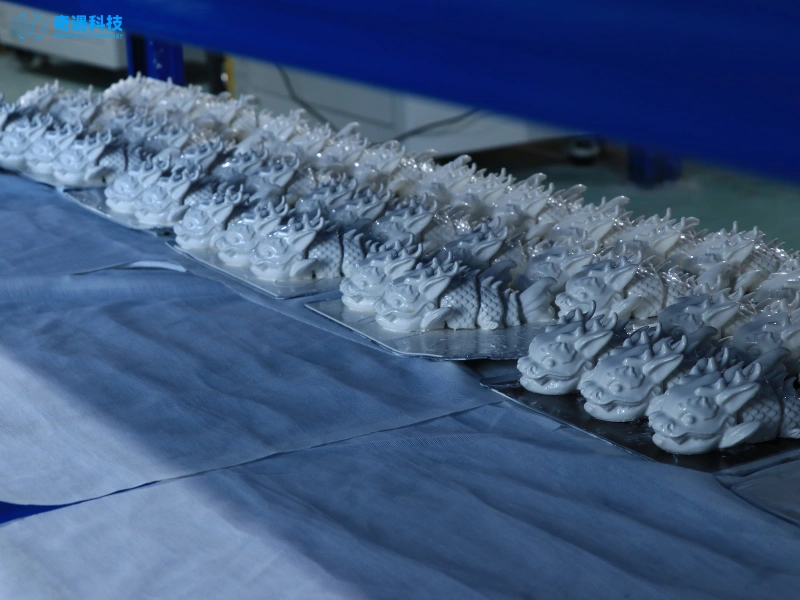
- High Precision: Layer thickness can be as low as 20–50 microns, and XY resolution can reach 25–50 microns, suitable for fine details and microstructures.
- Complex Geometries: DLP allows the creation of shapes that are impossible or very costly with traditional machining or casting.
- Fast Production: Entire layers are cured simultaneously, reducing print time compared to point-by-point methods like SLA.
- Material Efficiency: Minimal waste of high-value ceramic materials.
Materials Used in DLP Ceramic Printing
DLP ceramic printing relies on photosensitive ceramic slurries, which combine:
- Ceramic powder: Commonly alumina (Al₂O₃), zirconia (ZrO₂), or silicates.
- Photosensitive resin: Acts as the carrier and binder.
- Additives: Dispersants and thickeners to maintain flowability and uniformity.
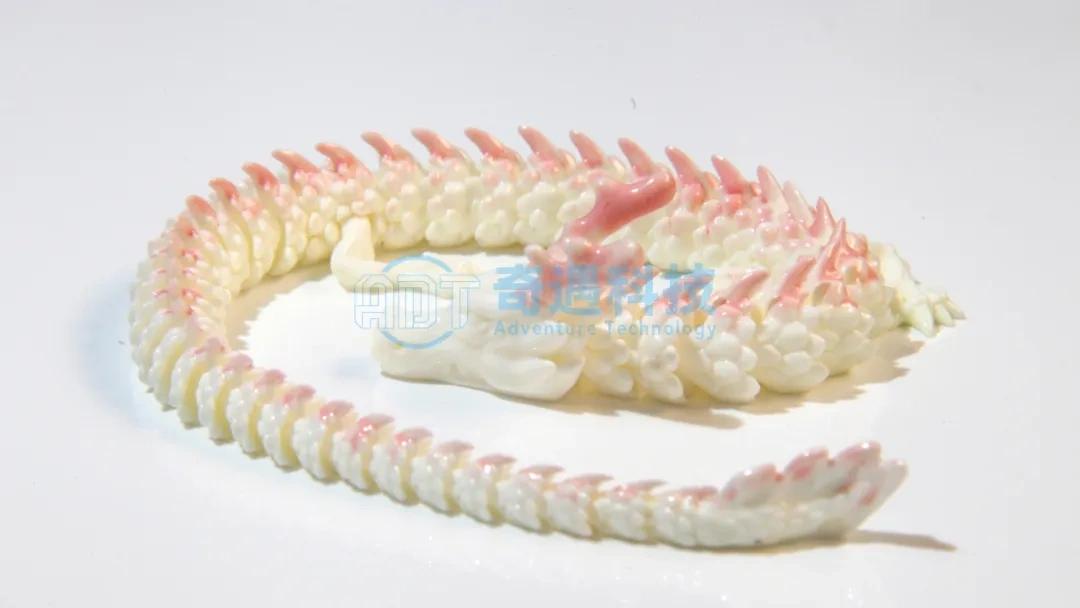
Our printers use a specially formulated photosensitive ceramic paste that combines fine ceramic powders like alumina or zirconia with UV-curable binders. This allows for intricate shaping with sharp edges, hollow structures, and minimal deformation during post-processing.
Material considerations:
- High ceramic loading reduces shrinkage during sintering.
- Viscosity affects layer leveling and printing precision.
- Proper curing depth must match the projector wavelength and power.
Post-Processing
After printing, DLP ceramic parts are not yet fully dense. Post-processing steps include:
- Cleaning: Remove uncured resin from the surface.
- Drying: Prevent deformation.
- Debinding: Low-temperature removal of resin.
- Sintering: High-temperature densification to achieve final strength and hardness.
Example results:
- Alumina: Sintered at 1450°C, density ~98%, bending strength ~350 MPa
- Zirconia: Sintered at 1500°C, higher toughness, suitable for functional components
Applications of DLP Ceramic 3D Printing
DLP ceramic 3D printing is used in high-value applications requiring precision and performance:
- Medical: Dental crowns, implants, and surgical guides
- Aerospace: High-temperature parts, micro-turbine components
- Industrial molds: Precision ceramic molds and micro-injection molds
Case example
A dental lab prints patient-specific crowns using DLP ceramic printing. The printed crowns achieve ±50 µm tolerance and excellent surface smoothness, reducing manual finishing.
From biomedical implants to electronic substrates and aerospace thermal shields, DLP ceramic printing is now powering innovation across sectors that demand both complexity and performance.
Choosing the Right DLP Ceramic 3D Printing System
Resolution & Accuracy
The fineness of reproduction and smoothness of surfaces depend on the resolution of a DLP ceramic 3D printer. Good XY resolution, usually 25-50 microns and adjustable layer thickness, usually 20-100microns enables fines parts and close tolerances. It is particularly necessary when using such applications as medical implants or micro-molds, where the slightest deviation can influence functionality. Resolution of a printer should be high in order to produce a ceramic part with a high level of accuracy, detail, and smoothness.
Light Source and Exposure Control
The source and exposure system of the UV light is very crucial in the uniform and consistent curing of the photosensitive ceramic slurry. The lights should emit a wavelength of 385–405 nm, matching the resin properties, and they should provide a homogeneous intensity to ensure that each layer solidifies. Exposure time and power can be set to maximize various slurries and part geometries to minimize defects and enhance surface finish. The use of a printer that has a high level of light control ensures the consistency and repeatability of the printing results.
Stability Platform Mechanical Design.
It must have stable and accurate mechanical parts to prevent possible misalignment of layers, warping of layers, or defects. The platform on which the building is done should move freely on the Z-axis and the entire machine should produce as little vibration as possible when printing. An inflexible and carefully structured platform will guarantee that high-resolution optics will be converted to accurate and high-quality ceramic components.
Material Compatibility
The printer should be able to handle the types of ceramic powders and slurry viscosities of your applications which may be alumina or zirconia. High ceramic loading is supported to minimize shrinkage in the course of sintering and to increase mechanical performance, whereas flexibility to deal with other materials can provide an opportunity to experiment or upgrade in the future without hardware changes.
Post-Processing Support
The further processing of the printed part by making it a functional, fully dense ceramic component requires further processing after it has been printed. The workflow of the printer must also facilitate effective cleaning, debinding and sintering. Integrated post-processing guidance or automation systems minimize human error, enhance throughput and guarantee that the completed part satisfies mechanical and dimensional specifications.
Conclusion
Ceramic 3D printing is a high precision and design freedom technology with efficient production. With high quality photosensitive ceramic slurry and ideal printing parameters, manufacturers can create complex and high performance ceramic parts which are used in industries where quality and precision are highly important.
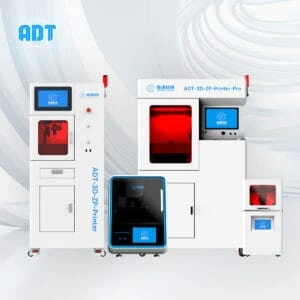
At Adventuretech, our DLP platforms are available in desktop, dual-cylinder, and PRO configurations. We also support over 20 verified materials, including silicon nitride, hydroxyapatite, and composite formulations.
If you’re ready to move from paste to precision, let’s talk. We’re here to support your research, your design goals, and your next-generation applications.