
Producing high-optical-quality LuAG:Ce transparent ceramics is notoriously challenging due to the material’s strict requirements and complex manufacturing process. Achieving full transparency demands ultra-high density, uniform Ce doping, and zero micro-defects—conditions that are difficult to meet with conventional ceramic methods. Moreover, integrating DLP 3D printing introduces additional challenges, such as controlling shrinkage during sintering and preventing cracks or pores in intricate structures.
In recent decades, transparent ceramic optical materials made from simple and complex oxides have been a major focus of research worldwide. Among them, complex oxides with a cubic garnet crystal structure hold a particularly important position because they combine a variety of excellent and unique physical and optical properties.
Recently, Professor Petr S. Sokolov and his team at the National Research Center Kurchatov Institute in Moscow, Russia, published a study in the journal Optical Materials titled "Isobornyl acrylate-based photosensitive resins for high-resolution digital light processing 3D printing of garnet ceramics." In this work, the researchers used self-synthesized garnet oxide powders together with other commercially available components to develop several photosensitive resin systems suitable for digital light processing (DLP) 3D printing. By combining these resins with desktop DLP 3D printers, a simple air-atmosphere debinding process, and subsequent high-temperature pressureless sintering, they successfully produced dense, defect-free, and semi-transparent (Gd, Y)₃Al₂Ga₃O₁₂:Ce ceramics.
Original link: https://doi.org/10.1016/j.optmat.2024.116559
Overview of Research Content
The cited study investigates the feasibility of using DLP 3D printing technology to achieve highly dense ceramic green bodies for the fabrication of inorganic ceramic scintillator materials, as well as to enable crack-free sintering of ceramic components with complex geometries. DLP 3D printing has been widely applied to the fabrication of ceramic products with various shapes and structural designs. However, according to the reported research, no previous studies have demonstrated the fabrication of high-precision, periodically ordered or lattice-type ceramic structures based on garnet-type complex oxide materials.
The authors propose a simple and efficient formulation system based on mono-functional and tri-functional acrylate monomers for the preparation of photosensitive resins and the fabrication of high-resolution ceramic structures. The 3D-printed periodic planar structures of (Gd,Y)₃Al₂Ga₃O₁₂:Ce ceramics were systematically and comprehensively characterized using optical microscopy, scanning electron microscopy, as well as luminescence and scintillation performance measurements.
Materials and Methods
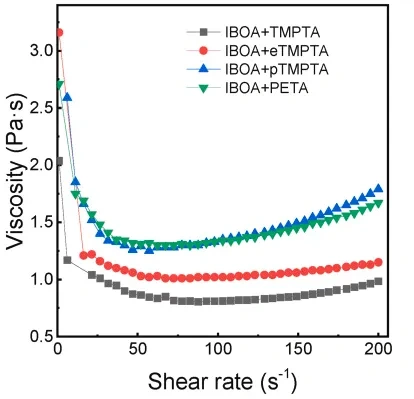
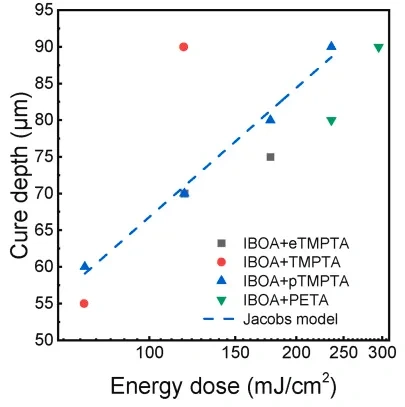
Based on relevant literature, we used self-made LuAG:Ce garnet-type oxide powder as the main raw material. This powder has uniform particle size and good dispersibility, providing a reliable foundation for the preparation of high-optical-quality transparent ceramics. To achieve DLP 3D printing, we developed a specialized photosensitive resin formulation, using monofunctional and trifunctional acrylic monomers, and adding appropriate amounts of ceramic powder and photoinitiator. By optimizing the resin viscosity and photocuring speed, we can ensure uniform distribution of ceramic powder during printing, while controlling shrinkage and deformation to ensure printing accuracy.
We used a desktop DLP photopolymerization 3D printer to fabricate ceramic green bodies, with layer thicknesses ranging from 50 to 100 μm and a minimum feature size of 200 μm. By carefully designing the support structures during printing, complex grid or lattice-shaped ceramic structures could be successfully produced.
After printing, the ceramic green bodies underwent air debinding to gradually remove the resin, minimizing the risk of cracks and pores. This was followed by pressureless high-temperature sintering to densify the ceramics, resulting in semi-transparent or highly transparent LuAG:Ce ceramics. The sintering temperature and dwell time were optimized to ensure stable crystal structures, minimal microscopic defects, and excellent optical properties.
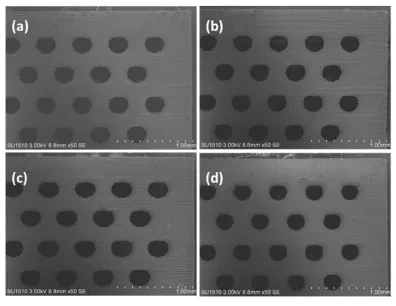
To evaluate material performance, the sintered ceramics were systematically characterized using multiple methods. Optical microscopy and scanning electron microscopy (SEM) were used to examine the microstructure, including grain size, porosity, and microcracks. Light transmittance measurements assessed transparency, while photoluminescence yield and lifetime tests confirmed their performance as scintillator materials. Additionally, the dimensional accuracy of the printed and sintered grid structures was measured to verify the controllability of high-resolution features.
Using this approach, we successfully fabricated high-optical-quality LuAG:Ce transparent ceramics with dense, defect-free microstructures, capable of forming complex periodic structures with high printing precision. This method offers a new route for applications in scintillator materials, X-ray imaging, and nuclear detection.
Conclusion
If you are interested in the fabrication process and properties of high optical quality LuAG:Ce transparent ceramics, or would like to learn how to apply DLP 3D printing to the fabrication of complex ceramic structures, please visit our technical page for more case studies. If you have any questions, you can also contact our professional team. Qiyu Technology provides complete solutions from ceramic material research and development, ceramic 3D printing equipment, ceramic 3D printing services to sintering processes.