
As DLP 3D Printing continues to expand the possibilities of zirconia ceramic manufacturing, one challenge remains difficult to overcome: achieving high strength and high translucency in the same material.
If you choose a zirconia composition optimized for mechanical strength, you often sacrifice translucency. If you prioritize optical performance, strength typically drops. This limitation affects applications ranging from dental restorations and biomedical devices to precision engineering components and optical ceramics.
A recent study published in Materials Research offers an elegant solution. By carefully controlling particle size distribution within DLP-printable zirconia slurries, researchers demonstrated that it is possible to improve both mechanical properties and light transmission simultaneously.
The work highlights an important principle in DLP 3D Printing of ceramics: performance is not determined solely by material composition. The way particles are arranged before printing can significantly influence the final microstructure and, ultimately, the behavior of the sintered ceramic.
Why Strength and Translucency Usually Compete in Zirconia Ceramics
Zirconia remains one of the most widely used engineering ceramics because it combines:
- High fracture resistance
- Excellent wear resistance
- Biocompatibility
- Chemical stability
- High-temperature performance
However, not all zirconia materials behave the same way.
3Y-TZP (3 mol% yttria-stabilized tetragonal zirconia polycrystal) is known for its exceptional strength and transformation toughening effect. It is widely used in structural and dental applications where mechanical reliability is critical.
In contrast, 5Y-PSZ (5 mol% yttria partially stabilized zirconia) contains a higher proportion of cubic phase zirconia, which allows more light to pass through the material. This makes it attractive for aesthetic dental restorations and optical applications.
The challenge is straightforward:
- More tetragonal phase → higher strength
- More cubic phase → better translucency
Historically, improving one property often reduced the other.
For manufacturers using DLP Ceramic 3D Printing, the challenge becomes even more complex because slurry formulation directly affects both printability and final part quality.
Why Slurry Design Matters in DLP 3D Printing
In DLP-based ceramic additive manufacturing, everything begins with the slurry.
A high-quality slurry must satisfy several requirements simultaneously:
- High solid loading
- Stable dispersion
- Low viscosity
- Sufficient curing depth
- Uniform particle distribution
Traditionally, many zirconia slurries rely on powders with a relatively narrow particle size distribution. While this simplifies formulation, it may not provide the most efficient particle packing during printing and sintering.
The research team from the University of Jinan investigated whether combining powders of different sizes could create a more favorable microstructure after sintering.
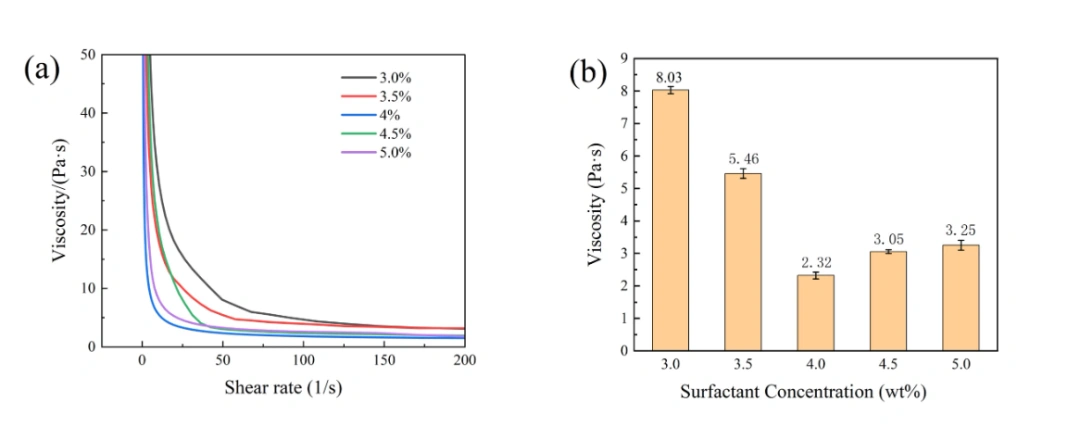
As expected, adding finer particles increased slurry viscosity and reduced UV curing depth. At first glance, these effects might appear undesirable for DLP processing.
However, the researchers looked beyond printing performance and focused on what happens during sintering.
That is where particle grading begins to show its true value.
The Particle Grading Strategy
The study mixed:
- Coarser 3Y-TZP powder (D50 ≈ 500 nm)
- Ultrafine 5Y-PSZ powder (D50 ≈ 90 nm)
Several formulations were prepared with different coarse-to-fine powder ratios, ranging from 100:0 to 70:30.
The objective was not simply to blend two zirconia compositions. Instead, the researchers aimed to engineer a particle architecture capable of producing a superior microstructure after densification.
This approach is commonly known as particle grading.
Although simple in concept, it can dramatically affect ceramic processing behavior.
How Particle Grading Improves Densification
Imagine filling a container with large stones.
No matter how carefully you arrange them, empty spaces remain between the stones.
Now pour fine sand into those gaps.
The sand fills the voids, increasing packing density.
The same principle applies to ceramic powders.
When ultrafine particles are introduced into a matrix of larger particles, they occupy the spaces between coarse grains. This creates a denser powder network before sintering even begins.
Higher packing density typically leads to:
- Reduced shrinkage variation
- Better densification
- Lower residual porosity
- More uniform microstructures
For zirconia ceramic 3D printing, these advantages are particularly important because porosity strongly influences both strength and optical performance.
Why Fine Particles Accelerate Sintering
The benefits extend beyond particle packing.
Ultrafine zirconia particles possess significantly higher surface energy than larger particles. During sintering, this stored energy acts as a powerful driving force for mass transport.
As temperature rises, the fine particles:
- Diffuse more rapidly
- Fill interparticle gaps
- Promote neck growth between grains
- Assist pore elimination
At the same time, they influence grain boundary behavior.
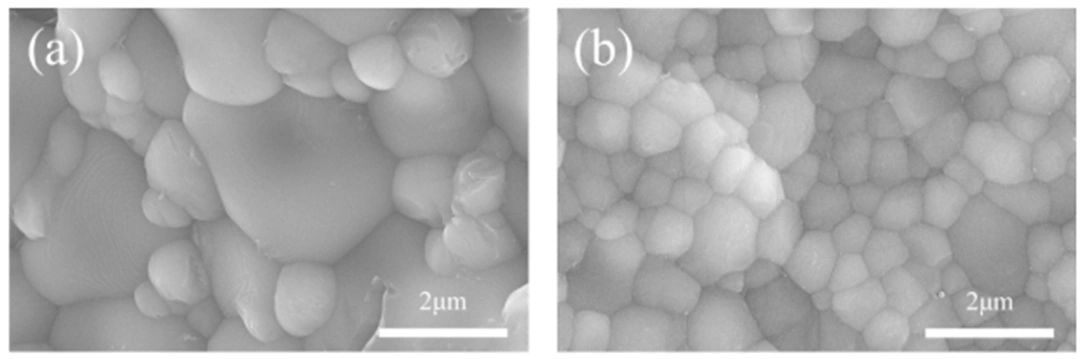
The study suggests that fine particles accumulate around grain boundaries and slow excessive grain boundary migration.
This creates two major benefits:
Enhanced Densification
Faster pore elimination produces a more compact ceramic body with fewer internal defects.
Controlled Grain Growth
Abnormal grain growth can generate optical scattering sites and mechanical weak points. By suppressing oversized grains, particle grading promotes a more uniform microstructure.
These two effects are critical because both strength and translucency depend heavily on microstructural uniformity.
Finding the Optimal Ratio
The researchers printed and sintered zirconia specimens with different particle grading ratios before evaluating their microstructure, hardness, flexural strength, and optical performance.
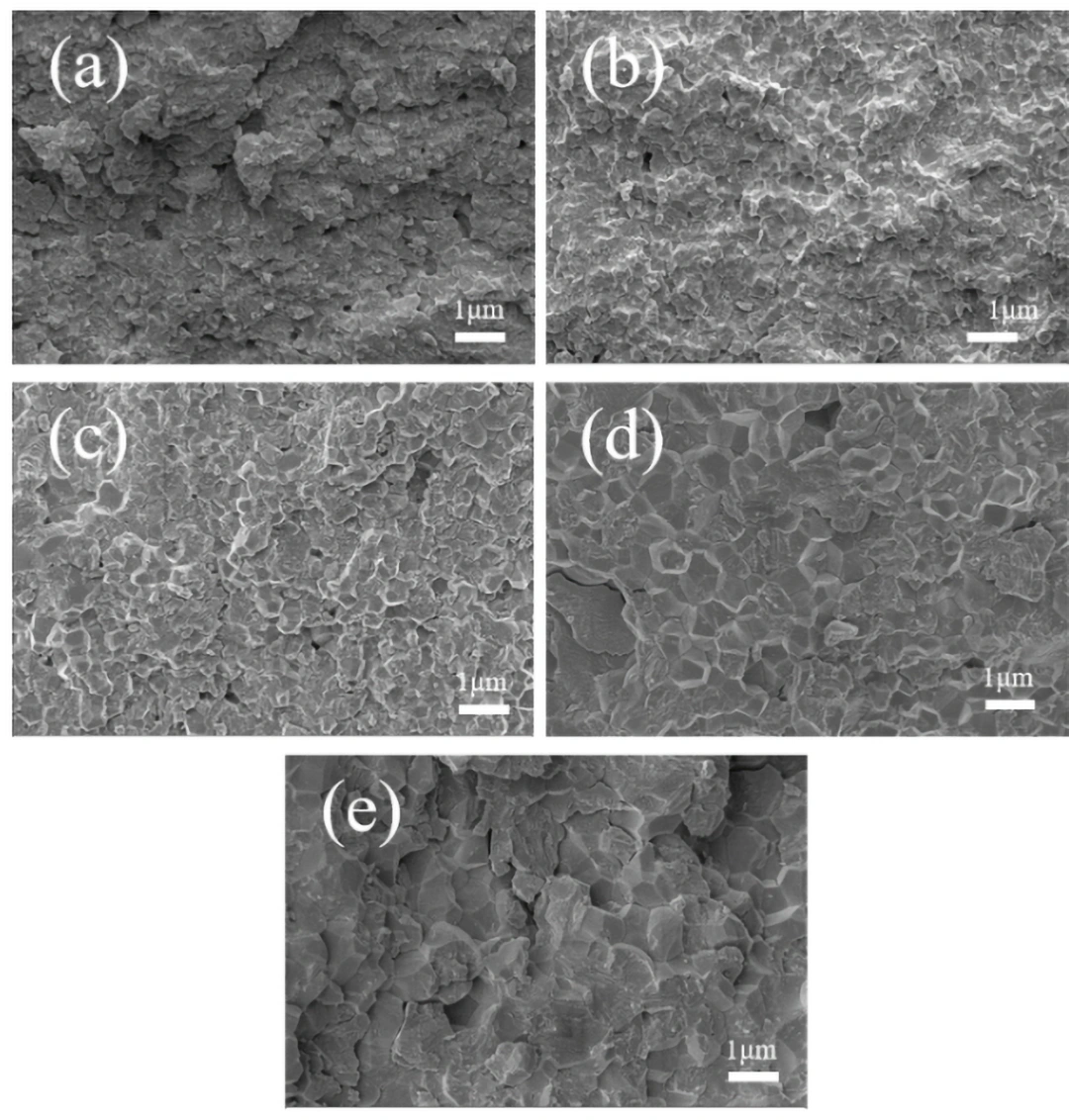
The most balanced microstructure appeared in the sample containing approximately 20 wt.% ultrafine 5Y-PSZ powder.
Compared with the coarse-particle-only formulation, this sample exhibited:
- Higher density
- Fewer visible pores
- More uniform grain distribution
- Reduced abnormal grain growth
Interestingly, increasing the ultrafine particle content beyond this level did not continue to improve performance.
At higher concentrations, particle agglomeration began to appear, which reduced microstructural uniformity and limited further benefits.
This finding reinforces a common lesson in ceramic processing: more is not always better.
Optimization matters.
The 80:20 Ratio Delivered the Best Overall Performance
Mechanical and optical testing confirmed the microstructural observations.
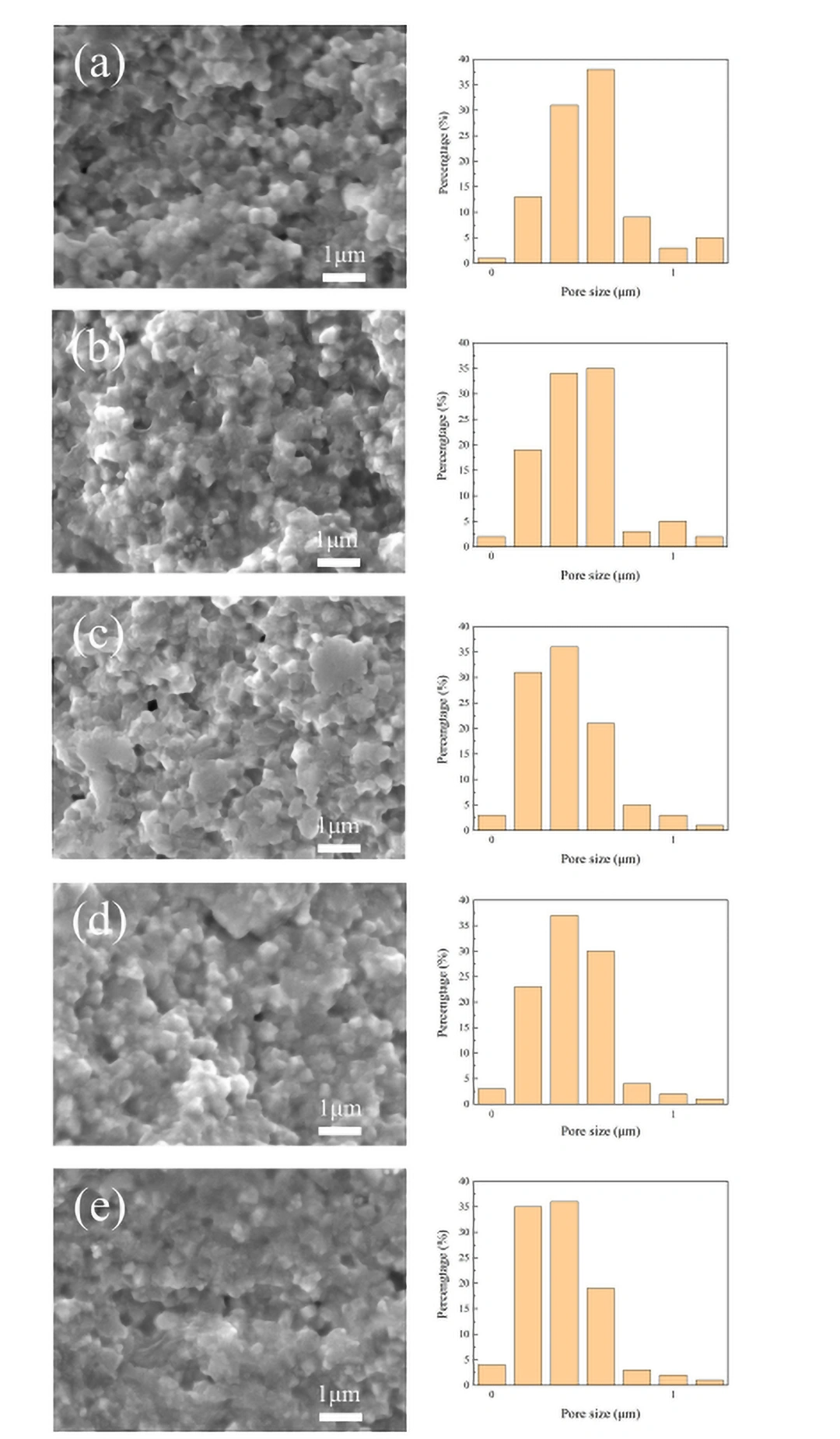
The formulation containing approximately 80% coarse 3Y-TZP and 20% ultrafine 5Y-PSZ achieved the strongest overall performance.
The material demonstrated:
- The highest flexural strength
- The highest hardness
- Significantly improved translucency
Most importantly, the improvement in optical performance did not come at the expense of mechanical reliability.
This is what makes the study particularly significant.
Instead of accepting the traditional strength-versus-translucency compromise, the researchers showed that microstructural engineering can shift the balance and improve both properties simultaneously.
What This Means for DLP Ceramic 3D Printing
The implications extend far beyond zirconia alone.
The study demonstrates a broader principle for ceramic additive manufacturing:
Material performance can be improved not only through chemistry but also through particle architecture.
For engineers developing next-generation ceramic components, particle grading offers a practical and scalable strategy for enhancing performance without fundamentally changing existing DLP printing equipment.
Potential benefits include:
- Higher-density printed ceramics
- Improved mechanical reliability
- Better optical properties
- Reduced defect formation
- Greater process flexibility
As DLP technology continues to move from laboratory research into industrial production, such approaches may become increasingly important.
Applications That Could Benefit Most
Dental Restorations
Modern dental zirconia requires both durability and natural aesthetics.
Improved translucency allows restorations to better mimic natural teeth, while high strength ensures long-term clinical performance.
Biomedical Devices
Patient-specific implants produced through DLP 3D Printing could benefit from enhanced mechanical integrity without sacrificing visual or diagnostic requirements.
Optical Ceramics
Transparent or semi-transparent zirconia components are attracting attention for specialized optical and protective applications.
Reducing light-scattering defects directly improves performance.
Advanced Engineering Components
High-strength zirconia remains valuable in wear-resistant systems, precision machinery, and harsh-environment applications where complex geometries are required.
Future Research Directions
While the results are promising, they also open several new research opportunities.
Future work may focus on:
- Multi-modal particle grading systems with three or more particle sizes
- AI-assisted optimization of slurry formulations
- Application of particle grading to alumina, silicon nitride, and other advanced ceramics
- Performance evaluation of lattice structures and complex geometries produced through DLP printing
- Predictive models linking particle distribution to final microstructure and properties
As researchers continue to refine these approaches, particle grading may become a standard design tool for high-performance ceramic additive manufacturing.
Conclusion
One of the most interesting aspects of this research is its simplicity.
The breakthrough did not require a new printer, a new light source, or an entirely new material system. Instead, it came from a deeper understanding of how particles interact during printing and sintering.
By carefully combining coarse 3Y-TZP particles with ultrafine 5Y-PSZ particles, the researchers created a zirconia ceramic that achieves an impressive balance of strength and translucency.
For the growing field of DLP 3D Printing, this study serves as a reminder that major performance gains often begin at the microscopic level. When particle architecture is engineered intelligently, it becomes possible to overcome limitations that once seemed unavoidable.
As ceramic additive manufacturing continues to evolve, particle grading may prove to be one of the most practical pathways toward stronger, denser, and more functional zirconia components.
Reference
Li, L. et al. (2026). Materials Research.
Role of Particle Grading on Slurries Curing, Mechanical Properties, and Light Transmittance of DLP-Processed Zirconia Ceramics.
https://doi.org/10.1590/1980-5373-mr-2025-0573