Silicon carbide (SiC) ceramics have excellent properties such as high temperature resistance, good oxidation resistance, high thermal conductivity and low thermal expansion coefficient, so they are widely used in the production of heat exchangers, high thermal conductivity large-scale integrated circuit substrates, rocket nozzles and other products.
However, the high hardness and brittleness of SiC ceramics make it difficult to process. Traditional SiC ceramic forming technologies include dry pressing, isostatic pressing, slip casting, injection molding, etc. Molds are required in the process of preparing SiC ceramic green bodies. The entire production cycle is time-consuming and costly, and it is difficult to manufacture relatively complex parts and composite structures.
Therefore, industrial production urgently needs a forming method for high-performance complex-shaped ceramic parts. This time, let's take a look at the case of our company using self-developed desktop DLP light-curing 3D printing device to print a fine G-type surface structure of silicon carbide parts.
- Model Slicing
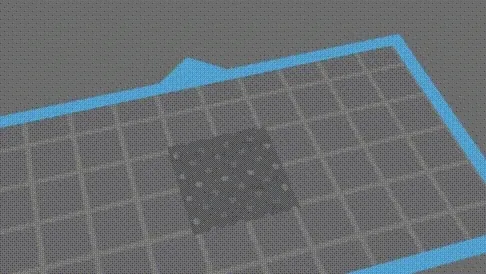
The Printing height 20mm; Printing time 1 hour 40min
- Printing Process
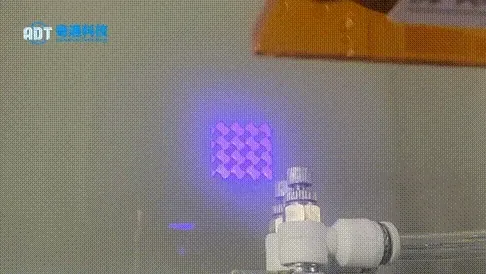
Printing process (light intensity 45mW/cm2, layer thickness 0.04mm, exposure time adjusted to 8s, material laying speed 120mm/s)
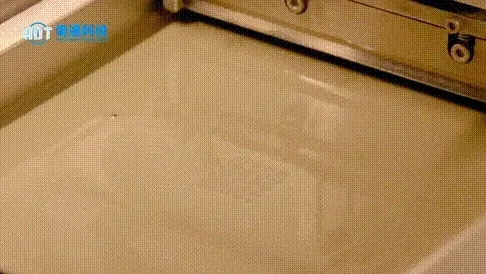
Printing completed
- Surface Cleaning
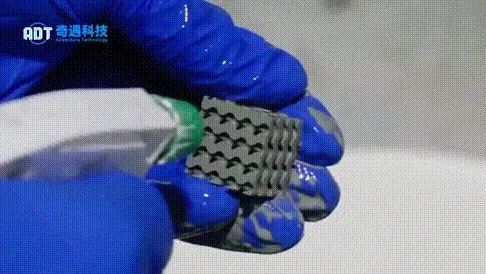
- Display the green body after printing (unsintered)
The ceramic 3D printer used for this printing
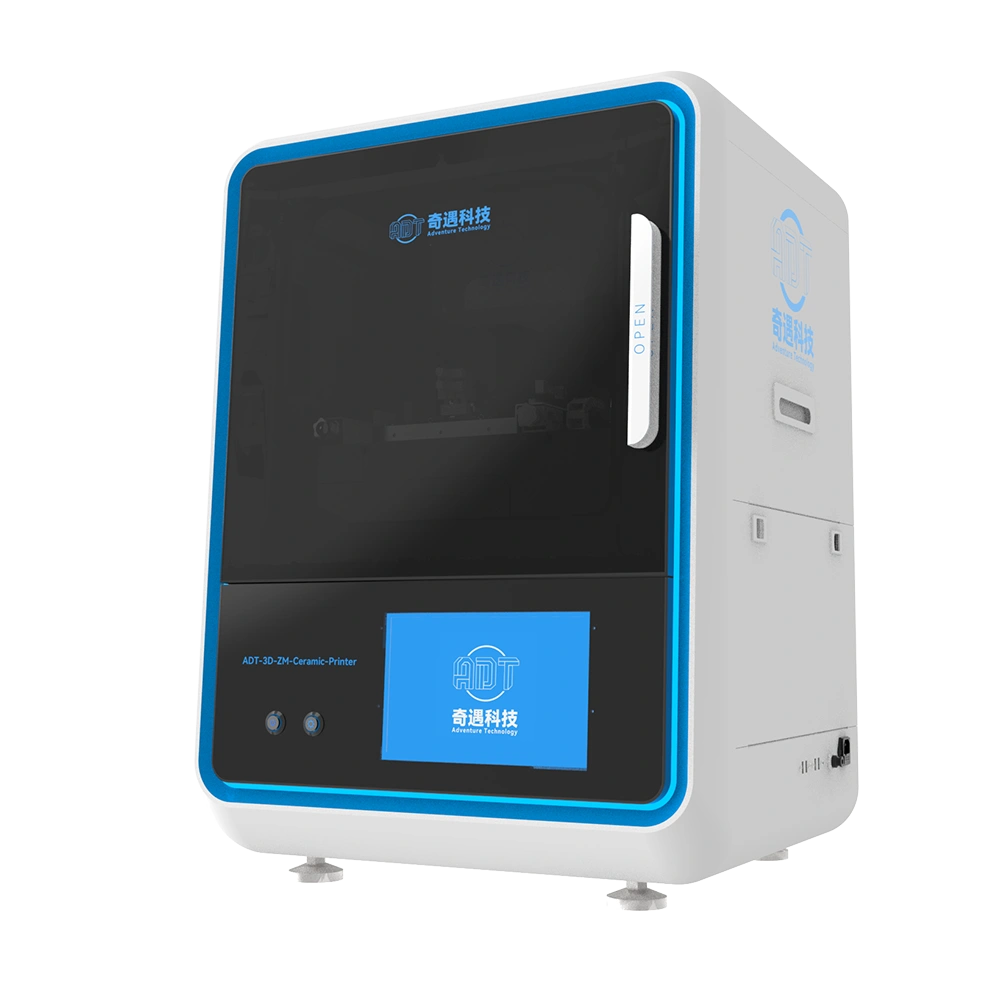
ADT-3D-ZM-Ceramic-96-50
Features:
1.Ultra-fast: 700 layers per hour (alumina), accelerating R&D and production.
2.High printing success rate: Upright sinking forming method and peristaltic filter feeding system.
3.Multi-material compatibility: Capable of printing various ceramic materials to meet diverse research needs.
4.Simplified printing process: Built-in material process parameter package for one-click printing.
5.Comprehensive software features: Includes photo, video, and algorithm correction functions.
Shenzhen Adventuretech was established in 2015. It is committed to helping users build a complete ceramic 3D printing system.If you have any requirements, please feel free to contact us!