
Industry Insights
Recently, the team led by Andrius Gineika at Kaunas University of Technology published a study titled 'The application of synthetic wollastonite in digital light processing 3D printing' in 'Ceramics International'. This research developed a 3D printable organic-inorganic resin.Using glycerol dimethacrylate and wollastonite, it was demonstrated that this material is compatible with common DLP 3D printers.This allows for the creation of real 3D structures with sub-millimeter spatial accuracy using recyclable industrial waste under standard printing parameters.
Original link: https://doi.org/10.1016/j.ceramint.2024.09.161
Adventure Technology official website: http://www.adventuretech.cn/
If you cannot open it, please copy the URL to your browser to view.
Research Content
Wollastoniteis a versatile material widely used in ceramics, coatings, and plastics due to its excellent mechanical properties and biocompatibility. This study combines glycerol dimethacrylate (GDM) with four types of wollastonite-based precursors.These include waste-derived sources, and the resulting material is used forDLP 3D printing.Wollastonite (CaSiO₃) typically comes from natural or synthetic sources and has good mechanical properties and biocompatibility. The study proposes using silica waste—by-products from the production of aluminum fluoride (AlF₃)—as a source of wollastonite, which helps recycle industrial waste and expand the application range of wollastonite.The research shows thatglycerol dimethacrylate resinexhibits excellent mechanical properties, particularly outstanding performance in storage modulus (G′) and loss modulus (G″). By combining waste-derived wollastonite with glycerol dimethacrylate, the prepared resin demonstrates good moldability in DLP 3D printing.
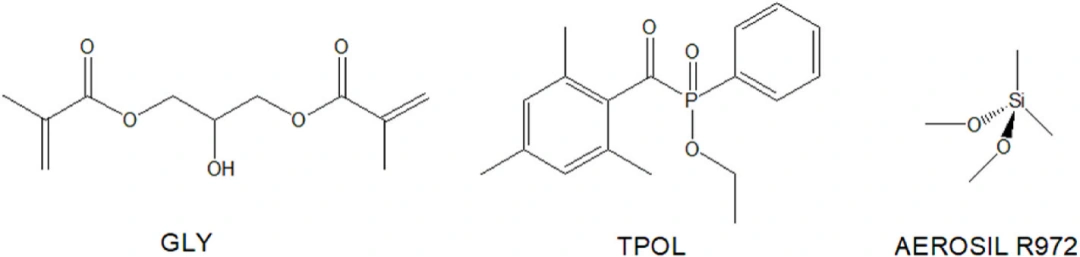
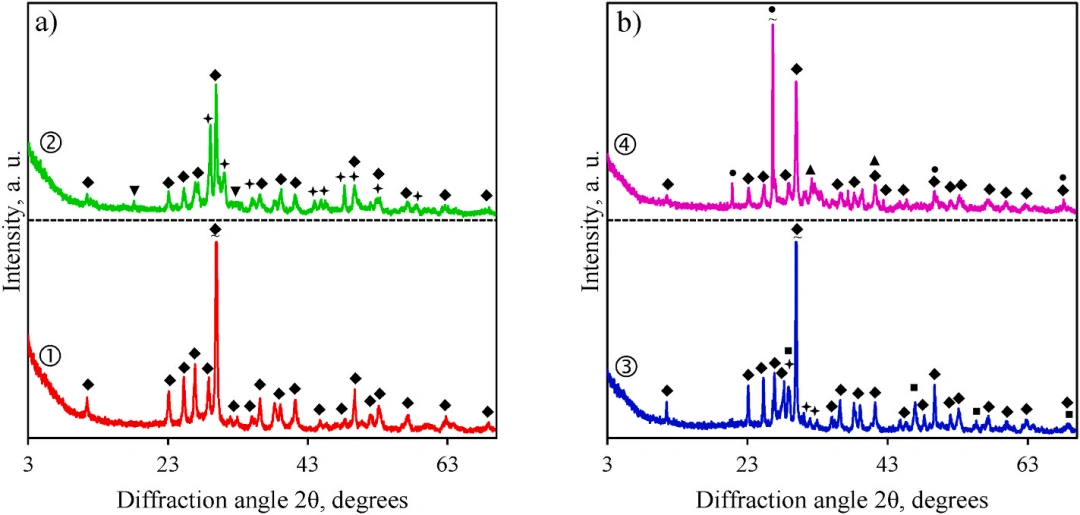
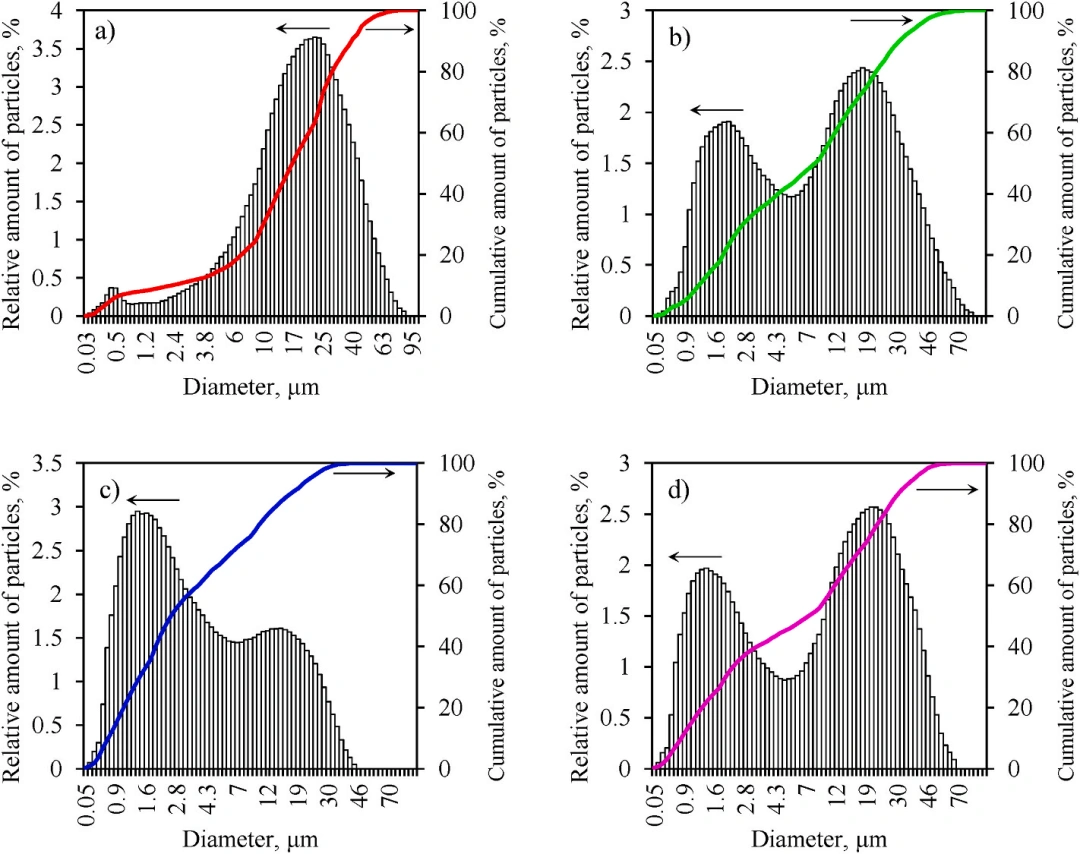
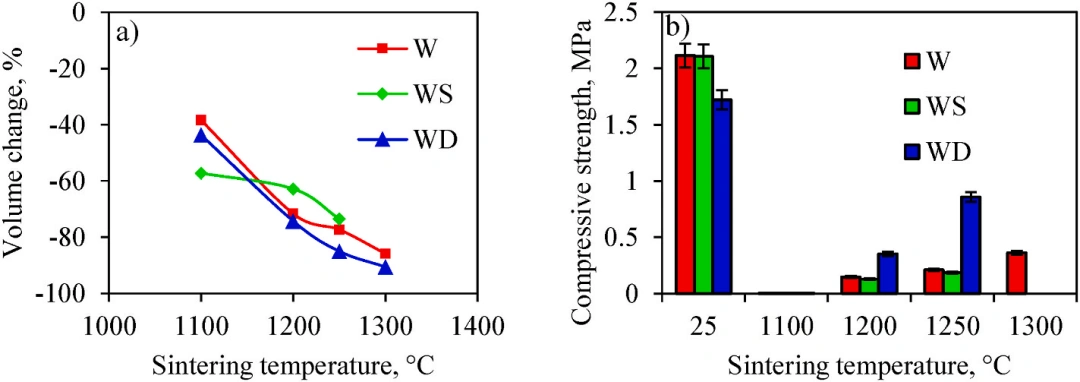
The sintered samples show optimal mechanical properties at 1250–1300°C,even though the waste-derived wollastonite contains fluorine (F) and aluminum (Al) ions, which may affect the vitrification behavior during the sintering process in some cases.△Figure 1, Chemical structures of glycerol dimethacrylate (GLY), ethyl (2,4,6-trimethylbenzoyl) phenyl phosphate (TPOL), and dimethylsilylated silica (AEROSIL R972).△Figure 2, XRD patterns of the precursors: 1 – W, 2 – WS, 3 – WD, 4 – WP. Indices: ◆ – wollastonite (tremolite), ▾ – fluormayenite (fluorite), ▯ – cuspidine (calcium phosphate), ■ – fluorite (fluorspar), ● – quartz, ▴ – larnite.△Figure 3, Particle composition of the precursors: a – W, b – WS, c – WD, d – WP.
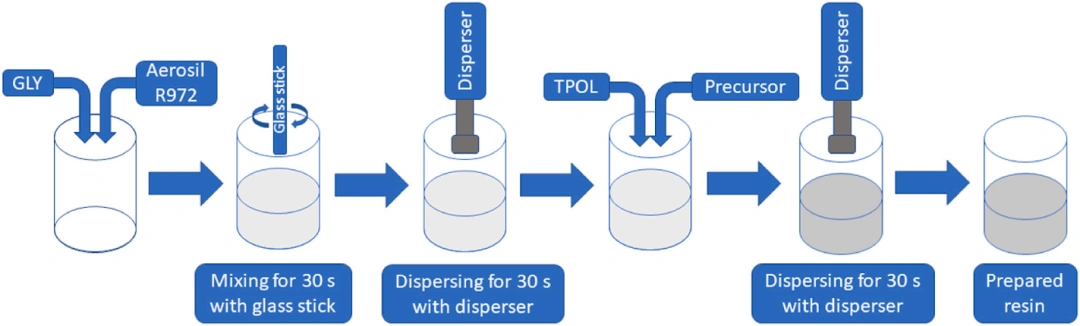
△Figure 4, Main scheme for resin preparation.
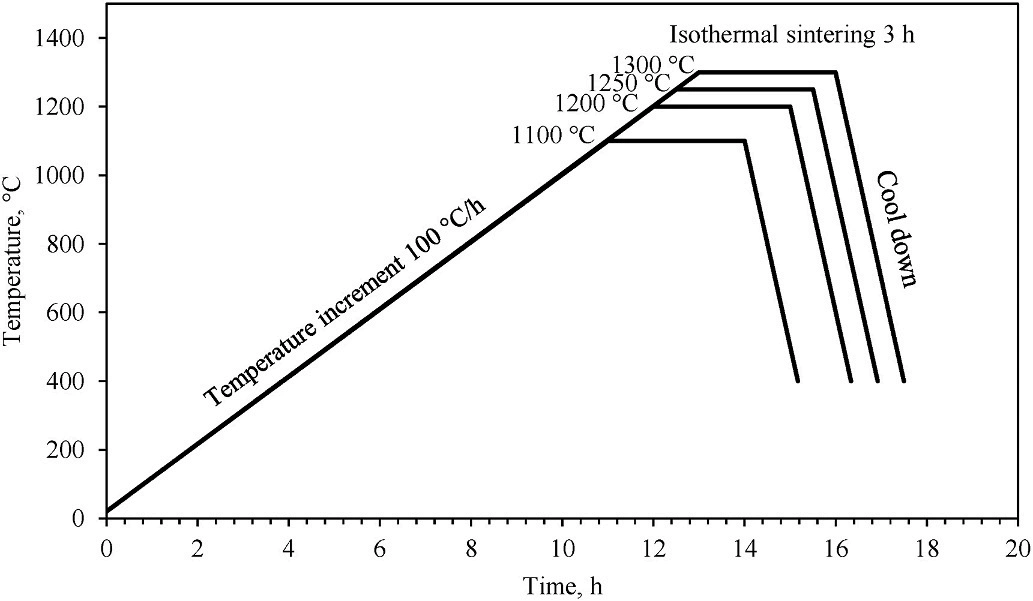
△Figure 5, Temperature conditions of the calcination process.
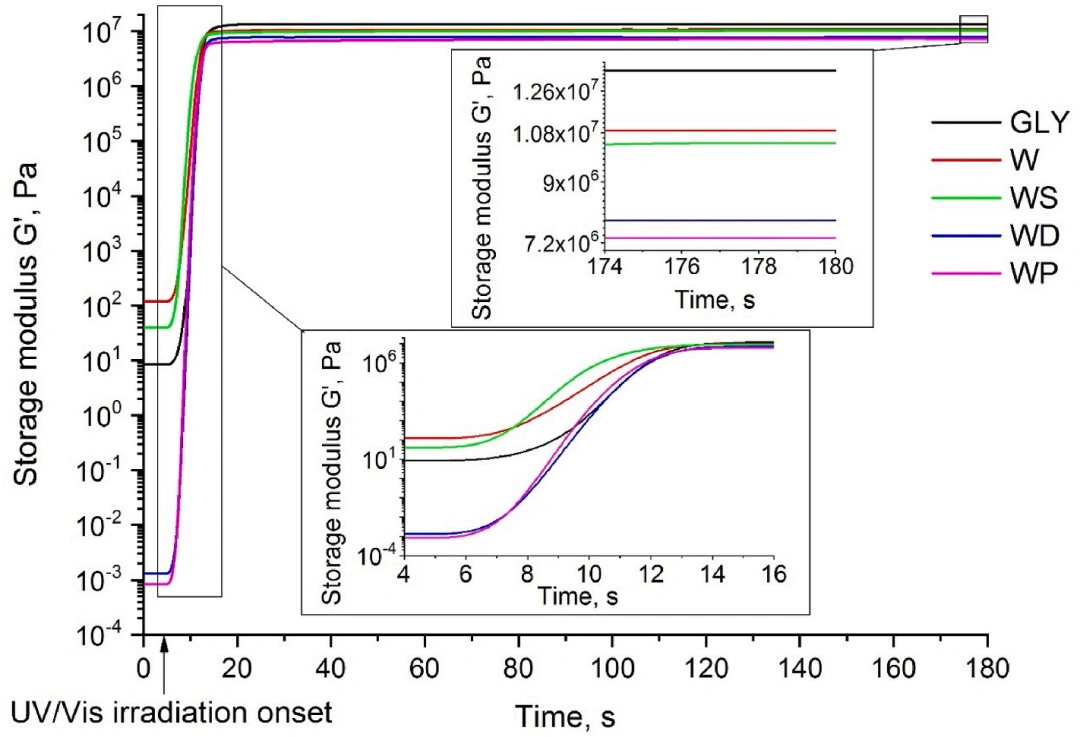
△Figure 6, Dependence of storage modulus G′ of glycerol dimethacrylate and structural precursor suspensions on radiation time.
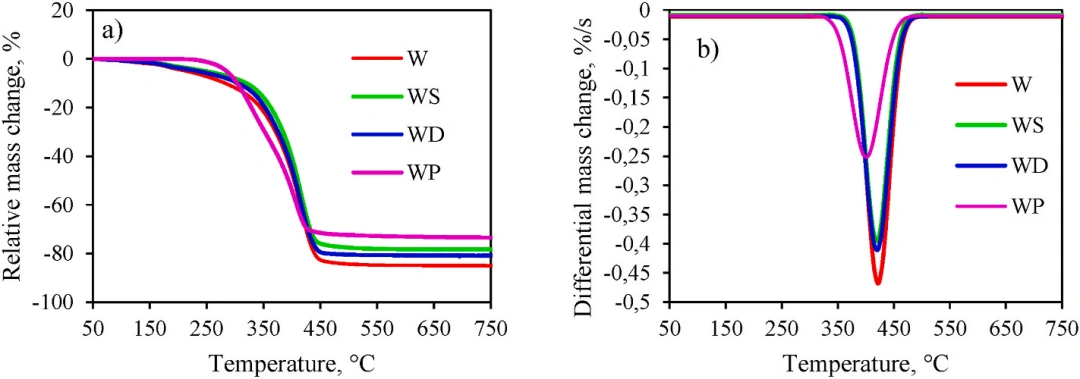
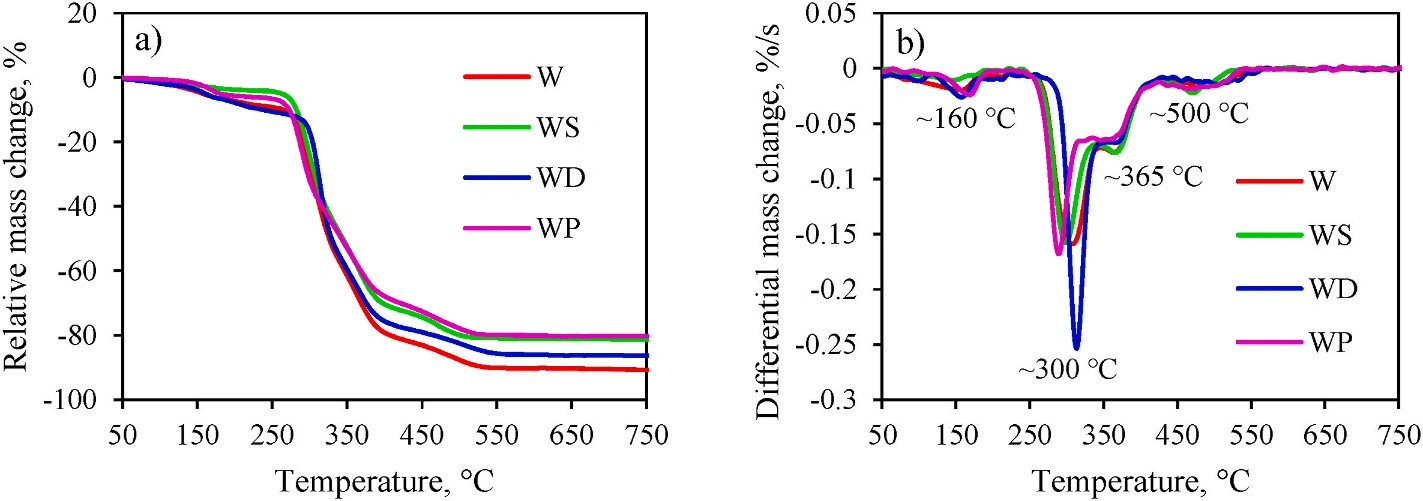
△Figure 7, Thermal analysis results of the green body: a – thermogravimetric analysis (TG), b – differential thermogravimetric analysis (DTG), conducted in a nitrogen atmosphere.
△Figure 8, Thermal analysis results of the green body: a – thermogravimetric analysis (TG), b – differential thermogravimetric analysis (DTG), conducted in an air atmosphere.
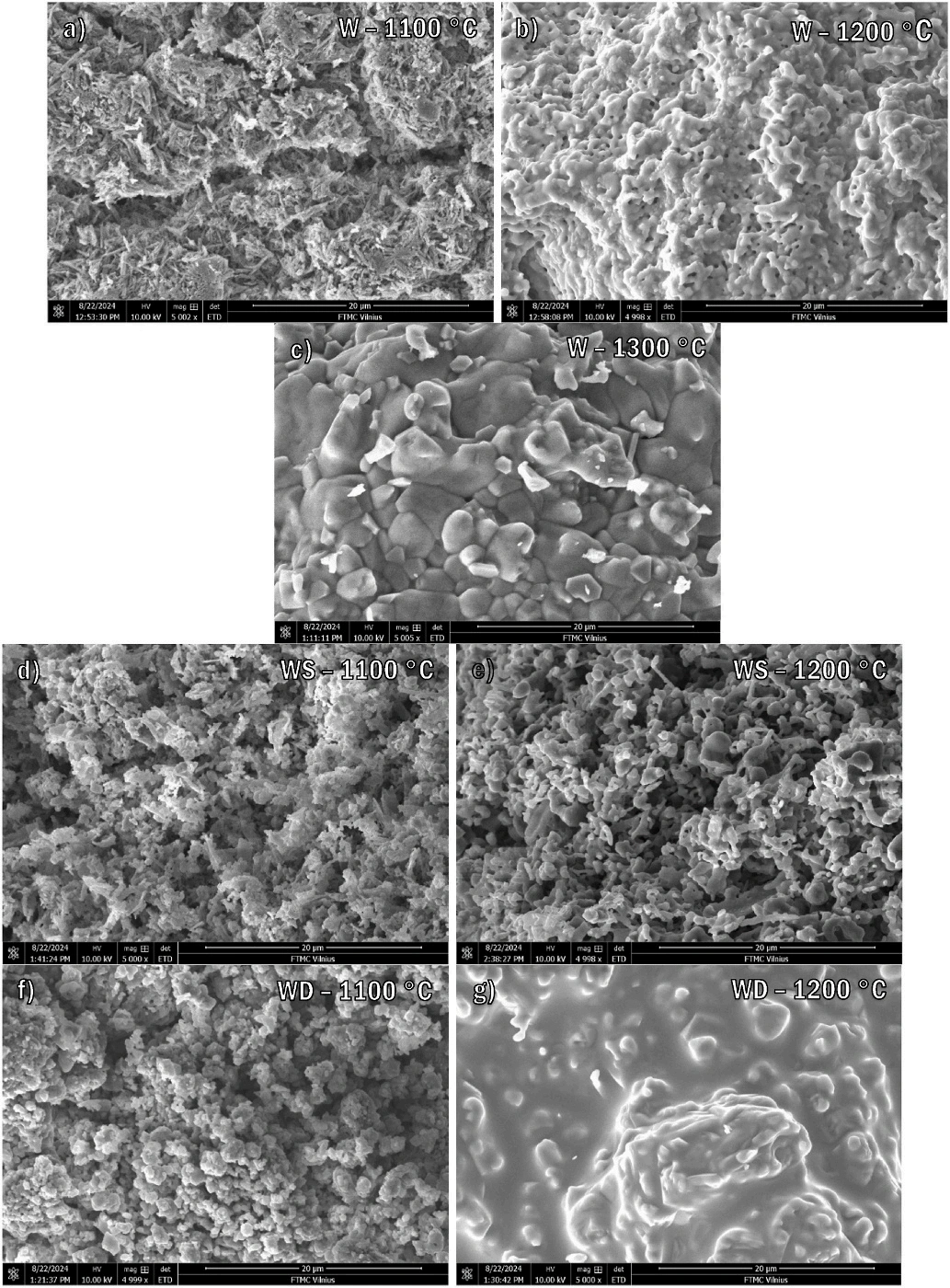
△Figure 9, SEM images of the surface morphology of sintered scaffolds: a) W – 1100°C, b) W – 1200°C, c) W – 1300°C, d) WS – 1100°C, e) WS – 1200°C, f) WD – 1100°C, g) WD – 1200°C.
△Figure 10, Effect of sintering temperature on the performance of printed 3D structures: a) volume change, b) compressive strength.
Conclusion
In this study, waste-derived glycerol dimethacrylate was combined with four types of precursors based on
wollastonite to prepare photocurable resins for DLP 3Dprinting. It was observed that the synthesized reagent-grade wollastonite, due to itsneedle-like structure,had the greatest impact on the viscosity of the resin. Meanwhile, dense minerals such asfluorspar,especiallyquartz,remained unreactive in the synthesized wollastonite samples, increasing thebrittleness of the green body.The photocurable resin glycerol dimethacrylate (Gly) exhibited the best mechanical properties—highest storage modulus and loss modulus.Meanwhile, W and WS showed similar mechanical properties, but their values were 20% and 40% lower than those of the unfilled resin, respectively. The mechanical properties of resins WD and WP were similar but lower than those of W and WS.The best mechanical properties were observed in samples sintered at 1250–1300°C.
However, the pure talc and the WS structure from waste sources differ from the WD structure from defluorinated waste sources, as they did not undergo vitrification, even though WS contains more fluorine and has a 30% lower compressive strength than WD. On the other hand, WS contains calcium phosphate, while WD contains fluorite, so the addition of the latter mineral may have regulated the vitrification and mechanical properties.
Materials from recyclable waste have been proven to be compatible with DLP 3D printers.It allows the use of standard printing parameters to directly manufacture real 3D structures with sub-millimeter spatial definition. This study paves the way for the production of inorganic objects using reusable industrial waste.