
Industry Insights
In modern manufacturing and medical technology, high-precision ceramic 3D printing is rapidly becoming a key technology. Recently, a study on digital light processing (DLP) technology in the manufacturing of high-performance materials has attracted widespread attention.Army Medical University (Third Military Medical University) Liu ChonglunThe team published a study titled '3D bioprinting of high-performance hydrogel with in-situ birth of stem cell spheroids' in 'Bioactive Materials', demonstrating the potential of DLP technology in hydrogel bioprinting, providing direct reference for ceramic printing technology. The article shows how to achieve the in-situ generation of stem cell spheroids by optimizing the bioink formulation.in-situ generation, and enhanced the regenerative capacity of the materials.
Original link: https://doi.org/10.1016/j.bioactmat.2024.09.033
Adventure Technology official website: http://www.adventuretech.cn/
If you cannot open it, please copy the URL to your browser to view.
Research Content
The article developed a new type of bioink composed ofgelatin methacryloyl (GelMA) and dextran.GelMA provides mechanical support, while dextran acts as a 'cell bait', inducing cell aggregation to form spheroids, and generating a porous structure by removing dextran after printing. Verification and encapsulation ofdental pulp stem cells (DPSC)in the hydrogel structure demonstrated their regenerative ability in vivo in dentin and neo-vascular-like structures. This strategy addresses the balance challenge betweenprintability and biocompatibilityof traditional printing materials.
Although the focus of the research is on hydrogel bioprinting, its methodology and technical highlights are also applicable to ceramic 3D printing. The following points are particularly important:
Slurry formulation optimization:Ceramic slurries need to have both photopolymerization properties and excellent dispersion uniformity, similar to the requirements of bioinks for material rheological properties. By adjusting the interactions between materials (such as the inducing effect of dextran), slurries more suitable for high-precision ceramic printing can be developed.
Porous structure design:The article promotes nutrient exchange and cell growth through the pore structure generated by the removal of dextran. Similarly, in ceramic printing, this porous design can be used to optimize the functions of filters and biomedical implants.
Complex structure manufacturing:The advantages of DLP technology in microstructure manufacturing can be used to print ceramic parts with complex internal channels, such as precision equipment for fluid dynamics experiments or ceramic nozzles in the aerospace field.
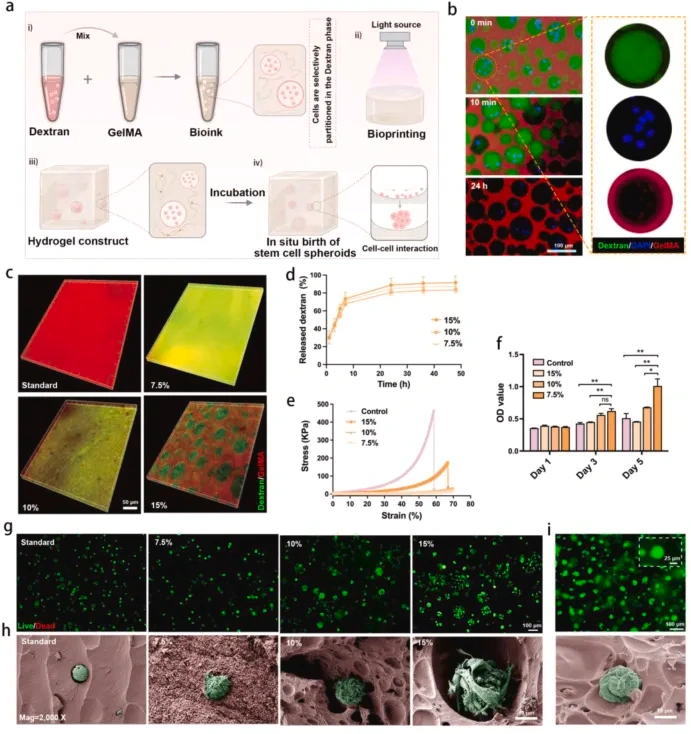
△Figure 1, Composition of bioink and pore formation process.
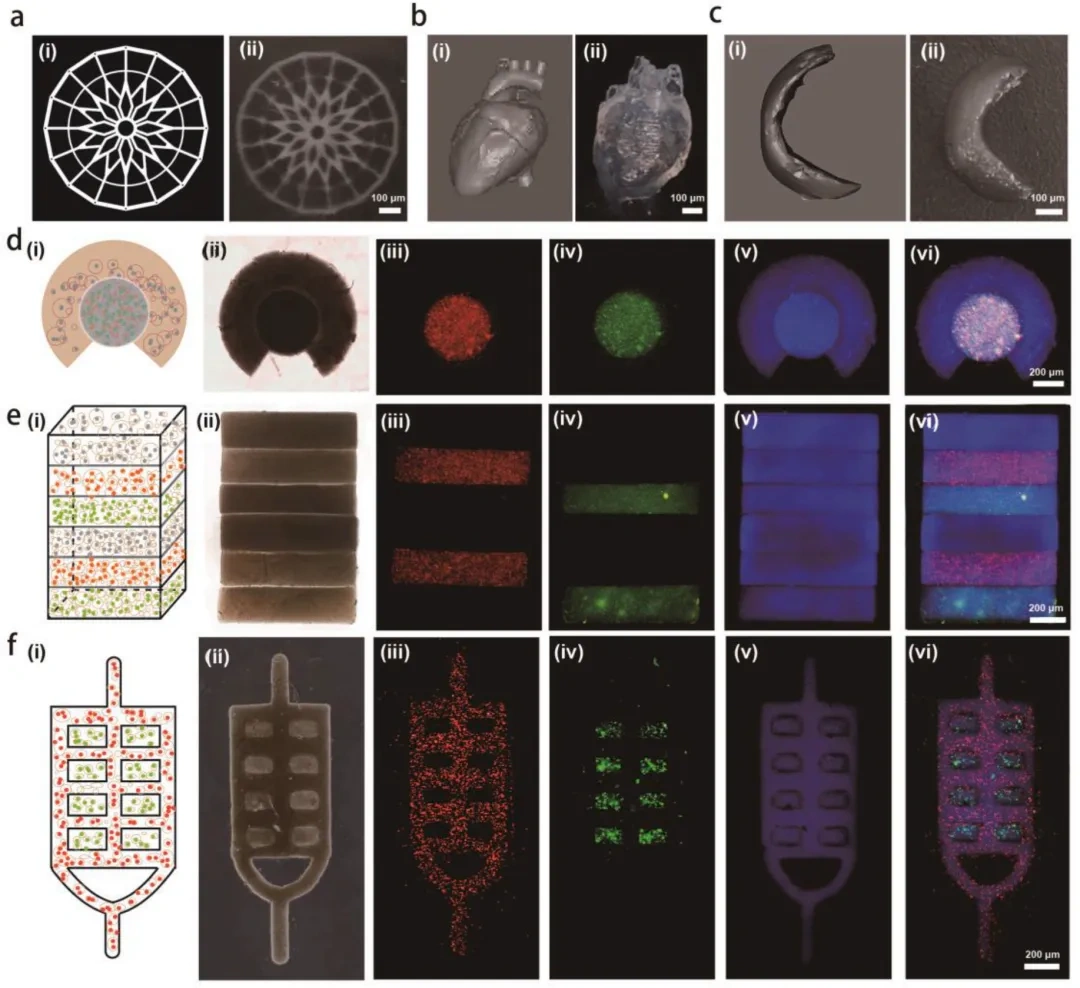
△Figure 2, DLP printing of different shapes and structural models.
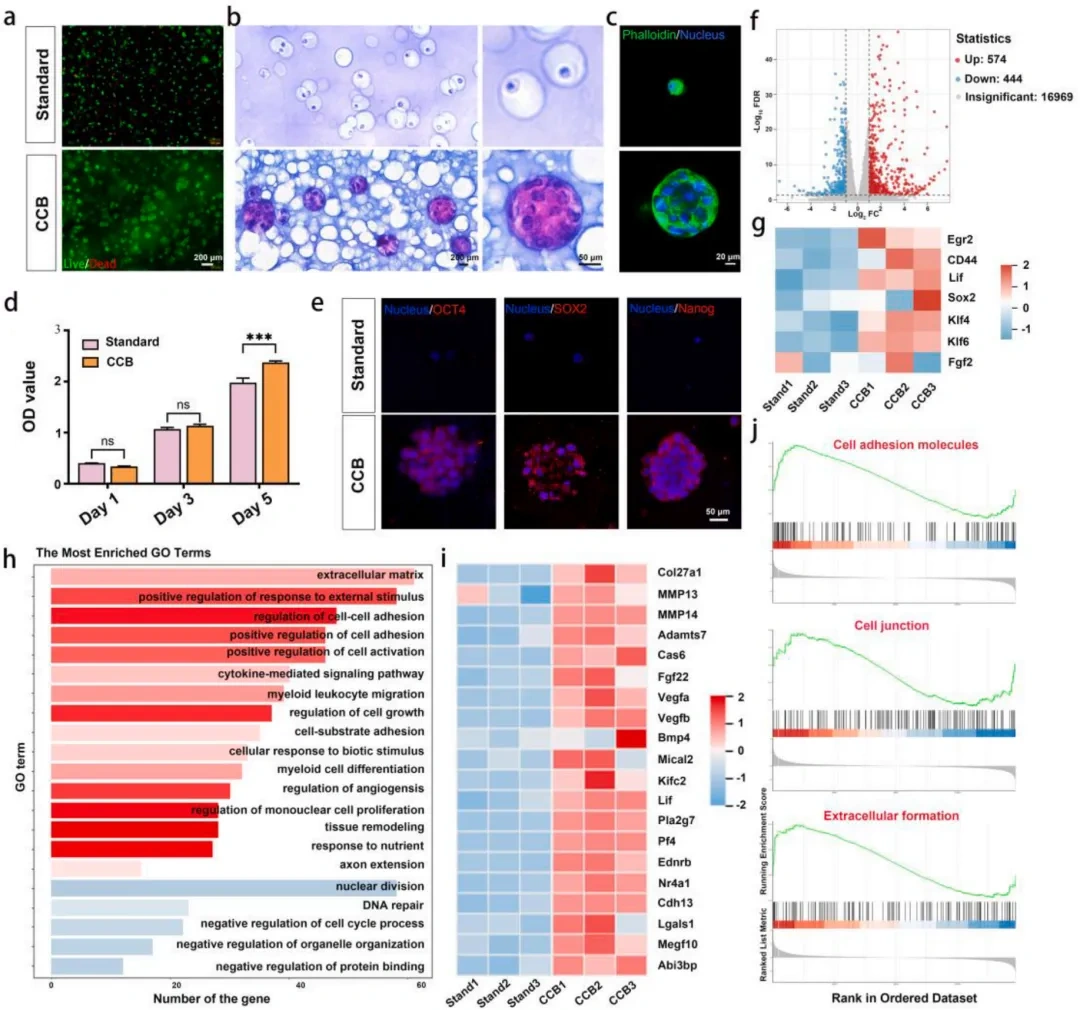
△Figure 3, Formation of stem cell spheroids and analysis of cell activity.
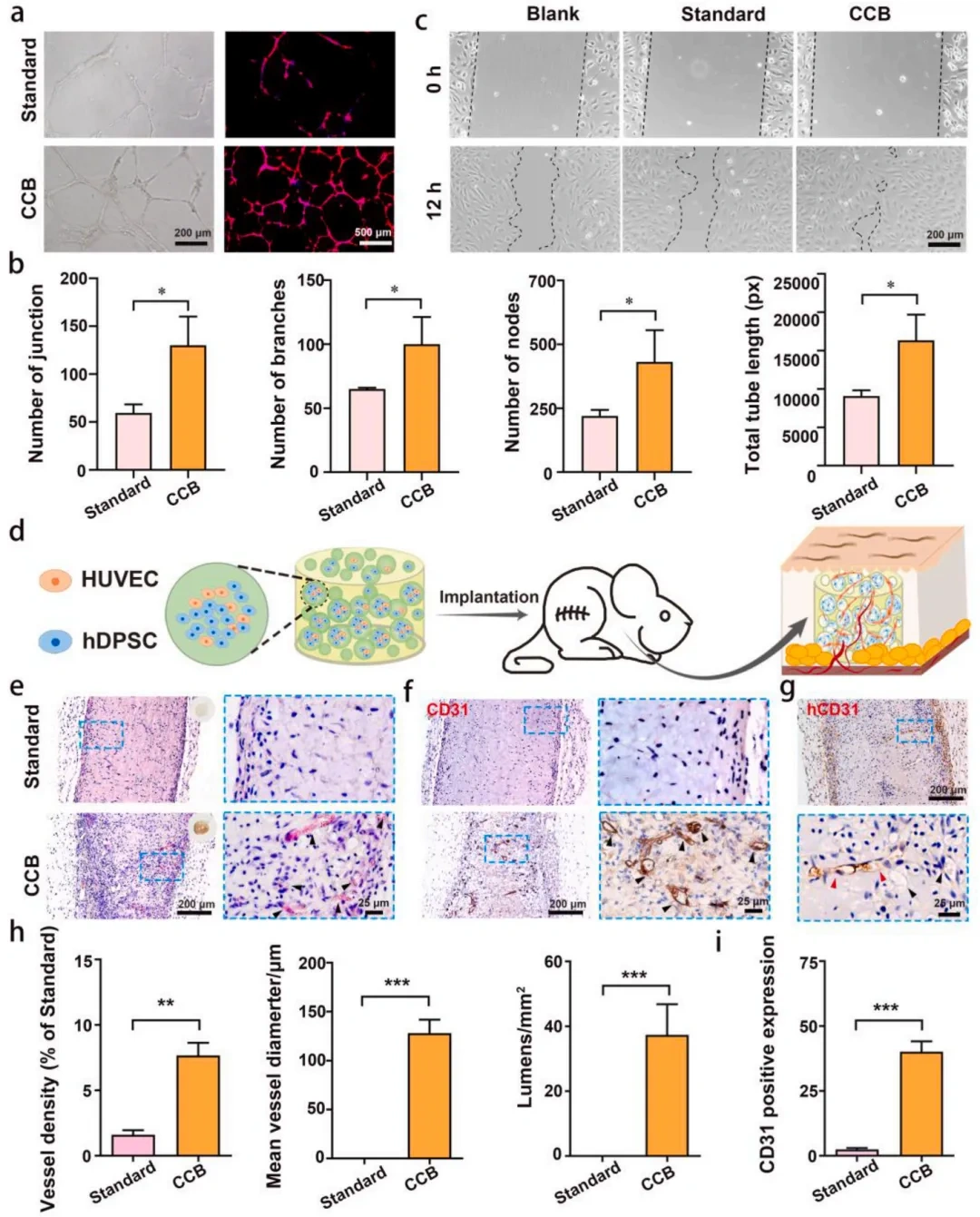
△Figure 4, Angiogenesis experiments and tissue staining results.
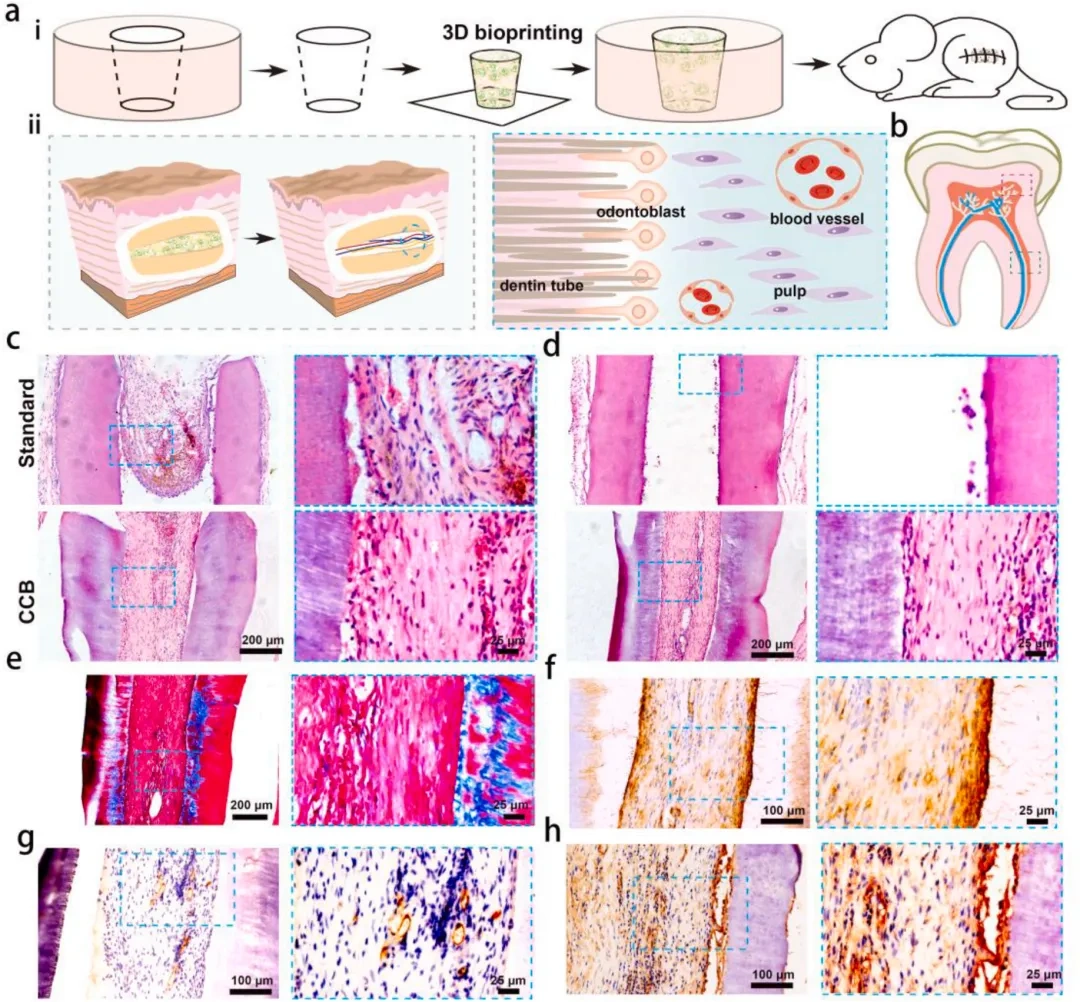
△Figure 5, Detailed observation of regenerated tissue in the dental pulp-dentin complex.
Conclusion
In this study, the authors demonstrated that cell-concentrated bioink is suitable for supporting DLP-based tissue structure bioprinting and in-situ formation of stem cell spheroids. The developed bioink has been shown to aid in the manufacture of high-performance hydrogel structures, significantly enhancing cell viability while maintaining structural complexity and fidelity. Furthermore, these structures effectively concentrate the embedded cells within the dextran phase. Stem cells, influenced by bending morphology and high cell density, tend to aggregate into spheroids, leading to enhanced dryness and differentiation potential. Additionally, our hydrogel has been shown to support in vivo vascularization and regeneration of dentin. Based on this data, we propose a simple and practical strategy for bioprinting hydrogel tissue structures with in-situ born stem cell spheroids using cell-concentrated bioink, showing great potential in tissue engineering and regenerative medicine.