
Industry new knowledge
Recently, the team of Haijiang Wang of south university of science and technology of China published a study on Vat photopolymerization 3D printing of NiO-YSZ anode for solid oxide fuel cells in the "Journal of the European Ceramic Society", which was prepared by light curing DLP 3D printing technologySolid Oxide Fuel Cell (SOFC)ofNickel Oxide-Yttria Stabilized Zirconia (NiO-YSZ)anode structure, and its performance were studied and analyzed.

Original link: https://doi.org/10.1016/j.jeurceramsoc. 2024.02.020
Adventure Technology official website: http://www.adventuretech.cn/
If it cannot be opened, please copy the URL to the browser.
research content
Solid Oxide Fuel Cell (SOFC)It is an efficient and environmentally friendly all-solid fuel cell that can directly convert chemical energy into electrical energy at high temperatures, with good power density and fuel diversity. Its performance is affected by many factors such as material composition and structural design. By optimizing the electrode-electrolyte interface and reducing resistance, power output can be improved.However, traditional structural control techniques such as phase inversion and machining have limitations that make it difficult to implement complex or customized components.
In recent years, ceramic additive manufacturing technology has been applied in SOFC, but each has its own limitations. This study focuses on the printedNickel Oxide-Yttria Stabilized Zirconia (NiO-YSZ)Based on the anode material, 8YSZ was prepared asElectrolyte, lanthanum strontium manganese oxide-yttrium-doped stabilized zirconia (LSM-YSZ)SOFC cells as cathode materials. Comparative analysis of SOFC prepared by the traditional dry pressing (DP) method, focusing onAnode microstructure, power output and AC impedance. The results show that,Light curing DLP 3D printing canIt becomes a promising method to fabricate geometrically complex NiO-YSZ anode structures for SOFCs.
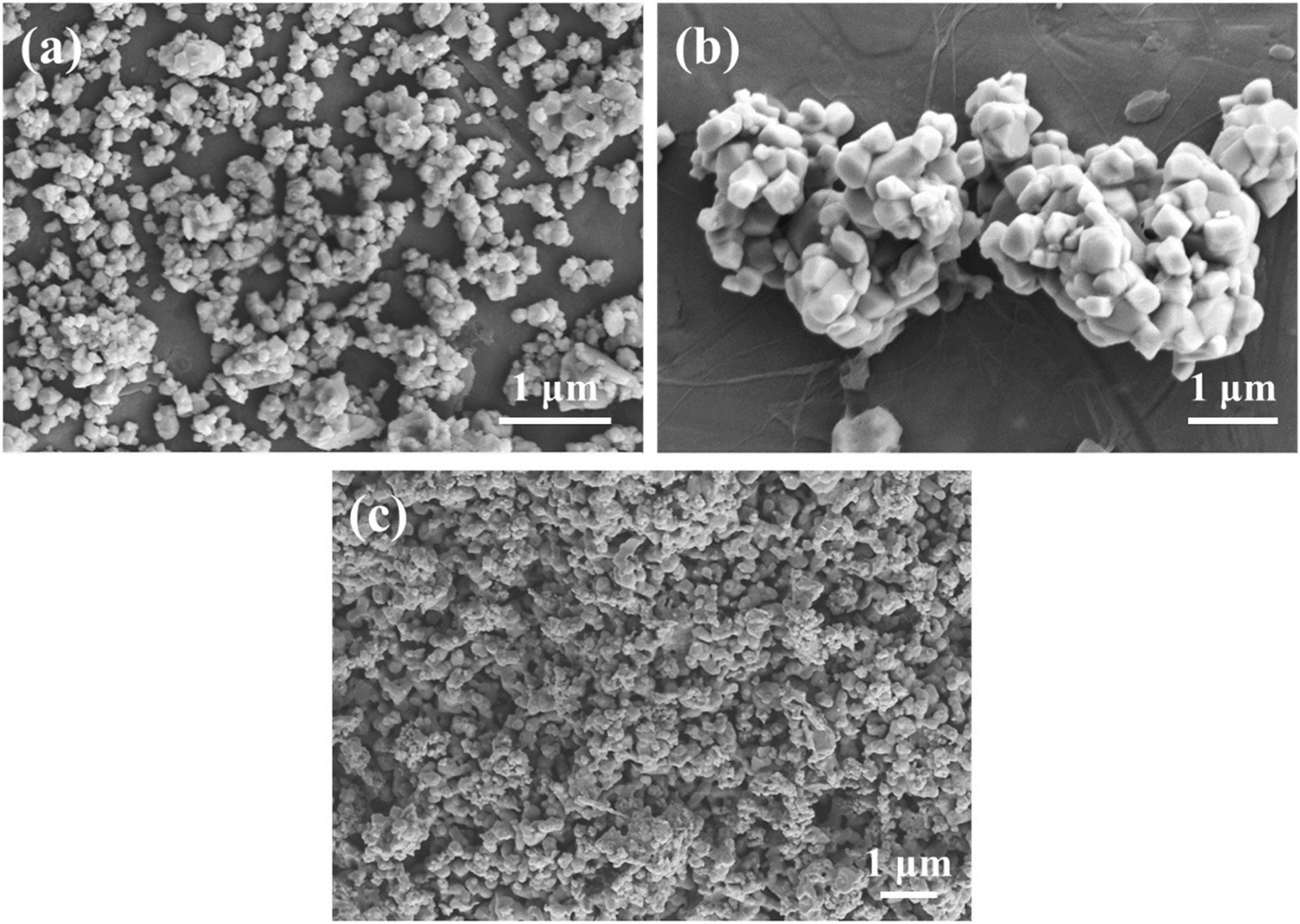
1, SEM images of (a) 8YSZ, (B) NiO, and (c) LSM powders.
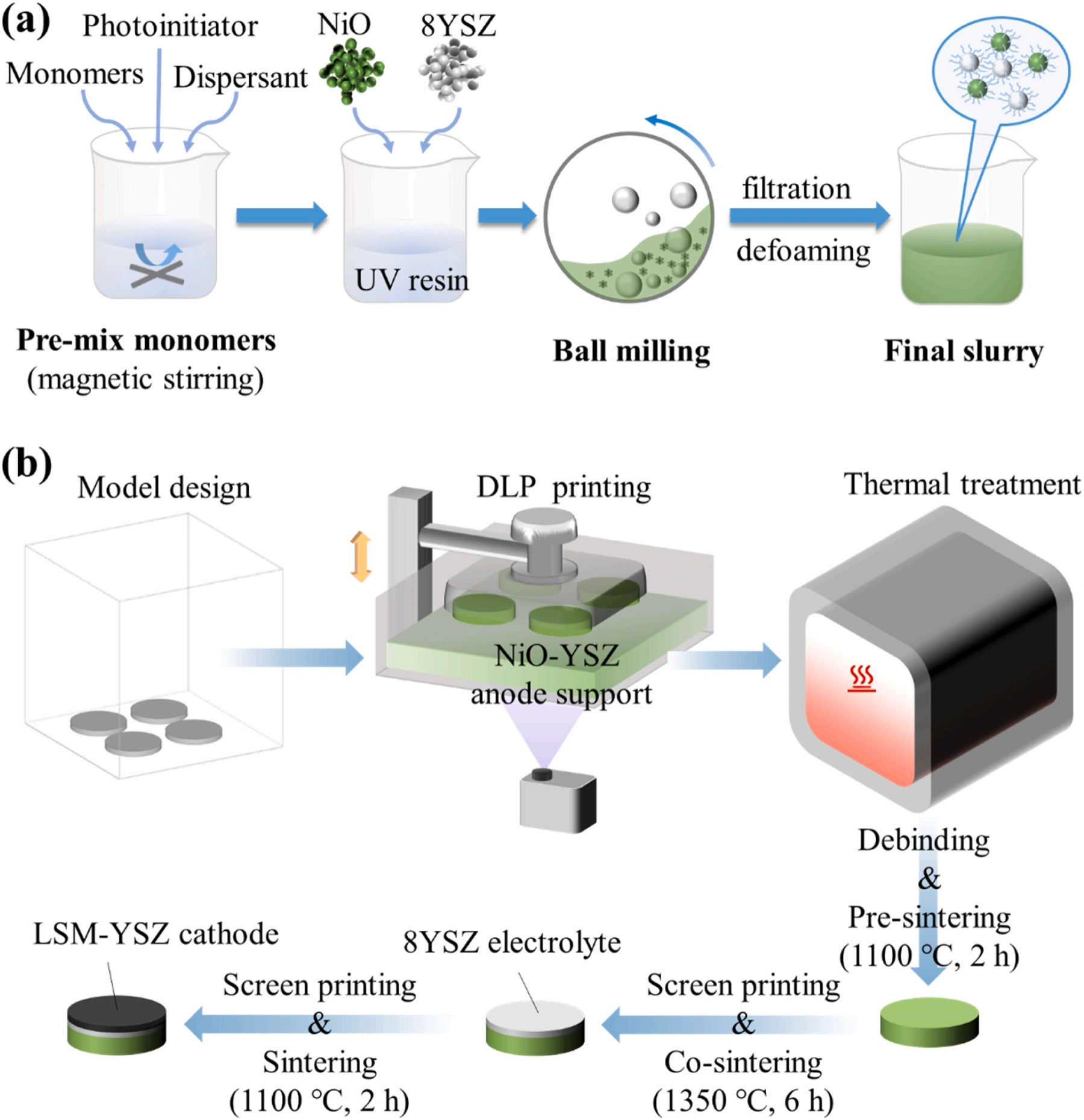
Figure 2,(a)UV paste preparation flow chart. (B) Schematic of DLP 3D printing of NiO-YSZ anode-supported SOFC/SOEC.
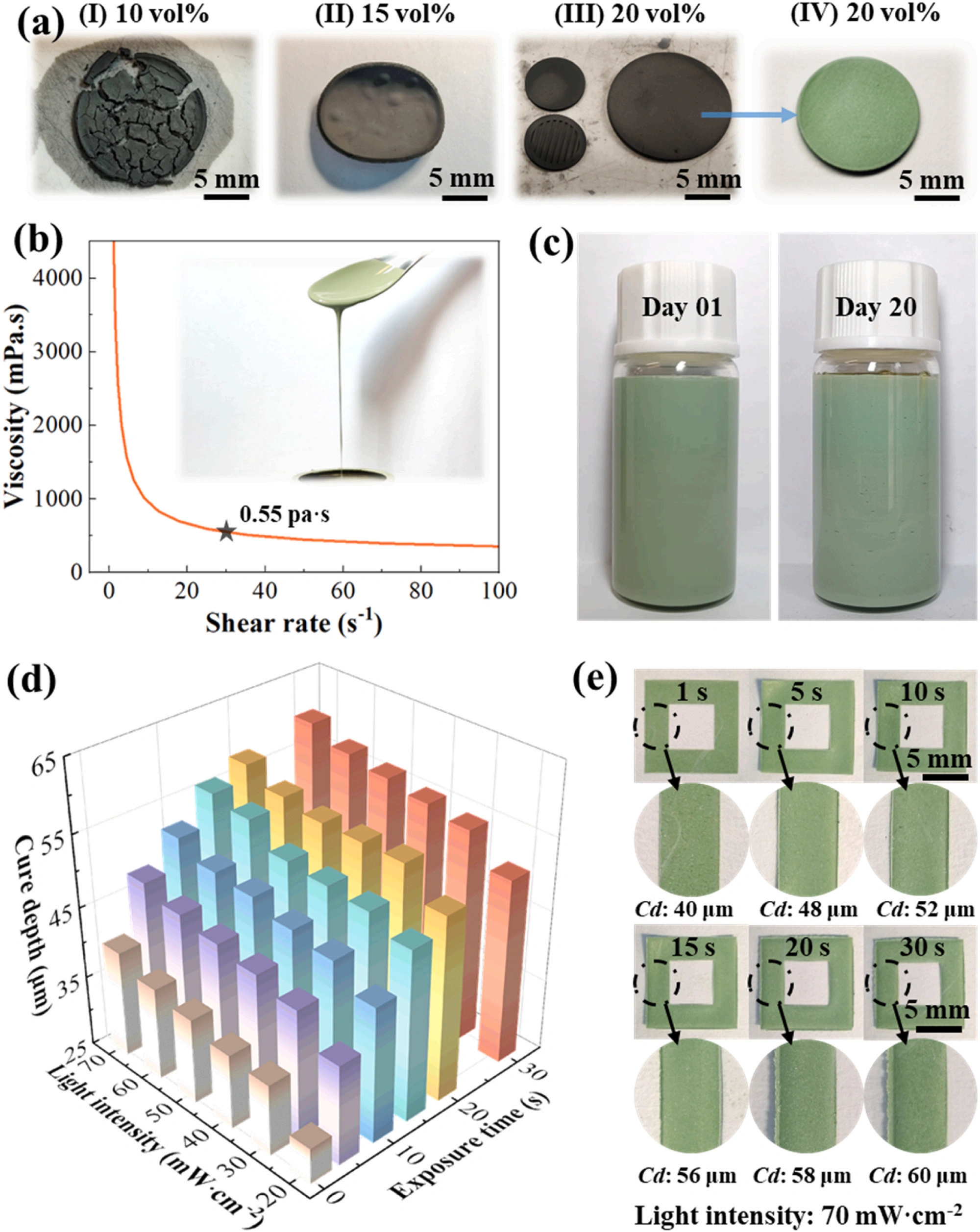
Figure 3,(a) Degreasing results of NiO-YSZ samples with different solid contents (I-III: degreasing in N2, IV: air degreasing after N2 degreasing). (B) 20vol% solid content NiO-YSZ viscosity characteristics, (c) sedimentation characteristics and (d-e) solidification characteristics of the slurry.
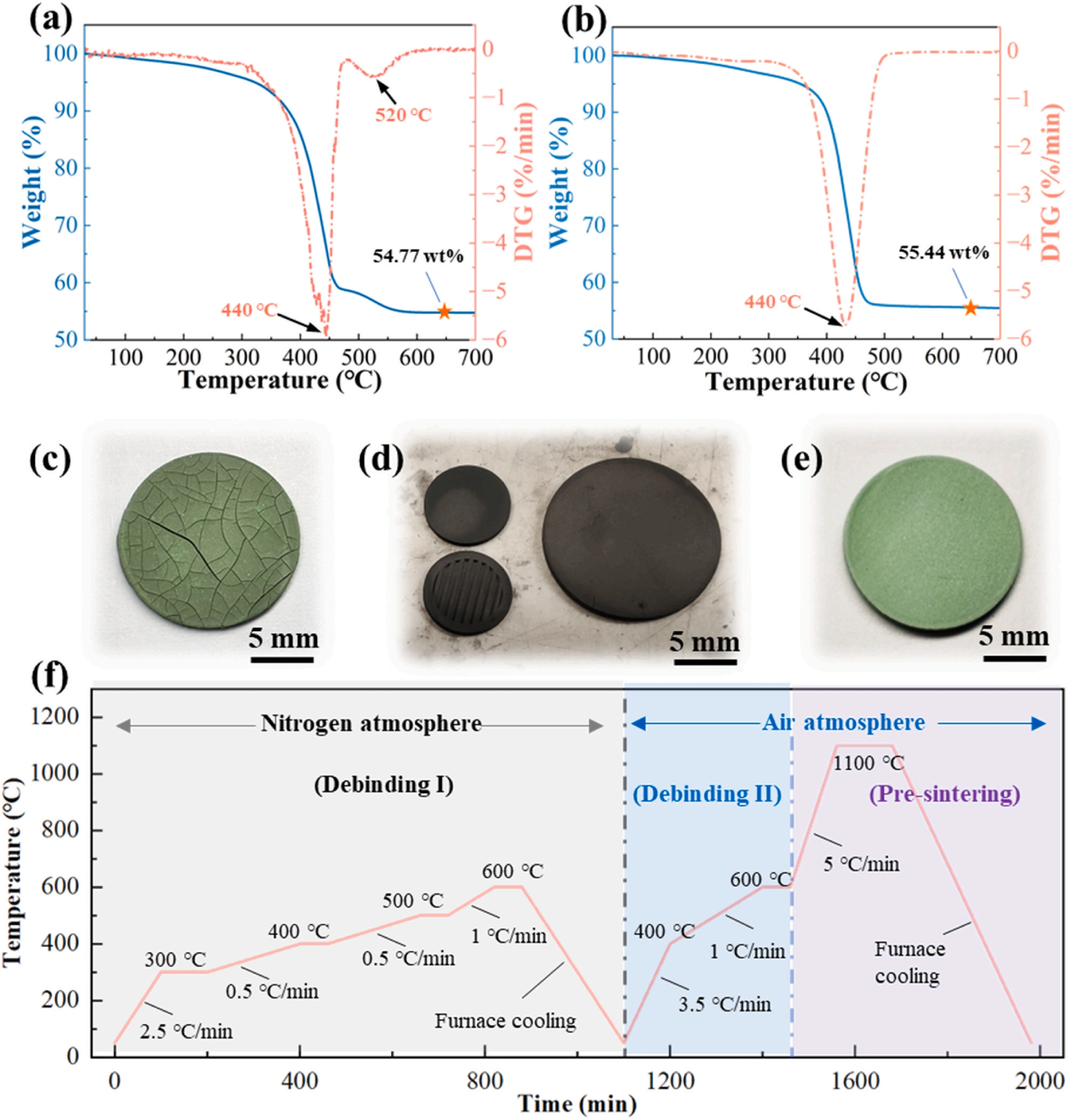
4,(a) TGA in air atmosphere and (B) N2 atmosphere. Samples were degreased in (c) air and (d) N2 atmosphere. (e) Samples degreased by N2-air two-step degreasing process. (f) N2-air two-step degreasing and pre-sintering curve.
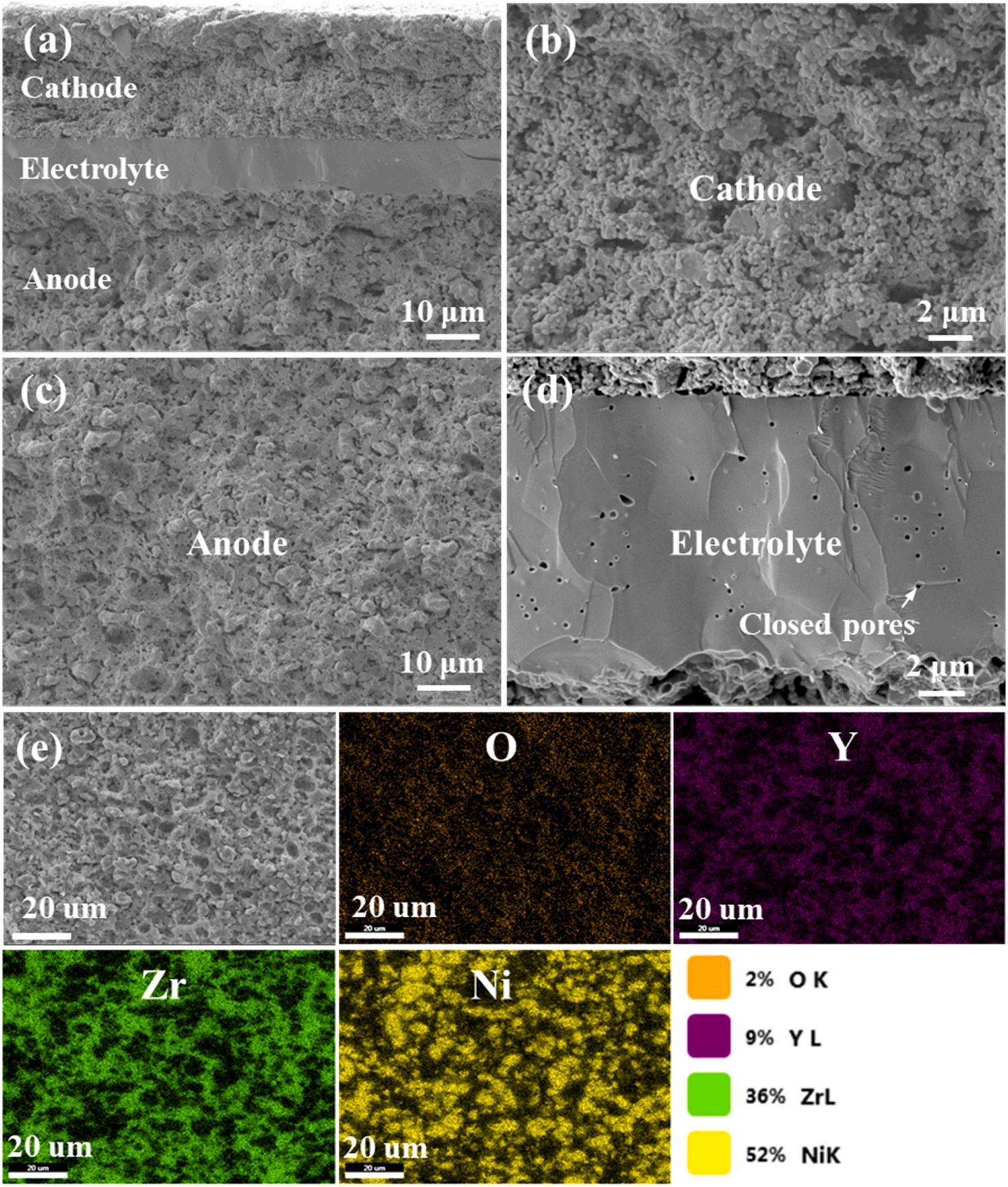
5,(a) Cross section of a SOFC full cell prepared by DLP printing NiO-YSZ anode substrate. Microstructure of (B) cathode layer, (c) anode layer, and (d) electrolyte layer. (e) EDS elemental mapping of the DLP printed anode support layer.
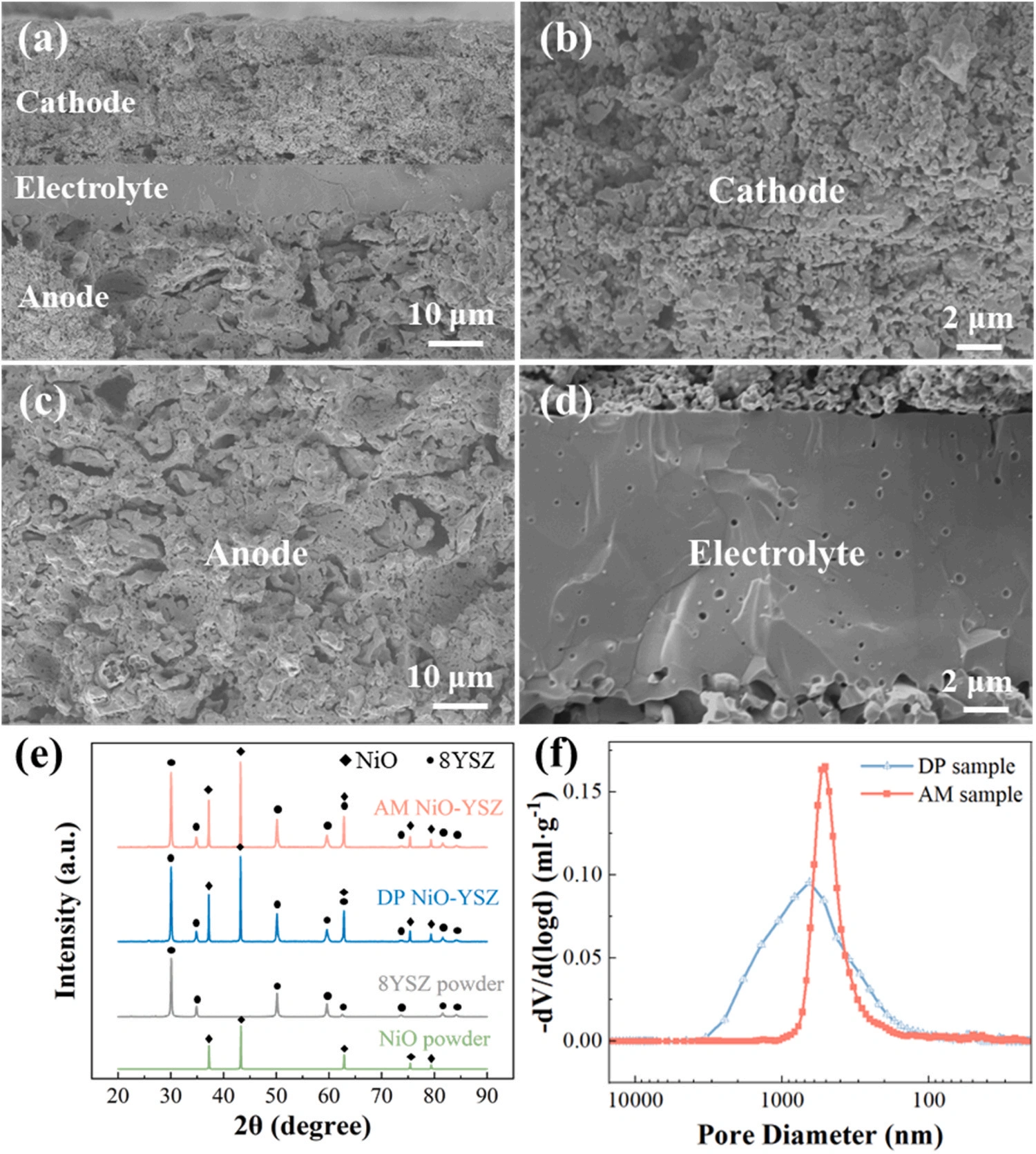
6,(a) Cross section of a SOFC full cell prepared by a conventional DP process. Microstructure of (B) cathode layer, (c) anode layer, and (d) electrolyte layer. (e) XRD patterns of pristine NiO powder, 8YSZ powder, DP and AM NiO-YSZ anode structures. (f) Pore size distribution of the anode substrate.
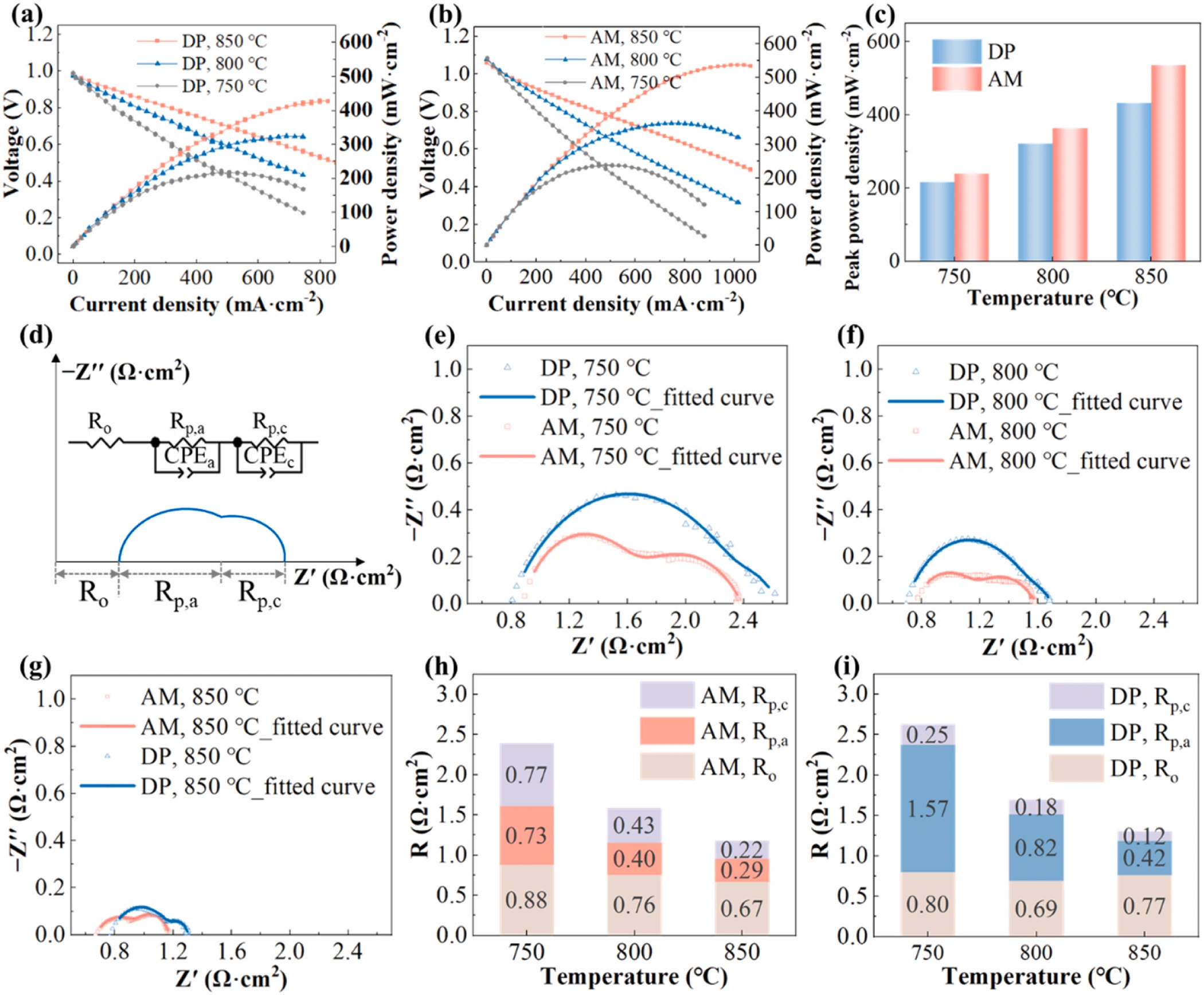
7, J-V-P curves of SOFCs prepared by (a) DP process and (B) DLP printing. (C) Comparison of peak power density of AM and DP samples at different temperatures. (d) SOFC equivalent circuit. (e-g) EIS comparison of AM and DP samples at 0.8V. Impedance fit analysis results for (h) AM samples and (I) DP samples.
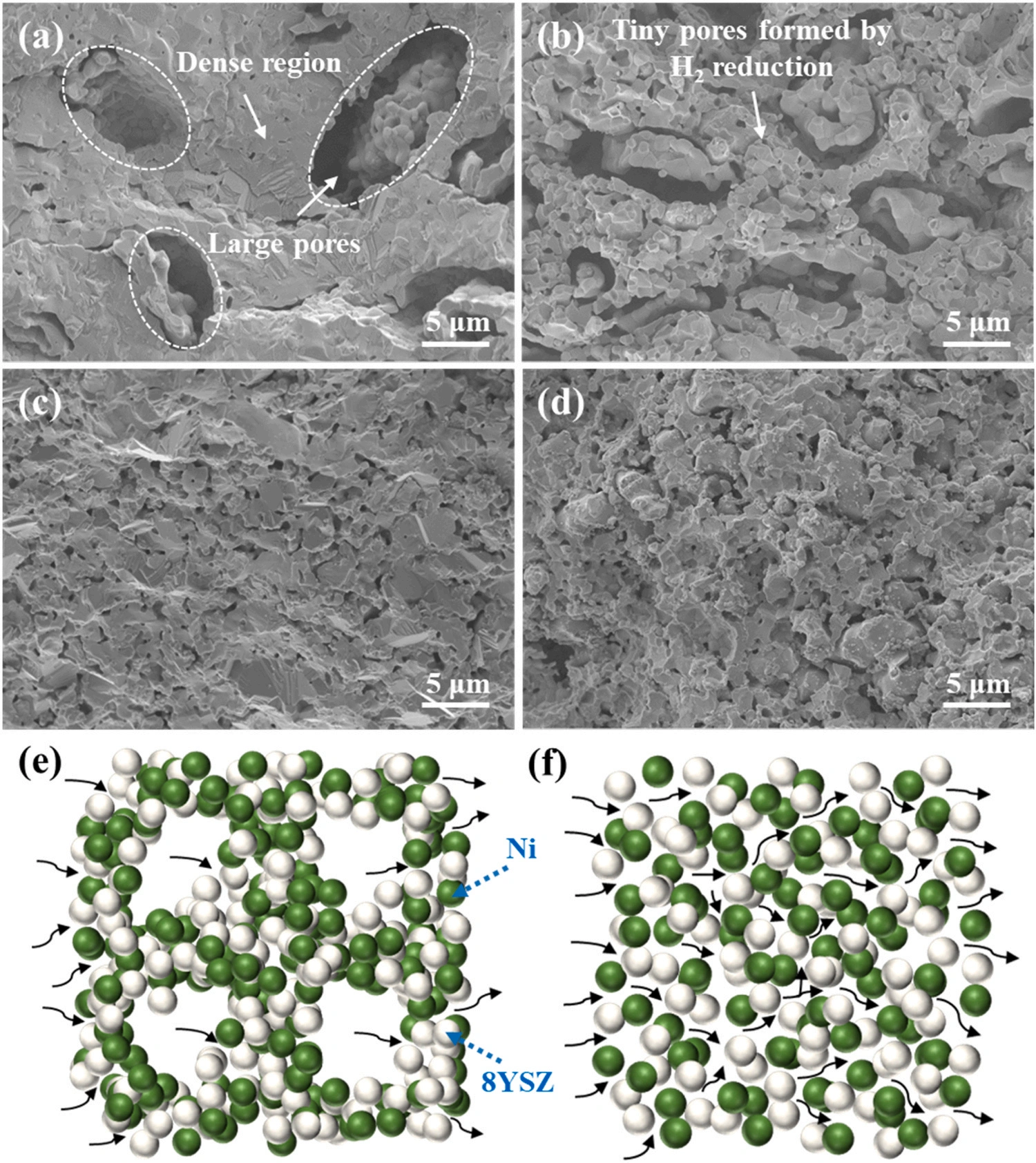
8, Microstructure of DP prepared anode (a) before and (B) after H2 reduction. Microstructure of the AM prepared anode (c) before and (d) after H2 reduction. Schematic of porous anode gas transport in (e)DP sample and (f)AM sample.
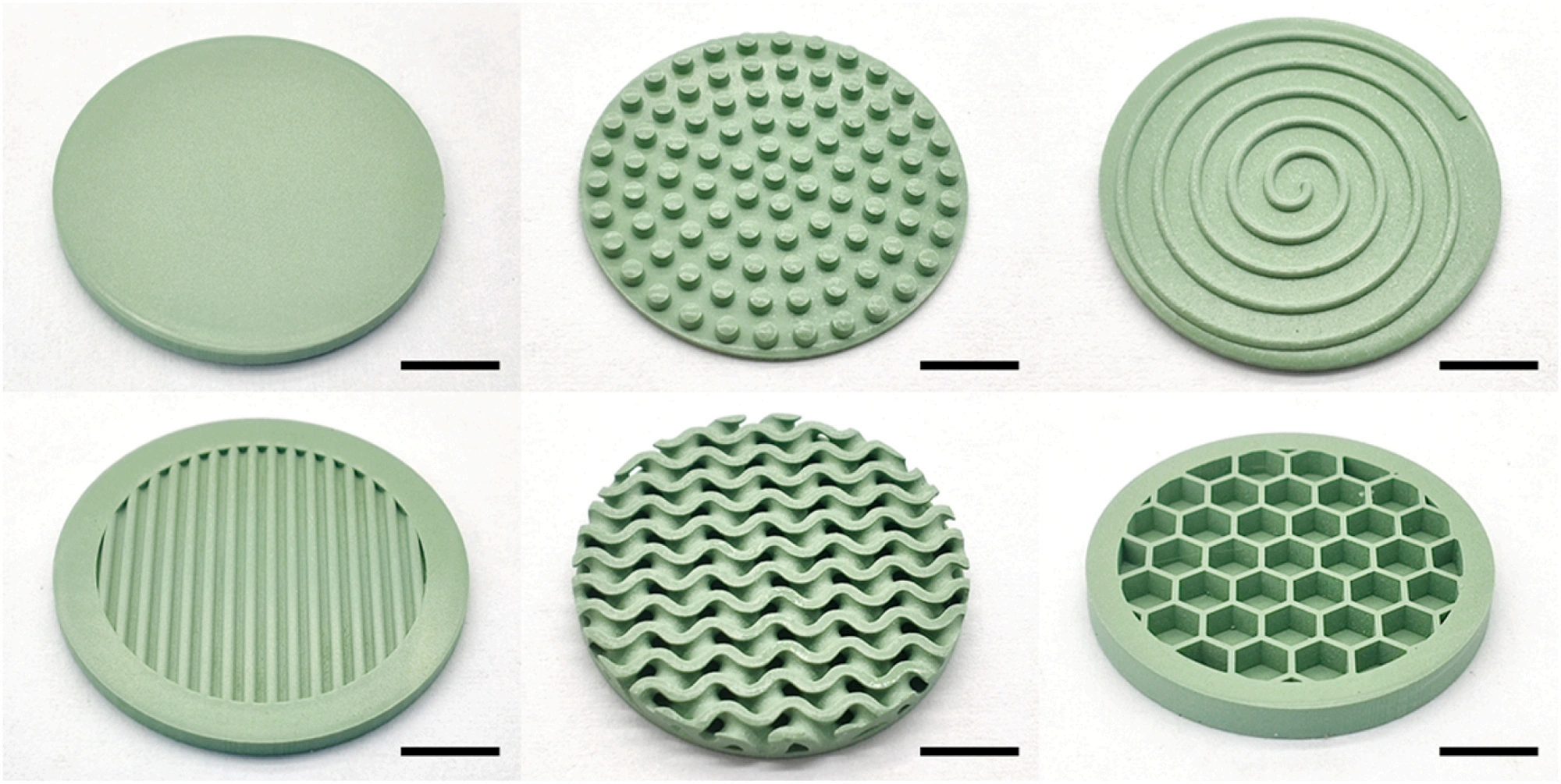
9, Demonstration of various anode support structures prepared by DLP printing using the prepared NiO-YSZ slurry (Note: all samples are printed embryos, scale bar: 5mm).
Conclusion
This study developed a photopolymerization (VP)3D printing process to fabricate NiO-YSZ anode structures for SOFCs and compared it with cells fabricated by the traditional direct printing (DP) process. The main conclusions are as follows:
The prepared NiO-YSZ UV paste exhibits significant shear thinning behavior, low viscosity (0.55 Pa · s at a shear rate of 30 s¹) and long-term stability, and has a curing depth of about 56 µm under low light scattering, which is suitable for VP 3D printing of complex anode structures.
By optimizing the two-step debonding process containing nitrogen and air atmosphere, the cracking and deformation problems during the debonding process were successfully reduced.
SOFC cells fabricated using the DLP process exhibit superior performance at 750°C, 800°C, and 850°C, with peak power densities of 239 mW ⋅ cm²², 364 mW ⋅ cm²², and 536 mW ⋅ cm²respectively, compared with the traditional DP-made battery (217 mW⋅cm²², 322 mW⋅ cm²² and 433 mW⋅ cm²²), there is a significant improvement, mainly due to the uniform and detailed hole structure in the additive manufacturing sample, which reduces the polarization resistance.