
Recently, a team led by Goulas, Athanasios of Loughborough University, published a study Digital light processing of sodium-beta-alumina ceramic electrolytes in Applied Materials Today, focusing onFabrication of sodium-β-alumina ceramic electrolyte by digital light processing (DLP) technology and evaluation of its application in solid-state batteries.
Original link: https://doi.org/10.1016/j.apmt. 2024.102276
Adventure Technology official website: http://www.adventuretech.cn/
If it cannot be opened, please copy the URL to the browser.
research content
With the increase of energy demand, solid-state battery (SSB), as the future direction of energy storage technology, has attracted much attention because of its high safety, superior performance and non-flammability. At present, mainstream lithium-ion batteries are facing the problem of scarcity of lithium resources, and sodium-based batteries are a viable alternative to lithium batteries because of their abundant sodium resources and low cost.sodium-β-alumina solid electrolyte(BASE) is a ceramic material with good sodium ion conductivity.
The purpose of this paper is to explore the use of DLP additive manufacturing technology to manufacture sodium-beta-alumina solid electrolyte and test its potential for solid-state batteries. The main objectives of the study include:
· Preparation of high solid content ceramic resin, and the use of DLP technology for molding;
· Sintered and densified samples to test their ionic conductivity and physical properties;
• Evaluate the potential of DLP technology for the fabrication of complex geometry electrolyte structures.
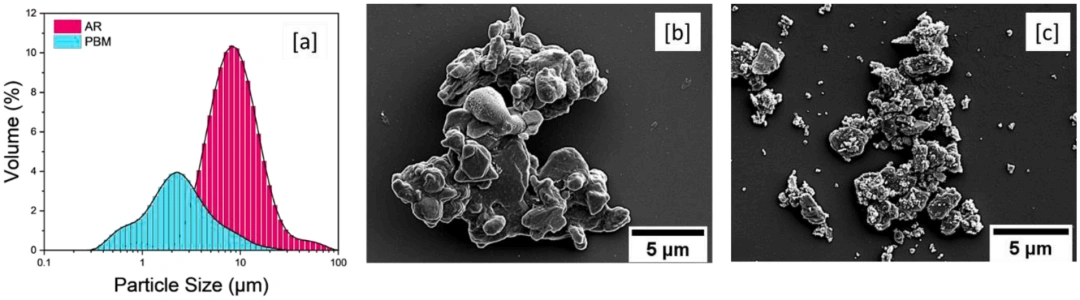
△ Figure 1,[a] Frequency distribution diagram (PBM) of particle size before and after grinding (AR). [B] and [c] SEM for receiving and ball-milled powders, respectively.
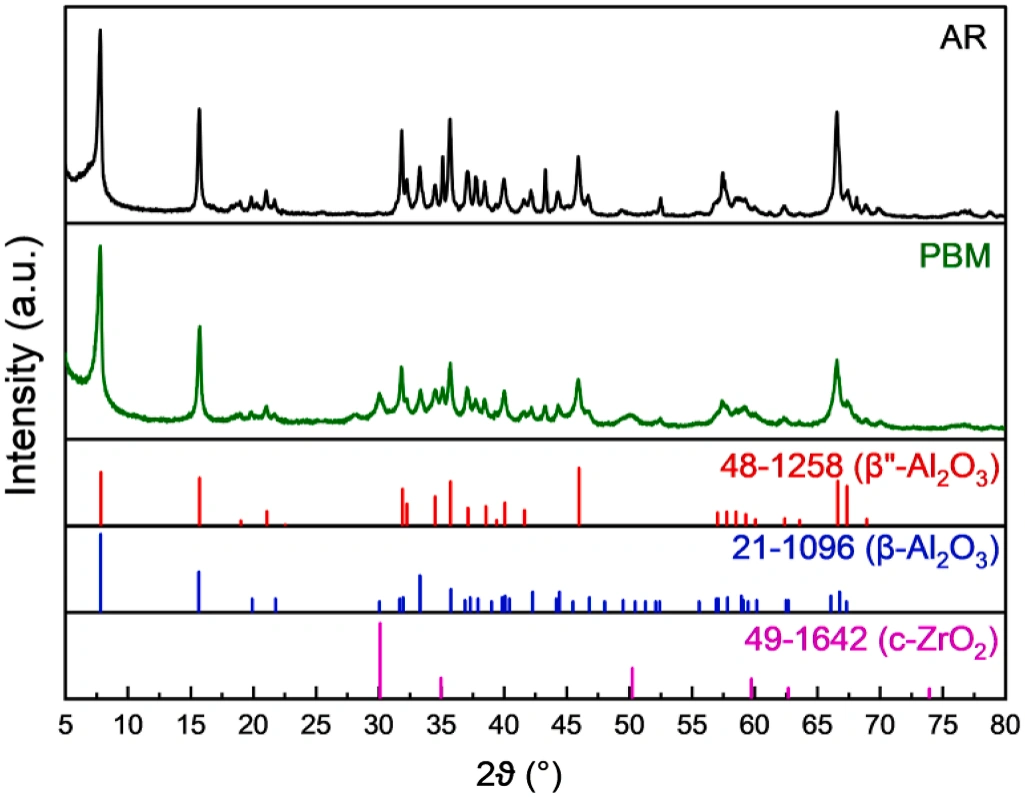
2, XRD patterns at room temperature before and after planetary ball milling (AR) of base ceramics (PBM).
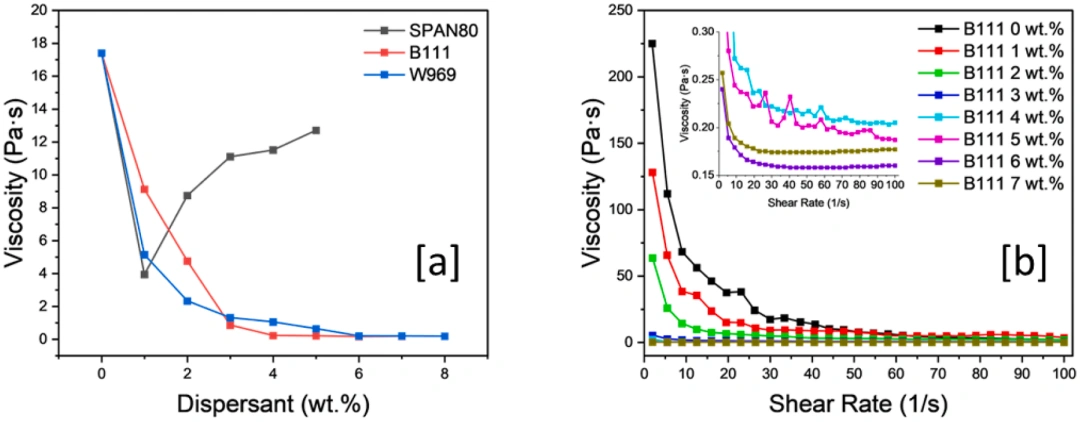
△ Fig. 3,[a] the effect of dispersant concentration (wt.%) on the viscosity of basic ceramic resin suspension at a shear rate of 30 s -1, and [B] the effect of BYK dispersant -111(B111) concentration.
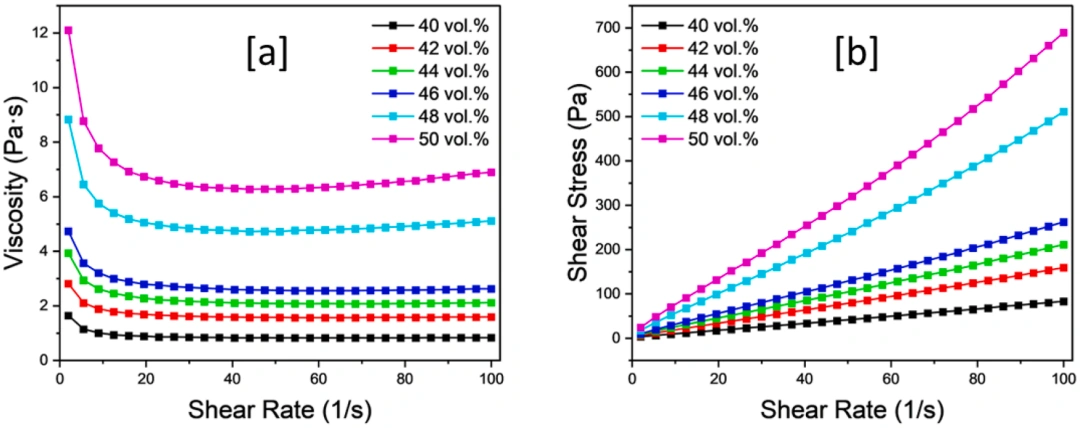
4,[a] Shear rate versus viscosity and [B] Shear rate versus shear stress of the base ceramic suspension (vol.%).
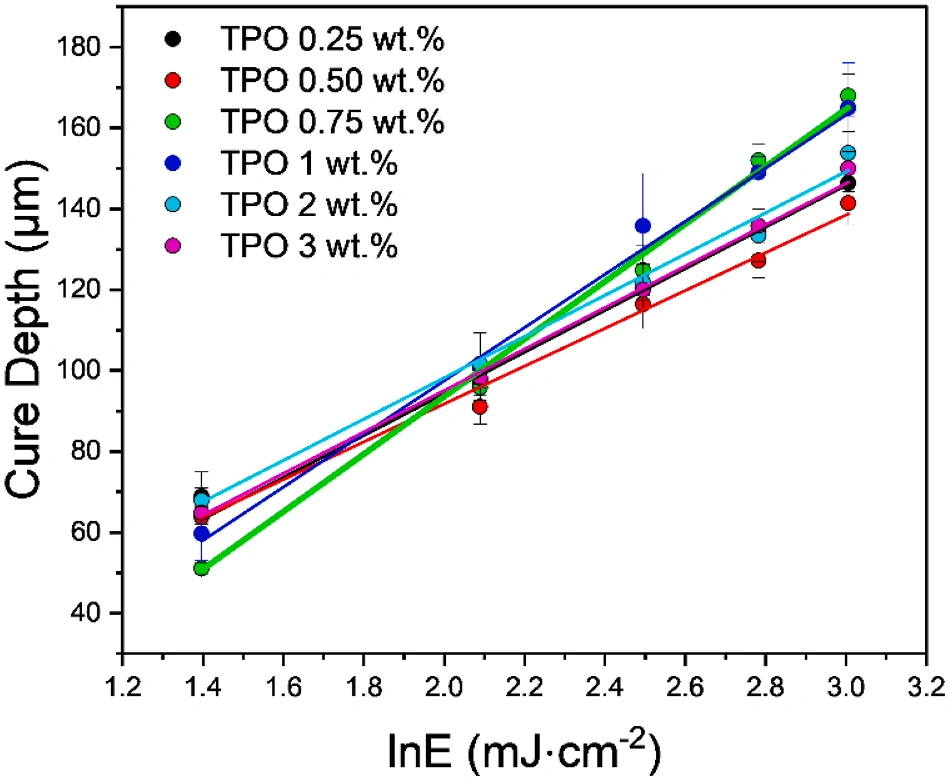
Delta Figure 5, Effect of photoinitiator (TPO) concentration on depth of cure of ceramic resin.
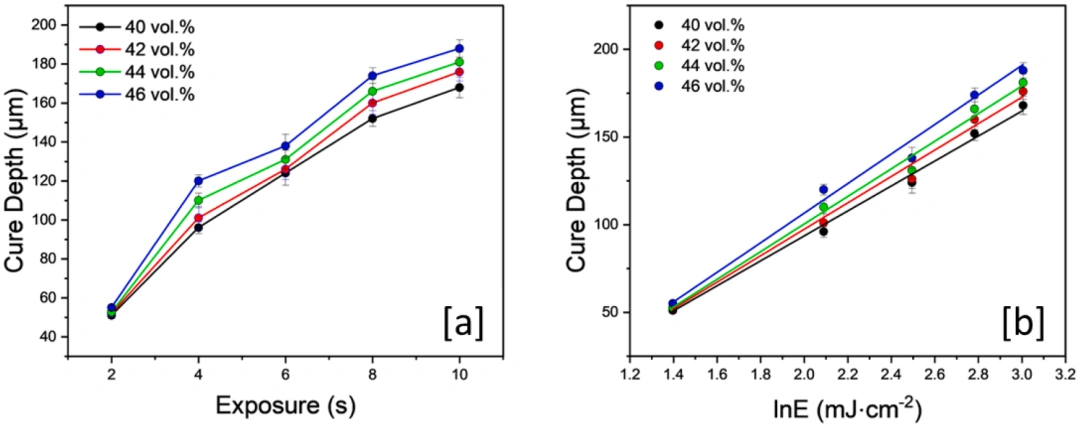
6, Effect of base solids loading on [a] thickness of the cured film and [B] depth of penetration calculated from the slope of the cure curve.
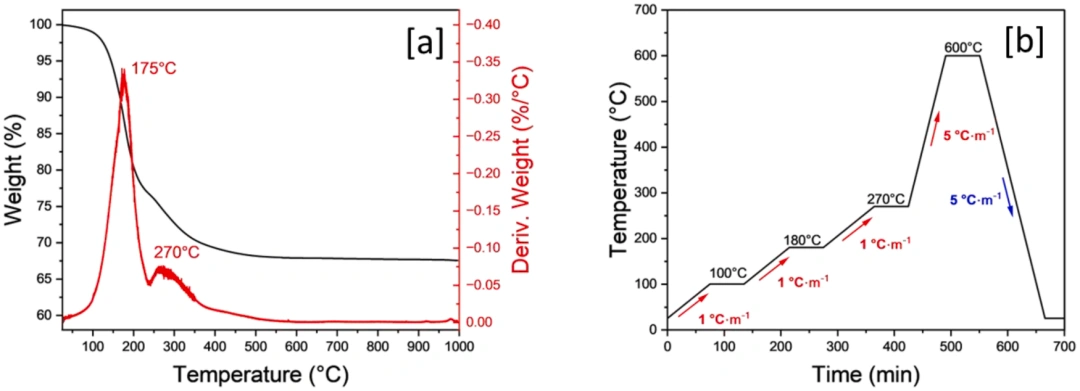
7,[a] thermal decomposition curve of 46% base ceramic resin and [B] thermal binder removal scheme used.
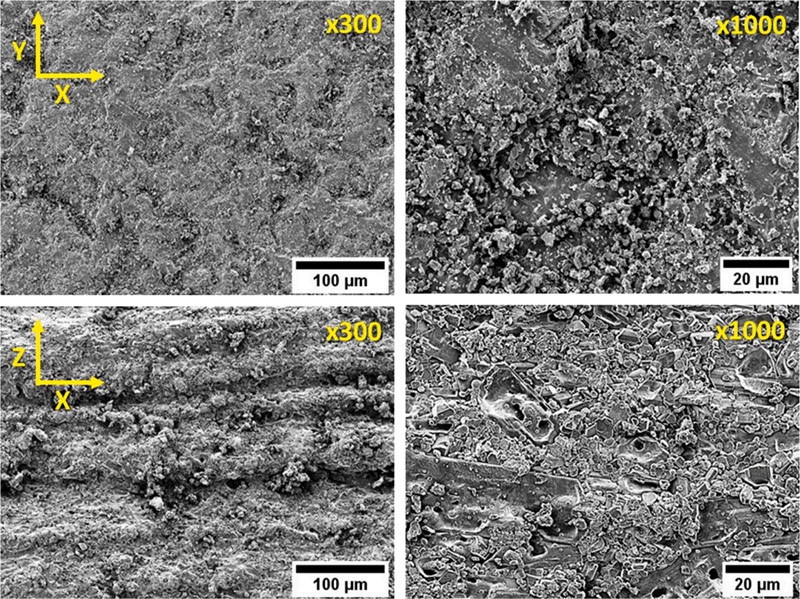
8, scanning electron micrographs of the surface at different magnifications.
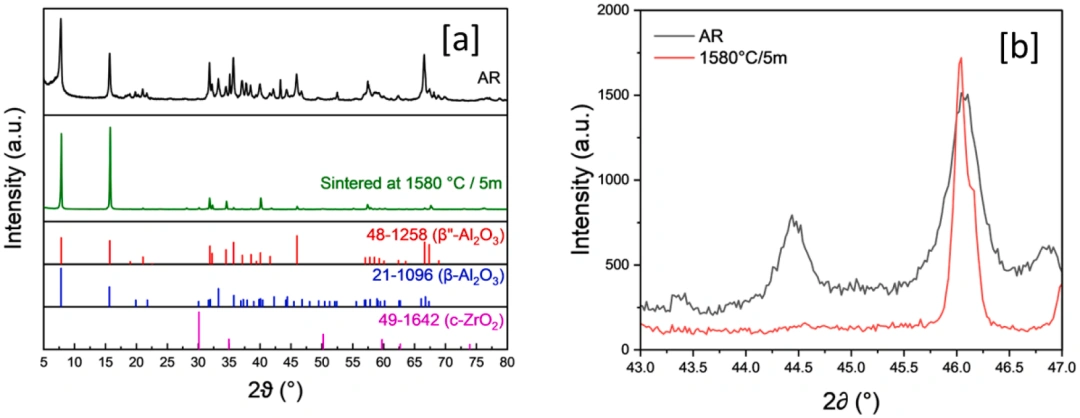
9, [a] RT-XRD patterns of bases before and after sintering and [B] relative intensities of constituent phases.
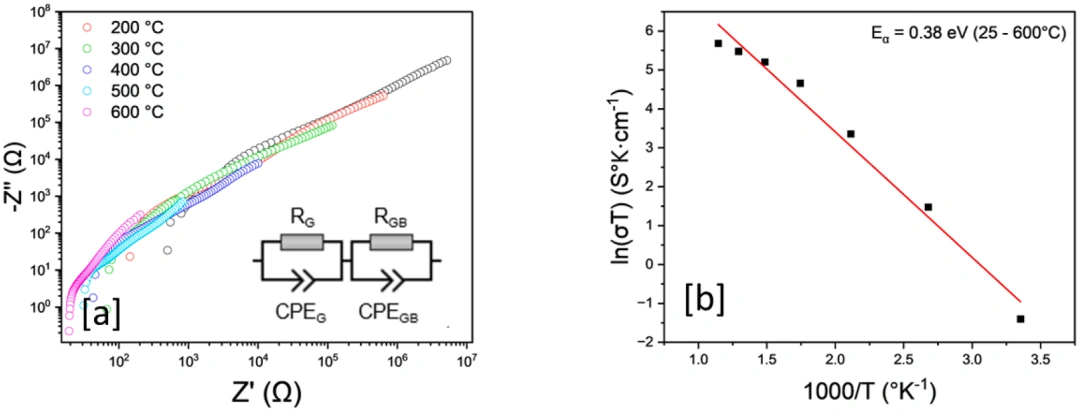
Δ Figure 10, [a] impedance spectrum and equivalent circuit calculated for ionic conductivity and [B] activation energy of the basic test sample additionally manufactured in RT-600 ◦ C.
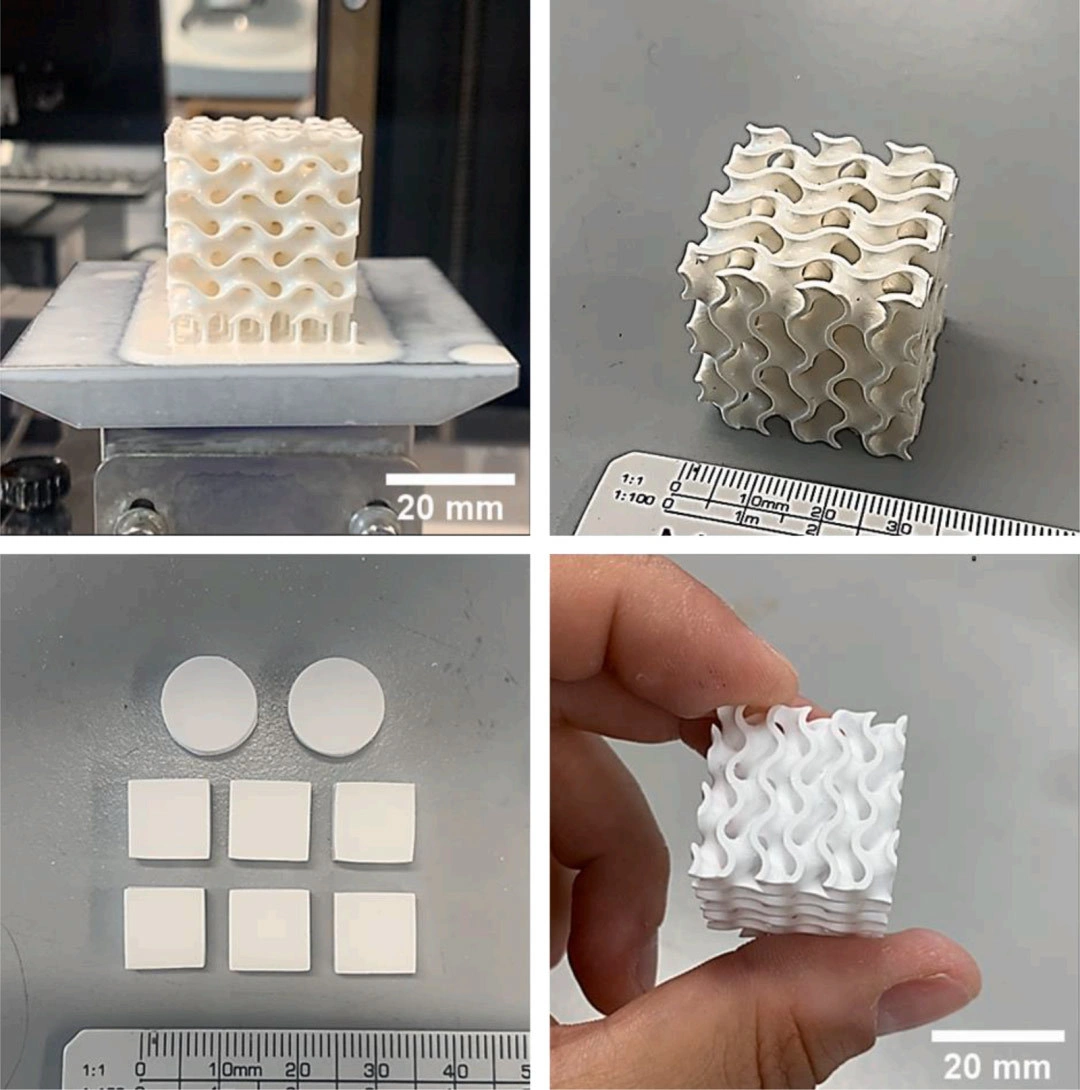
11, Example of overlay fabrication geometry using BASE printing (top two) and density (bottom two).
research conclusion
This study demonstrates for the first time that sodium-β-alumina solid-state electrolytes can be successfully fabricated by DLP additive manufacturing technology and demonstrates its great potential for solid-state battery applications. DLP technology enables the fabrication of electrolyte structures with complex geometries with high ionic conductivity and high density. This manufacturing process provides the possibility for the large-scale production of all-solid-state Battery (ASSB) in the future, and provides new ideas for the design and optimization of complex battery structures.