
Industry new knowledge
Recently, Qiaolei Li team published a research entitled Optimisation and application of high solid loading stereolithography 3D printing ceramic cores slurry in Ceramics International. they optimized ceramic slurry to achieve high solid content and low viscosity, successfully prepared ceramic cores with complex structures, and studied the effect of sintering temperature on performance.
Original link: https://www.sciencedirect.com/science/article/abs/pii/S0272884223035393
Adventure Technology official website: http://www.adventuretech.cn/
If it cannot be opened, please copy the URL to the browser.
research content
At present, the ceramic core generally adopts the hot press injection process method, which needs to produce the mold, the cycle is long, the cost is high, and the ceramic chip with complex structure cannot be prepared.
This article mainly discusses the preparation process of ceramic chips, focusing onOptimization of High Solid Content and Low Viscosity Ceramic Slurry Based on Photocuring 3D Printing Technology. Also studied the adjustment of resin addition ratio, resin and resin, resin and ceramic particles between the mechanism, andSuccessfully obtained a ceramic slurry suitable for the preparation of complex structural ceramic chips. The bending strength, sintering shrinkage and porosity of ceramic chips are also discussed, which provides a theoretical basis for the wide application of three-dimensional printing ceramic technology in the industrial field.
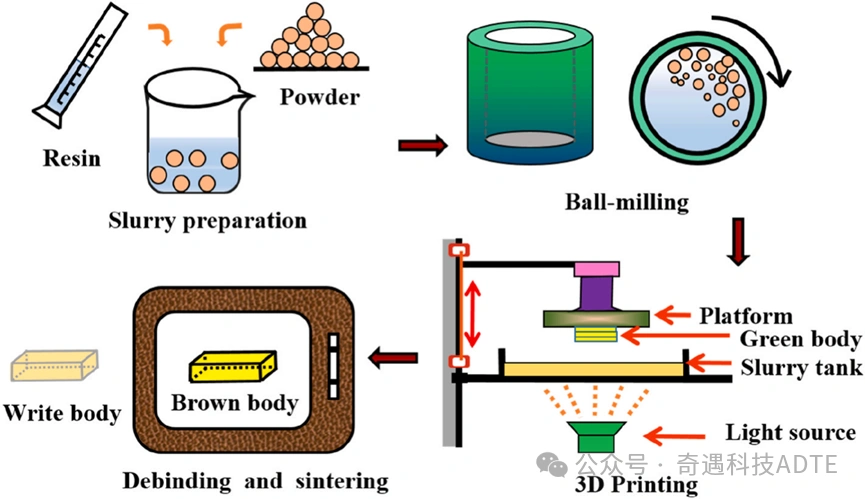
Figure 1, the preparation process of curing 3D printing ceramic core.
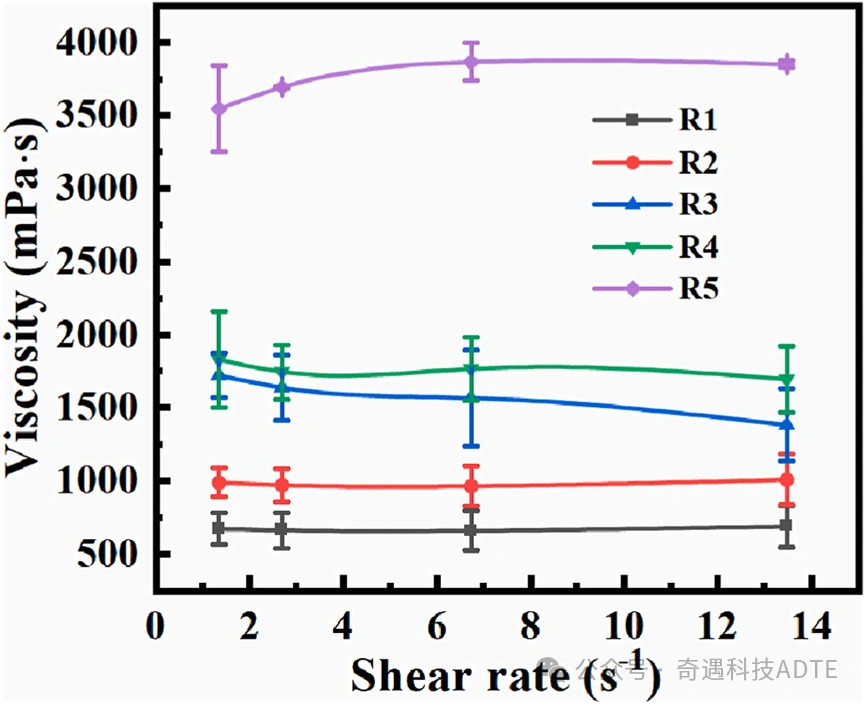
Figure 2, viscosity versus shear rate curves for different slurries.
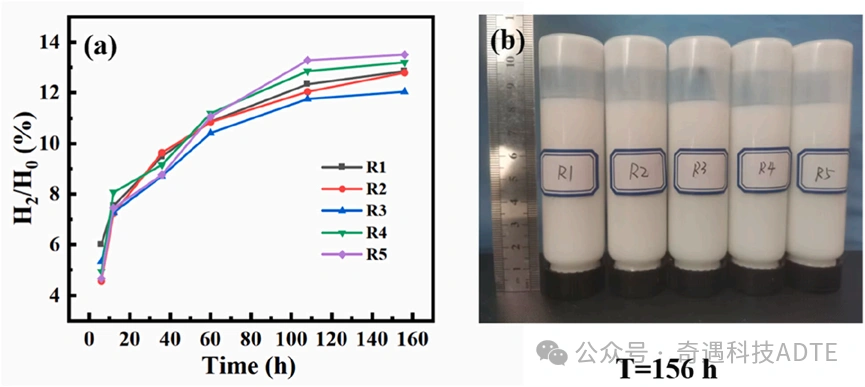
△Figure 3, stability of different slurries:(a)H2/H0 value vs. time curve; (B) Image of observation results after settling (T = 156 h).
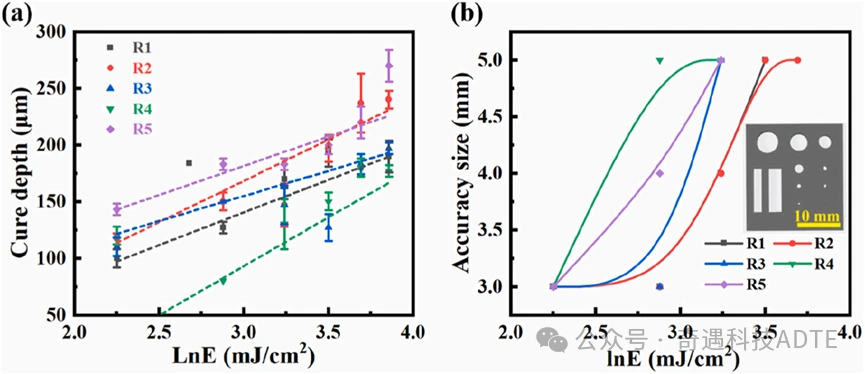
4, curing characteristics of different pastes:(a) curing depth vs. exposure energy curve; (B) precision dimension vs. exposure energy curve.
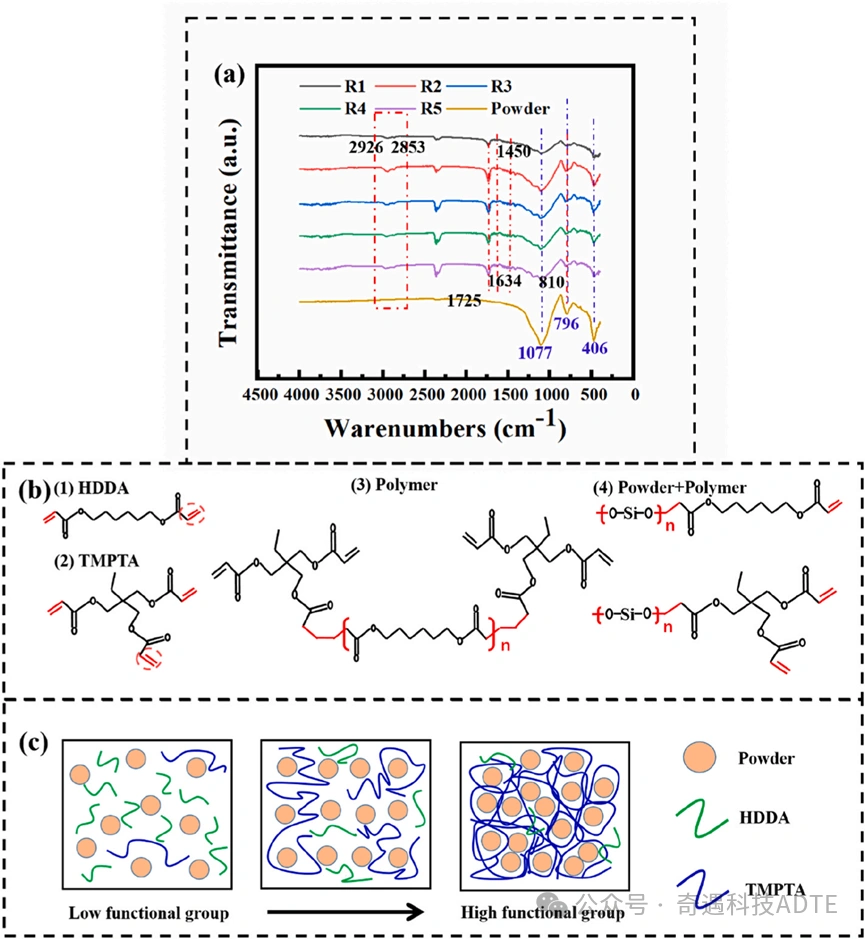
Δ Figure 5, Slurry reaction mechanism:(a) FT-IR spectra of different slurries and original powders; (B) Schematic diagram of polymerization reaction;(c) Solid powder distribution in different slurries.
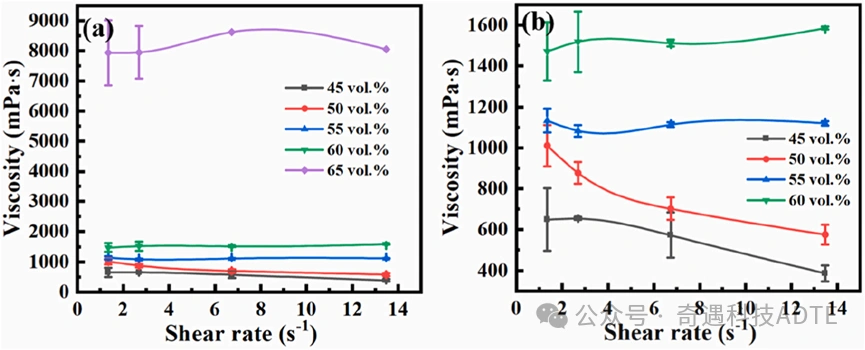
6, viscosity versus shear rate for slurries with different solids loadings:(a) solids loading less than 65 vol%;(B) solids loading less than 60 vol%.
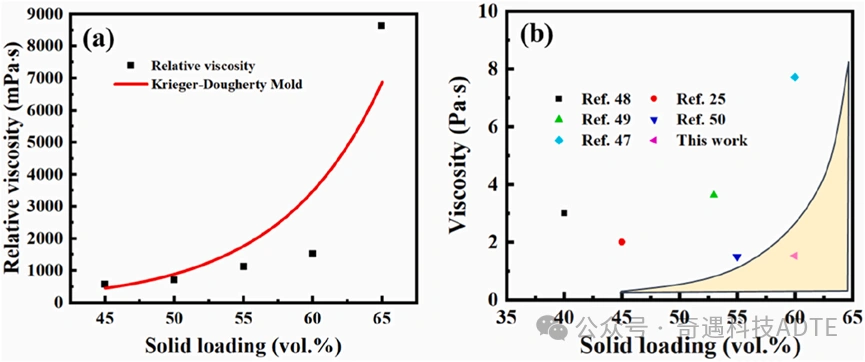
△Figure 7, the dependence of viscosity on solid load:(a) Krieger-Doughnard model at a shear rate of 6.735 s-1; (B) comparison with other slurries.
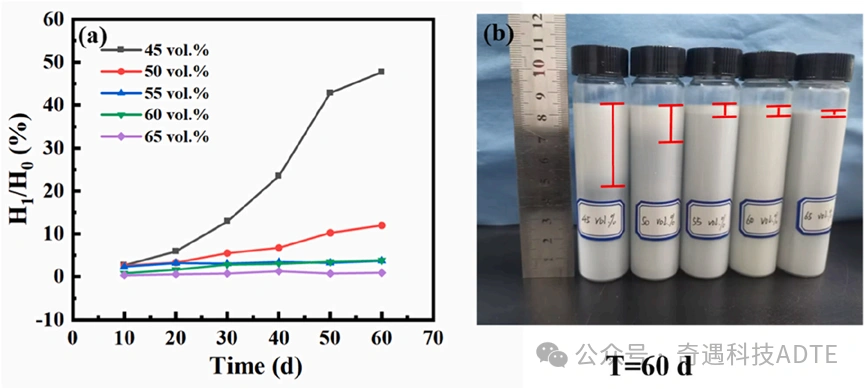
△Figure 8, the stability of slurries with different solid loadings:(a)H1/H 0 value vs. time curve; (B) Image of observation results after settling (T = 60 d).
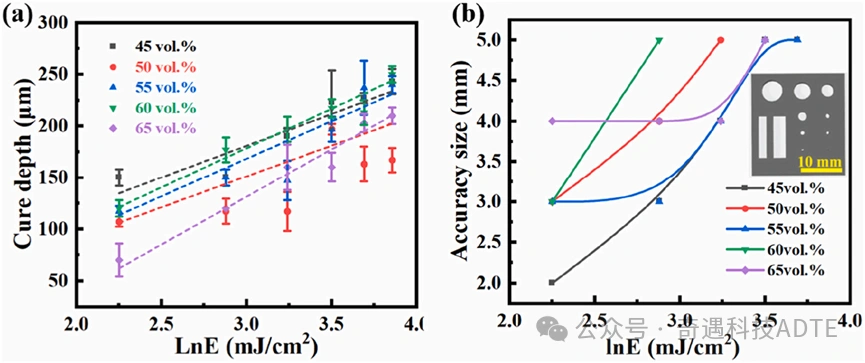
Figure 9, Curing characteristics of pastes with different solid loadings:(a) Curing depth vs. exposure energy; (B) Accuracy dimension vs. exposure energy.
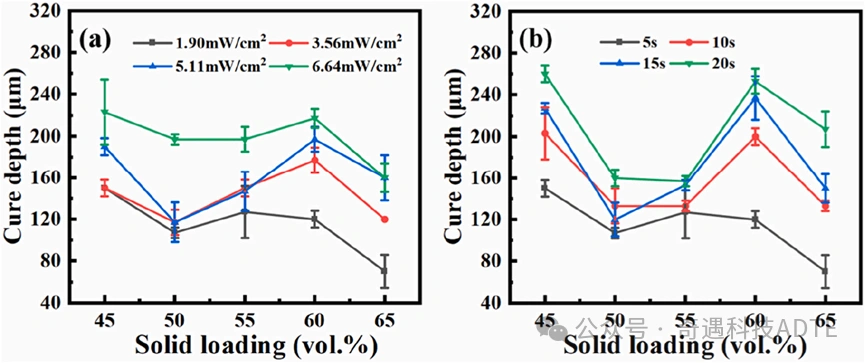
Figure 10, the curing characteristics of different solid content of the slurry:(a) the influence of different exposure power on the curing depth; (B) the influence of different exposure time on the curing depth.
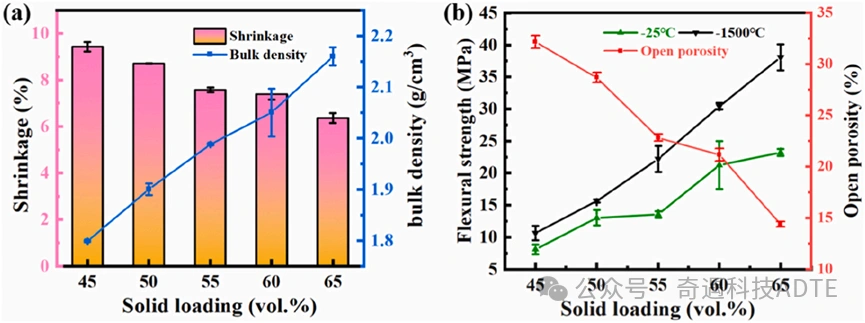
△ Figure 11, Properties of ceramic cores with different solids contents:(a) Shrinkage and bulk density; (B) Flexural strength and open porosity.
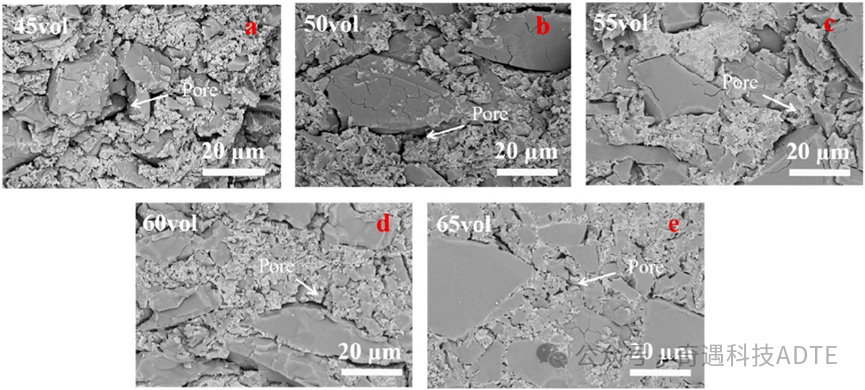
12, SEM of ceramic cores with different solid loadings.
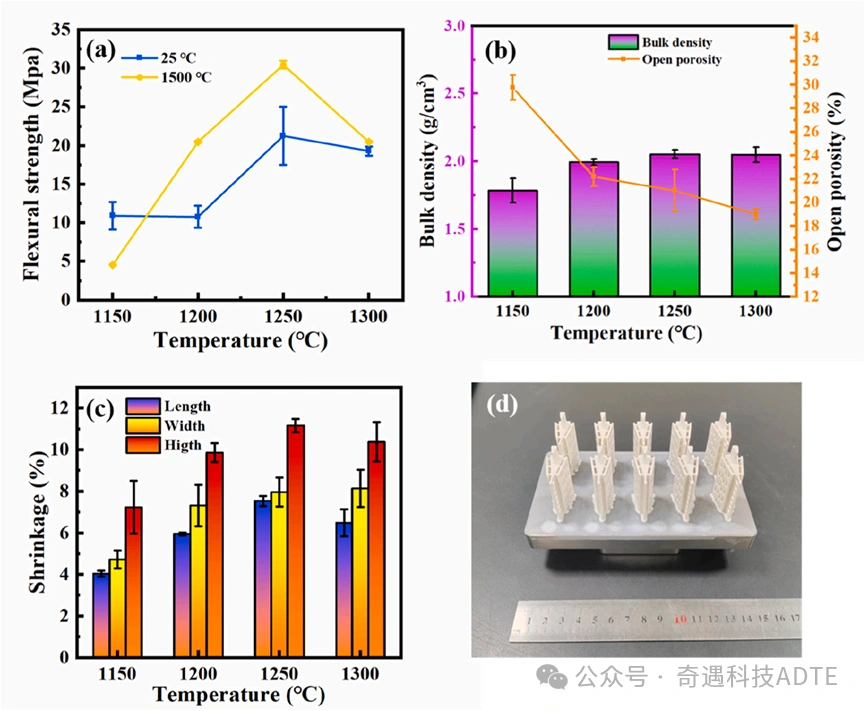
△ Figure 13. Properties of ceramic cores at different sintering temperatures:(a) flexural strength; (B) bulk density and porosity;(c) shrinkage in different directions;(d) ceramic cores.
research conclusion
1. With the decrease of the total functional group number in the slurry, the viscosity of the slurry decreases and the curing performance improves. The best addition ratio of HDDA:TMPTA is 6:2. With the increase of solid content, the viscosity of the system increases, and the stability is improved. When the solid content is 60vol%, the curing performance of the system is the best.
2. When the resin is irradiated with ultraviolet light, the c = c double bond opens. With the increase of functional groups in the slurry, the degree of opening of the double bond decreased gradually. At the same time, the bond energy reaction also occurred between the resin and the solid powder.
3. With the increase of sintering temperature, the bulk density gradually increases and the open porosity gradually decreases. The ceramic core has excellent properties at 1250 ℃, and the bending strength is 21.26 MPa(25 ℃) and 30.44 MPa(1500 ℃), respectively. The opening rate is 21.16%. The shrinkage rates for length, width and height were 7.54, 7.96 and 11.16, respectively.