
Industry new knowledge
Recently, Li Chenhui's team from the School of Mechanical Science and Engineering of Huazhong University of Science and Technology published a Enhanced molding and mechanical properties of SiC-based ceramic lattice structures via digital light Ceramics in processing Research,SiC @ Al2O3/Si CLS was prepared by liquid powder modification combined with precursor impregnation pyrolysis and reactive infiltration (PIP-RMI) post-treatment densification methods, which improved the performance of SiC ceramics and provided a method for optimizing the manufacturing process of SiC ceramics.
Original link: https://doi.org/10.1016/j.ceramint. 2024.08.081
Adventure Technology official website: http://www.adventuretech.cn/
If it cannot be opened, please copy the URL to the browser.
research content
Silicon carbide (SiC) ceramic lattice structure (CLS) has broad application prospects in the field of aerospace structural parts and optical mirrors due to its light weight, high strength and excellent dimensional stability. However, SiC CLSs are faced with technical problems such as poor curing performance and insufficient mechanical strength in the process of digital light processing (DLP) additive manufacturing.
This study innovatively combined liquid powder modification, precursor impregnation pyrolysis and reactive melt infiltration (PIP-RMI) process to improve the formability of SiC ceramics in DLP process. The SiC @ Al2O3 powder prepared by liquid phase precipitation method is used to prepare the slurry containing 40 vol% ceramic powder, which effectively improves the curing effect and long-term storage stability of the slurry. This technical improvement provides a new idea for the preparation of high-performance SiC CLSs and expands its application potential in high-demand industrial fields.
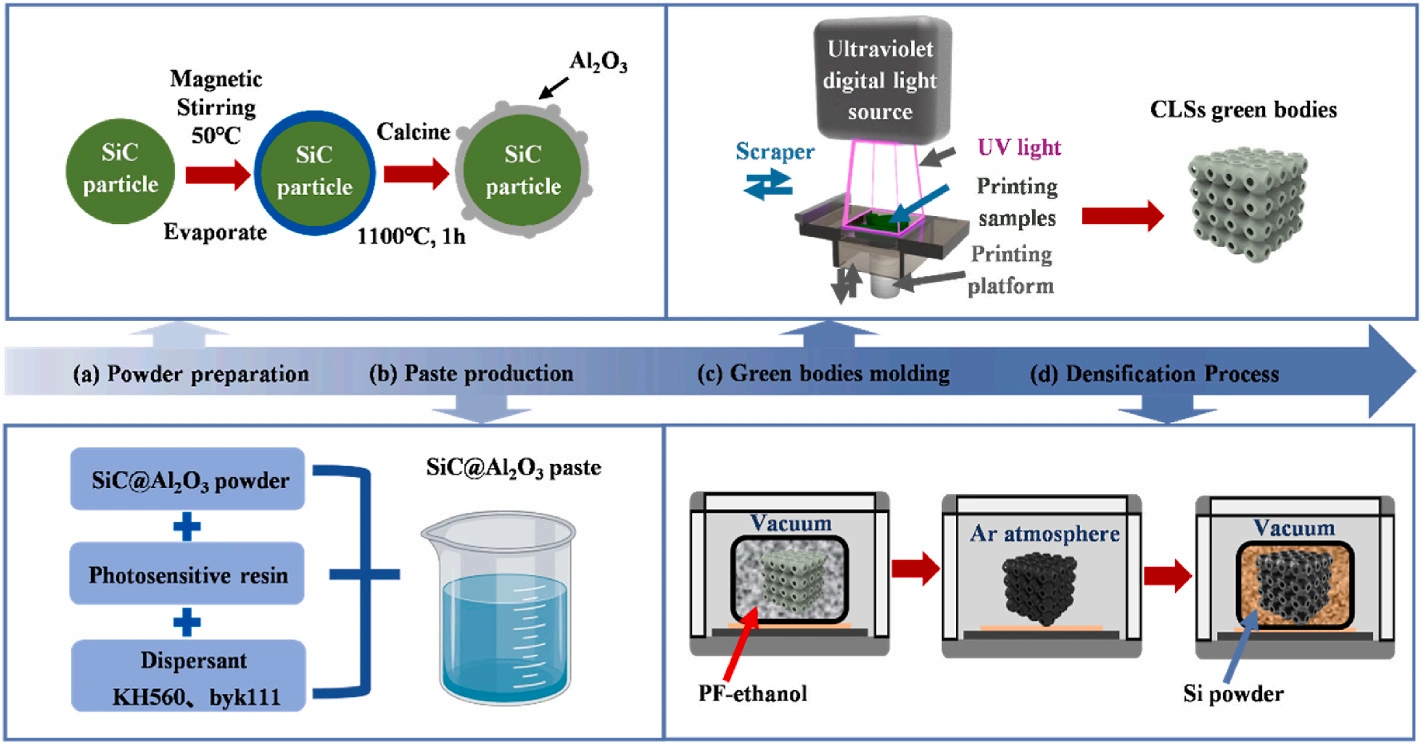
△ Figure 1, DLP additive manufacturing process and PIP-RMI densification process for SiC @ Al₂ O₂/Si ceramic lattice structure.
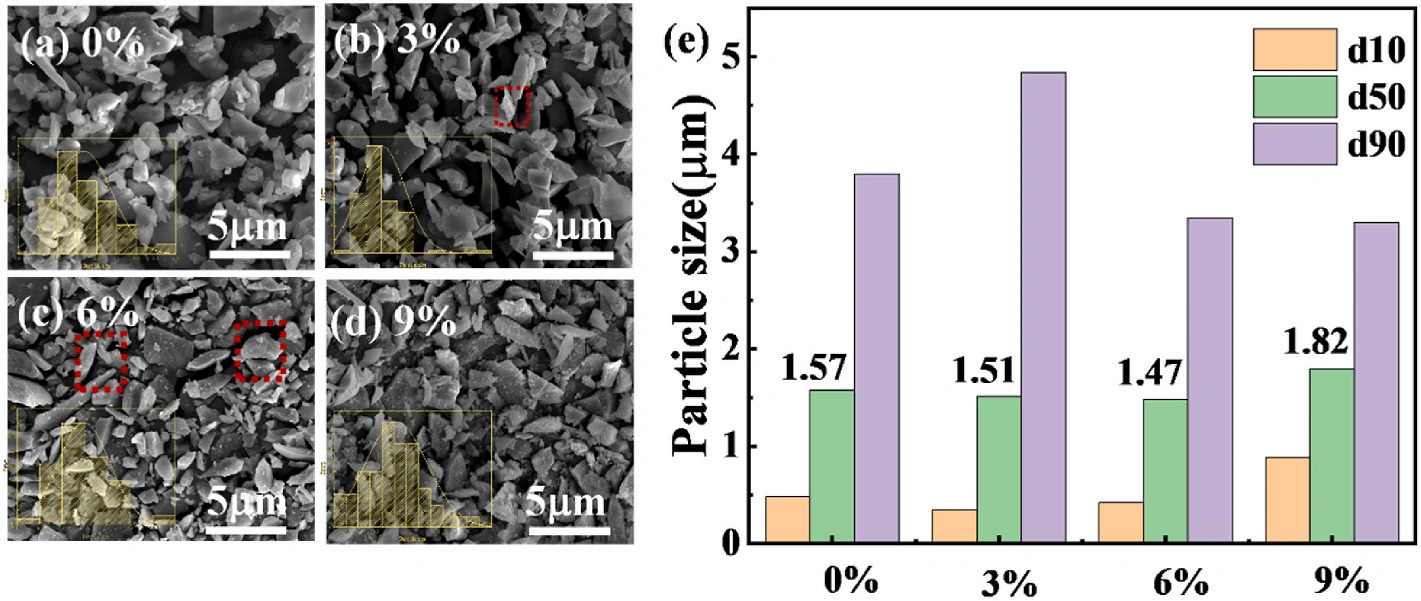
△ Figure 2,(a)-(d) SEM morphology and (e) particle size statistics of SiC @ Al₂ Oί powder.
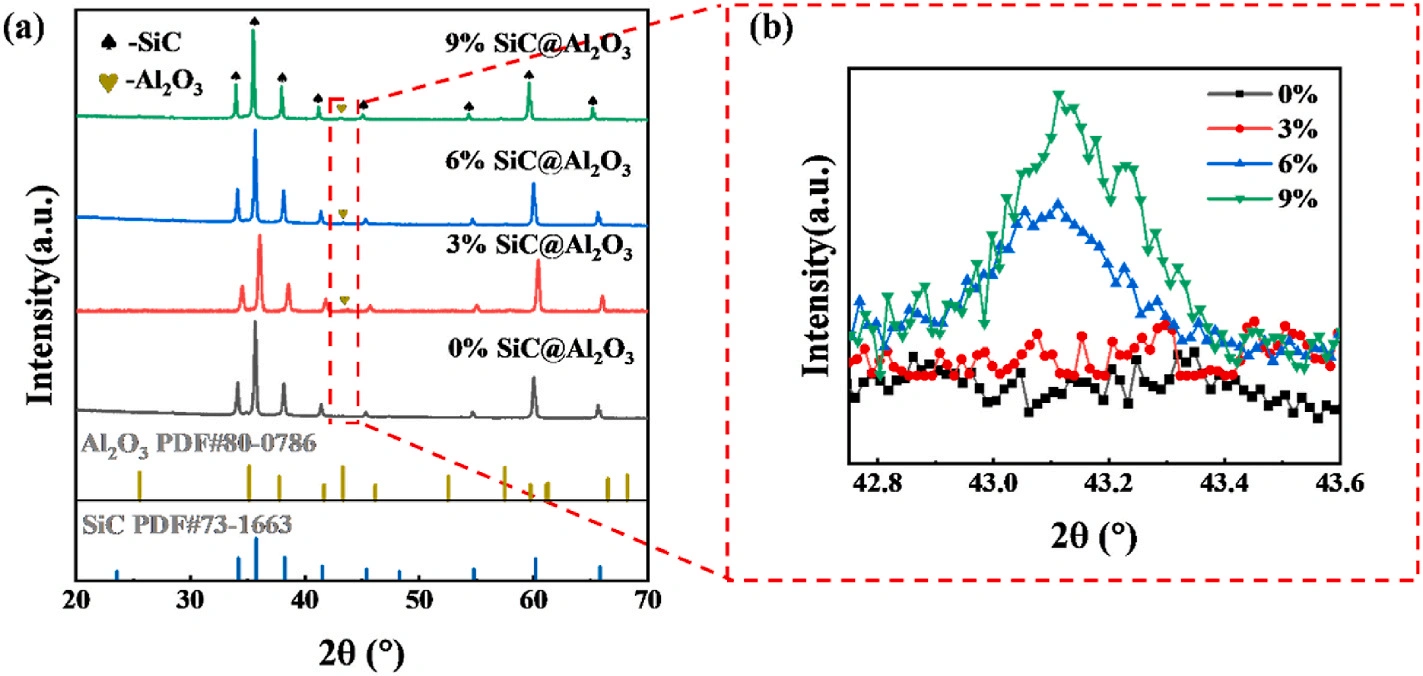
△ Figure 3,(a) XRD spectra of various SiC @ Al₂ O⅓ powders and (B) enlarged maps of Al₂ O⅓ peak positions.
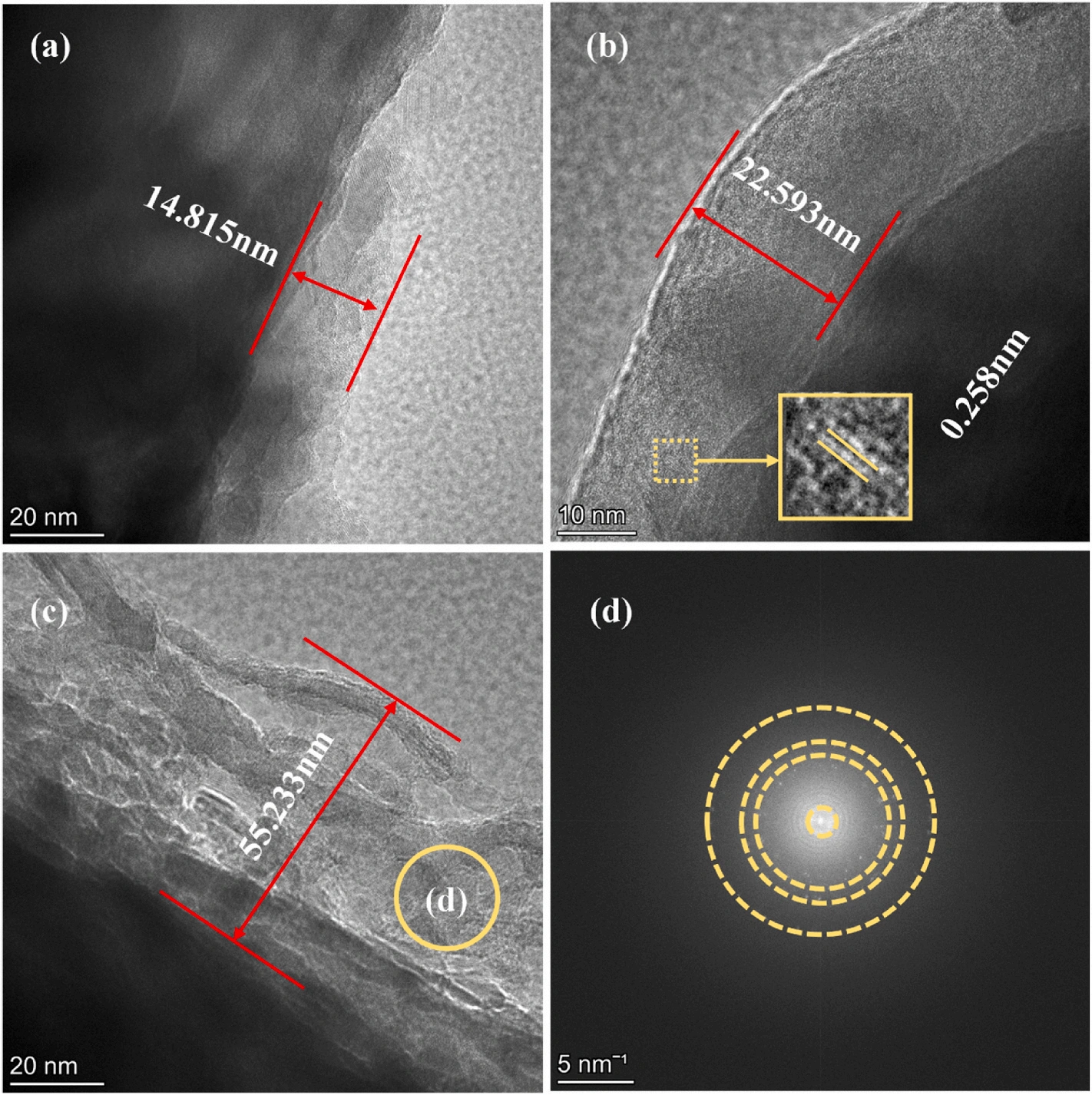
4, HRTEM images of (a) 3%, (B) 6%, and (c) 9% SiC @ Al₂ O3, and (d) SAED diffraction rings.
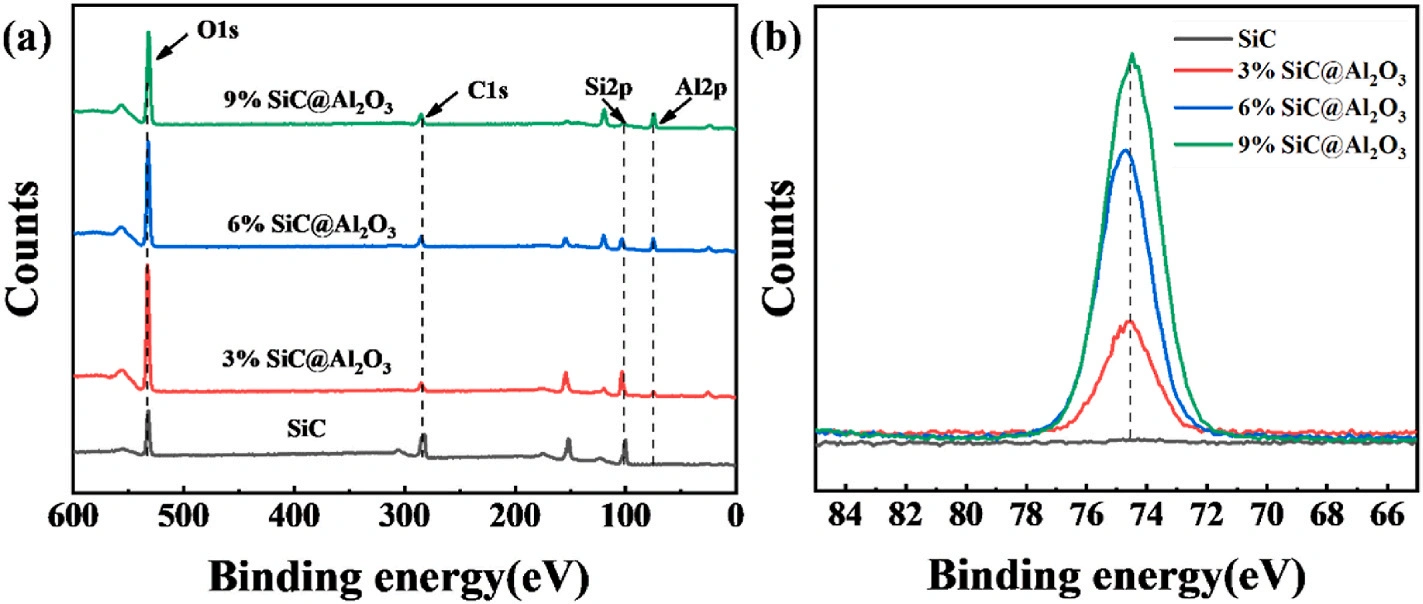
△ Figure 5,(a) XPS spectrum of SiC @ Al₂ Oί powder, (B) Al 2p spectrum of powder.
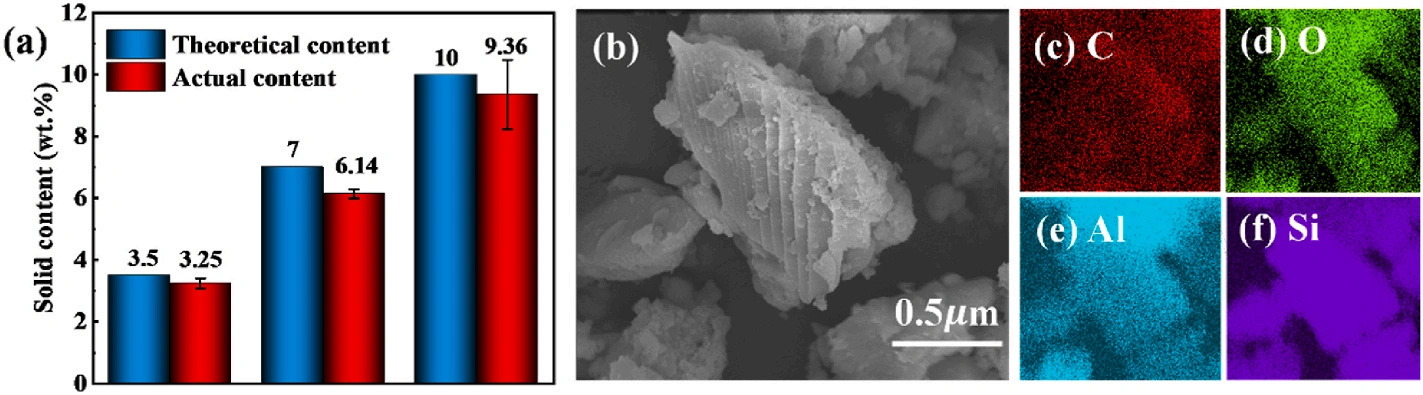
(a) Theoretical Al₂ Oover mass ratio and XRF analysis results; (B) SEM image of 6% SiC @ Al₂ Oover;(c)-(f) EDX mapping.
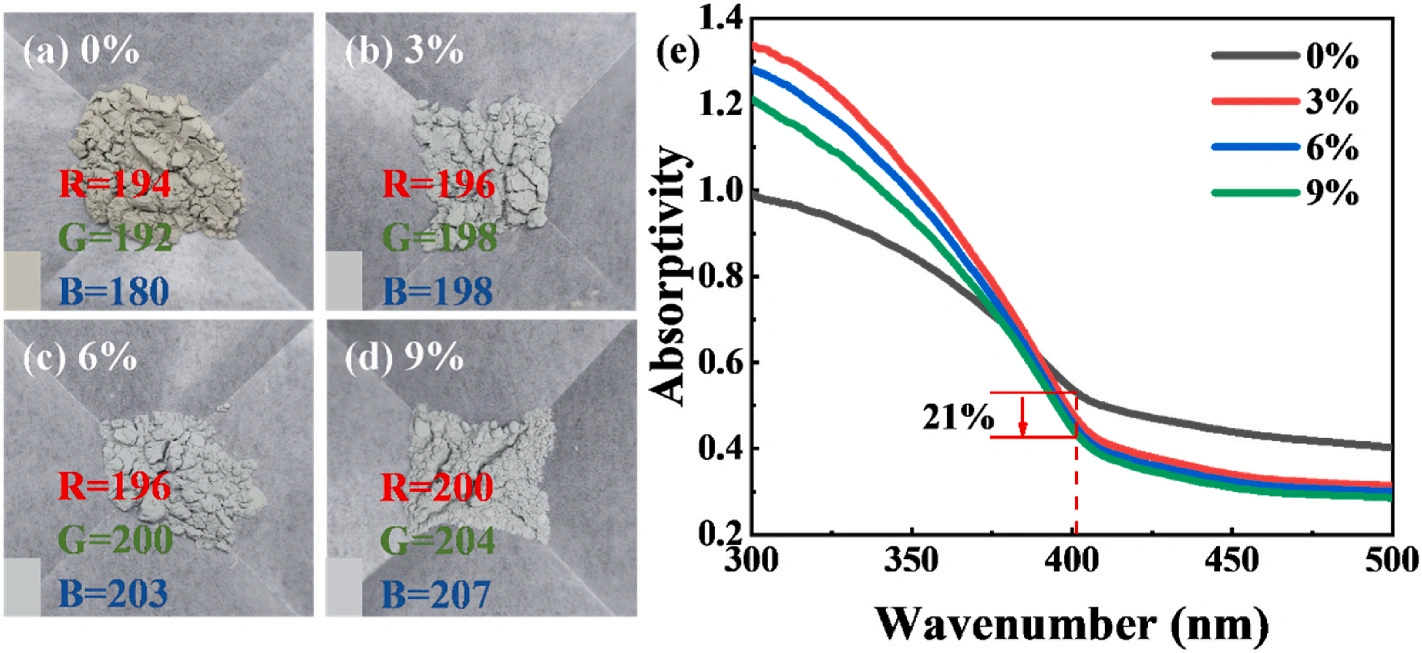
7,(a)-(d) Pictures of ceramic powder appearance and (e) UV absorption.
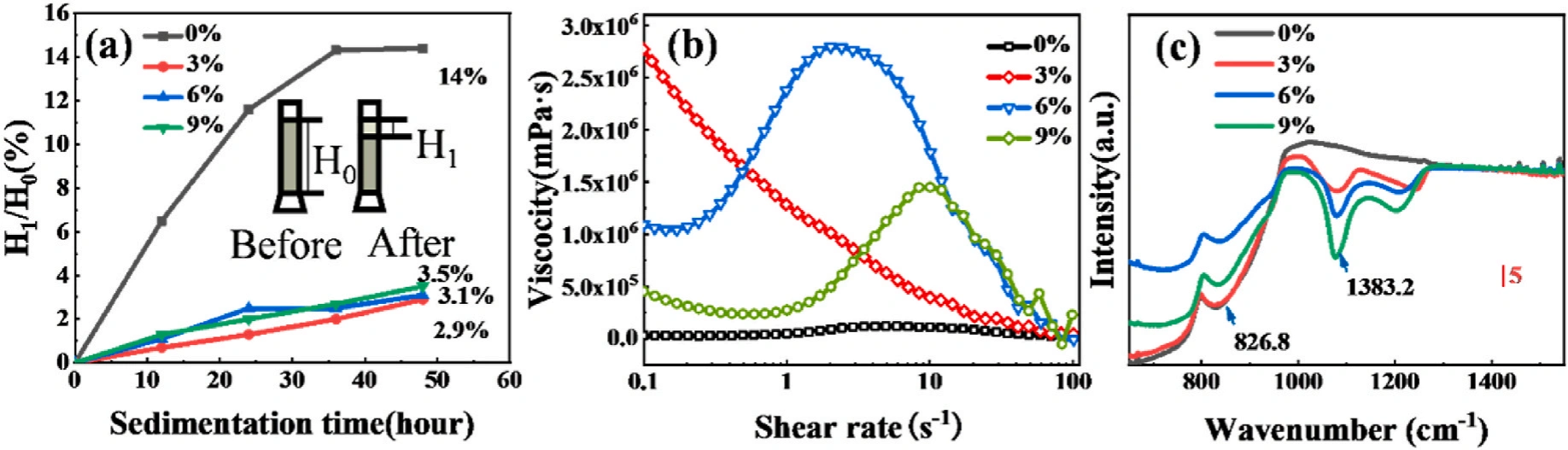
△ Figure 8,(a) Stability test of various SiC @ Al₂ Oί slurries, (B) rheological properties and (c) infrared (IR) test.
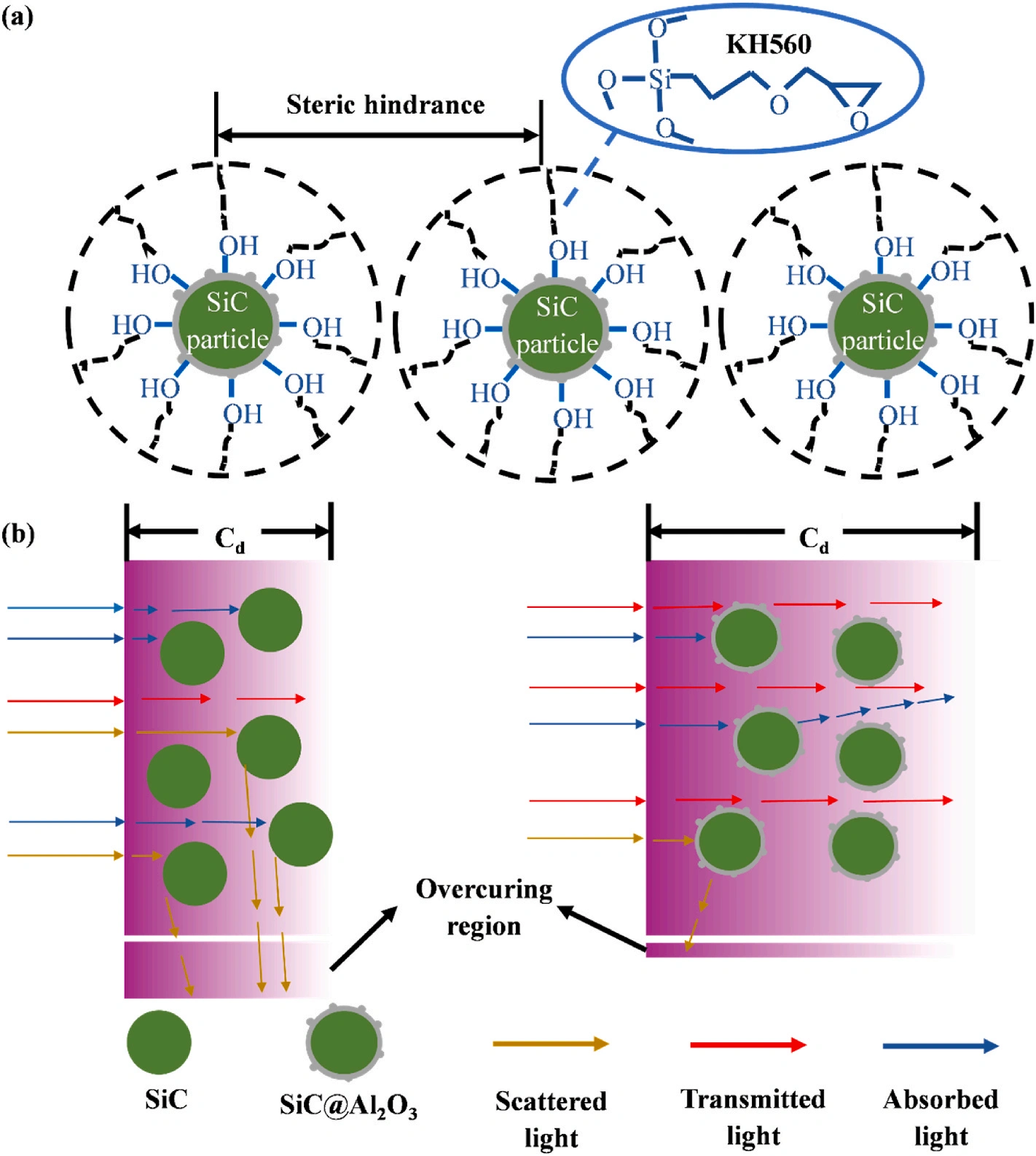
△ Figure 9,(a) Schematic diagram of the mechanism of the sedimentation performance of the improved SiC @ Al₂ Oover slurry and (B) Schematic diagram of the mechanism of the solidification performance of the improved SiC @ Al₂ Oover slurry.
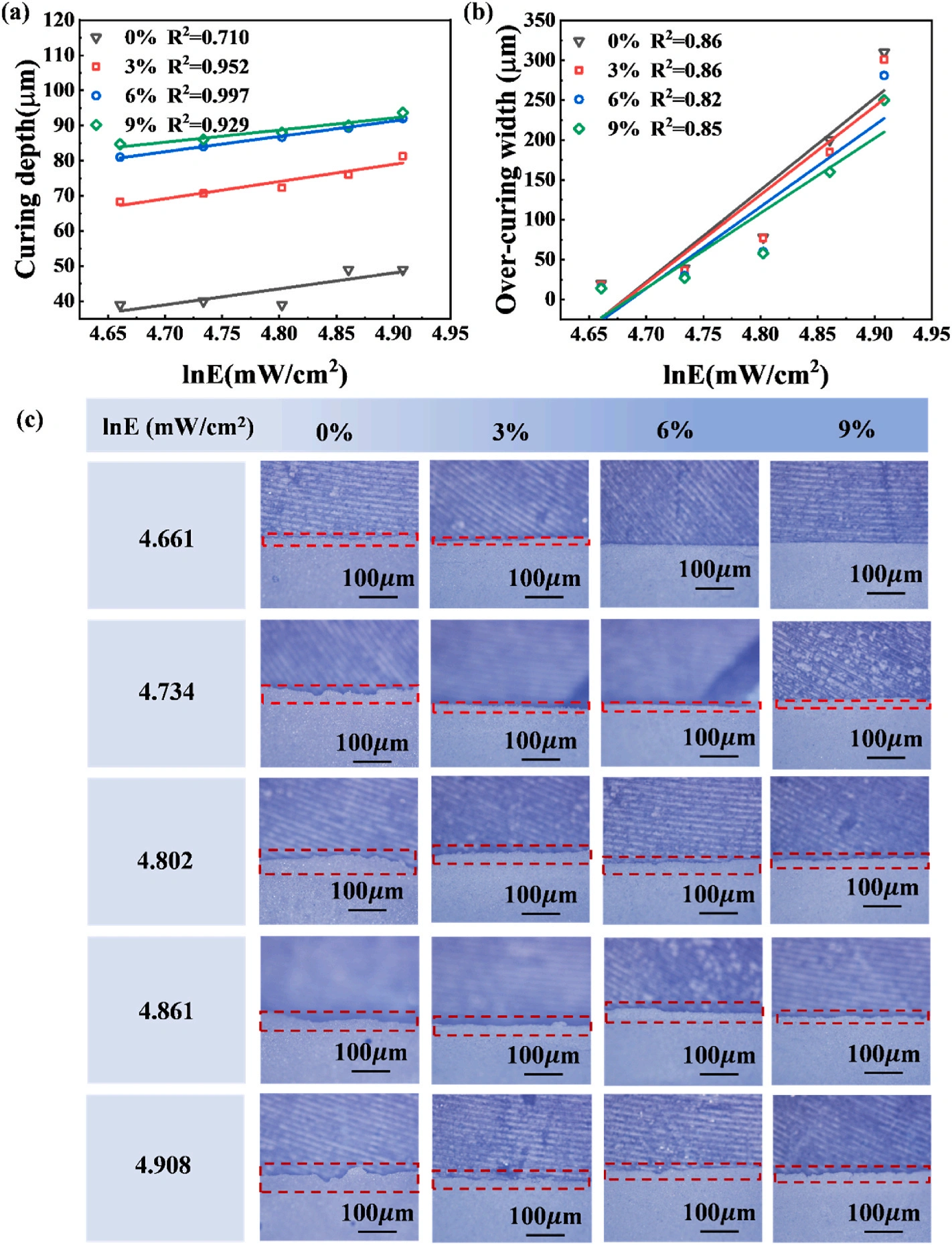
△ Figure 10,(a) The relationship between the curing thickness of the single layer and (B) the excessive curing width of various SiC @ Al₂ OL3 slurries and the curing light intensity;(c) the edge morphology of the cured layer.
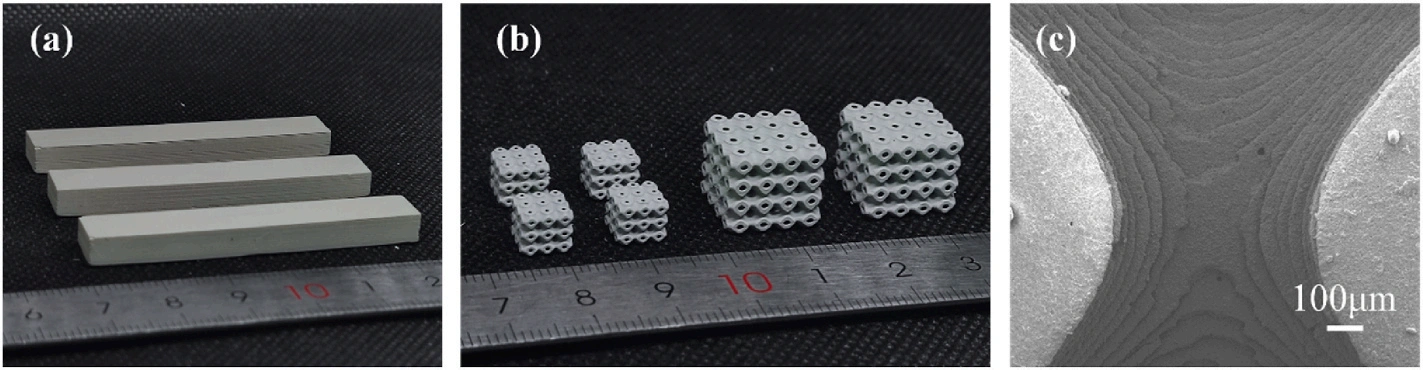
11,DLP-formed (a) Test Sample and (B) Original TPMS Ceramic Lattice Structure (CLS) Green Body Pictures;(c) Additively-manufactured Interlayer Patterns.
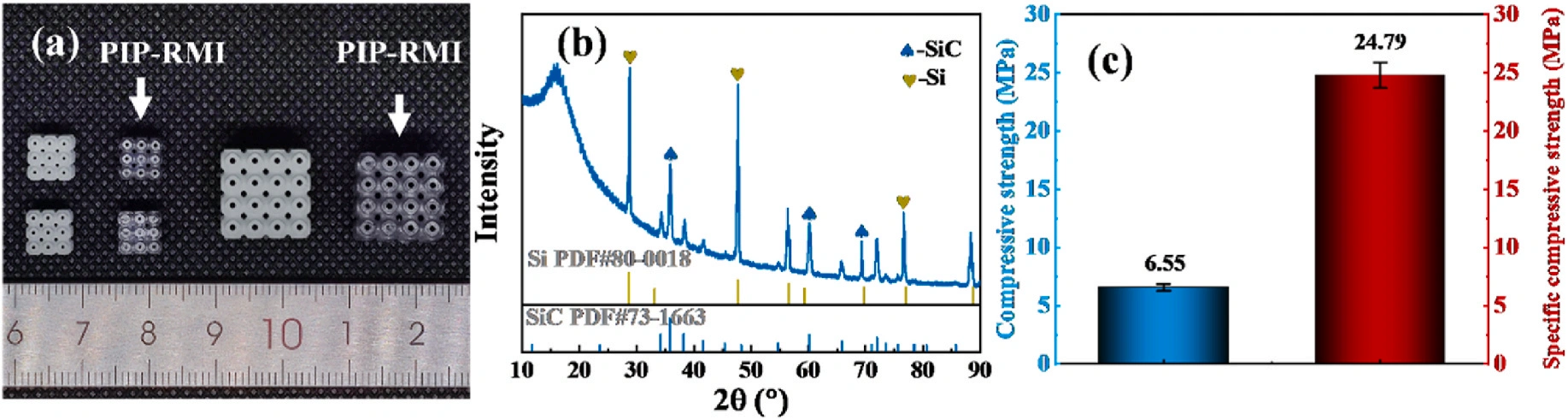
Figure 12,(a) Comparison of the appearance of the PIP-RMI treated sample and the green body sample; (B) XRD analysis of the PIP-RMI treated sample;(c) Compressive performance testing.
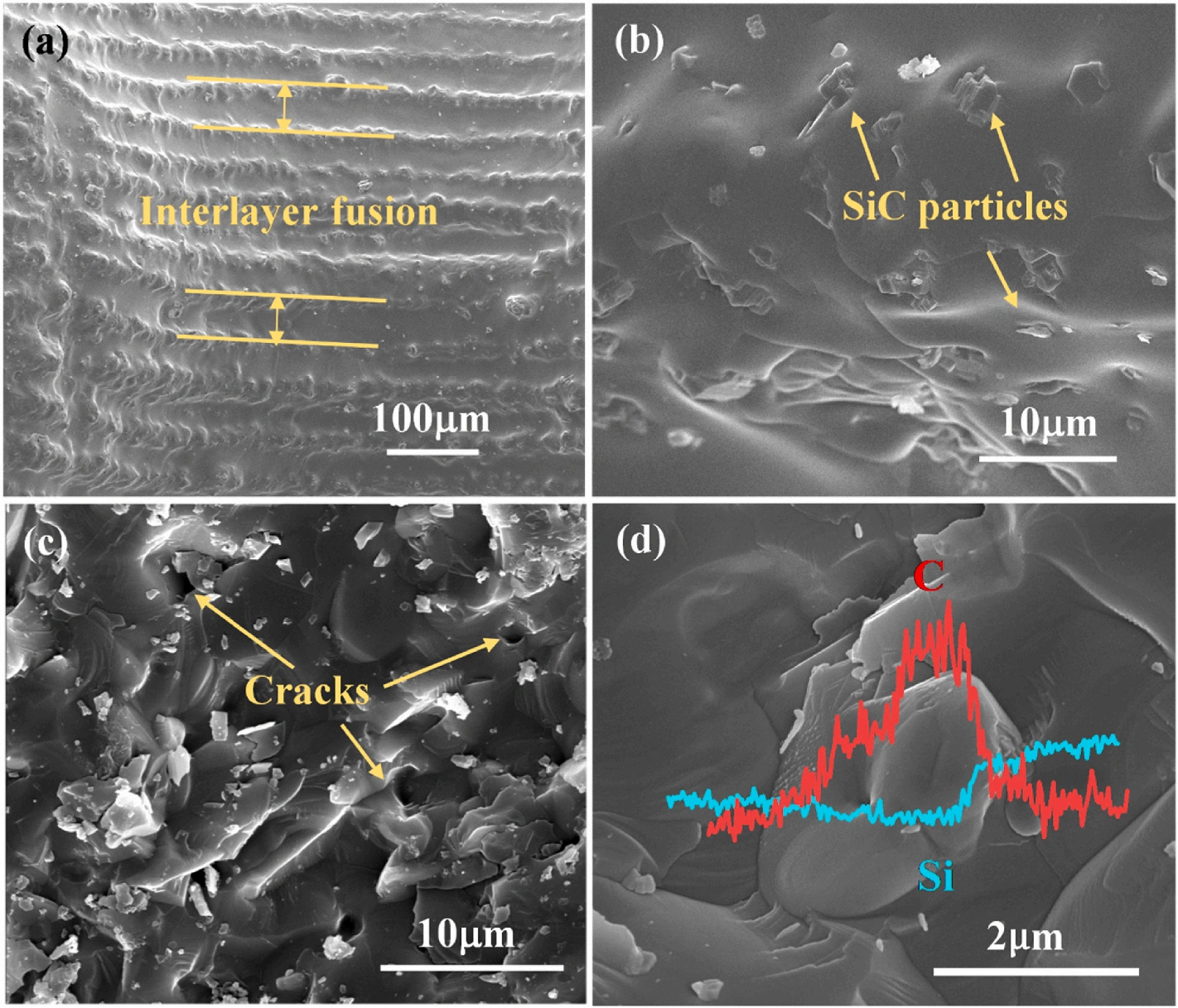
△ Figure 13,(a) Interlayer pattern of SiC @ Al₂ Oί/Si part, (B) surface morphology,(c) cross-section morphology,(d) EDS line scan of cross-section.
Conclusion
In this study, SiC @ Al₂ O∩ powder was prepared by liquid-phase coating modification method to solve the problems of poor curing performance and insufficient long-term stability of slurry during light curing molding. By combining PIP-RMI post-treatment densification methods, a SiC @ Al₂ O₂/Si TPMS ceramic lattice structure (CLS) with excellent mechanical properties and surface quality was successfully prepared.
The low light absorption and low UV refractive index of Al₂ significantly improve the curing performance of ceramic pastes, increase the curing thickness and reduce the excessive curing width. Experimental data show that the single layer curing thickness of SiC @ Al₂ O₂ slurry can reach 80 μm.
Despite the increase in viscosity, the slurry performed well in the DLP process due to its shear thinning characteristics, and the original TPMS structure ceramic embryo body with excellent surface quality was successfully prepared, and the mechanical properties of the bent specimen reached 75 MPa.
Through the PIP-RMI process, the ceramic embryo body is degreased and densified, and the obtained SiC @ Al₂ O/Si CLSs show excellent dimensional stability, good interlayer fusion and strong compression performance, with a specific compression strength of 24.79 MPa.
This study proposes a feasible preparation method of SiC-based ceramic lattice structure, which not only solves the inherent characteristics of SiC powder, but also enhances the mechanical properties of the final part.