
Fabricating Alumina Porous Plates with DLP Ceramic 3D Printing: Achieving Precise Complex Pore Structures
A ceramic plate may look simple from the outside.
However, the internal structure often determines its real performance.
In this case, the alumina ceramic plate contains a carefully designed network of pores throughout the structure. Although the external shape remains compact and stable, hundreds of internal channels create a controlled porous architecture.
This combination of stable macrostructure and precisely controlled microstructure is becoming increasingly important in advanced ceramic applications.
Traditionally, creating porous ceramic structures requires processes such as machining, pore-forming additives, or partial sintering. These methods can produce basic porous designs, but they become challenging when researchers need precise pore size control, complex internal channels, or customized structures.
DLP ceramic 3D printing provides a different approach.
By directly converting digital designs into ceramic components, researchers can create complex porous structures while maintaining the excellent properties of ceramic materials.
This case demonstrates the complete fabrication process of an alumina porous plate, from digital design to the final sintered component.
Why Are Porous Alumina Structures Important?
Alumina (Al₂O₃) is one of the most widely studied advanced ceramics because of its excellent material properties.
It offers:
- High-temperature stability
- Strong mechanical performance
- Chemical resistance
- Electrical insulation
- Long-term reliability
When engineers combine these properties with controlled porous structures, alumina components can achieve additional functions.
For example, porous alumina structures can support research and development in:
- Ceramic filtration systems
- Fluid control devices
- Thermal management components
- High-temperature applications
- Catalyst support structures
The challenge is controlling the internal architecture.
For many applications, pore size, pore distribution, and channel arrangement directly influence the final performance of the ceramic component.
Why Traditional Manufacturing Methods Are Limited
Creating porosity inside ceramics is not new.
However, manufacturing highly ordered porous structures remains difficult.
Traditional approaches usually rely on methods such as:
- Mechanical drilling
- Sacrificial pore-forming materials
- Controlled sintering processes
These methods work well for relatively simple structures. However, they become less flexible when researchers need:
- Complex interconnected channels
- Customized pore arrangements
- Rapid design changes
- Fine structural details
Instead of adapting the design to manufacturing limitations, DLP ceramic 3D printing allows the manufacturing process to follow the digital model directly.
Fabrication Process: From Digital Design to Ceramic Component
1. Designing the Porous Structure
The process begins with a 3D digital model.
Researchers first define the overall dimensions, pore geometry, and internal structure of the alumina porous plate.
Through CAD design, parameters such as:
- pore size
- pore spacing
- channel arrangement
- structural thickness
can be adjusted according to different research requirements.
This digital workflow gives researchers the flexibility to explore different ceramic architectures before fabrication begins.
2. Printing the Alumina Green Body
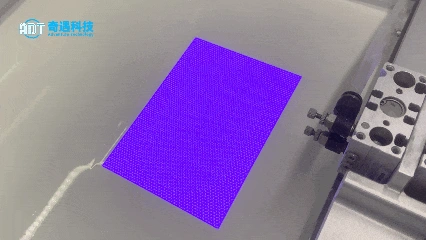
After completing the digital model, the structure is fabricated using DLP ceramic 3D printing technology.
During the printing process, the system selectively cures alumina ceramic slurry layer by layer.
Each layer follows the designed geometry, gradually building the complete porous structure.
Unlike traditional machining, DLP printing creates internal features directly during fabrication. This makes it possible to produce complex pore networks that are difficult to manufacture using conventional methods.
3. Removing the Printed Ceramic Part
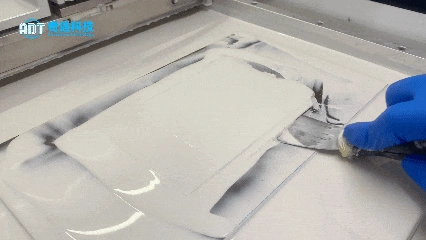
After printing, the alumina green body is carefully removed from the build platform.
At this stage, the component already contains the designed porous structure, but it remains in a fragile green state.
Careful handling is important because thin walls and complex channels require protection before further processing.
4. Cleaning the Porous Structure
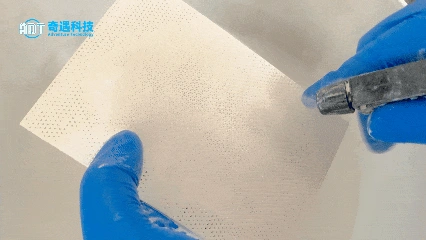
The next step focuses on removing residual ceramic slurry from the printed component.
Cleaning helps reveal the internal pore network and ensures that the designed channels remain open.
For porous ceramic applications, this step is especially important because blocked channels can affect fluid flow, filtration efficiency, and other functional properties.
5. Debinding and High-Temperature Sintering
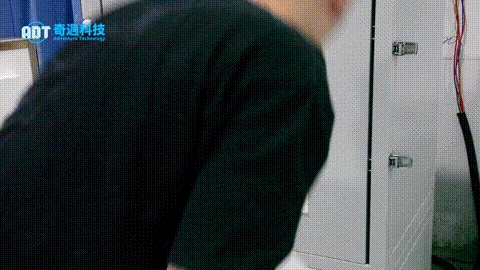
After cleaning, the printed green body undergoes debinding and sintering.
During debinding, organic components are gradually removed from the ceramic body.
The following high-temperature sintering process transforms the printed structure into a stable alumina ceramic component.
Because ceramics experience shrinkage during sintering, process control plays an important role in maintaining dimensional accuracy and preserving the designed porous architecture.
6. Final Alumina Porous Plate
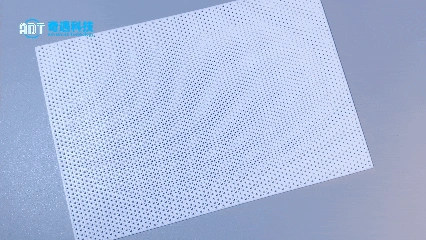
The final alumina porous plate demonstrates the capability of DLP ceramic 3D printing for complex ceramic structures.
The component maintains:
- Accurate overall dimensions
- Uniform pore distribution
- Stable ceramic performance
- Complex internal architecture
The result is a functional ceramic structure that combines material performance with design freedom.
Research Value of DLP Ceramic 3D Printing
For ceramic researchers, the greatest advantage of DLP printing is not only producing a final part.
It creates a faster pathway between:
Design concept → Physical sample → Experimental validation
Researchers can modify digital models, test different structures, and evaluate new ceramic designs without creating new tooling.
This capability is particularly valuable for:
- Advanced ceramic research
- Porous material development
- Functional structure optimization
- Laboratory-scale prototyping
Potential Applications of Alumina Porous Structures
The combination of alumina properties and controlled porous architecture creates opportunities in many fields, including:
Filtration Research
Precise pore structures can support studies of particle separation and fluid transport.
Thermal Management
Porous ceramic designs can help researchers investigate heat transfer behaviors.
Chemical and Energy Systems
Alumina porous structures can serve as supports for catalysts and functional materials.
Advanced Manufacturing Research
Researchers can explore new ceramic geometries that are difficult to fabricate using traditional processes.
Frequently Asked Questions
Why use DLP ceramic 3D printing for porous alumina structures?
DLP ceramic 3D printing allows researchers to directly manufacture complex pore architectures from digital designs while maintaining high precision.
Can researchers customize pore structures?
Yes. Researchers can modify pore size, distribution, and internal geometry during the CAD design stage.
Why is alumina suitable for porous ceramic applications?
Alumina provides excellent thermal stability, chemical resistance, and mechanical strength, making it suitable for demanding environments.
Is DLP ceramic 3D printing suitable for laboratory research?
Yes. The technology supports rapid prototyping and advanced ceramic structure development in research environments.
Conclusion
Complex porous ceramic structures have always been challenging to manufacture.
DLP ceramic 3D printing provides researchers with a flexible digital manufacturing approach, allowing them to transform complex designs into functional alumina components.
Through precise control of pore architecture and ceramic processing, researchers can explore new possibilities in filtration, thermal management, fluid systems, and advanced material development.
This alumina porous plate case demonstrates how ceramic additive manufacturing can bridge the gap between innovative design concepts and real experimental components.
Explore how ADT’s DLP ceramic 3D printing platform supports advanced ceramic research and complex structure fabrication.