
Silica 3D Printing : How to Control the Cristobalite Content, Microstructure, and Properties of Ceramic Cores by Doping with Fe₂O₃?
I. Silica 3D Printing : Complex double-walled ceramic cores can be fabricated using mold-free digital light processing ceramic 3D printing technology.
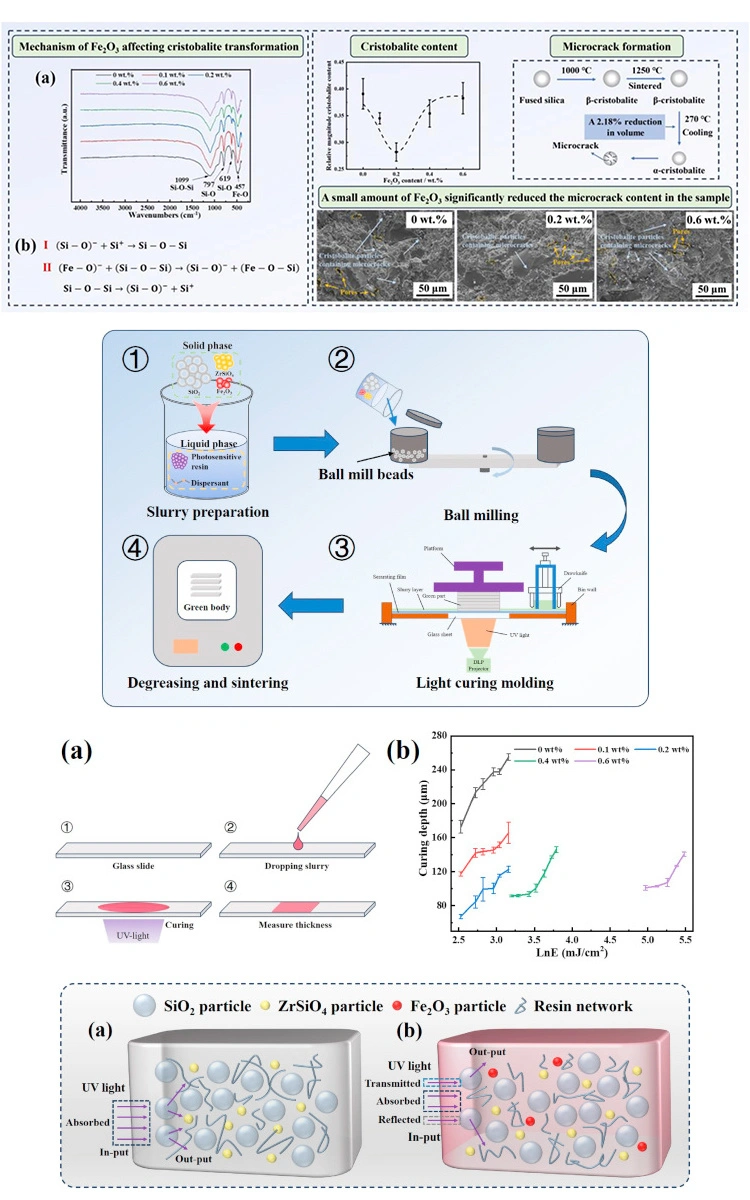
Fused silica (SiO₂) is a widely used material for preparing ceramic cores; however, the crystallization behavior of fused silica can lead to a decrease in the mechanical properties of the resulting ceramics Silica 3D Printing. Recently, a research team led by Professor Jin-Guo Li from Northeastern University published a study in *Ceramics International* entitled "Controlling the cristobalite content, microstructure, and properties of vat photopolymerization 3D printed SiO₂-based ceramic cores by doping Fe₂O₃". They controlled the cristobalite content, microstructure, and properties of SiO₂-based ceramic cores fabricated by digital light processing ceramic 3D printing by doping with Fe₂O₃Silica 3D Printing.
Original article link: https://doi-org-s-2.proxy.itic-sci.com/10.1016/j.ceramint.2025.01.389
II. Silica 3D Printing : SiO₂-based ceramics with different Fe₂O₃ contents were fabricated using digital light processing ceramic 3D printing technology.
The effects of Fe₂O₃ on the crystallization, microstructure, and properties of the ceramic cores were studied. The results showed that an appropriate amount of Fe₂O₃ content affects the cristobalite content by influencing the ratio of bridging oxygen to non-bridging oxygen in the ceramic core Silica 3D Printing. The results of this study provide new insights into controlling the cristobalite content in vat photopolymerization 3D printed SiO₂-based ceramic cores and offer a promising approach for developing SiO₂-based ceramic cores with enhanced mechanical properties. The following are the research methods and data from the article:
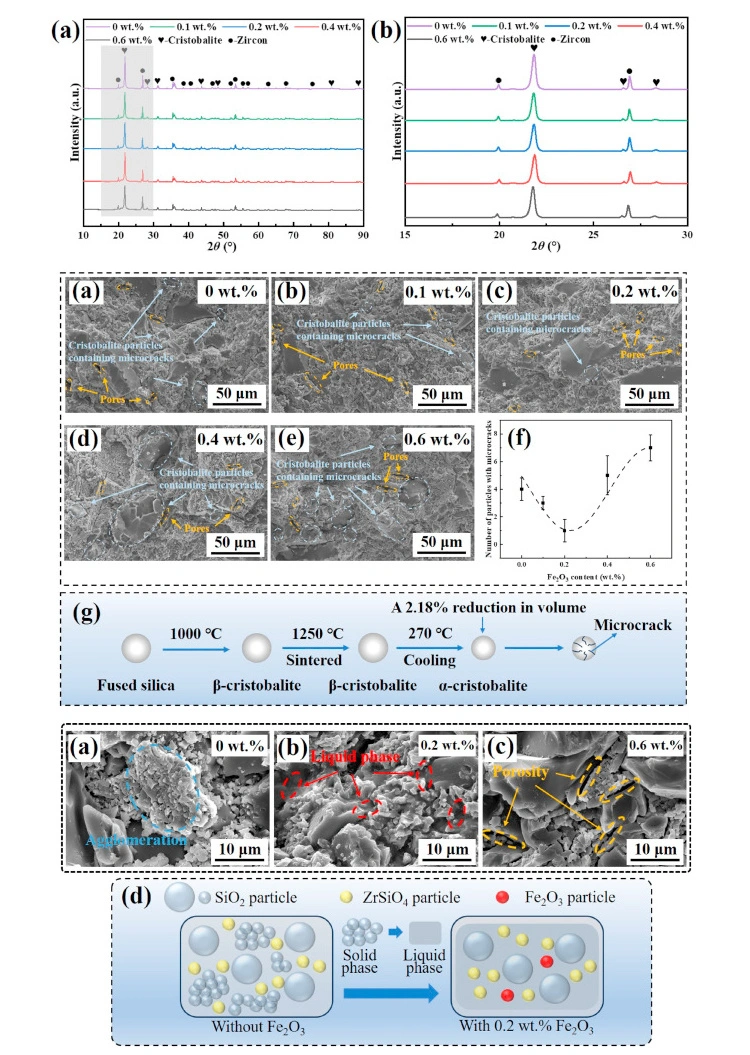
In this study, SiO₂-based ceramic samples with different Fe₂O₃ contents were prepared using ceramic 3D printing technology Silica 3D Printing. The effects of Fe₂O₃ on the crystallization, microstructure, and properties of the samples were studied, and the following conclusions were obtained:
1. Fe₂O₃ reduces the UV light absorption capacity of the SiO₂-based ceramic slurry, affecting the printing effect Silica 3D Printing. The Fe₂O₃ content should be controlled to no more than 0.2 wt% to avoid printing defects.
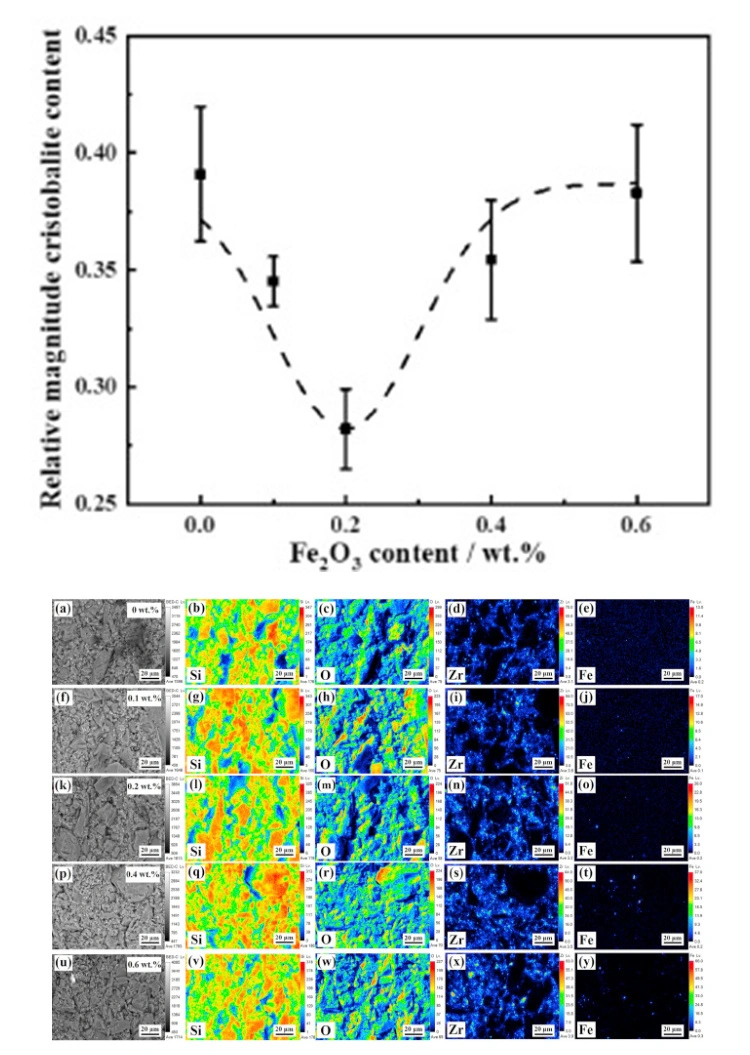
2. Adding 0.2 wt% Fe₂O₃ increases the proportion of bridging oxygen, inhibits the transformation of fused silica to cristobalite, and reduces microcracks, thereby improving performance Silica 3D Printing.
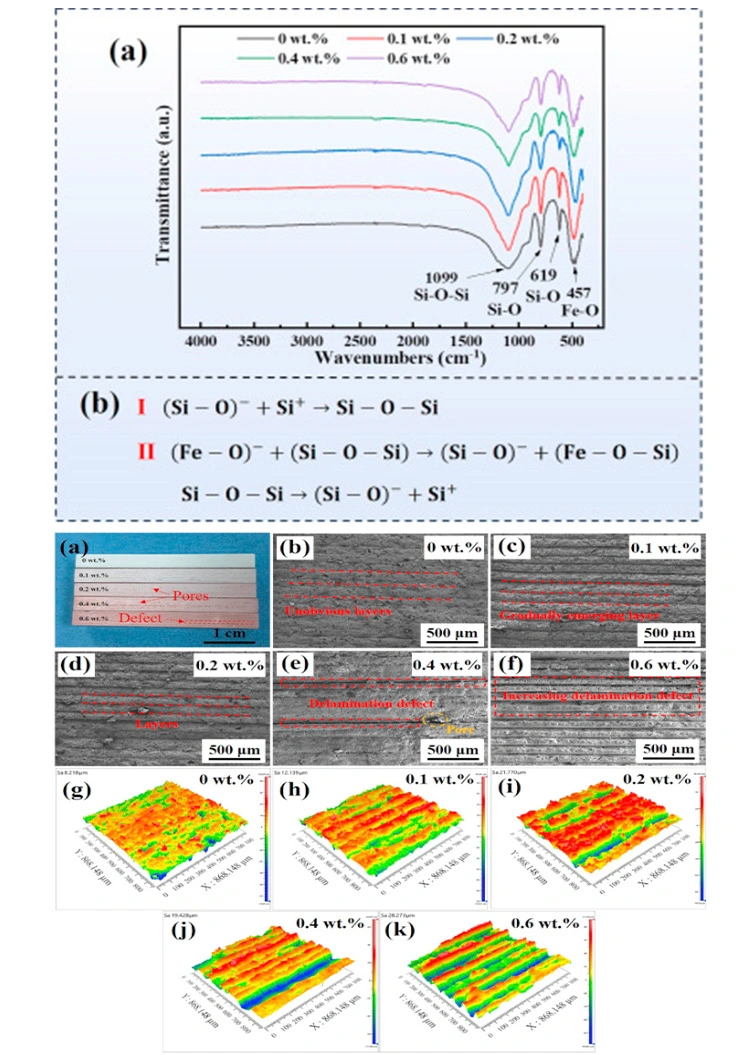
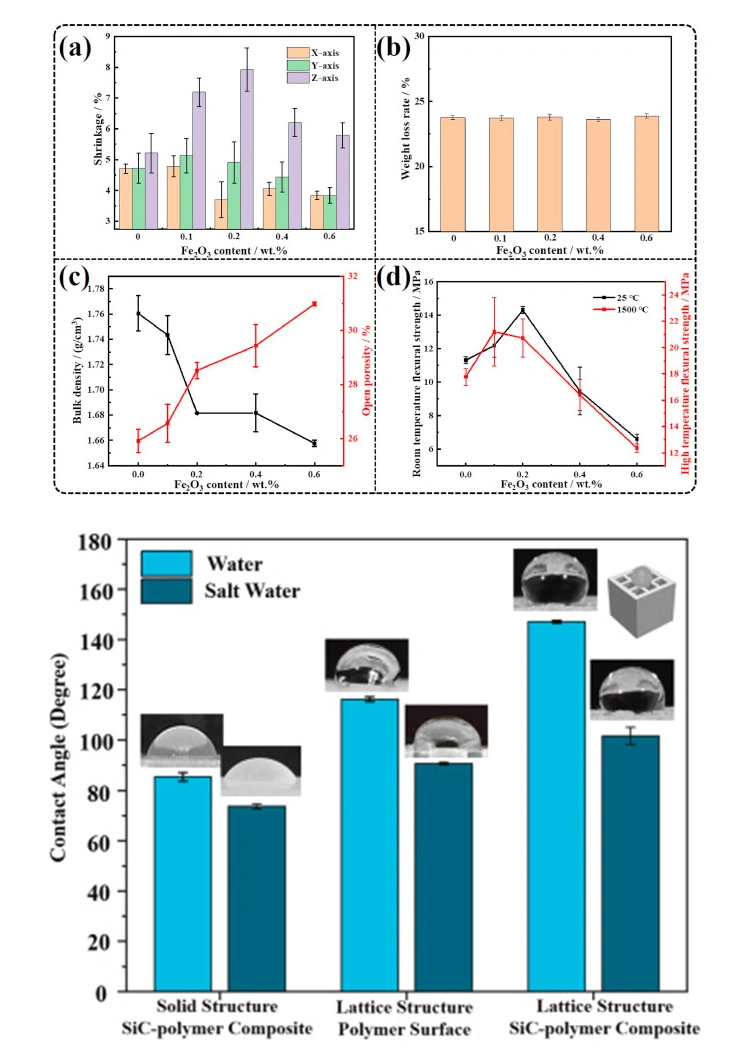
3. When the Fe₂O₃ content is 0.2 wt%, the SiO₂-based ceramic sample exhibits excellent performance: room temperature flexural strength of 14.31 MPa, high-temperature flexural strength of 20.73 MPa, shrinkage rates of 3.71%, 4.91%, and 7.92% in the X, Y, and Z axes respectively, open porosity of 28.52%, and bulk density of 1.68 g/cm³Silica 3D Printing.
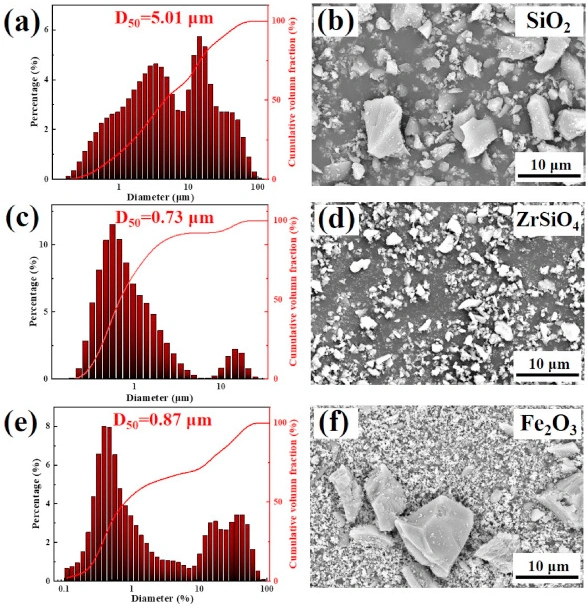
4. By controlling the Fe₂O₃ content, the cristobalite content and mechanical properties can be balanced Silica 3D Printing, improving the performance of the ceramic core and providing a theoretical basis for the preparation of high-performance, complex-structured ceramic cores.
Shenzhen Adventure Technology Co., Ltd. was established in 2015 as a high-tech company focused on ceramic additive manufacturing technology. The company has a research and development team primarily consisting of postdoctoral researchers from Tsinghua University and returning PhDs from the Norwegian University of Science and Technology, dedicated to providing complete solutions for “ceramic 3D printing equipment + ceramic 3D printing materials + ceramics sintering processes.”
Official Website 1 : https://adt-ceramic3dp.com/
Official Website 2 : https://www.adventure-tech.cn/