In advanced ceramic materials preparation, surface coating is a key method to improve powder quality. It adds a thin, uniform layer on ceramic particles to enhance flowability, sintering, and final strength. This is especially important for high-performance slurries used in Ceramic 3D Printer systems, such as DLP Ceramic 3D Printer and light curing 3D printing, where coated powders help produce dense, defect-free zirconia or alumina parts.
Core Mechanisms: Three Main Interactions
- Chemical Bonding The strongest link. Coating agents react with the particle surface to form covalent or ionic bonds, creating atomic-level adhesion. This ensures the coating stays stable during printing and sintering in zirconia 3D printing applications.
- Electrostatic Attraction Acts as the first step. Opposite charges pull the coating material toward the particle surface, helping it attach evenly before stronger bonds form.
- Adsorption Layer Mediation Works like a “bridge layer.” By optimizing slurry viscosity and solid content (e.g., ~55 wt% solids), a dense intermediate layer forms. This promotes uniform coating and improves overall bonding strength and toughness.
These three forces work together to make surface coating effective.
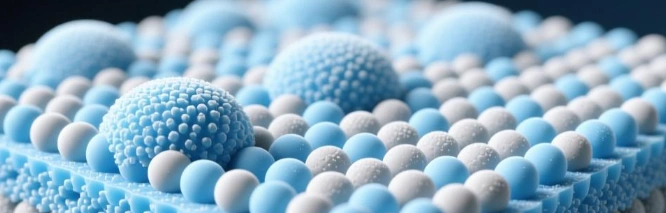
Why Coatings Get Damaged During Forming?
Even good coatings can fail during shaping and sintering — including extrusion and post-processing in DLP Ceramic 3D Printer workflows.
Main causes:
- Mechanical stress: High pressure and particle friction during pressing or extrusion can crack or peel the coating.
- Thermal stress: Differences in thermal expansion between coating and base material create shear forces at high temperatures, leading to delamination.
- Weak interfaces: Poor bonding, voids, or moisture damage reduce the coating’s resistance.
How to Protect and Improve Coatings
Process improvements:
- Lower pressure and slower heating rates.
- Use smoother molds and gradient temperature profiles to reduce stress.
Material design:
- Adjust slurry recipes (binders, solid content).
- Add transition layers or gradient structures to ease thermal mismatch.
Evaluation methods:
- SEM: See cracks and coating uniformity.
- Nanoindentation: Measure interface strength.
- Contact angle: Check surface durability.
These steps help create reliable coatings for real-world use.
Summary
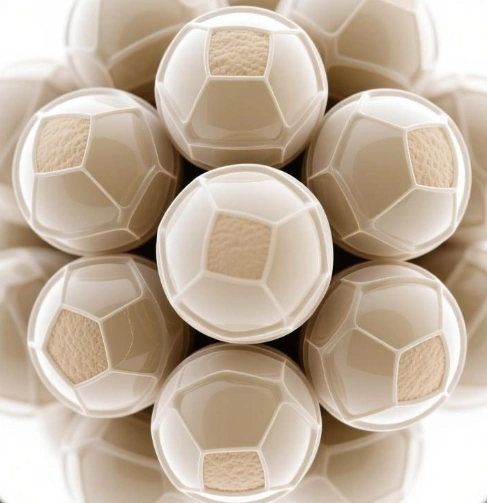
Surface coating uses chemical bonding, electrostatic forces, and adsorption layers to greatly improve ceramic powder performance. By controlling stresses during forming and sintering, and using smart process and material design, we can achieve stronger, more reliable ceramics — especially in Ceramic 3D Printer technologies like DLP Ceramic 3D Printer and light curing 3D printing for dental, aerospace, and medical applications.