
With the rapid development of Ceramic 3D Printing (Additive Manufacturing), ceramic materials have gradually become a focal point for both academia and industry due to their excellent high-temperature resistance, corrosion resistance, insulation, and biocompatibility. However, the quality and performance of 3D-printed ceramic components are not determined solely by equipment and processes; the deeper key often lies in the fundamental material—ceramic powders.
Ceramic powders not only form the essential framework of printed parts, but their particle size, morphology, flowability, dispersibility, and high-temperature stability directly determine the feasibility of the printing process as well as the accuracy, strength, and reliability of the final product. In this sense, ceramic powders can be regarded as the “invisible cornerstone” that dictates the success or failure of 3D printing. This article will systematically review the critical role and recent advances of ceramic powders in Ceramic 3D printing, and explore their profound impact on printing quality.
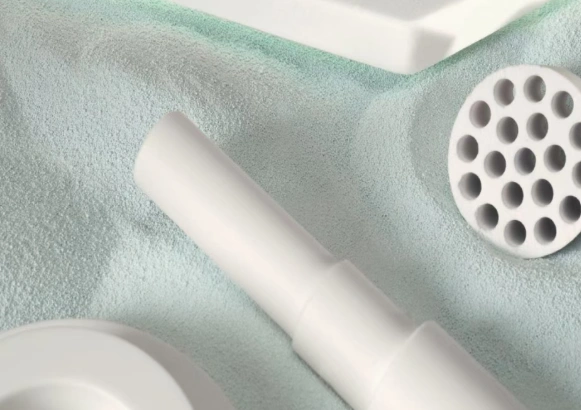
Figure 1. Ceramic Powder and Finished Ceramic Product
1. Particle Size and Distribution: Core Parameters Determining Accuracy and Strength
Among all influencing factors, particle size and distribution are arguably the most fundamental and critical. Particle size directly affects the surface roughness of the powder, packing density, and the subsequent mechanical properties of the printed parts.
- Excessively large particles: May lead to rough layer surfaces, reduced resolution of fine details, and the formation of pores at interlayer junctions, thereby weakening mechanical strength.
- Excessively small particles: Result in a significantly increased specific surface area and enhanced van der Waals forces between particles, which promotes agglomeration, reduces flowability, and in severe cases, may cause nozzle clogging or uneven powder spreading.
Therefore, ceramic powders suitable for 3D printing are typically in the micron to submicron range, where they can maintain good flowability while balancing accuracy and strength.
At the same time, the rationality of particle size distribution is equally critical. Ceramic Powders with a single particle size tend to leave large voids during packing, whereas a wide particle size distribution allows smaller particles to fill the gaps between larger ones, thereby improving packing density and uniformity. However, an excessively broad distribution may also lead to segregation, which undermines stability.
Studies have shown that adjusting powders into a reasonable range through powder classification techniques can effectively improve powder spreading and enhance the densification of sintered parts. For example, zirconia and alumina powders with a narrow particle size distribution exhibit higher printing accuracy, while those with composite particle size designs can achieve improved mechanical performance after sintering.
Thus, particle size and distribution are the primary design parameters of ceramic powders. Their optimization not only depends on powder preparation methods (such as spray drying, sol–gel, or vapor deposition) but is also closely related to subsequent classification and surface treatment.
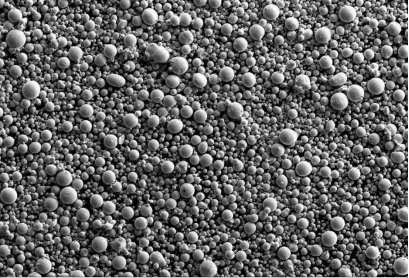
Figure 2. Microscopic View of Ceramic Powder Particle Size
2. Powder Shape and Surface Morphology: Key Factors Affecting Packing and Spreading
The ideal shape of ceramic powder particles should be close to spherical. Spherical particles offer the following advantages:
- Better flowability: Under applied force, they mainly roll rather than slide, resulting in lower friction and improved uniform spreading;
- Dense packing: The spherical structure can maximize void filling, thereby increasing the initial packing density;
- Process stability: A uniform powder layer reduces defects caused by variations in particle morphology.
In contrast, irregularly shaped powders—such as flaky, needle-like, or fragmental particles—tend to create packing voids, weaken interlayer bonding, and generate structural defects during high-temperature sintering.
Surface morphology is equally important. Smooth-surfaced powders help reduce interparticle adhesion, minimize agglomeration, and improve dispersibility, whereas rough-surfaced powders are more prone to uneven packing.
In practical preparation, factors such as raw material purity, milling process, calcination temperature, and atmosphere all influence the final particle shape and surface condition.
For example:
- Spray drying is commonly used to produce spherical powders with excellent flowability, suitable for large-scale applications.
- High-energy ball milling, while effective in reducing particle size, often results in flaky or fragmental particles that require further modification.
- Surface coating (e.g., Al₂O₃ or SiO₂ shells) can significantly enhance powder dispersibility and stability.
Therefore, the morphological control of ceramic powders relies not only on process selection but also on post-treatment and modification techniques, in order to meet the requirements of Ceramic 3D printing.
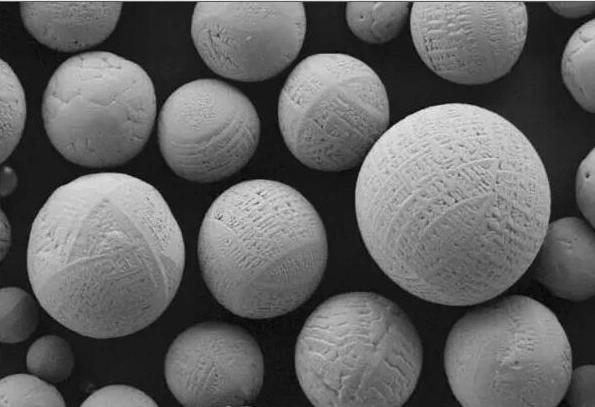
Figure 3. Microscopic View of Ceramic Powder
3.Powder Flowability and Dispersibility: Ensuring Uniform Powder Spreading and Structural Densification
During the powder spreading process, flowability and dispersibility play a decisive role in determining the uniformity of the powder bed, which in turn governs the stability of the printed layers and the densification of the final components.
- High flowability ensures that powders can spread smoothly under gravity or by a recoating blade, thereby preventing the formation of “void regions” or excessive accumulation.
- Excellent dispersibility minimizes particle agglomeration, promotes homogeneous particle distribution between layers, and enhances interlayer bonding strength.
Several strategies can be employed to enhance the flowability and dispersibility of ceramic powders:
- Use of dispersants: Dispersants can reduce particle agglomeration through mechanisms such as electrostatic repulsion or steric hindrance; for instance, polycarboxylate dispersants are often incorporated into alumina slurries.
- Humidity regulation: A moderate level of moisture can decrease interparticle friction and improve lubrication; however, excessive humidity may cause clumping, which in turn deteriorates flowability.
- Surface coating and modification: For moisture-sensitive ceramic powders such as aluminum nitride, the application of organic coatings is commonly adopted to improve dispersion stability.
- Composite powder design: Optimizing the ratio of large and small particles can enhance both ceramic powder flowability and packing density.
- Experimental studies have demonstrated that composite powders incorporating surface-modified nanoparticles can markedly improve the dispersibility of ceramic slurries, thereby enabling the fabrication of denser components with superior mechanical properties.
4.High-Temperature Stability: A Prerequisite for Ensuring Final Performance
In many ceramic 3D printing technologies, printing and shaping represent only the initial step; subsequent high-temperature sintering is essential to achieve densification and performance enhancement. Therefore, the stability of powders at elevated temperatures is of critical importance.
- If chemical reactions occur during sintering (e.g., oxidation or decomposition), structural defects or performance degradation may result;
- If phase transformations take place (such as the tetragonal-to-monoclinic transition in ZrO₂), they may induce volume changes and cracking;
- If impurities are present, low-melting phases may form at high temperatures, leading to grain boundary weakening and reduced strength.
Accordingly, ceramic powders must undergo strict control of purity and phase composition prior to application. For instance, silicon carbide, due to its highly covalent bonding nature, exhibits low sintering activity and typically requires the addition of sintering aids; whereas zirconia must be stabilized (e.g., with Y₂O₃ or MgO) to suppress phase transformations and ensure structural stability.
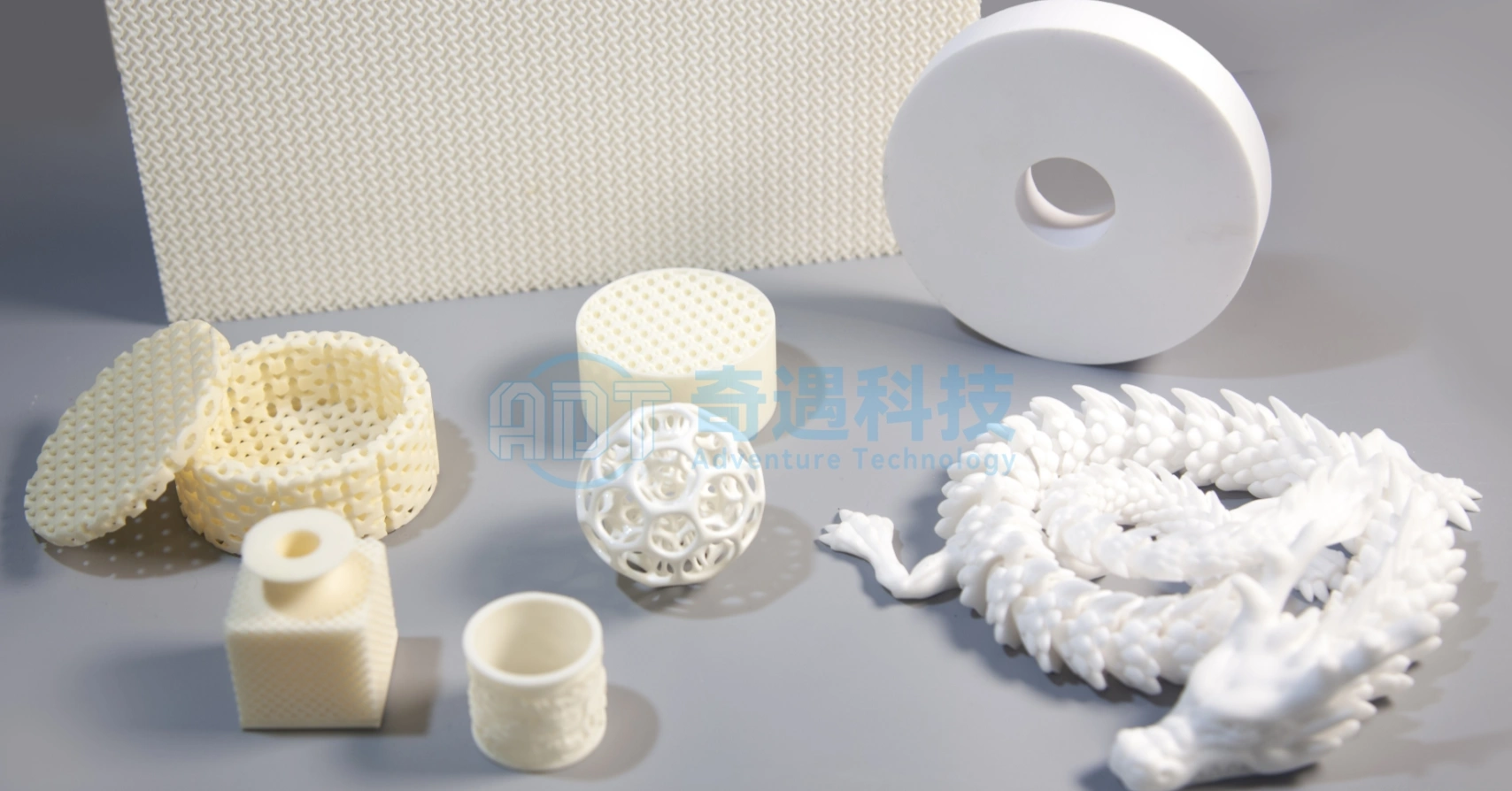
Figure 4. Successfully Printed Ceramic Samples by Adventuretech
4.Conclusion
Ceramic powders serve as the “invisible protagonist” in 3D printing. Their characteristics—including particle size, morphology, flowability, and high-temperature stability—collectively determine the accuracy, strength, and reliability of the printed components. With the continuous advancement of powder preparation techniques and modification methods, ceramic powders are expected to play an increasingly vital role in the field of 3D printing, opening new pathways for the fabrication of high-performance ceramic components.