
The Role of Ceramic 3D Printing in Art and Architectural Innovation
When people talk about ceramics, they usually think of traditional pottery, sculpture, or tiles. But in recent years, ceramic 3D printing has quietly stepped into the limelight of the art and architectural design world, offering new possibilities that were once technically unthinkable.
At Adventuretech, we’ve worked with creators and institutions to explore how digital fabrication and advanced ceramic materials can push the boundaries of creativity. Here are some transformative ways ceramic 3D printing is reshaping the intersection between aesthetics and structure:
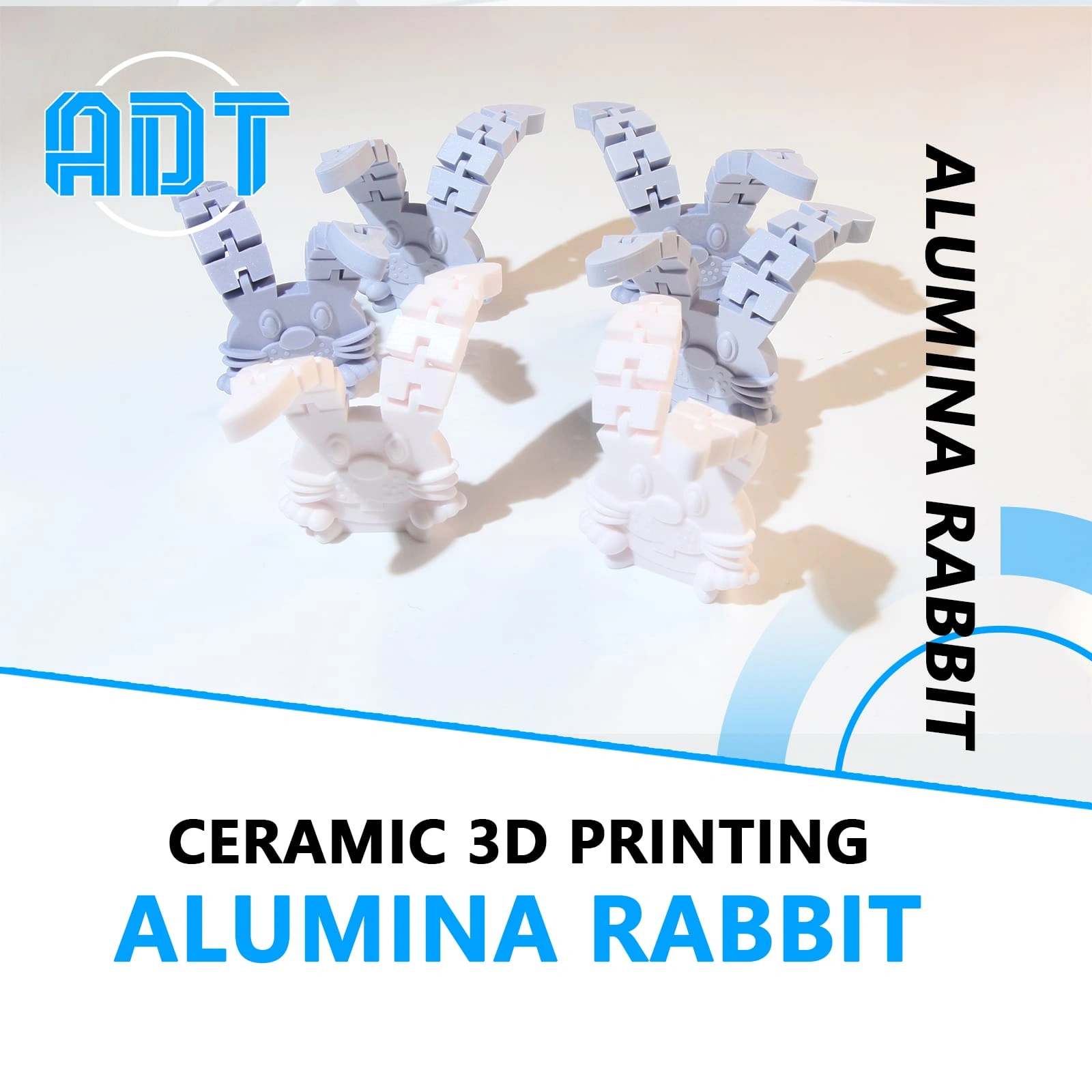
1. Sculptural Freedom Without Moulds
This alumina rabbit sculpture exemplifies the kind of complex, high-resolution forms possible with our DLP-based ceramic printing technology. Artists are no longer limited by traditional hand-building or slip casting—designs can be generated digitally and fabricated directly in ceramic.
2. Blending Art with Engineering
Architects and designers are increasingly integrating 3D printed ceramics into facades, acoustic panels, and decorative interiors. These are not just aesthetic choices—they can also offer thermal insulation, structural reinforcement, and even acoustic control through porous geometries.
3. Supporting Parametric and Generative Design
With digital modeling tools and generative design algorithms, creators can generate forms that are mathematically intricate yet physically viable. 3D printed ceramic components support this workflow by enabling rapid prototyping and production of custom geometries that are otherwise impossible to make with traditional techniques.
4. Museum-Grade and Site-Specific Installations
Because we support materials like alumina, zirconia, and other high-performance ceramics, our parts can endure long-term public display, even in outdoor or high-humidity environments. Artists and curators can now commission ceramic installations with confidence in both form and durability.
5. Educational Platforms and New Media Art
Institutions and art academies are increasingly adopting ceramic 3D printers to teach students how to merge CAD software with material-based thinking. The result? A new generation of hybrid artists who understand both form and function—both code and clay.
In short, ceramic additive manufacturing is not just an industrial tool—it’s a cultural engine. Whether you’re an artist, architect, or educator, Adventuretech is ready to support your next creative leap.