Zirconia Ceramics 3D Printing : The Effect of Filling Strategy on Density, Morphology, and Strength
I. Latest Research Results on Zirconia Ceramics 3D Printing
Zirconia-based ceramics, due to their excellent mechanical properties, have wide applications in manufacturing, chemical engineering, and biomedical industries. However, achieving optimal mechanical properties for 3D printed zirconia ceramics for advanced engineering applications remains a significant challenge. Recently, Professor Xu Tingting from the Institute of Materials, China Academy of Engineering Physics, published a study in *Ceramics International* entitled "Effect of filling strategy on surface topography and strength of 3D–printed dense zirconia ceramics." They prepared zirconia ceramics with different filling strategies using direct ink writing (DIW) technology and investigated effective methods to obtain ceramics with high density, excellent surface morphology, and superior mechanical properties.
Original article link: https://doi.org/10.1016/j.ceramint.2025.01.190
II. Direct Ink Writing (DIW) Technology Used in the Zirconia Ceramics 3D Printing
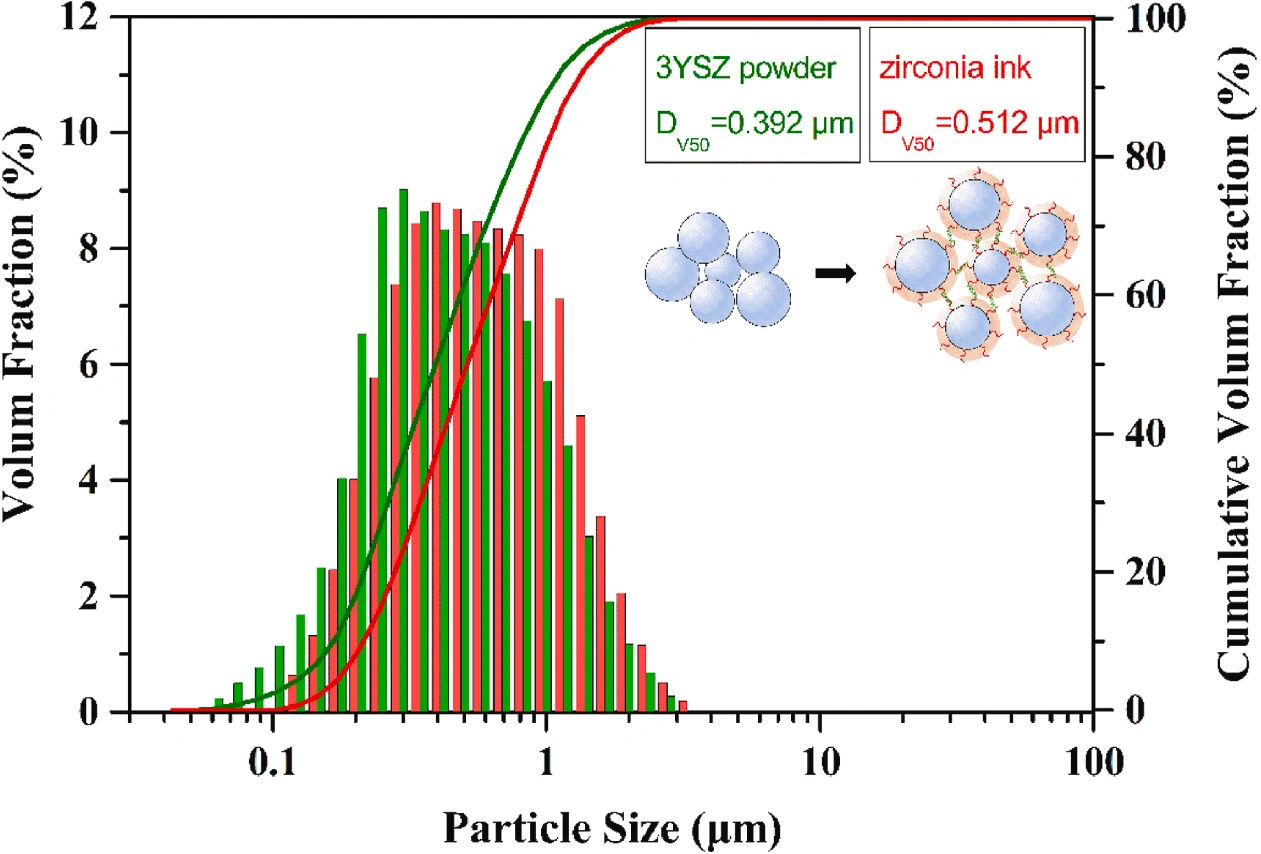
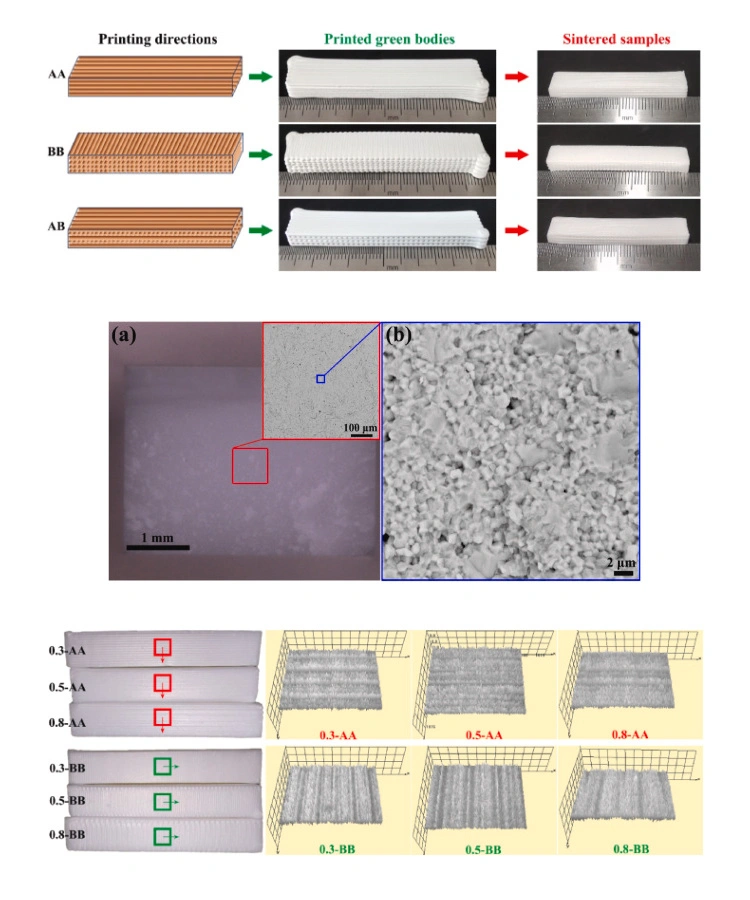
In this study, zirconia ceramics with different filling strategies were prepared using direct ink writing technology. The effects of various filling parameters (including nozzle diameter and printing direction) on sintering shrinkage evolution, surface morphology, and mechanical properties were investigated. To ensure the accuracy of mechanical testing, all zirconia ceramics were densely sintered to a relative density exceeding 98%. The following is a summary of the research methods and data from the article:
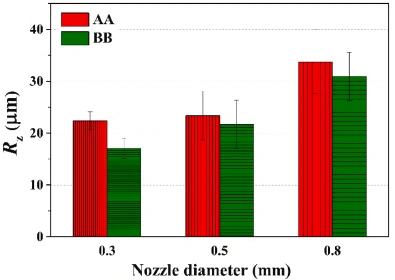
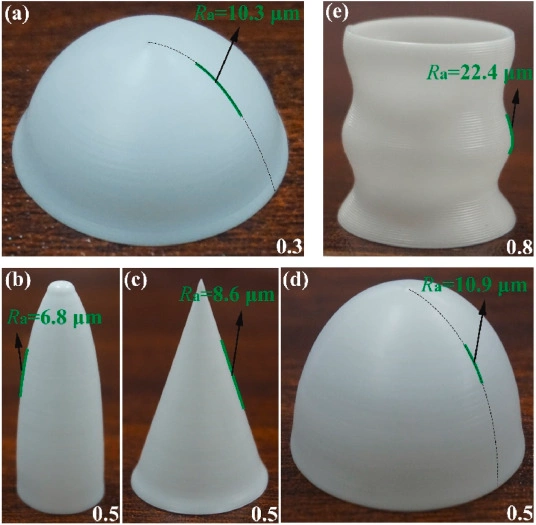
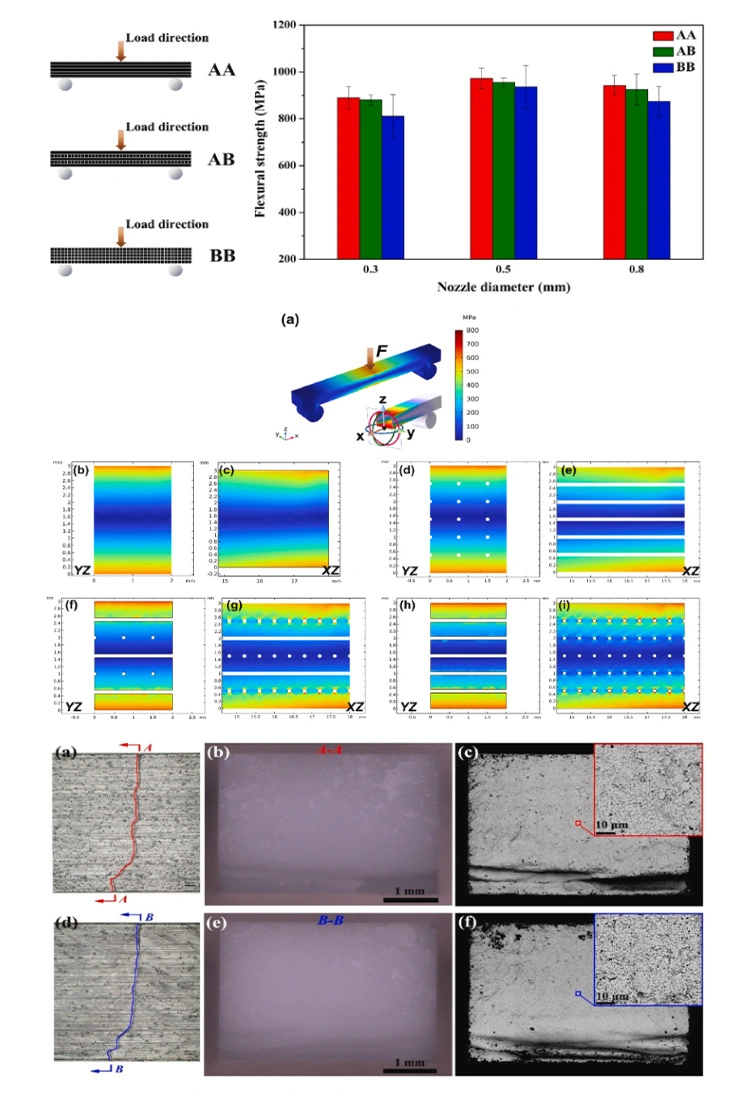
This paper proposes a method for optimizing the quality and mechanical properties of 3D printed zirconia ceramics based on direct ink writing (DIW). The study shows that reducing the nozzle diameter and selecting an appropriate printing path can significantly improve the side surface quality (Ra = 6.8 μm) and reduce post-processing requirements; meanwhile, printing with a 0.5 mm nozzle along the AA path can achieve a flexural strength of 973 MPa, comparable to traditional dense ceramics. Reduced stress concentration at pores and avoidance of stepped crack propagation are key factors in achieving high performance.