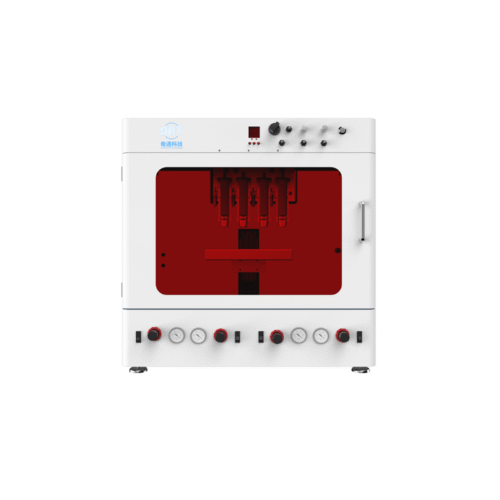
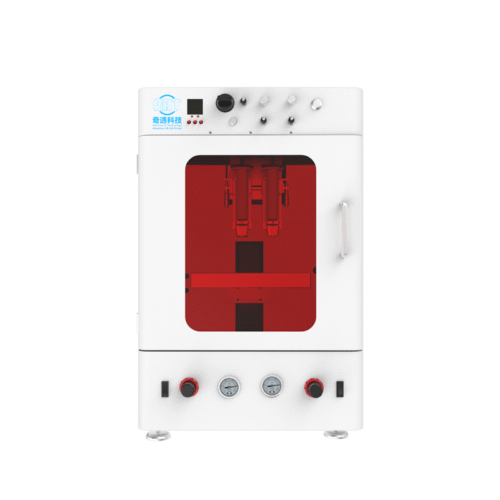
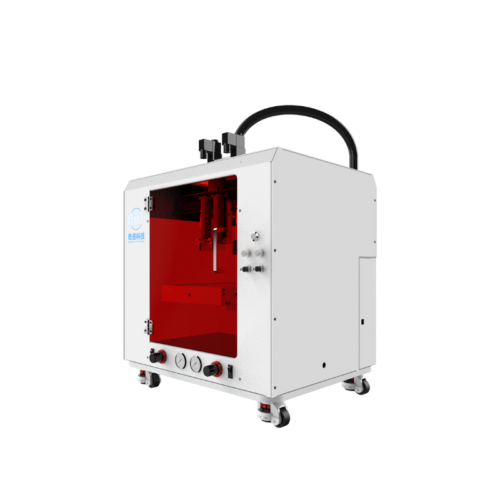
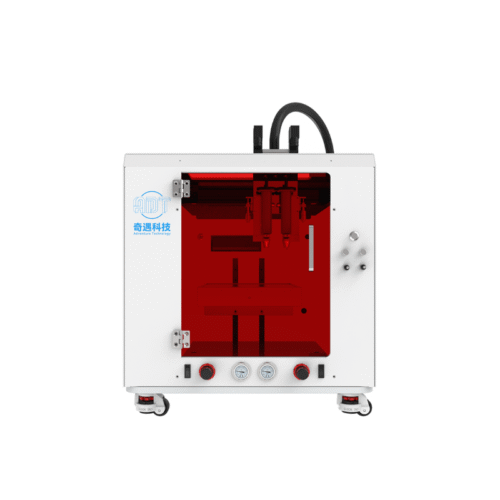
DlW Ceramic 3D Printer
The DIW ceramic 3D printer is a ceramic additive manufacturing device that utilizes Direct Ink Writing (DIW) technology. First proposed and patented in 1997 by Cesarano et al. at Sandia National Laboratories in the United States, it is now one of the key pieces of equipment in the field of ceramic 3D printing. The following is a detailed introduction to its core information:
Working Principle of the DIW Ceramic 3D Printer
Using a high-viscosity, high-solid-content slurry mixed from ceramic powder and binders as raw material, the slurry is extruded from a precision nozzle under controlled pressure. The nozzle’s movement is then controlled according to a preset digital model, allowing the slurry to be deposited layer by layer to form the desired shape. Subsequent high-temperature debinding and sintering processes are then performed to produce a dense ceramic finished product. Some devices also incorporate auxiliary curing modules such as near-infrared and ultraviolet light to address potential deformation issues during printing and improve the molding effect.
Core Advantages of the DIW Ceramic 3D Printer
Adaptable to complex scenarios: Compared to technologies such as stereolithography (SLA), it has significant advantages in the manufacturing of large-sized, complex three-dimensional lattice structure ceramic components. It can print both solid parts and special structures such as porous scaffolds, and also supports gradient materials and multi-material printing to meet different functional requirements.
High cost-effectiveness for research: Only a small amount of material is needed for printing tests, allowing researchers to conduct small-scale experiments without preparing large quantities of raw materials, significantly reducing costs during the new material development phase. It also allows for flexible adjustment of the slurry formula, reducing reliance on specific molding materials and facilitating frequent parameter adjustments for verification.
Compatible with various materials: It has extremely strong compatibility, handling not only common traditional ceramic materials such as alumina and zirconia, but also bioceramics such as hydroxyapatite and high-temperature ceramics such as silicon carbide. It can also be adapted to related materials in different forms such as suspensions and silicones.
Main Application Areas of the DIW Ceramic 3D Printer
Aerospace: It can manufacture high-temperature resistant components such as combustion chamber liners and blades for aero engines. For example, silicon carbide ceramic components processed using the “DIW+PIP” composite process have superior high-temperature oxidation resistance compared to traditionally manufactured products and have been used in small-batch production of related aero engine components. Biomedical applications: Suitable for manufacturing biocompatible artificial bone scaffolds such as hydroxyapatite. The printed porous lattice structure facilitates cell and tissue growth, providing customized solutions for the field of tissue engineering.
Cultural relic restoration: After obtaining 3D data of cultural relics through micro-CT scanning, combined with matching mineral pigment ceramic ink, it can accurately restore the details of ceramic artifacts. The Dunhuang Research Institute has used this technology to restore Tang Dynasty ceramic sculptures with an accuracy of 0.1mm, significantly shortening the restoration cycle.
Electronics field: Capable of printing fine-structured ceramic substrates, such as the Al₂O₃ ceramic substrate developed by Tsinghua University. The printed microchannel structure improves heat dissipation and has been applied to electronic devices such as 5G base station power amplifier modules.
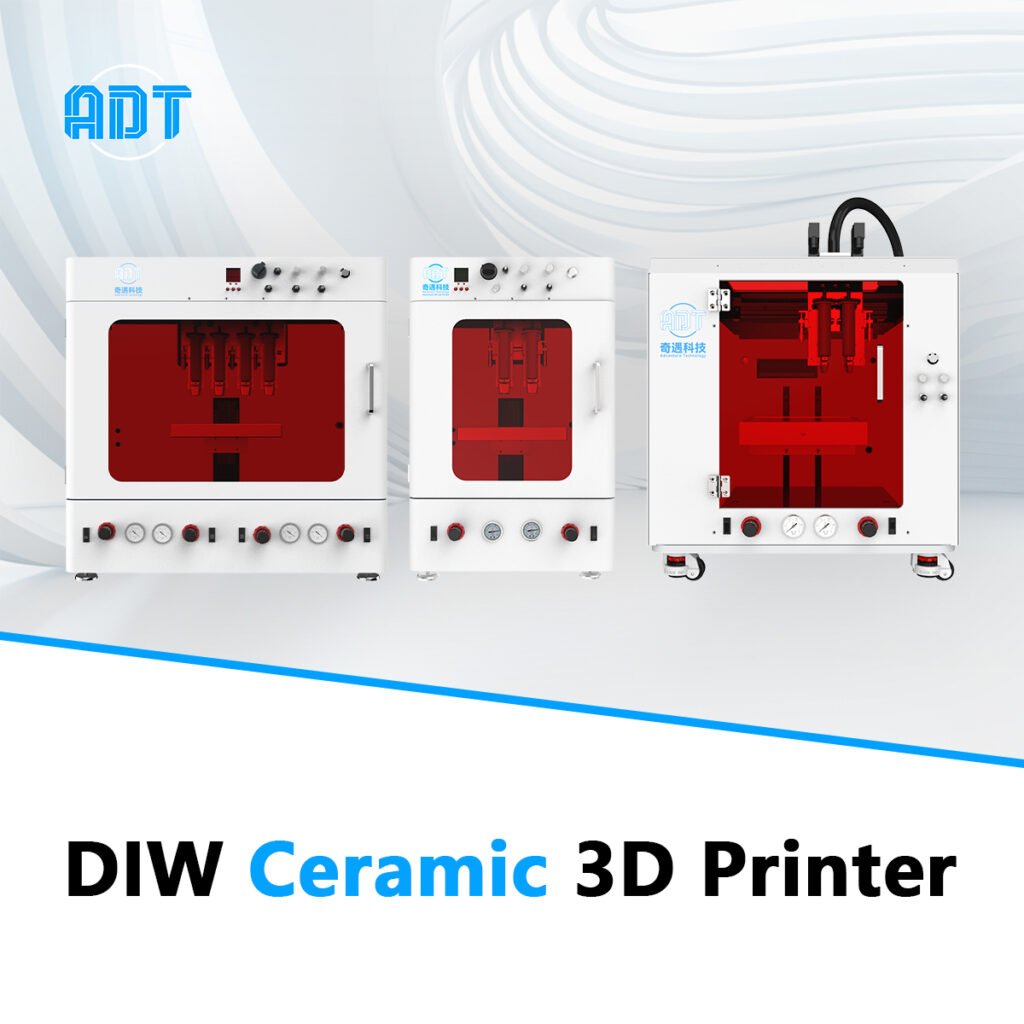
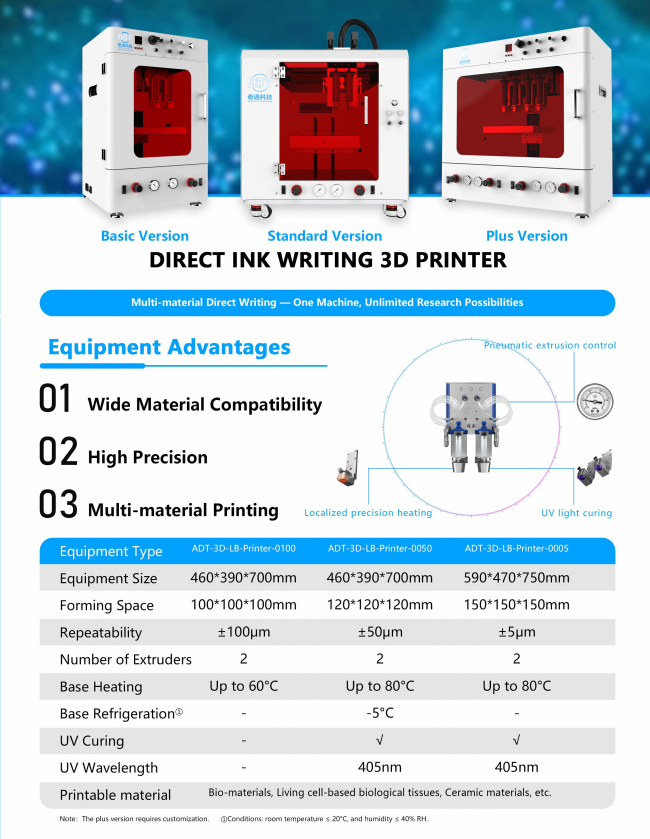
Adventure Technology (ADT)’s DIW ceramic 3D printers come in three versions: entry-level, standard, and advanced, offering advantages such as strong material compatibility, high precision, and multi-material printing capabilities.