
Dental

Medical

College

Aviation

Ceramic

Biology


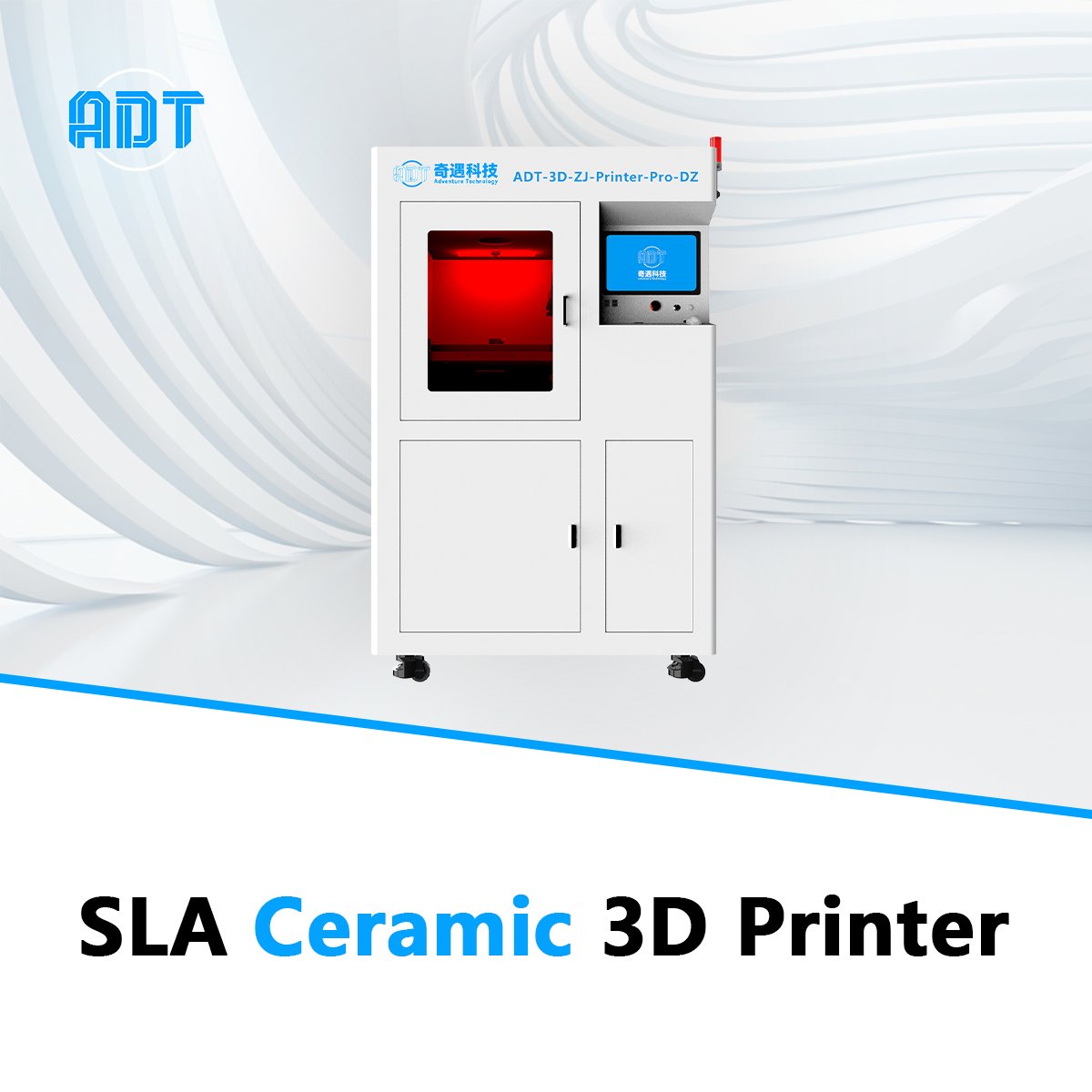
SLA ceramic 3D printers are ceramic additive manufacturing equipment that utilizes Stereolithography Apparatus (SLA) technology. They are one of the mainstream devices in the field of ceramic 3D printing, primarily used for high-precision, complex structure molding. They are commonly used in scientific research and the manufacturing of high-end precision ceramic components. The following is a detailed introduction to its core information:
Slurry Preparation: Nanoscale ceramic powders such as zirconia and alumina are thoroughly mixed with photosensitive resin and a dispersant to create a low-viscosity suspension slurry with a solid content of 65%-75vol%. The dispersant prevents ceramic particles from settling, while the photosensitive resin acts as a binder for subsequent curing.
Layer-by-Layer Curing and Forming: The equipment uses a UV laser with a wavelength of 355nm – 405nm, with a laser spot size as small as 30μm. The laser scans the surface of the slurry point by point according to the path of the digital model. In the scanned areas, the photosensitive resin selectively cures, firmly encapsulating the ceramic particles and forming a single layer structure. After each layer is scanned, the forming platform moves down by one layer thickness (usually 20-50μm), and then the next layer is scanned. The green body is formed by stacking layers.
Post-processing and Strengthening: The formed green body requires degreasing treatment at 300-600℃ with a slow heating rate of 1-2℃/min to remove the photosensitive resin, preventing cracking due to rapid resin volatilization. Subsequently, it is sintered at a high temperature of 1600-1800℃ to densify the ceramic particles. The final product density can reach 95%-98%, but a 15-20% size allowance needs to be reserved in the design stage to account for sintering shrinkage. Advantages of SLA Ceramic 3D Printers:
Extremely high molding accuracy, surface roughness Ra < 1μm, capable of producing complex structures such as 0.1mm thin walls and 0.5mm micro-holes, enabling the production of high-precision parts with micron-level resolution; flexible printing size options, with models up to 600×600×300mm available on the market, balancing precision and larger molding size; high density of finished products after sintering, meeting the performance requirements of high-end precision components.
Slower molding speed; the point-by-point scanning method is less efficient than surface exposure technologies such as DLP; high threshold for slurry preparation, requiring professional technical control of the ratio and state, otherwise it will affect the molding effect; molding size is limited by the platform, with conventional industrial models mostly ≤1000×800×1000mm, limiting the manufacturing of large-sized parts.
Biomedical: Ideal manufacturing equipment for customized implants such as dental crowns and hydroxyapatite artificial bone scaffolds. The printed parts can accurately match the patient’s anatomical structure, have excellent biocompatibility, and high bone integration rate after implantation. For example, the ceramic crowns produced have high dimensional accuracy and can meet clinical needs without secondary grinding.
Scientific Research: Widely used in material laboratories of universities such as Tsinghua University and Zhejiang University, accounting for 75% of the ceramic 3D printing equipment selection in scientific research scenarios. It can be used for ceramic material performance research and complex structure verification, assisting researchers in conducting research and experiments on special structural ceramics such as thin-walled and hollow structures.
Precision Manufacturing: Suitable for manufacturing precision components such as electronic miniature heat sinks and miniature sensor ceramic casings, and can also be used for small high-temperature resistant ceramic parts in the aerospace field. Its high-precision characteristics can meet the stringent requirements of these components for size and performance.
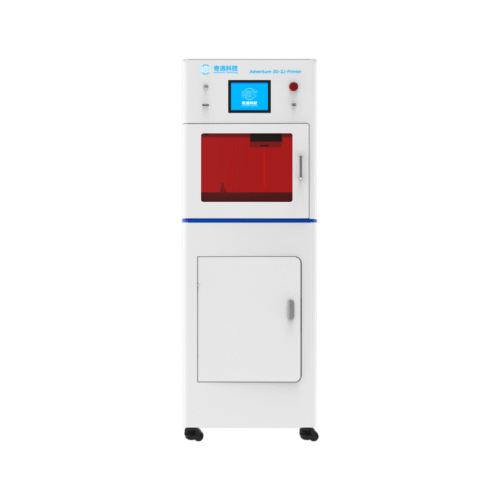
Adventure Technology (ADT)’s SLA ceramic 3D printers have advantages such as strong material compatibility, high precision, multi-material printing, and high success rate.
Dental
Medical
College
Aviation
Ceramic
Biology

Addr.3rd Floor, Building A, South China Institute of New Materials, Suiyan West Road, Nanhai District, Foshan City, Guangdong Province, China
© 2015 – 2025© Shenzhen Adventure Tech Co., Ltd. All Rights Reserved. Powered by Shenzhen Adventure Tech Co., Ltd.