
3D Printing Bioceramics: A New Frontier in Personalized Implants
Let’s be honest—traditional medical implants haven’t always been the best fit for every patient. Mass-produced titanium plates or plastic-based components often lead to suboptimal healing, inflammation, or the need for future revision. But with the rise of bioceramic 3D printing, we are entering a new era of personalized, biologically compatible implants.
1. Biocompatibility with No Compromise
Materials like hydroxyapatite, tricalcium phosphate, and alumina are already well-accepted in biomedical applications. What ceramic 3D printing enables is the ability to precisely shape these materials into patient-specific geometries without sacrificing biocompatibility or mechanical integrity. Whether it’s a dental bracket or a cranial plate, the material is already trusted—now the form is smarter.
2. Patient-Specific Design and Fit
No two jaws are the same. No two fractures heal the same. With digital modeling and DLP ceramic 3D printing, clinicians can now design customized implants tailored to each patient’s anatomy, improving fit, comfort, and integration.
3. Porous Structures for Bone Ingrowth
One of the major breakthroughs is the ability to 3D print porous bioceramic scaffolds that mimic the trabecular structure of real bone. These porous implants promote osseointegration and reduce stress shielding—benefits that are crucial in orthopedic and maxillofacial applications.
4. No Metal, No Problem
Some patients have metal allergies or require imaging-friendly materials. With non-metallic ceramic implants, MRI and CT compatibility is no longer a concern. Plus, bioceramics offer excellent corrosion resistance and are chemically inert, which is critical in long-term implant performance.
5. Precision Orthodontics as a Case Study
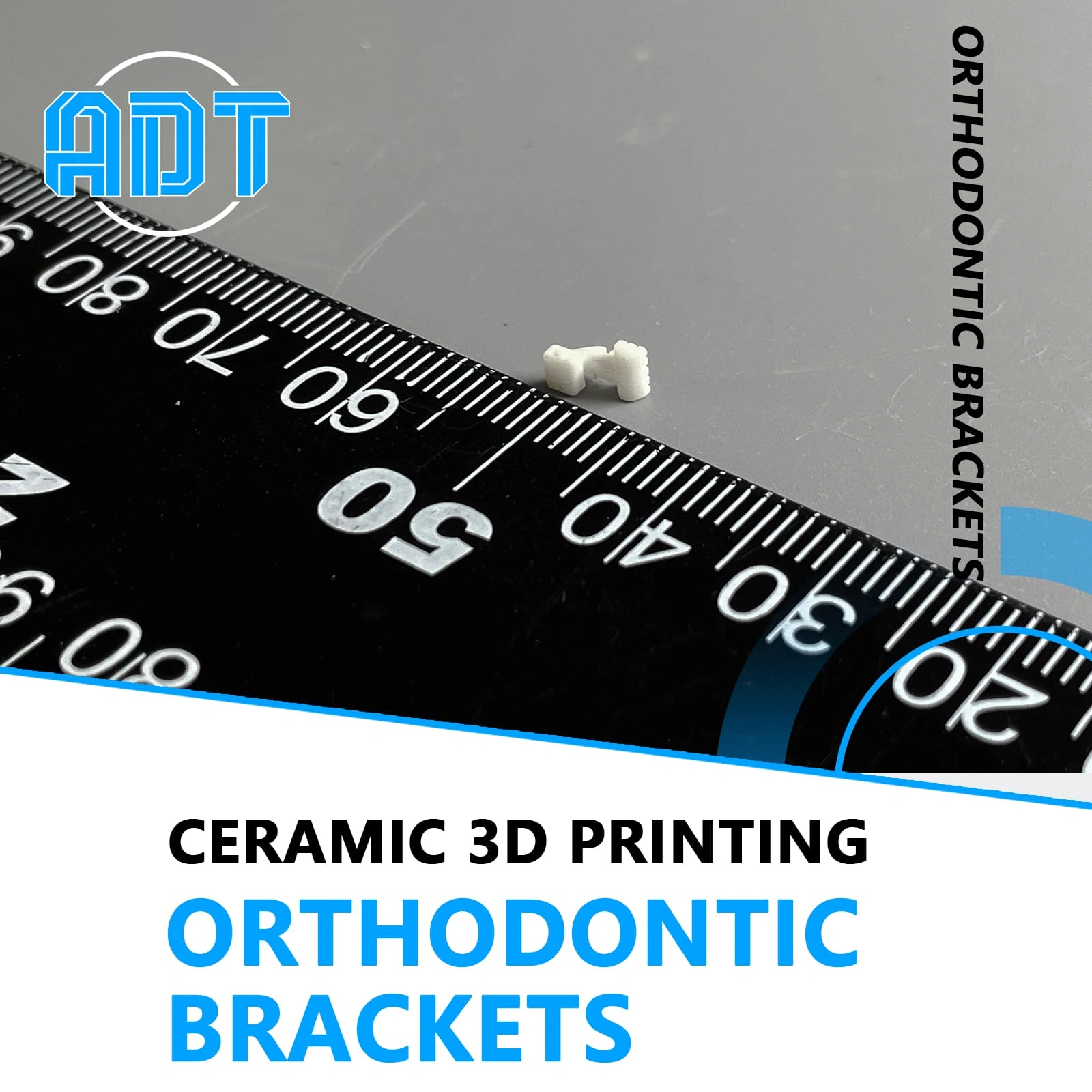
Our Adventuretech 3D-printed orthodontic brackets are a prime example of how ceramic additive manufacturing is pushing dental care into the future. We can now manufacture aesthetic, high-strength brackets with patient-specific shapes, all while ensuring biocompatibility and minimal wear on opposing teeth.
Final Word: Whether you’re designing a spinal cage, a facial implant, or a set of brackets, bioceramic 3D printing offers unparalleled freedom in form, function, and biocompatibility. If you’re in biomedical research, dentistry, or orthopedics, it’s time to rethink how you make implants. Our team is here to help you start.