
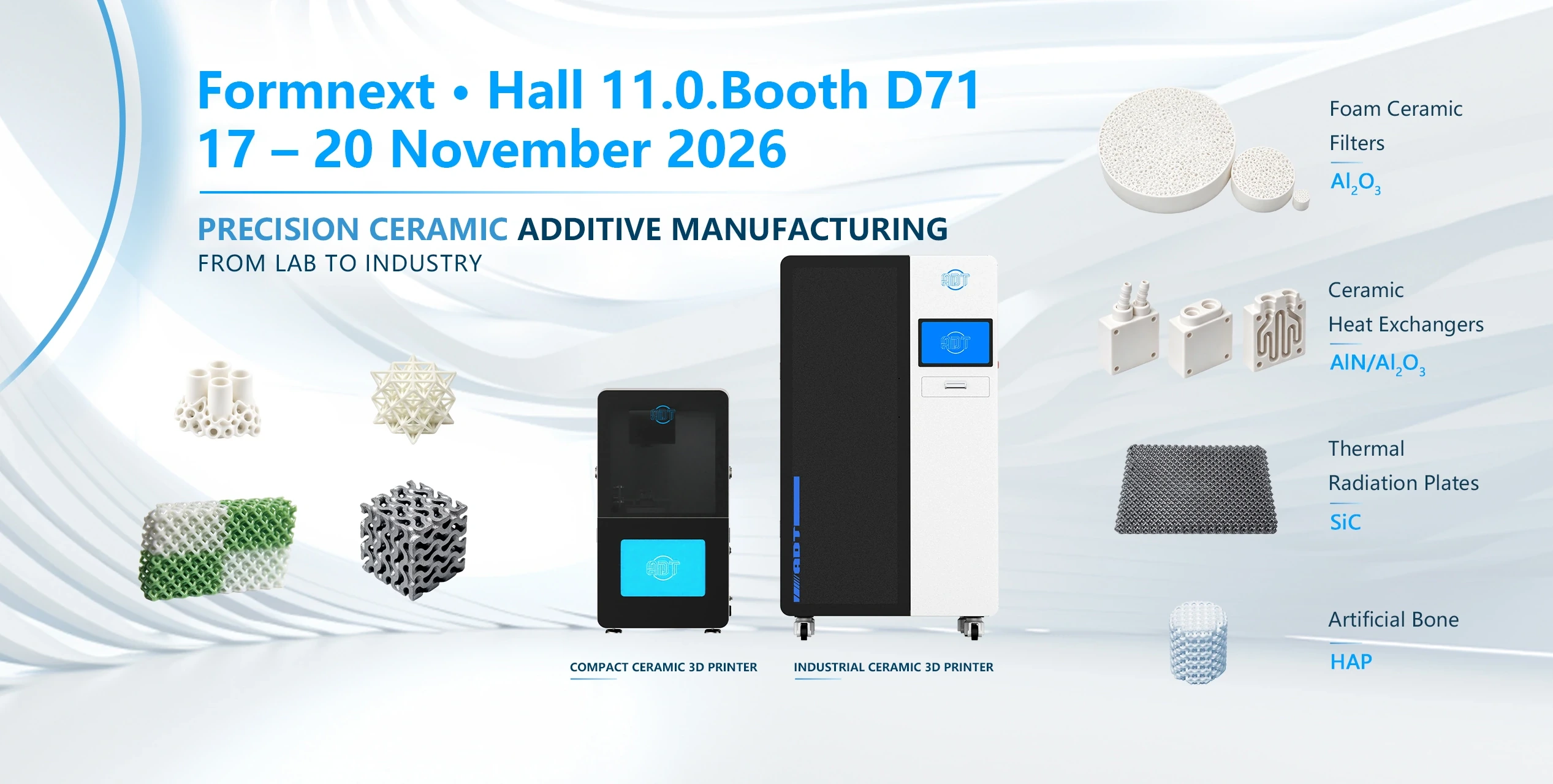
AdventureTech launches the ADT Ceram-DD50 at Formnext 2026, a desktop ceramic 3D printer for anyone starting out in ceramic slurry research. A 51.2 × 28.8 × 60 mm build area and a 10 mL minimum material load put lattice, TPMS and fine-curved-surface experiments within reach of an individual laboratory. The DD50 will be on the stand at Formnext 2026, 17–20 November in Frankfurt, Germany, Hall 11 Booth D71.
“Most of our customers are not printing thousands of parts. They are finding out whether a new alumina or zirconia formulation will hold its shape at 20 µm — and that answer should not cost them a full vat of slurry.”
– May Liu, Manager, AdventureTech
Bench-top: 20 µm where the research actually happens
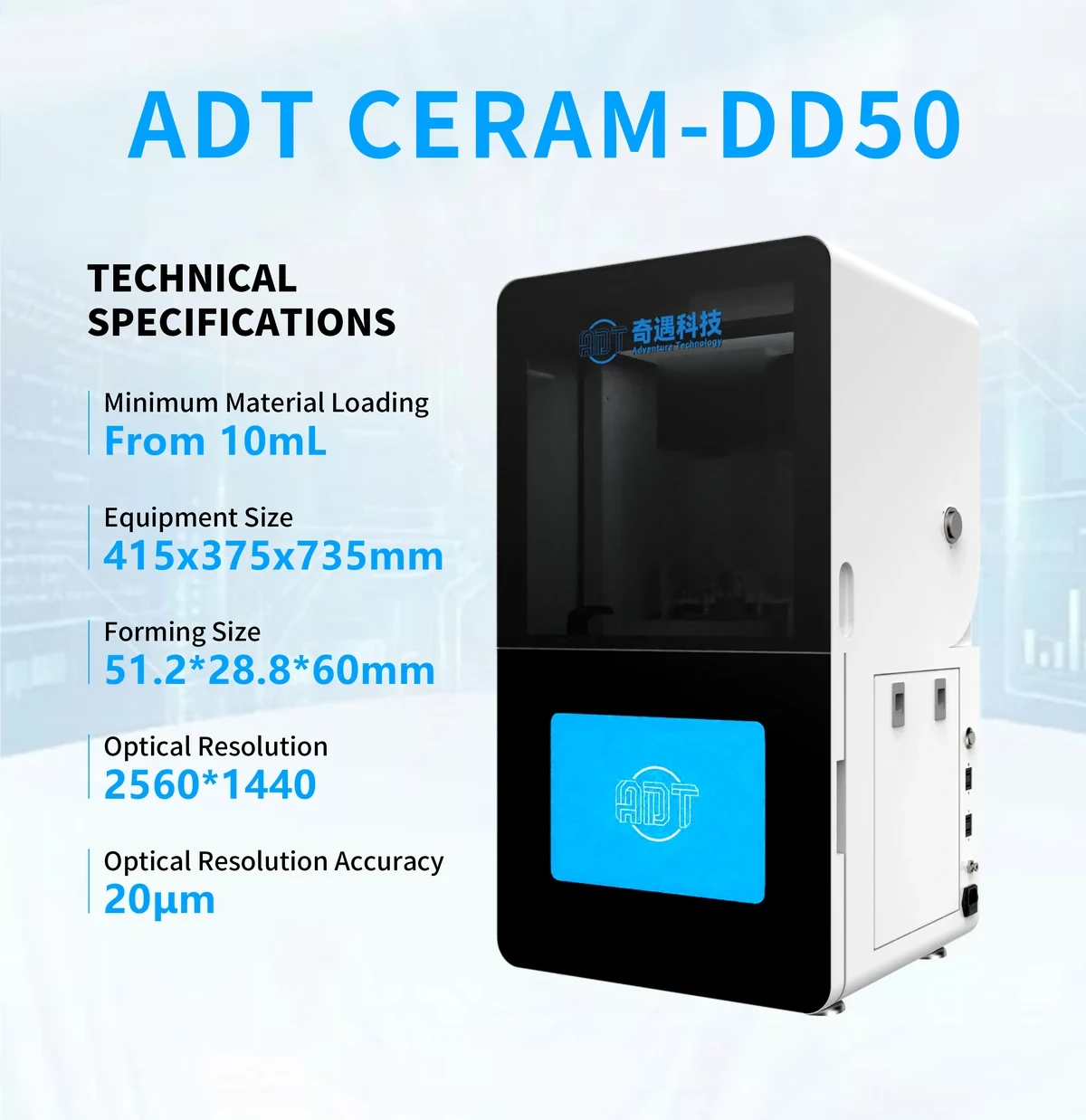
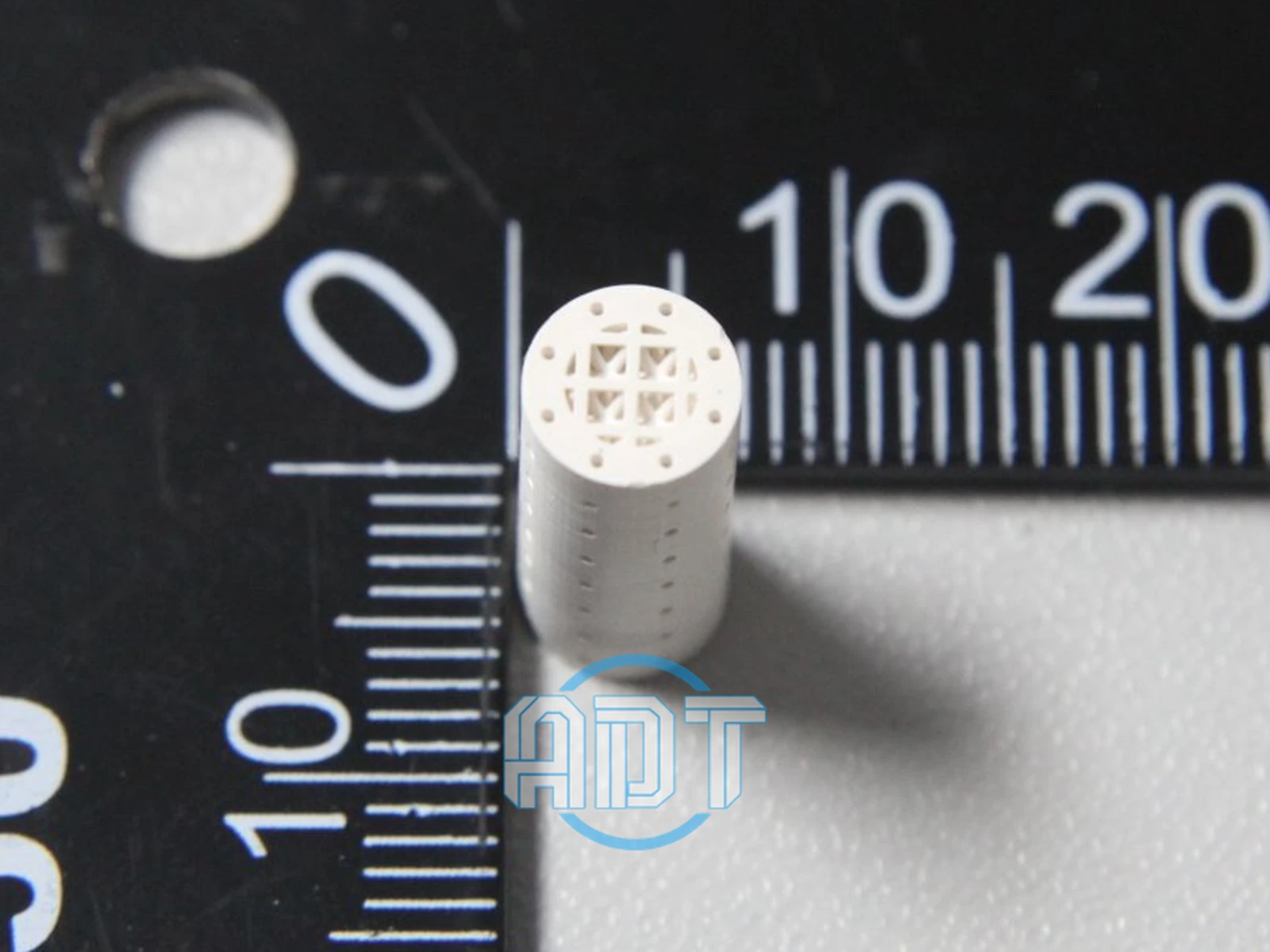
The DD50 is made for exploring and first-stage manufacturing of ceramic 3D printing. Forming is top-down DLP, using a custom 2560 × 1440 optical engine with an optical resolution accuracy of 20 µm — the detail that decides whether a lattice strut or a TPMS wall survives exposure, washing and sintering.
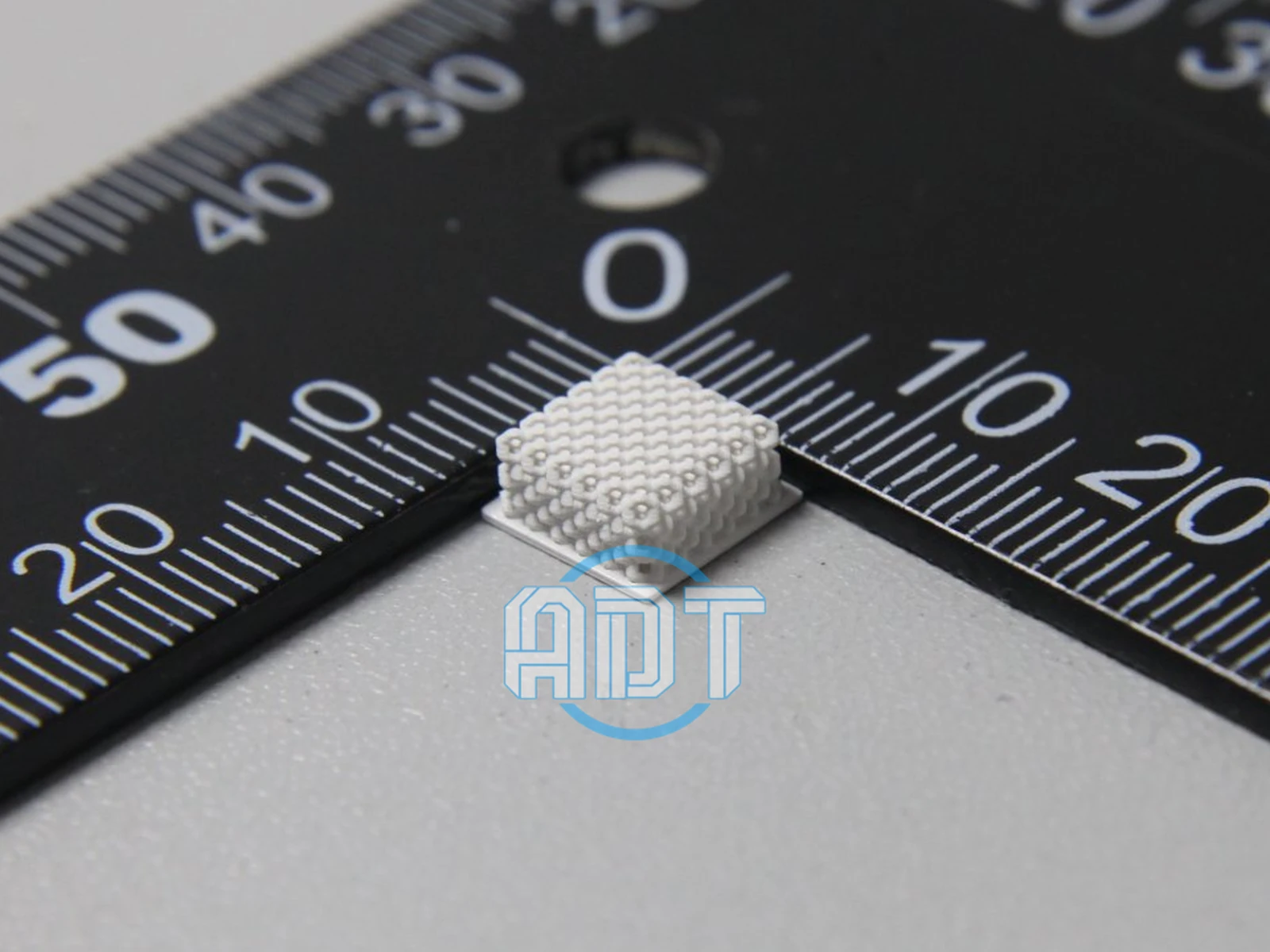
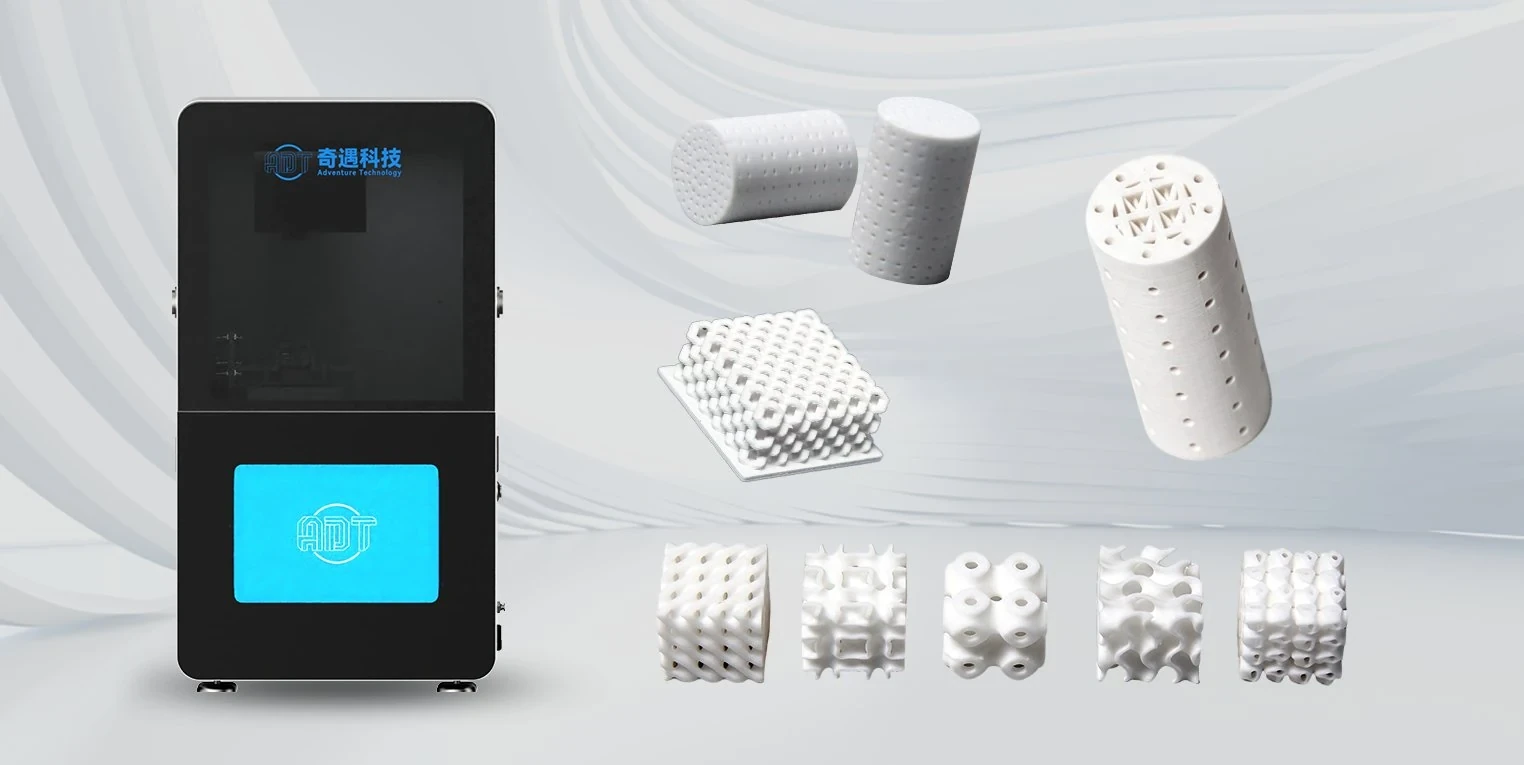
The unit measures 415 × 375 × 735 mm and ships with the main unit and control software as standard, so it sits on a laboratory bench rather than in a production hall. Researchers complete validation prints of ceramic green bodies after a short learning curve. Structures such as lattices, TPMS architectures and complex curved surfaces let a team validate how a material forms, combining formulation, exposure parameters and structural design in a single experiment.
10 mL: one experiment, not one vat
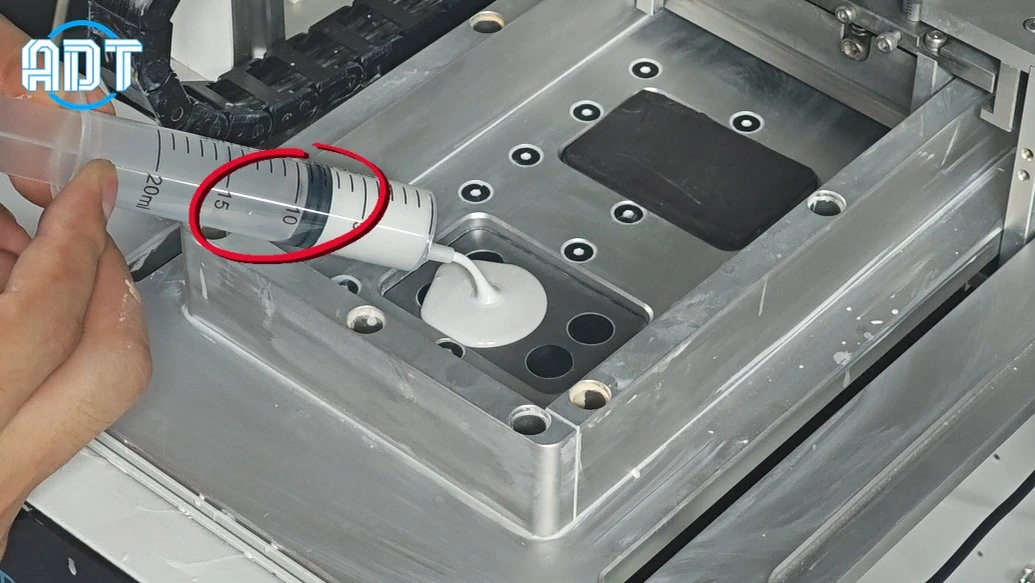
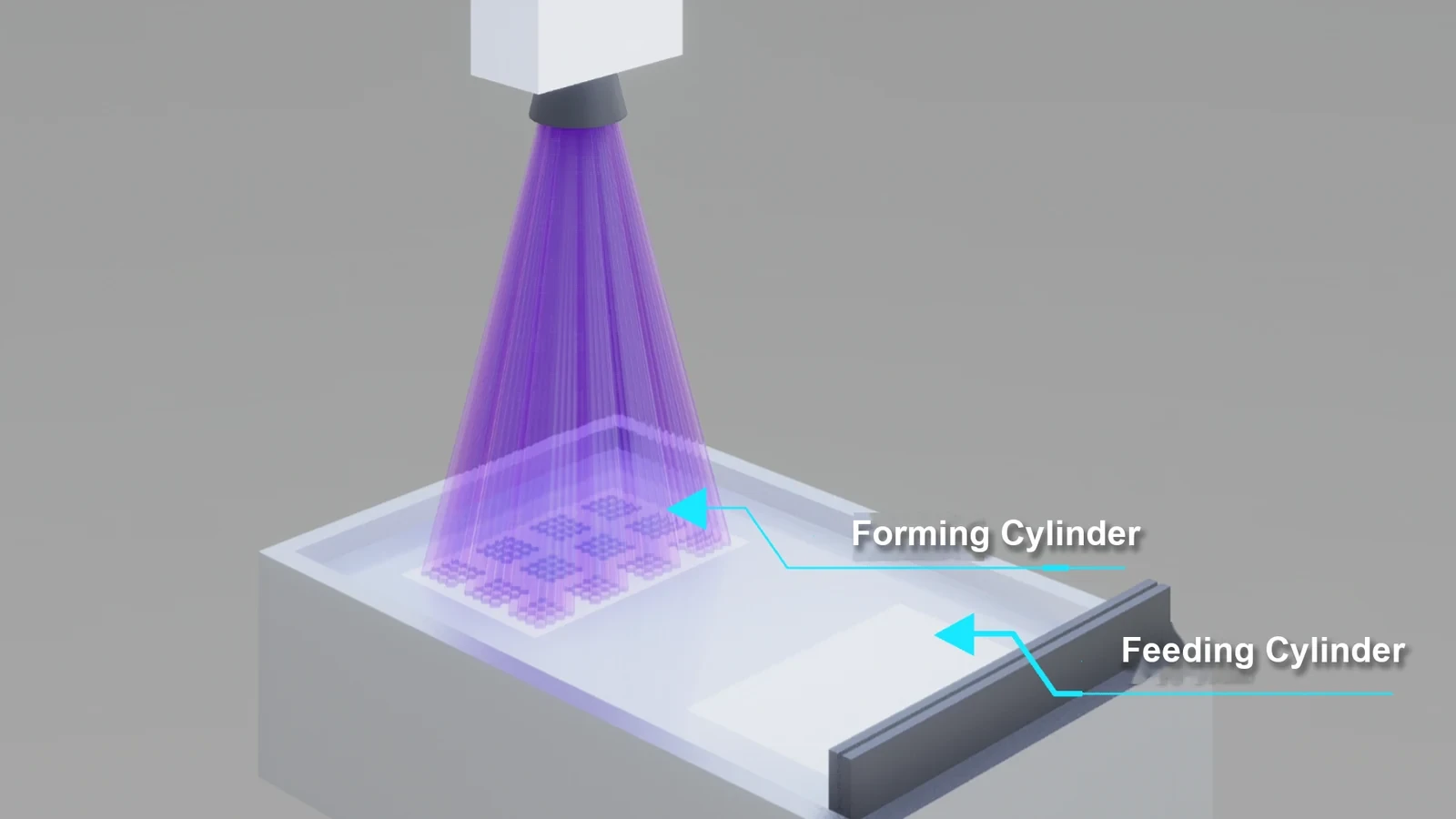
The Ceram-DD50 uses a dual-cylinder feed structure built from a feeding cylinder and a forming cylinder. During printing, ceramic slurry is delivered to the forming area and spread with a blade; minimum material loading is 10 mL.
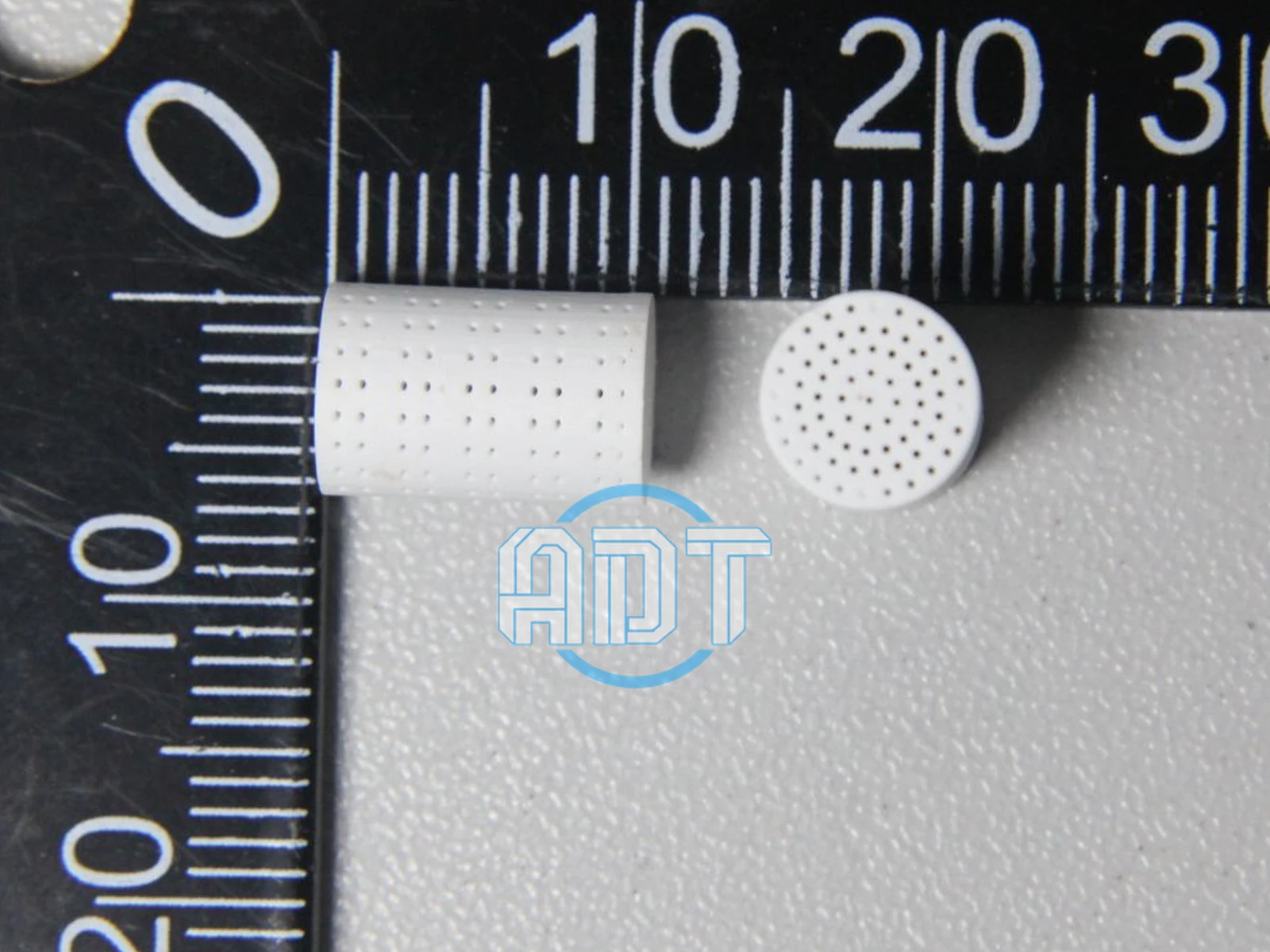
For a new ceramic slurry, a lab-made formulation, or a material available only in small quantities, a 10 mL micro-load reduces the slurry consumed per experiment. A limited batch of material then supports more rounds of printing validation — solid loading, dispersion system, exposure parameters and sintering process all tuned on the same material you already have.
Tolerant of slurries that are still being formulated
Material research rarely works with one fixed slurry. Changes in powder type, solid loading and formulation system all affect viscosity and spreading behaviour. The combination of top-down forming, blade spreading and dual-cylinder feeding handles ceramic slurries across a range of viscosities, with particular tolerance for high-viscosity formulations. An integrated heating system works with material and print parameter settings to establish stable printing conditions; final forming parameters still need to be tuned for each specific formulation.
A validation instrument, not a shrunken production machine
Together, the 20 µm optical engine, the 10 mL minimum load and the bench-scale footprint make the DD50 an instrument for small structures and more experiments. Green bodies still require the corresponding cleaning, debinding and sintering steps before finished ceramic parts are obtained.
The ADT Ceram-DD50 is the lead model of the new Mini series and is available to order now. Configuration options, printed samples and purchasing information are available from the AdventureTech sales team at adventuretech@adt-ceramic3dp.com — or on the stand at Formnext 2026, 17–20 November, Frankfurt, Hall 11 stand D71.
About AdventureTech
AdventureTech designs and manufactures ceramic 3D printing equipment and ceramic materials, including DLP, DIW and SLA systems and alumina, zirconia, silicon carbide, silicon nitride, hydroxyapatite and tricalcium phosphate materials, together with ceramic printing services. The company is headquartered in Foshan, China. More information at https://adt-ceramic3dp.com/
Contact
May Liu, Manager
AdventureTech
adventuretech@adt-ceramic3dp.com
https://adt-ceramic3dp.com/