
Alumina 3D printing : Achieving high porosity and high strength through adjustment of the sintering process
-
Manufacturing High-Porosity Alumina Ceramic Cores Using DLP Ceramic Alumina 3D Printing Technology
High-temperature alloy blades are critical components of aero engines and gas turbines, and their complex internal cooling channels require precision casting processes for manufacturing. Ceramic cores, as key components in the casting process, must meet the requirements of high precision, high temperature resistance, easy removal, and high strength to ensure the integrity of the internal structure and surface quality of the blades Alumina 3D Printing. Recently, the team of Liu Yongsheng at Northwestern Polytechnical University published a study in the *International Journal of Applied Ceramic Technology* entitled “Digital light processing 3D-printing alumina-based ceramic core with high porosity and available strength via adjusting sintering procedures.” They studied the sintering process of DLP ceramic 3D printing for preparing high-porosity alumina ceramic cores, successfully balancing high porosity and mechanical properties at lower temperatures Alumina 3D Printing.
Original article link: https://doi.org/10.1111/ijac.15164
-
Alumina 3D Printing: Digital Light Processing (DLP) has become a leading solution for high-performance ceramic cores.
This technology perfectly combines precision and scalability, making it particularly suitable for manufacturing the complex internal structures required for next-generation turbine blades. However, ceramic green bodies obtained by photocuring printing are prone to cracking and shrinkage during the subsequent sintering process, and the sintering process directly affects material strength Alumina 3D Printing. To facilitate the subsequent removal of the ceramic core while meeting its erosion resistance strength, and to balance the requirements of high open porosity and strength, this paper systematically studied the effects of sintering temperature, heating rate, and holding time on the sintering process of ceramic cores, ultimately determining the optimal sintering process parameters. The following are the research methods and data from the article:
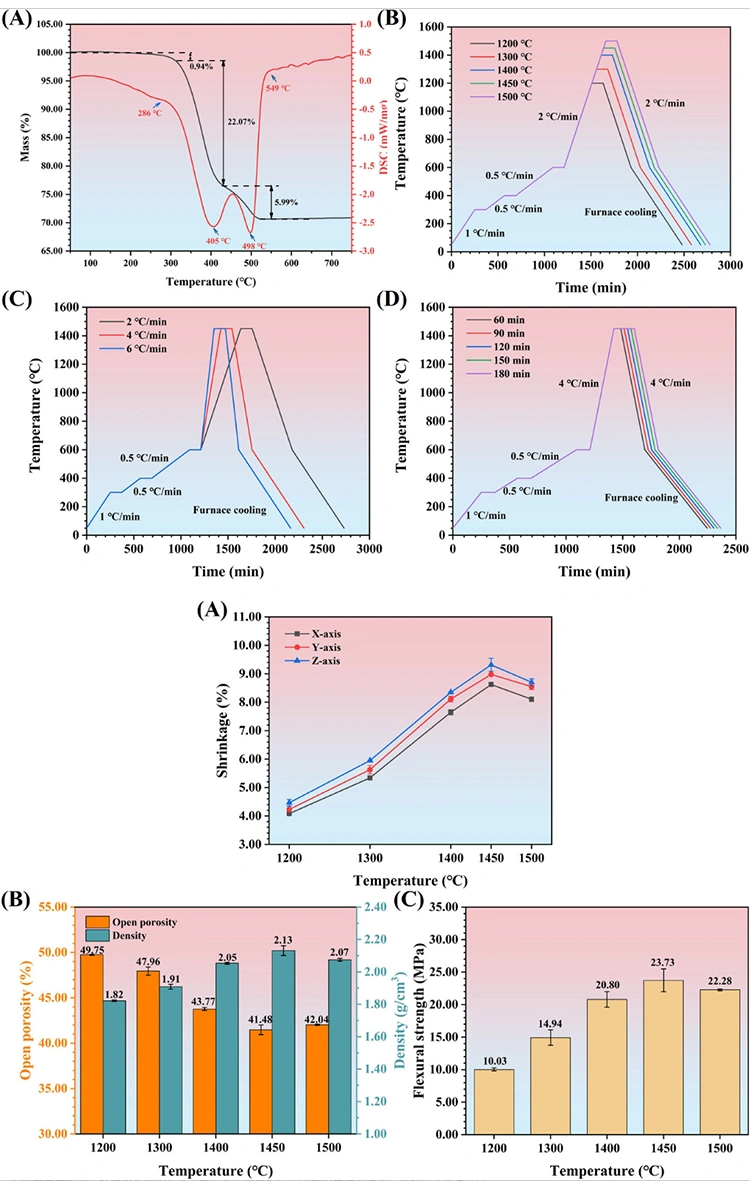
This study investigated the phase composition and microstructure of alumina-based ceramic cores under different sintering temperatures, heating rates, and holding times, and analyzed their effects on the physical and mechanical properties of the ceramics Alumina 3D Printing. By increasing porosity while maintaining strength, ceramic cores with high porosity and suitable strength were obtained at lower temperatures. The research results are summarized as follows:
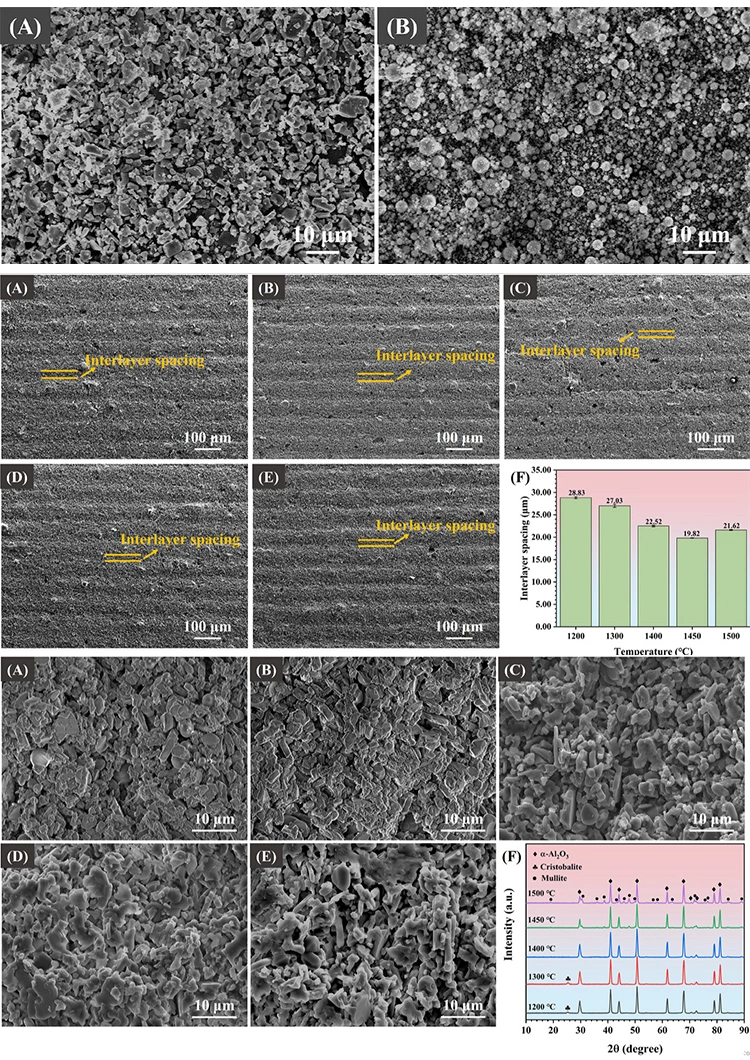
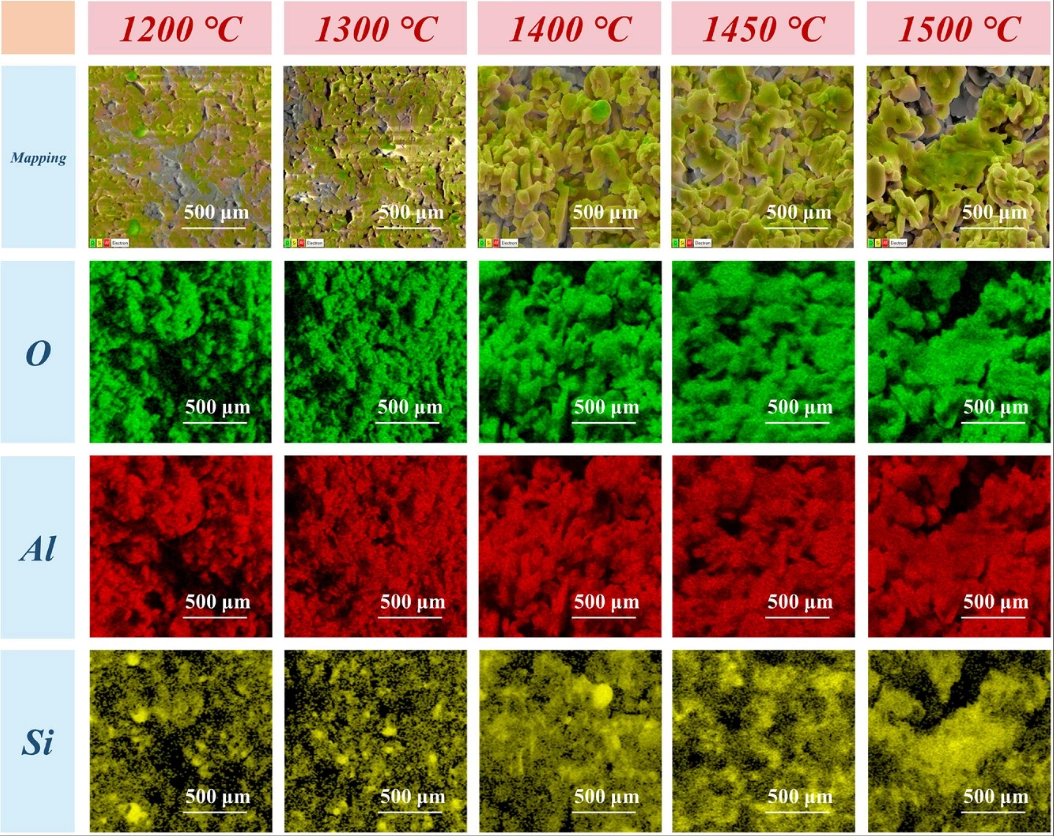
As the sintering temperature increased from 1200℃ to 1500℃, the amount of cristobalite precipitate increased until it disappeared. Mullite phase appeared after 1450℃, and its amount gradually increased Alumina 3D Printing. The sintering shrinkage rate, bulk density, and flexural strength of the ceramic first increased and then decreased, while the initial pore size first decreased and then increased. At a sintering temperature of 1450℃, the ceramic reached its maximum flexural strength of 23.73 MPa, with a porosity of 41.48% Ceramic 3D Printing Project Cases.
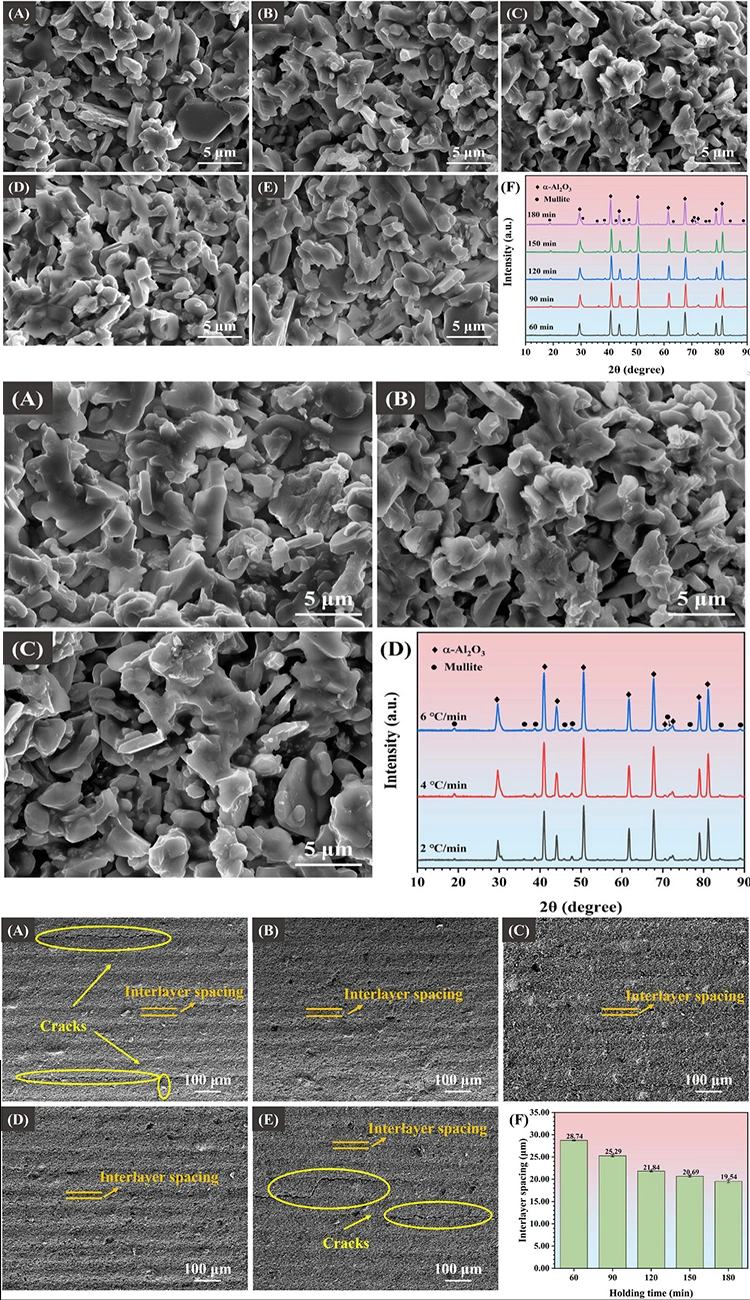
As the sintering heating rate increased from 2℃/min to 6℃/min, the ceramic’s flexural strength reached its maximum value of 28.28 MPa at a sintering heating rate of 4℃/min, with a porosity of 41.40%.
With the extension of the sintering holding time, the mullite phase content in the ceramic increased, the sintering shrinkage rate gradually increased, and the flexural strength first increased and then decreased. The optimal holding time was 120 min, at which point the ceramic’s flexural strength was 28.28 MPa and the porosity was 41.40% Alumina 3D Printing.
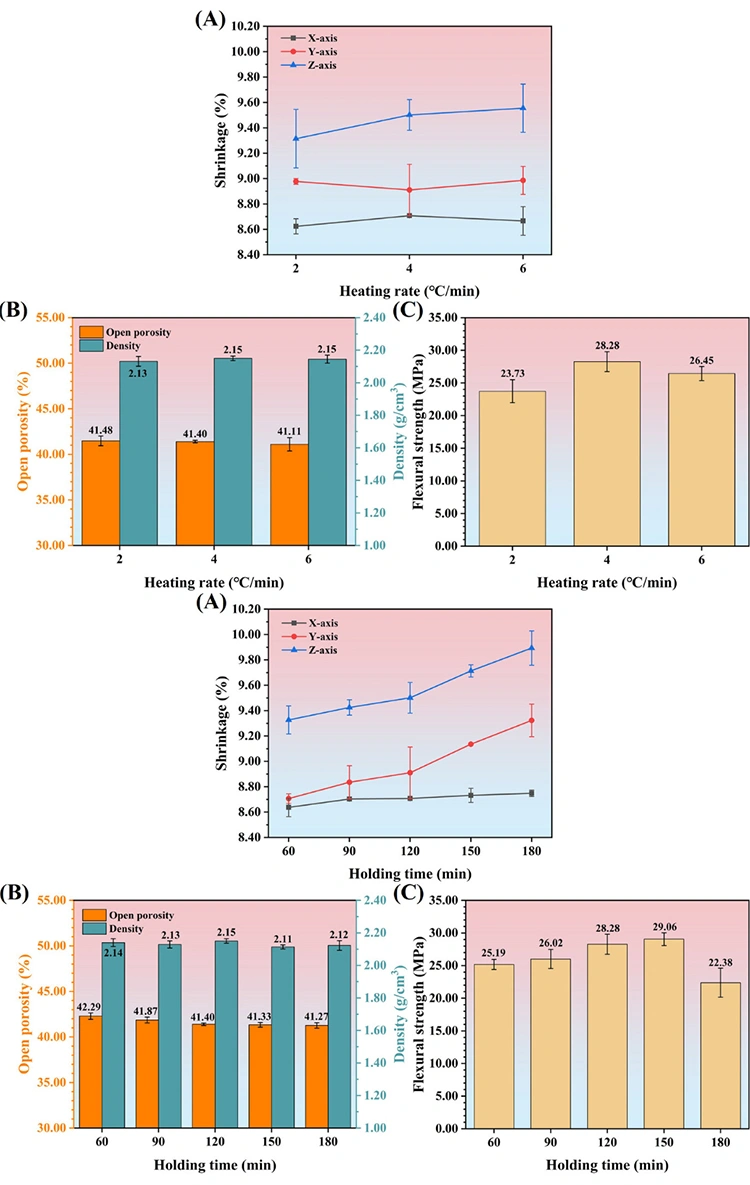
In summary, when the sintering temperature was 1450℃, the sintering heating rate was 4℃/min, and the holding time was 120 min, the ceramic core exhibited optimal overall performance, with a flexural strength of 28.28 MPa, a porosity of 41.40%, and a density of 2.15 g/cm³Alumina 3D Printing.
Shenzhen Adventure Technology Co., Ltd. was established in 2015 as a high-tech company focused on ceramic additive manufacturing technology. The company has a research and development team primarily consisting of postdoctoral researchers from Tsinghua University and returning PhDs from the Norwegian University of Science and Technology, dedicated to providing complete solutions for “ceramic 3D printing equipment + ceramic 3D printing materials + ceramics sintering processes.”
Official Website 1 : https://adt-ceramic3dp.com/
Official Website 2 : https://www.adventure-tech.cn/