
In additive manufacturing and coating processes for ceramics and functional materials, the flow and smoothness of the slurry fundamentally determine the quality and structural precision of the final product. The slurry itself is a complex non-Newtonian fluid, and its overall flow behavior is influenced by many factors, such as the properties of the particles, the proportion of solids in the slurry, and the dispersion used. Among these, the interaction between particles is particularly crucial, directly affecting whether the slurry flows or solidifies easily, thus determining its final flowability and structural stability.
Detailed Explanation of Key Parameters
1. Viscosity
Viscosity is the most straightforward—and also the most important—rheological parameter in ceramic 3D-printing slurry. It determines whether the slurry can smoothly pass through a small nozzle, and whether it can hold its intended shape on the build platform after being extruded.However, viscosity isn’t a fixed value. It changes with shear rate (like the pressure you apply when extruding). In most cases, the slurry shows shear-thinning behavior—the more you push it, the thinner it gets. And that’s exactly the key characteristic that makes smooth printing possible.
2. Thixotropy
Thixotropy describes how the slurry’s internal structure breaks down under force and how quickly it recovers afterward. Think of ketchup: when you shake it (apply shear), it thins out and pours easily; once it sits still, it thickens again and won’t flow on its own. In ceramic 3D printing, thixotropy is one of the most important properties of the slurry. In one sentence: thixotropy tells us how fast the slurry can bounce back to its resting state after being softened by extrusion.
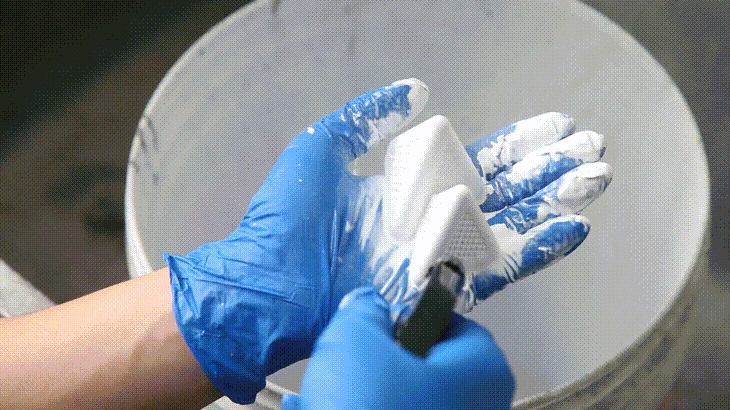
If the slurry’s thixotropy is too weak, its structure recovers slowly, and the printed lines can slump or deform on the platform. If it’s too strong, the slurry recovers too quickly, which may cause inconsistent extrusion or even clogging. In many ceramic slurries, thixotropy depends on the dispersant, binder, and particle interactions. How well these are tuned directly affects whether the printed layers can stack up properly and stay stable.
3. Yield Stress
Yield stress refers to the minimum stress required to get the slurry to start flowing. You can think of it as the threshold for how “lazy” the slurry is to move:
- Below this force, it stays still—like soft clay just sitting there.
- Above this force, it starts to flow and can be extruded.
A good example is toothpaste: you have to squeeze it to get it out, but once it’s out, it holds its shape instead of spreading flat. That’s yield stress at work.
In ceramic 3D printing, yield stress is a key parameter for determining whether overhangs can be printed and whether stacked layers can remain stable.
- If the yield stress is too low: the slurry will slump and won’t hold its shape.
- If the yield stress is too high: extrusion becomes difficult, requiring higher pressure that can strain the equipment or lead to inconsistent printing.
4.Inter-particle Forces
Inter-particle forces include van der Waals attraction, electrostatic repulsion, and polymer bridging. Together, they form the internal dispersion network of the slurry and directly affect viscosity, yield stress, and thixotropy.
In ceramic or electrode slurries, the most fundamental attraction between particles comes from van der Waals forces. You can’t see these forces, but they’re surprisingly strong. For example, when two perfectly flat surfaces are only about 10 Å apart (extremely close), the attraction between them is already significant; if that distance shrinks to around 3–4 Å, the force becomes even stronger. In high-solid-content and high-viscosity systems, particles are packed more tightly, the solvent’s protective effect weakens, and binders may even pull particles closer together. All of this makes particles more prone to sticking, forming clusters, or even creating a fairly rigid network.
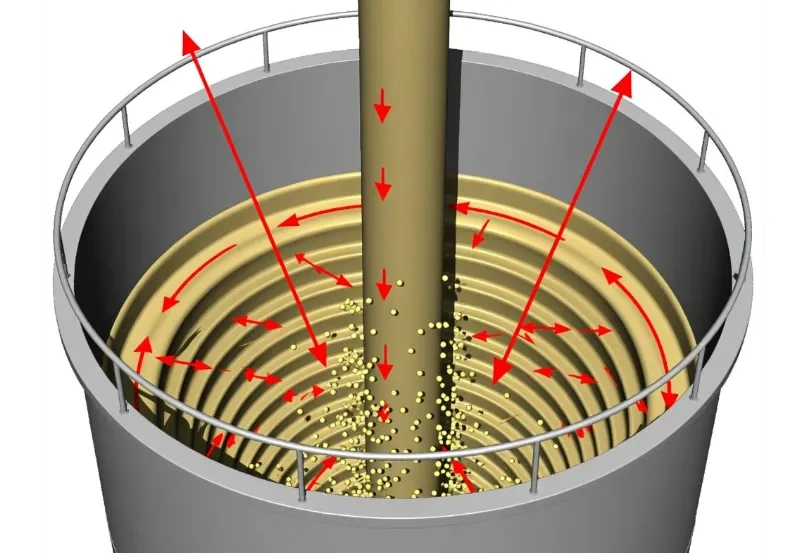
In contrast to van der Waals attraction, electrostatic repulsion is crucial for keeping the slurry stable. It comes from the electrical double layer on particle surfaces, which pushes particles apart and prevents them from clumping. But in high-solid-content systems, the ion concentration increases and compresses the double layer, weakening the repulsion and making aggregation more likely. For example, in LiFePO₄ slurries, if the concentration of Li⁺ is too high, it reduces the particles’ zeta potential, leading to poorer dispersion and more clumping.
Polymer binders also influence particle interactions through their long molecular chains. Sometimes they connect particles like bridges (bridging flocculation), and sometimes their moving chains disrupt clusters (a dissipative effect). All these molecular-level behaviors eventually affect how the slurry flows, including key rheological properties like shear-thinning and thixotropy.
Basic Tuning Techniques
Adjusting Solid Content
The slurry concentration—especially the solid content—is one of the key factors affecting its rheological behavior. The higher the solid loading, the harder the slurry is to flow; both yield stress and viscosity increase significantly.
For example, in a water-based slurry made with nanopowders, when the solid content increases from 10% to 40%, the yield stress rises from about 1.2 Pa to 7.5 Pa, and the zero-shear viscosity (the viscosity at rest) shoots up from 0.1 Pa·s to around 146 Pa·s. This shows just how dramatic the impact of solid content can be—raising solid content essentially pushes the slurry from a flowable liquid toward a semi-solid.
How to tune it:
For printing tasks that require high precision or thin-wall structures, slightly lowering the solid content can help prevent nozzle clogging and improve extrusion stability.
For situations where the printed part must resist slumping (like large builds or complex overhangs), increasing the solid content helps the slurry hold its shape better.
Dispersants
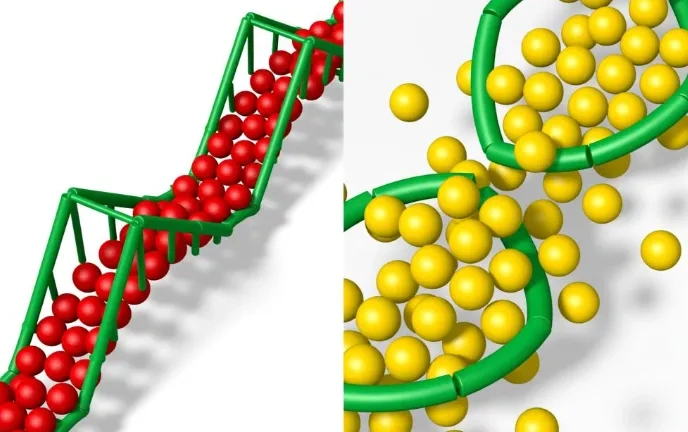
Dispersants help particles “keep their distance” by providing electrostatic repulsion or steric hindrance. This leads to:
- Lower viscosity
- Less particle agglomeration
- A more stable slurry structure
- Better shear-thinning behavior
It’s important to note that adding too little dispersant means the particles aren’t fully dispersed, so the viscosity stays high. But adding too much can also be a problem—if the dispersant doesn’t adsorb evenly, the system can become over-dispersed or unstable. In that case, instead of improving dispersion, it can actually make particles more likely to clump together.
Different systems (like zirconia, alumina, or LiFePO₄) also require different types of dispersants to work effectively.
Binders
Binders are usually long-chain polymers, and they participate in particle interactions in several different ways. On one hand, polymer chains can form bridges between particles, making them stick together more easily, which increases yield stress and thixotropy. On the other hand, the movement of these polymer chains can also weaken particle attraction, reduce agglomeration, and help the system rebuild its structure more quickly once shear stops. Because of this dual effect, binders play a crucial role in controlling thixotropy.
Examples:
- If the thixotropy is too weak and printed lines tend to slump, adding an appropriate amount of binder can improve structural recovery.
- If the yield stress is too high and extrusion becomes difficult, you may need to reduce the binder content or switch to a more flexible binder system.
- Binders are a key tuning method in ceramic inkjet printing, extrusion-based 3D printing, and electrode coating processes.
Tuning Particle Size and Distribution
Beyond concentration, particle size and size distribution can significantly affect flow behavior even when the solid content stays the same. Smaller particles have a much larger total surface area, which strengthens inter-particle forces and makes them more likely to stick together and form aggregates. This makes the slurry thicker and harder to flow. Particle shape matters too:
- Spherical particles have smaller contact areas and flow the easiest.
- Plate-like or fibrous particles increase internal friction and create shear “dead zones” in high-solid-content slurries, making flow more difficult.
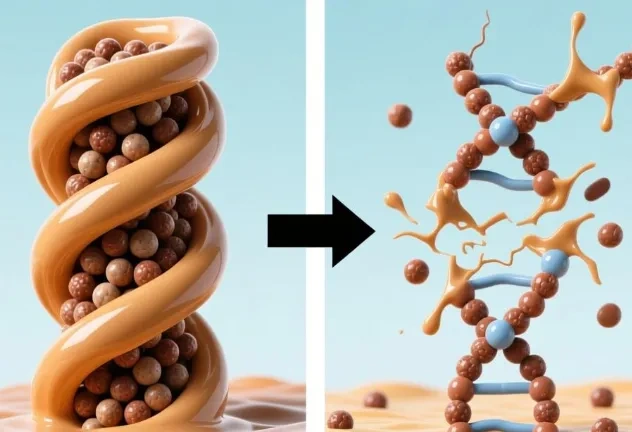
Particle size, distribution, and morphology don’t just affect flow—they directly influence coating quality and the final film’s density, smoothness, and optical performance. Slurries with finer particles and narrower size distributions typically produce denser, smoother coatings. In contrast, large particles or broad distributions often lead to uneven coating thickness, rough surfaces, and poorer optical properties.
To produce high-precision, high-density ceramic parts, you need a solid understanding of both the slurry’s microscopic structure and its macroscopic rheological behavior. Only through scientific, coordinated control of these factors can a slurry flow smoothly while still maintaining a stable structure after forming. This is essential for manufacturing complex ceramic components and provides a reliable theoretical and practical foundation for processes like additive manufacturing and coating.If you’d like to learn more about one-stop ceramic 3D-printing services, feel free to contact us.