
Lightweight Porous Ceramic Structures Enabled by Ceramic 3D Printing
Ceramic materials are traditionally known for their strength, chemical stability, and thermal resistance. However, one major drawback is their brittleness and high density. To overcome these limitations, engineers and researchers are increasingly exploring lightweight porous ceramic structures—offering a new path to combine strength and low weight. Ceramic 3D printing now plays a central role in making these structures feasible, both in academic labs and industrial R&D centers.
Why Porosity Matters in Ceramics
Porosity directly influences key physical properties like weight, thermal conductivity, and mechanical strength. High porosity reduces density and enhances thermal insulation, making these ceramics ideal for aerospace, energy, and biomedical applications. Traditionally, achieving well-controlled porosity has been difficult. However, additive manufacturing provides new opportunities to tailor pore distribution and architecture with great precision.
Additive Manufacturing Techniques for Porous Ceramics
Several ceramic 3D printing methods support the fabrication of porous components:
-
DLP (Digital Light Processing): DLP uses light to cure ceramic-laden photopolymers. Researchers can design lattice structures or TPMS geometries digitally, and DLP reproduces them layer by layer. This method offers high resolution and fine control over wall thickness and porosity.
-
Binder Jetting: This technique selectively deposits binders onto a ceramic powder bed. After sintering, unbound particles are removed, resulting in intrinsic porosity. It’s well-suited for larger parts with moderate accuracy.
-
Extrusion-based printing: This approach extrudes ceramic pastes or slurries. By adjusting nozzle paths or material composition, users can introduce controlled voids. It’s a cost-effective method for printing macroporous scaffolds.
Each method allows designers to tune porosity at different length scales, from microns to millimeters.
Material Selection and Engineering Trade-Offs
Not all ceramics are suited for every printing process. Common materials include:
-
Alumina (Al₂O₃): Excellent for thermal insulation and electrical applications.
-
Zirconia (ZrO₂): Strong and bioinert—widely used in medical implants.
-
Silicon Carbide (SiC): Offers high hardness and chemical resistance, suitable for aerospace and armor.
Selecting the right material involves balancing printability, shrinkage, sintering temperature, and mechanical performance. For porous structures, additional trade-offs emerge. Increased porosity may weaken the part. Therefore, designers must strategically place reinforcement regions or use hierarchical porosity designs.
Structural Design for Weight Reduction
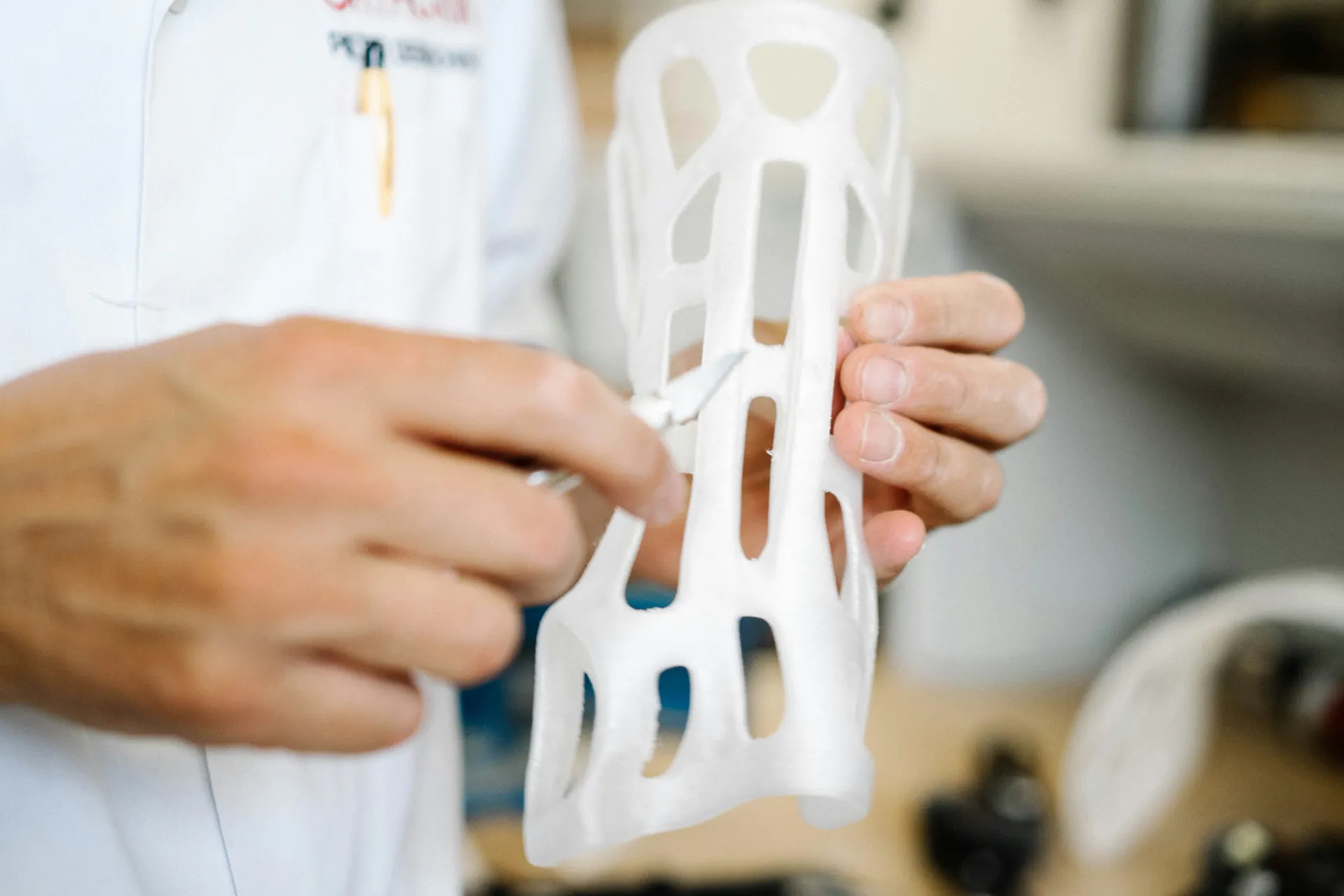
To reduce weight while maintaining performance, engineers rely on lattice designs, cellular structures, and TPMS (triply periodic minimal surfaces). These forms minimize material usage without compromising strength. With 3D modeling software, researchers can simulate stress distribution and thermal flow, ensuring the printed parts meet specific engineering demands.
Furthermore, multimaterial printing is emerging. It allows the combination of dense and porous ceramics in one structure, offering hybrid performance such as structural rigidity with embedded insulation or fluidic channels.
Challenges and Future Outlook
Despite its potential, several challenges remain:
-
Sintering shrinkage: Predicting and compensating for dimensional changes remains complex.
-
Ink formulation: For DLP and extrusion, optimizing rheology and solid content is crucial.
-
Mechanical predictability: Porous ceramics often have nonlinear stress responses. Accurate simulation models are still evolving.
Looking ahead, AI-assisted design and real-time process monitoring could enhance print quality. In the long term, we expect porous ceramics to become key components in applications ranging from thermal barrier coatings to bioactive scaffolds and energy absorbers.
Want to integrate lightweight ceramic structures into your next research or product design?
We support a wide range of materials and printing technologies. Contact Adventure Tech today at adventuretech@adt-ceramic3dp.com, or visit https://adt-ceramic3dp.com for technical consultation.