
At first, I felt that 3D printing was something distant from me—an area I would never really get involved in. But as I learned more about it, I began to realize that it has moved beyond the limits of a single field and has become a key driving force across artistic creation, industrial manufacturing, and consumer product design.
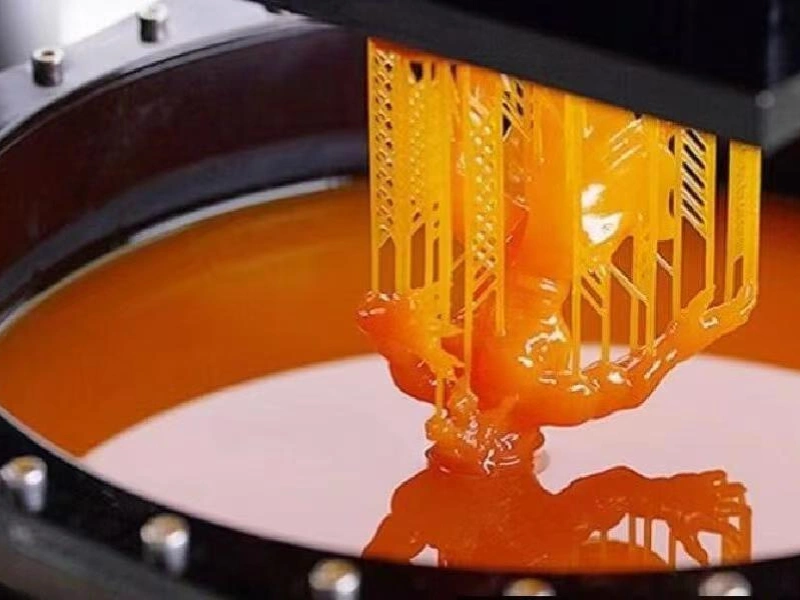
This technology, which builds physical objects by layering materials based on digital models, not only redefines the logic of “manufacturing” but also blurs the traditional boundaries between art and industry, creativity and mass production. Other manufacturing methods utilize subtractive logic, and are therefore known as traditional: in the case of a sculpture, the starting material is a block of stone that is complete and whole, and the artist removes the material as they want to make the object; in the case of a mechanical part, the starting material is a solid block of metal, which the artist can cut and drill away. 3D printing, by contrast, uses additive logic: the printer takes a layer of material (resin or metal powder) and then dies away the material in the pattern of the desired object.
People once tended to see art and industry, creativity and mass production, as opposing concepts, but 3D printing has broken down these boundaries. From the imaginative sculptures created by artists, to rapidly iterated components produced on factory floors, and even to custom-fitted footwear made for individual consumers, 3D printing is driving industries into a new era of “digital design + on-demand production,” powered by the core advantage of rapid manufacturing 3D printing.
3D Printing in Art and Creative Industries
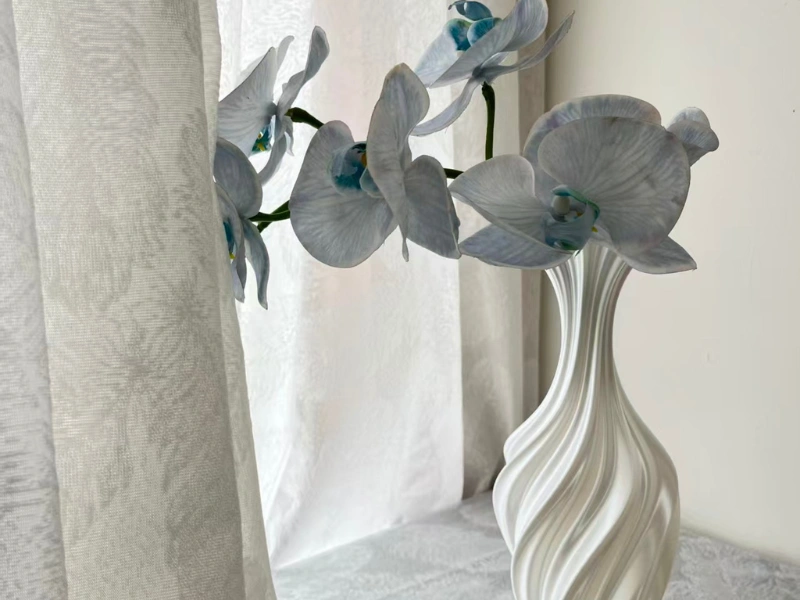
With the advancement of 3D printing technology, artists and designers are breaking through the limitations of traditional creation methods, directly transforming digital designs into physical works. 3D printed art makes complex geometric shapes, intricate structures, and personalized designs possible, which are almost impossible to achieve with traditional manual or molding processes.
In particular, SLA 3D printing technology, with its excellent precision and surface finish, has become a commonly used tool in the creative industry. Designers can print highly detailed sculptures, installations, and even tiny ornaments, realizing highly customized works. Compared to traditional sculpting or casting processes, SLA 3D printing not only significantly shortens the production cycle but also allows artists to experiment with bolder and more complex design concepts.
At the same time, the rise of the “3D artistic” concept means that creation is no longer limited to single pieces. Through the modification and iteration of digital models, artists can quickly generate series of works, or combine virtual design with physical art to expand the expressive forms of their work. For example, a digital sculpture can be manufactured layer by layer through 3D printing, then colored and assembled to become an exhibition piece or a commercial product. This approach not only enhances the uniqueness of the work but also provides artists with new creative freedom.
Rapid Manufacturing and Ceramic 3D Printing
In the industrial and manufacturing sectors, 3D printing is no longer limited to prototyping; it is increasingly becoming a core method of rapid manufacturing . Through digital design and additive manufacturing, companies can transform complex components from concept to functional products in a very short time, significantly shortening development cycles while reducing the costs associated with traditional tooling and production.
Among these applications, ceramic 3D printing, as an additive manufacturing approach for high-performance materials, is gaining growing traction in industrial use. Compared with conventional ceramic forming processes, ceramic 3D printing enables the production of complex geometries, internal channels, and high-density components—capabilities that are particularly valuable in high-precision fields such as aerospace, electronics, and medical devices. For example, certain high-temperature structural parts or functional ceramic components can be formed in a single process through ceramic 3D printing, avoiding the uncertainties introduced by multi-step mold fabrication and assembly.
3D Print Shoes and Custom Consumer Products with 3D Printing
Along with the evolution of the 3D printing technology, not only is it demonstrating massive potential in the industrial and artistic spheres, it is also slowly becoming significant in the design of consumer goods and shoes. Footwear designers and brands using 3D printing can attain high customization, fast iteration and atypical formation such as structures, which has significantly improved product innovation capacity and user experience.
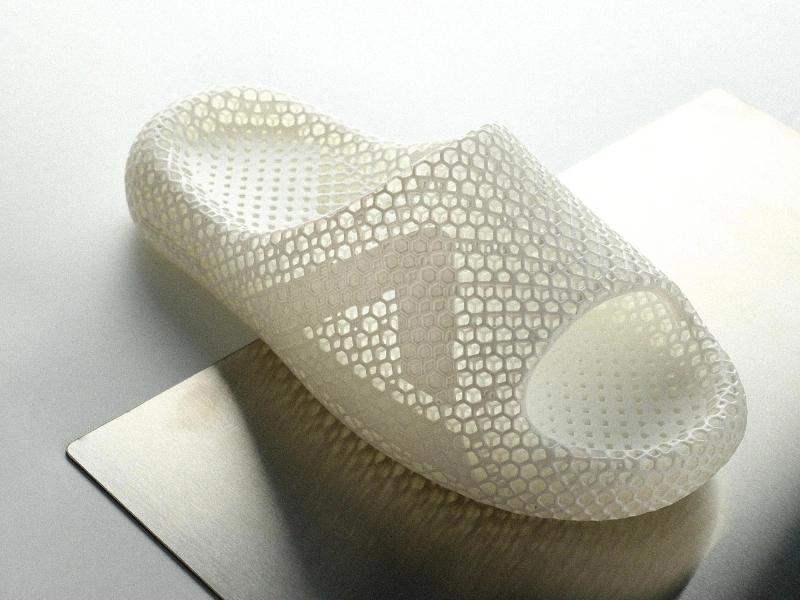
The greatest benefit of 3D printed shoes is that they can be customized depending on the shape of various users, the situations of use, and the comfort. Compared to traditional mold manufacturing, 3D printing allows for flexible control over the hardness distribution of the sole structure, the shape of cushioning units, and the mesh layout of the upper, resulting in more ergonomically designed footwear. For small-batch customization, limited edition shoes, or experimental designs, 3D printing offers a rapid implementation solution.
Besides footwear, the application of 3D printing in the consumer goods sector is also continuously expanding. For example:
- Home decor: Complex lighting fixtures, artistic ornaments
- Digital accessories: Personalized phone cases, headphone stands
- Sports equipment: Customized protective gear, lightweight sports equipment
Overall, the use of 3D printing in footwear and consumer products highlights the broad potential of additive manufacturing in everyday life. Whether for functional optimization, personalized design, or rapid product iteration, 3D printing is providing brands and designers with entirely new creative tools, while offering consumers more customized and innovative experiences.
Conclusion
3D printing technology is gradually expanding from laboratories and industrial prototyping into a wide range of fields, including artistic creation, consumer products, and high-performance material manufacturing. As a key player in the ceramic 3D printing sector—an important branch of 3D printing technology—Adventure Tech has been engaged in long-term research in this area and is dedicated to providing comprehensive ceramic 3D printing solutions.