
As ceramic additive manufacturing technologies continue to mature, manufacturers are increasingly exploring multi-material ceramic-metal components that combine the thermal stability of ceramics with the functional advantages of metals. Applications ranging from solid oxide fuel cells and aerospace systems to advanced industrial tooling are driving demand for manufacturing methods capable of producing complex structures with high dimensional accuracy and reliable performance.
Among the available fabrication approaches, filament-based additive manufacturing offers a promising route for producing near-net-shape ceramic, metal, and ceramic-metal composite parts. By combining different materials within a single build, engineers can create components that would be difficult or impossible to manufacture using conventional forming techniques.
Despite these advantages, one major challenge continues to limit broader adoption: the debinding process.
Before sintering can begin, a significant portion of the polymer binder contained within the printed feedstock must be removed. During this stage, the component temporarily loses much of its mechanical strength while the ceramic or metal particles have not yet formed a rigid network. As a result, even small thermal or gravitational forces can cause distortion, making dimensional stability difficult to maintain.
A recent study published in Ceramics International explored a practical solution to this problem. In the paper Development of Powder Bed Pre-Debinding Techniques for the Manufacturing Process of 3D-Printed Multi-Material Parts Made of Polyethylene-Based Ceramic, Metal and Metal-Ceramic Filaments, researchers investigated whether a fine alumina powder bed could provide temporary support during the most deformation-sensitive stage of binder removal.
Their findings suggest that powder-supported pre-debinding can significantly improve shape retention in multi-material ceramic 3D printing, creating more favorable conditions for subsequent sintering and ultimately improving final component quality.
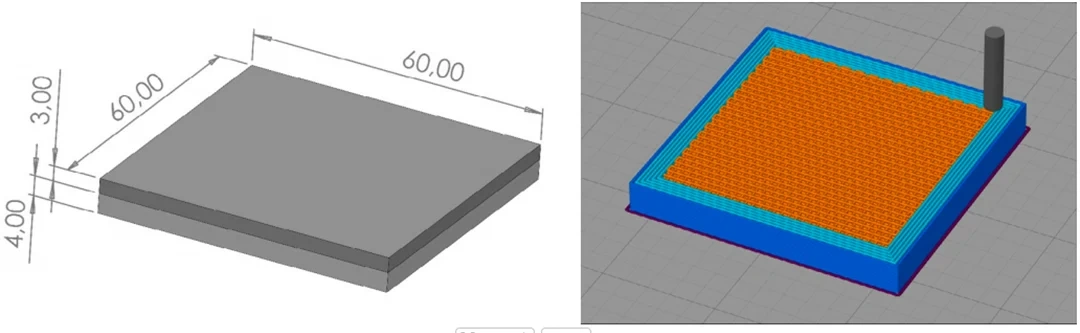
Why the Debinding Process Remains a Critical Challenge
In ceramic manufacturing, the debinding process is often considered one of the highest-risk stages of production. Defects introduced during binder removal frequently persist throughout subsequent processing and may remain visible even after final sintering.
Filament-based ceramic and metal feedstocks typically contain substantial amounts of polymer binder. These binders provide flexibility during filament extrusion and sufficient strength during printing, but they must be removed before densification can occur.
As temperature increases during thermal debinding, the binder softens, melts, and gradually decomposes. During this transition, the component enters a particularly vulnerable state. Much of the structural support originally provided by the polymer system disappears, while the ceramic or metal particles have not yet formed strong interparticle bonds.
Under these conditions, components may experience sagging, warpage, cracking, or dimensional deviations. Maintaining dimensional stability throughout binder removal is therefore essential for achieving consistent part quality and predictable shrinkage behavior during sintering.
The challenge becomes even more pronounced in multi-material ceramic additive manufacturing. Different ceramic and metallic materials often exhibit different thermal expansion characteristics, binder decomposition behavior, and sintering shrinkage rates. These differences can generate internal stresses that increase the risk of deformation, cracking, and interface failure.
As manufacturers continue to develop increasingly complex ceramic-metal architectures, reliable debinding strategies are becoming just as important as advances in printing technology itself.
A Different Approach to Powder-Supported Debinding
Powder-supported debinding is not a completely new concept. Traditional wick-debinding processes often place printed components inside a powder bed that absorbs molten binder through capillary action while simultaneously providing mechanical support.
Although effective, these approaches can require long processing times and may introduce additional complexity into manufacturing workflows.
Rather than supporting the component throughout the entire debinding cycle, the researchers focused specifically on the period when deformation is most likely to occur.
Their proposed strategy introduced a dedicated pre-debinding stage. During this stage, the printed component remained embedded within a supporting powder bed while the binder softened. Once the most deformation-sensitive phase had passed, the component proceeded through conventional thermal debinding and sintering.
This approach preserved the stabilizing benefits of powder-supported processing while avoiding many of the drawbacks associated with full wick-debinding methods.
To evaluate the effectiveness of the concept, the researchers produced filaments based on lanthanum strontium manganite (LSM), magnesium aluminate spinel (AR78), 316L stainless steel, and several composite material systems.
Four processing routes were then compared:
- Conventional thermal debinding without powder support
- Pre-debinding within a coke powder bed
- Pre-debinding within a fine alumina powder bed
- Pre-debinding within a combined alumina-coke powder bed
The objective was to determine how different powder environments influenced shape retention during thermal processing.
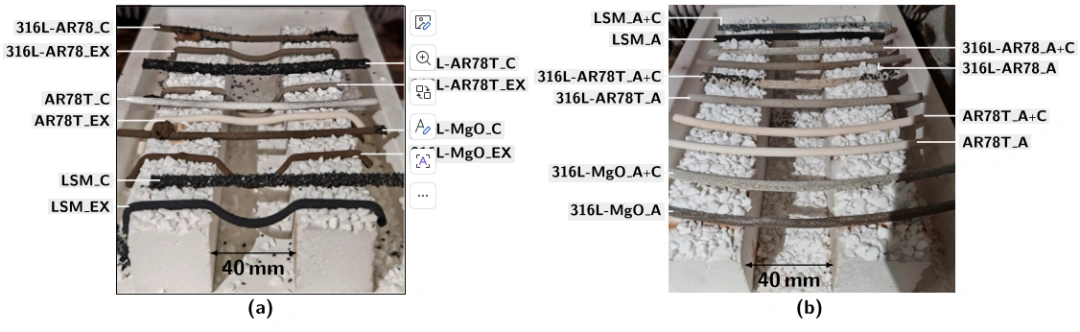
Alumina Powder Functioned as an Invisible Support Structure
The most significant improvements were observed when fine alumina powder was used as the supporting medium.
Samples processed without powder support exhibited severe softening and noticeable geometric distortion. Although the coke powder bed provided partial improvement, measurable deformation remained visible in several material systems.
The behavior changed substantially when alumina powder was introduced.
Components embedded within the alumina powder bed retained their original geometry with minimal distortion throughout thermal treatment. Similar performance was observed in the combined alumina-coke configuration.
The researchers attributed this improvement to the ability of fine alumina particles to provide continuous mechanical support during binder softening. By surrounding the component and restricting movement during the most vulnerable stage of processing, the powder bed effectively suppressed creep-related deformation.
One useful way to interpret this mechanism is to think of the alumina powder bed as an invisible support structure. Unlike conventional support geometries that must be designed, printed, and removed, the powder bed temporarily stabilizes the component during heat treatment without becoming part of the final product.
The results indicate that powder-supported debinding may serve as an effective strategy for reducing warpage and preserving dimensional accuracy in multi-material ceramic 3D printing applications.
Improved Shape Stability Led to Better Microstructures
The advantages of alumina-supported pre-debinding extended beyond external geometry.
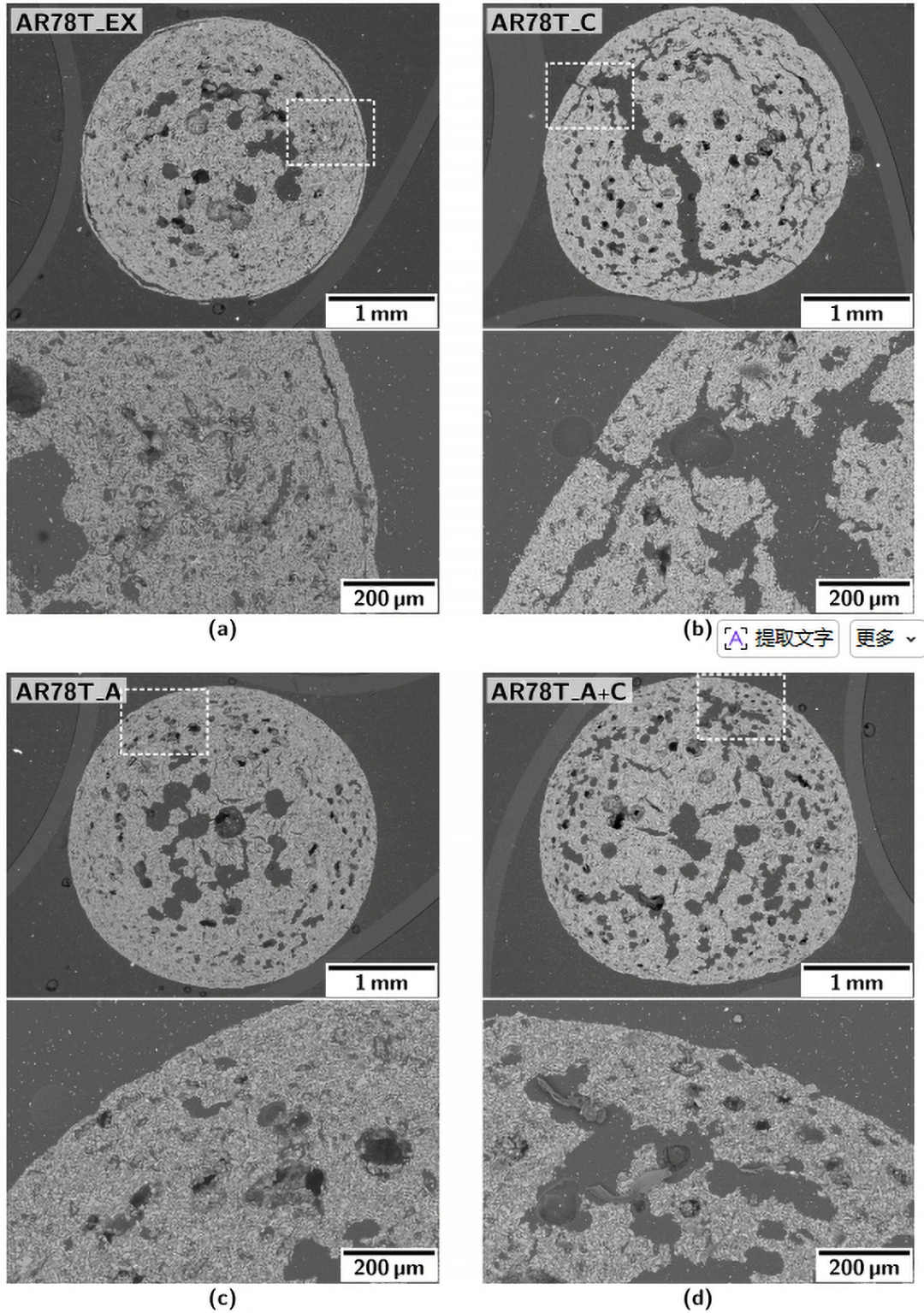
To evaluate the influence of processing conditions on material quality, the researchers analyzed sintered samples using scanning electron microscopy.
For LSM ceramics, conventionally processed samples exhibited irregular pore structures and microcracks. Such defects are often associated with localized deformation and uneven shrinkage during thermal treatment.
In contrast, samples that underwent alumina-supported pre-debinding displayed a more homogeneous microstructure. Pore distribution appeared more uniform, and evidence of cracking was significantly reduced.
A similar trend was observed in AR78 ceramics and AR78-TiO₂ composite materials. Across multiple material systems, alumina-supported samples consistently demonstrated improved structural uniformity and fewer processing-related defects.
These findings reinforce an important principle in ceramic manufacturing: many defects observed after sintering originate much earlier in the production sequence.
Improving stability during binder removal not only enhances dimensional accuracy but can also influence final microstructure, mechanical integrity, and overall component performance.
Demonstrating the Technology with a Multi-Material Component
To validate the practical relevance of the approach, the researchers fabricated a complex multi-material demonstrator containing both LSM and AR78-TiO₂ regions within a single component.
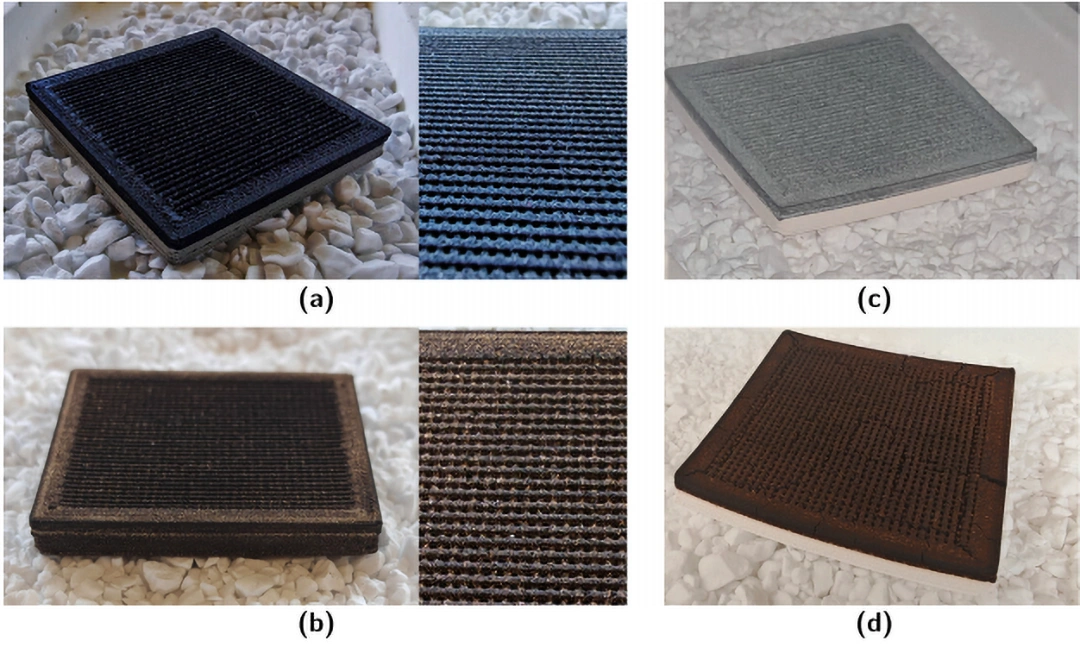
This experiment provided a realistic assessment of how the process would perform under actual manufacturing conditions.
The component successfully completed pre-debinding, secondary debinding, and final sintering while maintaining its intended geometry. Equally important, the interface between the two material systems remained intact throughout processing.
The finished structure exhibited no significant signs of delamination, severe warpage, or major cracking.
The successful fabrication of this demonstrator provides strong evidence that optimized powder-supported pre-debinding can facilitate the production of complex multi-material ceramic components while preserving both dimensional accuracy and material integrity.
Potential Industrial Implications
Although the study was conducted at laboratory scale, the findings may have broader implications for industrial ceramic additive manufacturing.
Components used in solid oxide fuel cells, ceramic heat exchangers, high-temperature energy systems, electronic devices, and aerospace applications frequently contain multiple material regions with different thermal behaviors. In these applications, maintaining dimensional tolerances throughout processing is often critical to achieving reliable performance.
As component geometries become more complex, deformation during debinding increasingly represents a major manufacturing risk.
The powder-supported pre-debinding approach demonstrated in this study offers a relatively simple method for improving process robustness without requiring substantial changes to existing production equipment.
For manufacturers seeking to reduce warpage, improve shape retention, and enhance sintering consistency, the strategy may represent a practical and scalable process optimization pathway.
What This Means for Ceramic Additive Manufacturing
Advances in printing hardware often receive the greatest attention within the additive manufacturing industry. However, this research highlights the fact that post-processing can be equally important in determining manufacturing success.
Even a perfectly printed component can fail if dimensional stability is not maintained during binder removal.
The work demonstrates that relatively simple modifications to the debinding workflow can significantly improve manufacturing reliability. By introducing a fine alumina powder bed during the critical binder-softening stage, the researchers were able to reduce deformation, improve shape retention, and create more favorable conditions for uniform sintering.
As multi-material ceramic 3D printing continues to evolve toward increasingly sophisticated architectures, reliable debinding strategies will become essential for achieving consistent production outcomes.
The alumina-supported pre-debinding approach provides a promising pathway toward manufacturing higher-quality ceramic and ceramic-metal components while minimizing additional process complexity.
Looking Ahead
As ceramic additive manufacturing advances toward increasingly complex multi-material structures, process optimization beyond the printing stage will become increasingly important.
Studies such as this demonstrate that improvements in debinding and sintering workflows can have a substantial impact on dimensional stability, microstructural quality, and overall manufacturing reliability.
The alumina-supported pre-debinding strategy highlights how relatively simple interventions can reduce defects, improve shape retention, and support the production of more reliable ceramic-metal components.
For researchers, engineers, and manufacturers working with advanced ceramic systems, these findings offer valuable insight into the critical relationship between debinding stability and final part performance.
About Ceramic Additive Manufacturing
Ceramic additive manufacturing enables the production of complex geometries that are difficult or impossible to achieve using conventional ceramic forming methods. Technologies such as DLP ceramic 3D printing, DIW ceramic 3D printing, and filament-based ceramic manufacturing are increasingly being adopted in research, electronics, aerospace, energy, biomedical, and advanced industrial applications.
At ADT, we closely follow the latest developments in ceramic materials, printing technologies, debinding strategies, and sintering processes to help researchers and manufacturers better understand the evolving landscape of ceramic 3D printing.
Reference
Malczyk, P., et al. Development of Powder Bed Pre-Debinding Techniques for the Manufacturing Process of 3D-Printed Multi-Material Parts Made of Polyethylene-Based Ceramic, Metal and Metal-Ceramic Filaments. Ceramics International, 2026.