
Why Multimaterial Ceramic 3D Printing Is the Future of Functional Devices
Let’s be honest—as engineers and researchers, we’ve always known that using just one material limits the functionality of a device. Especially in ceramics, where different properties are needed across thermal, electrical, and mechanical domains, multimaterial 3D printing is not a luxury—it’s the logical next step.
1. What Is Multimaterial Ceramic 3D Printing?
Simply put, it’s the ability to print multiple ceramic formulations or even ceramic-polymer hybrids within the same part. With DLP-based systems like those from Adventuretech, we can switch materials between layers—or even within the same layer—with high fidelity.
2. Why Does It Matter?
Let’s say you’re building a micro-heater. You want high thermal conductivity on one side, and electrical insulation on the other. Or maybe you’re fabricating a sensor where piezoelectric and structural ceramics need to coexist. Traditional methods can’t handle that complexity—but multimaterial 3D printing can.
3. Key Advantages
- Function Integration: Combine different properties into a single part without assembly.
- Miniaturization: Design compact components without sacrificing functionality.
- Custom Gradients: Create graded transitions between materials to reduce stress and failure.
4. Material Compatibility
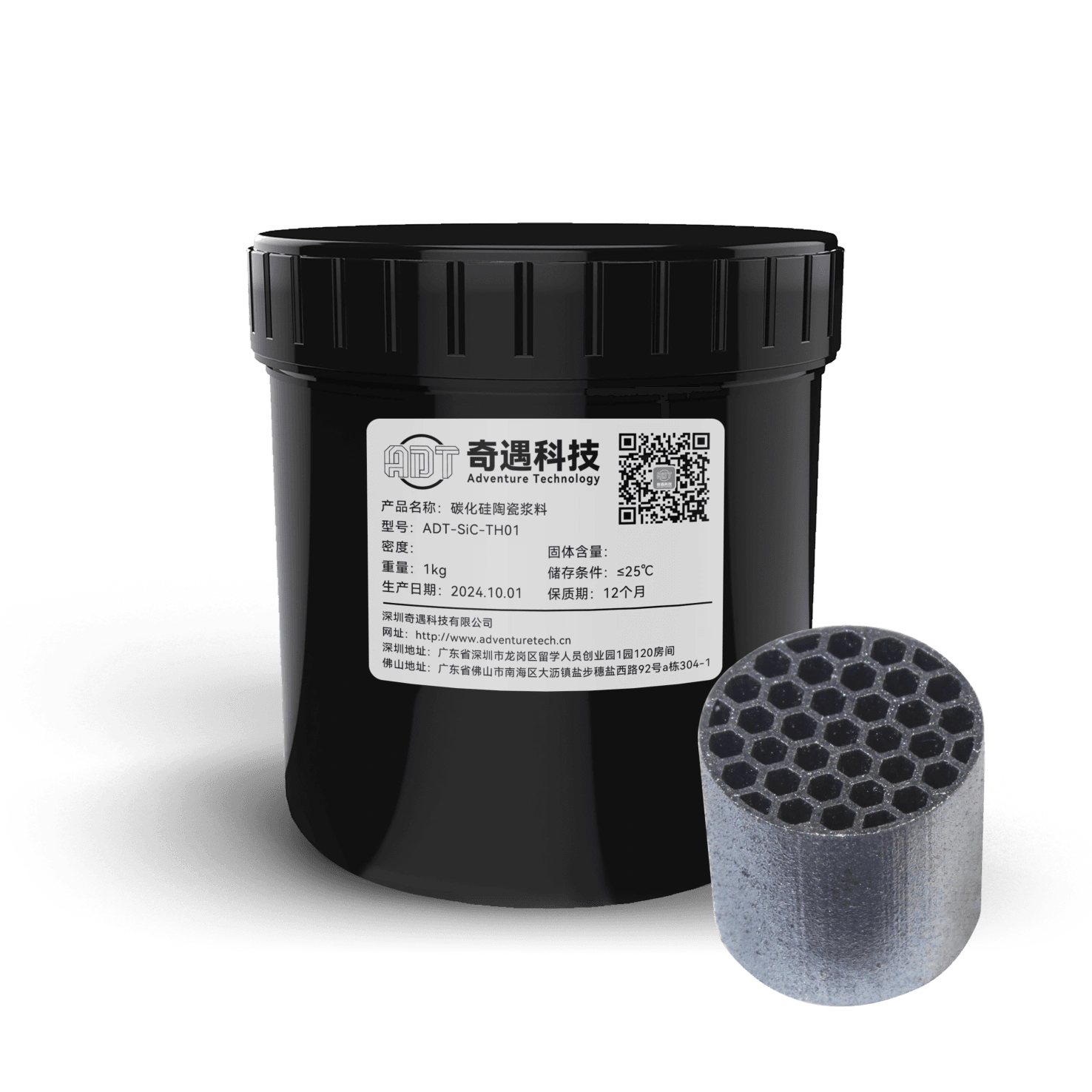
At Adventuretech, our printers support a wide range of materials, including barium titanate, silicon carbide, alumina-zirconia blends, and even bioactive ceramics. Each slurry is tuned for DLP compatibility, ensuring layer adhesion and print precision.
5. Real Applications
Multimaterial ceramic printing is already in use for:
- Biomedical implants with embedded bioactivity and strength zones
- Power electronics with integrated thermal paths
- Piezoelectric devices with printed electrodes and dielectrics
As we move toward next-generation functional devices, design freedom must be matched with material freedom. That’s where multimaterial ceramic 3D printing leads the charge. Interested in taking this leap? Talk to our team—we’re ready to prototype your future.